

 |
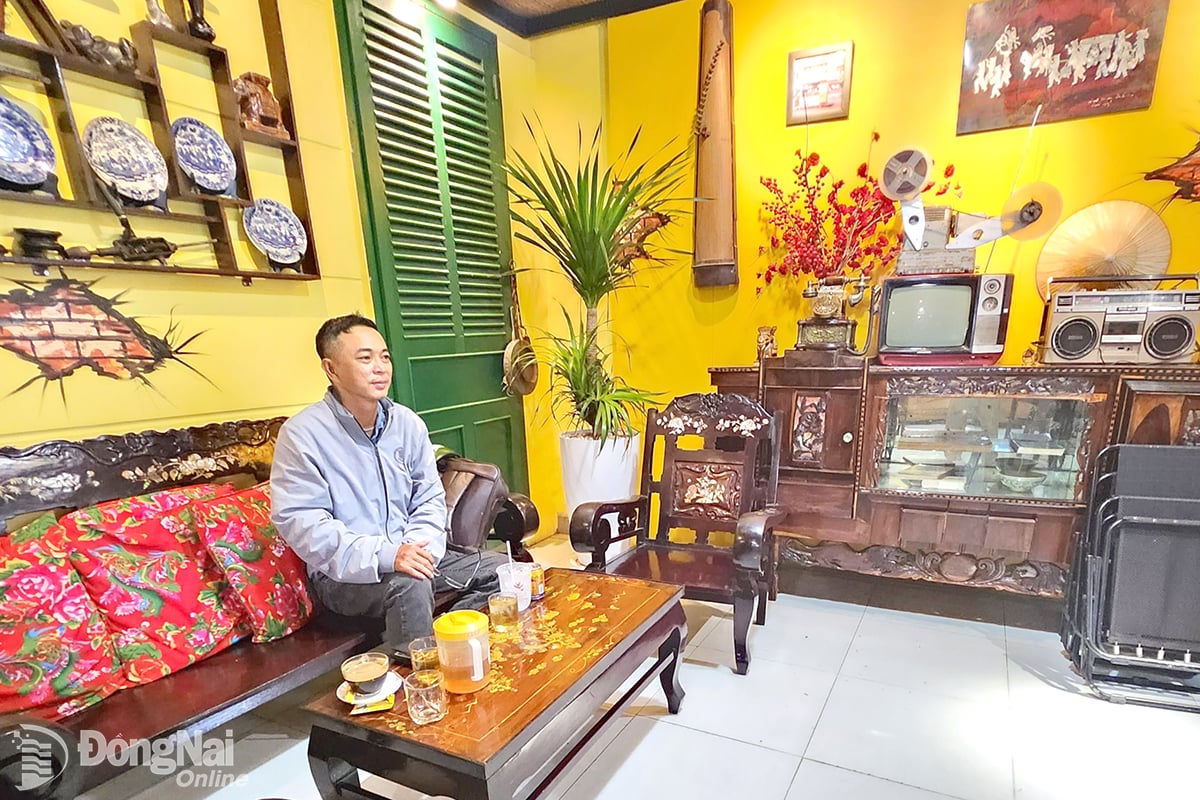
| Inside a nostalgic café in the heart of Bien Hoa. |
From filter coffee to antique coffee
It's unknown exactly when coffee shops or cafes first appeared in Bien Hoa, but one thing is certain: they are linked to the French colonial exploitation of Indochina and the introduction of coffee cultivation to Vietnam in the late 1920s, a milestone being the establishment of the Cau Dat Tea and Coffee Plantation (in what is now Lam Dong province). Along with Lam Dong and Dak Lak , coffee was also grown in Dong Nai, helping people in Southern Vietnam quickly become familiar with this beverage.
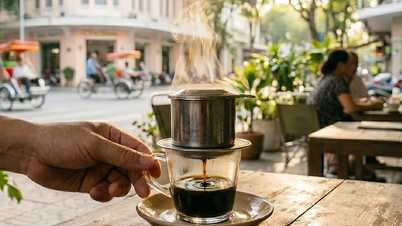
In the early days, like in many large cities across the country, alongside home-brewed coffee, there were traditional filter coffee shops, which have now become a thing of the past. Fortunately, in Bien Hoa today, there is still one such shop on Nguyen Van Tri Street, located on the banks of the Dong Nai River. The owner is Mr. Duc. Here, customers can witness firsthand how coffee is brewed in large cloth filters, then poured into jugs, and from there into small cups. The sight of the dark coffee dripping down the filter and wetting the brewing table creates a very peaceful scene. Most of the customers are laborers, arriving at the shop as early as 5 am. They are regulars, including vendors from Bien Hoa market, people exercising early in the morning, and motorbike taxi drivers… The price is also very affordable, only 15,000 VND per glass of iced black coffee.
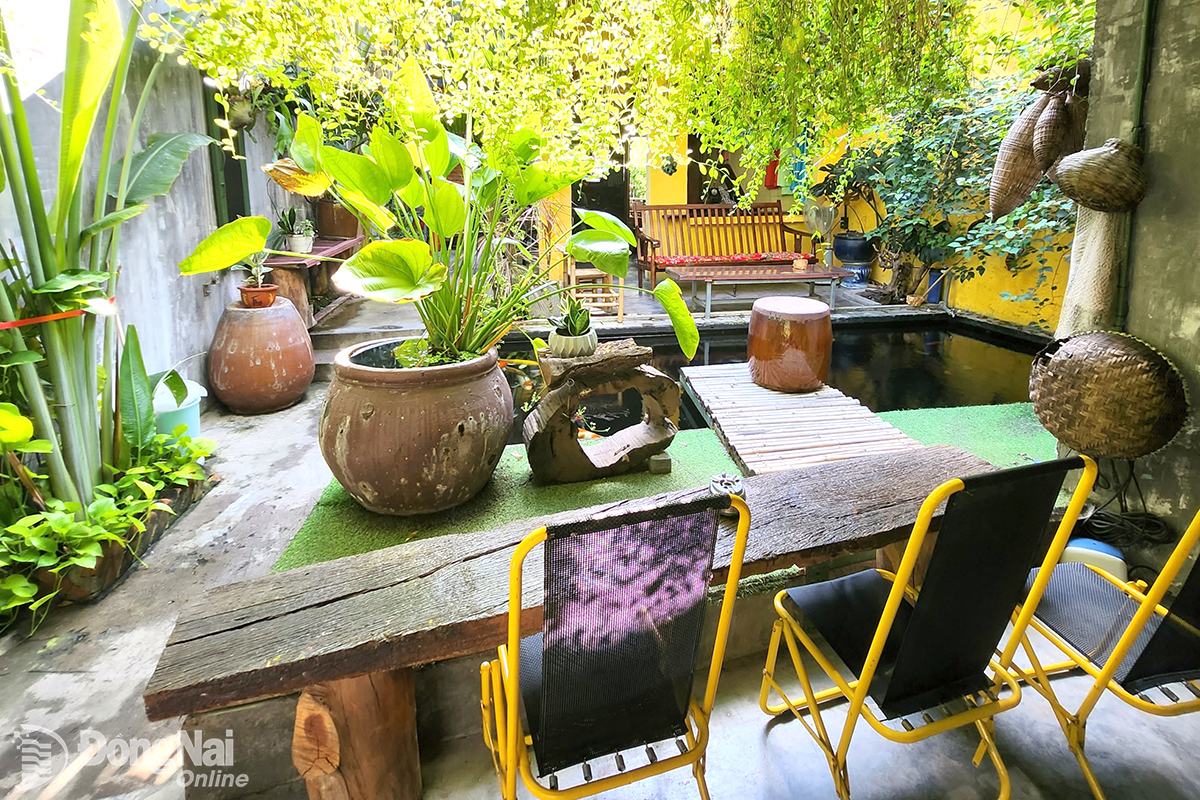 |
| A corner of the countryside setting in Dad's House coffee shop. |
The coffee is brewed in such a simple, unpretentious way that it retains the rich, intense flavor and glossy black color of pure coffee. Therefore, this type of coffee is suitable for middle-aged to elderly people – those whose memories are intertwined with the rustic, down-to-earth taste of coffee. Visiting this coffee shop reminds me of Mrs. Nam's coffee shop on Phan Boi Chau Street in Da Lat, which was the only one remaining in the tourist city for many years.
forward.
Also belonging to the nostalgic coffee scene from many years ago was Tem Phiếu Cafe on Hung Dao Vuong Street, which displayed many artifacts from the subsidy era, from ration stamps, old newspapers, table clocks, to bicycles with license plates… But for almost a year now, the cafe has been gone, probably due to competitive pressure related to rent with a larger cafe while the number of nostalgic customers has dwindled.
Another charming aspect of Tran Bien is the return of the name: Coffee Shop. A simple name, familiar to the lives of people in the southern provinces for almost a century, like Coffee Shop 1997 (on Phan Chu Trinh Street), and thanks to its location at a crossroads, convenient parking, and the owner's clever display of green vines cascading down, it's always crowded with customers.
Besides the traditional Vietnamese filter coffee, Bien Hoa also boasts several antique-themed cafes. A prime example is "My Father's House" cafe located at the end of Phan Dinh Phung street (opposite Buu Hung Temple, near Gate 2 of Bien Hoa Airport). The owner is Mr. Dung. The cafe is cleverly arranged with old household items, from black and white televisions and radios to cameras, charcoal irons, and typewriters, creating a distinctly rural atmosphere. Because it's a family-run business, there are no rent costs, and the staff are family members, so the opening hours are quite regular: not opening too early, closing at 6 pm, and closing for lunch break. The entire space is dedicated to displaying antiques, harmoniously and beautifully arranged with a fish pond, old tables and chairs, water jars, etc., creating a world of slow living reminiscent of decades past. This place could serve as a backdrop for films needing scenes of life during the subsidy period or even earlier.
The Many Facets of Coffee
Besides the traditional coffee mentioned above, in the wards of the former Bien Hoa city, many other types of coffee shops have sprung up, such as book cafes (like Da Xanh cafe on Nguyen Ai Quoc street), and takeaway coffee (sold on sidewalks)... Takeaway coffee is machine-brewed, served in plastic or paper cups, convenient for civil servants and laborers, and very affordable, from 15-18 thousand dong per cup. Young people today are very quick to adapt, launching small, compact mobile coffee carts that use machines, appearing on many streets in the city center, selling both coffee and other popular drinks such as soft drinks, milk tea, and freshly squeezed orange juice…
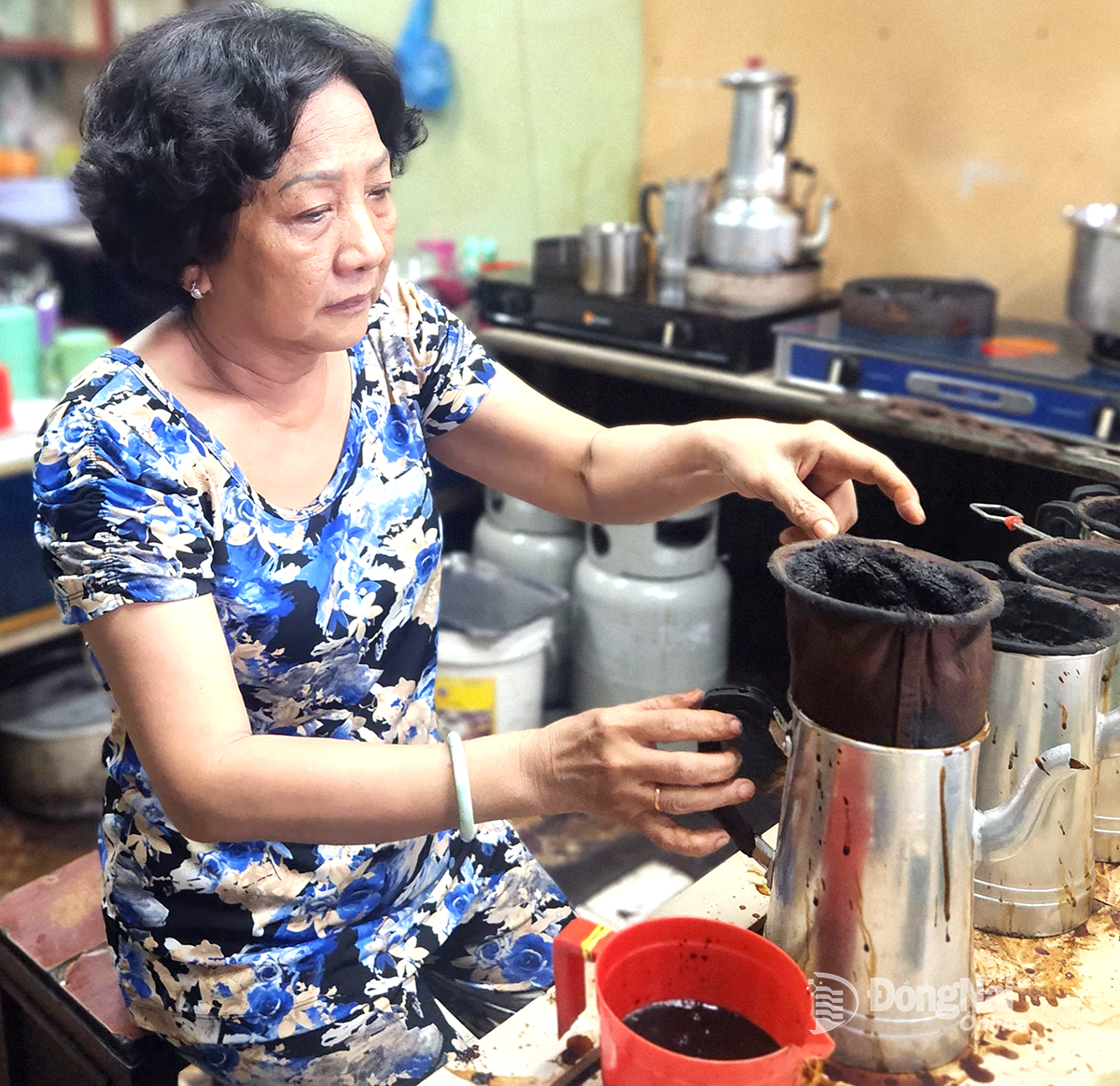 |
| A familiar sight at the last remaining traditional Vietnamese filter coffee shop in Bien Hoa. |
In terms of branding, all major coffee brands are present in Bien Hoa, such as Napoli, Trung Nguyen, Highland, Phuc Long, and Starbucks. A noticeable trend is that these large coffee chains utilize prime locations at major intersections to attract customers, and there's also a shift in the purpose of coffee shop visits among young people. Many young people go to coffee shops not just to enjoy coffee, but also to drink bubble tea and other trendy beverages, even if the price is two or three times higher than a traditional cup of coffee. Most popular, however, are the numerous pure coffee shops that have sprung up to cater to healthier eating habits, avoiding the corn and butter blends seen in the past.
Regarding coffee preferences, besides the common Robusta coffee (served iced, hot, or with milk), there are some cafes specializing in mild Arabica coffee (the type favored in the European market). One of them is Moca Cafe, located at the end of a side street off Vo Thi Sau Street. It sells both coffee and breakfast food, and has a spacious area suitable for families on weekends as well as groups of friends to meet up. Another cafe that also offers Arabica is Napoli (next to the old Vinatex Supermarket), owned by Mr. Quang, which has been open for 10 years. Mr. Quang, originally from Dak Lak but married to a woman from Bien Hoa, is very knowledgeable about coffee. He sources Arabica coffees like Moca from Cau Dat, catering to his discerning customers who prefer Moca with its mild aroma, slightly sour taste, and less bitterness compared to the more common Robusta coffee. A Mocha coffee from Cau Dat (Da Lat) costs only 25,000 VND, which is incredibly cheap compared to famous branded coffee shops, and only about 5,000 VND more than a regular iced coffee.
Then there are native Dong Nai residents like Mr. Quang Dung in Tran Bien ward, whose house is always stocked with a blend of Arabica and Robusta coffee. Originally from Long Khanh, a coffee-growing region, he's been familiar with this beverage since his youth, for over half a century. Every week, he has two coffee dates with his friends on Thursdays and Saturdays to chat and share stories about life and family. As for himself, for many years now, he's only been accustomed to drinking hot black coffee as a way to savor and appreciate its distinctive flavor.
It's impossible not to mention the Bien Hoa instant coffee brand, roasted and ground, with its factory in Bien Hoa Industrial Park 1, which has become the choice of many people nationwide, closely associated with the formation and development of the industrial city...
Van Phong
Source: https://baodongnai.com.vn/dong-nai-cuoi-tuan/202508/lang-thang-ca-phe-bien-hoa-bf727bb/

![[Image] Hanoi's urban life under the challenge of a "scorching hot" environment](https://vphoto.vietnam.vn/thumb/1200x675/vietnam/resource/IMAGE/2026/05/25/1779706979265_nang-nong-t5-2026-minh-duy-7-4636-jpg.webp)
![[Image] Close-up view of the interchange connecting the two expressways and Long Thanh Airport.](https://vphoto.vietnam.vn/thumb/1200x675/vietnam/resource/IMAGE/2026/05/25/1779703378210_ndo_br_z7863716673926-224453a31600126cce10622af6290afd-4549-jpg.webp)















































































Comment (0)