

 |
| Mr. Nong Van Ho's family brews winter solstice wine. (Photo: Thai Son) |
Preserving the family tradition starts in the kitchen.
Unlike year-round brewed liquor, the process of making lau tong requires fermenting and storing water for distillation precisely on the Winter Solstice, after which the liquor can be brewed on any day. This unique and somewhat "strict" timing is what gives this type of liquor its distinctive character.
And it was precisely this uniqueness that drew us to Xuan Duong commune to witness firsthand the process of making this specialty product, which is deeply rooted in the culture of the highlands.
Early on the morning of the Winter Solstice, many families in Xuan Duong prepared jars, pots, and other utensils to collect water from familiar streams and springs. No matter how busy they were, people still tried to collect water on this day. Those who hadn't yet brewed rice wine stored the water collected on the Winter Solstice in jars, waiting until they had time to mix it with yeast and ferment the rice.
In Mr. Nong Van Ho's kitchen, earthenware jars of water are neatly arranged in a corner, waiting for the day to ferment the rice wine. As Mr. Ho lit the fire, he slowly said: "For authentic rice wine, you need the water collected on the winter solstice. Without this water, the wine is no longer authentic rice wine. No matter how busy I am, I still have to go and fetch the water on that day to save it."
According to folk beliefs, the Winter Solstice is the time when heaven, earth, and humanity harmonize, and when yin reaches its extreme, yang is born. Therefore, people believe that water collected on this day accumulates the vital energy of heaven and earth, and using it to brew rice wine will prevent the wine from turning sour, keep it clear, and give it a deep, sweet, and warm flavor even after long storage.
After being steamed, glutinous rice is mixed with leaf yeast and then fermented entirely with water from the winter solstice in a warm house. The fermentation process lasts from 7 to 10 days, or even longer if the year is very cold. When the rice wine is "ripe," the locals distill it, producing a clear liquor that they call "tong wine."
The day of distilling the liquor is also when the family atmosphere becomes more lively. Relatives and friends gather around the fire, taking turns watching the pot and tasting the first drops of liquor. The aroma of the liquor mingled with the smoke from the fire, creating a unique and warm atmosphere of winter in the highlands.

Ms. Nong Thi Nguyen, who has been involved in cooking "lau tong" (a type of hot pot) for decades, shared: "Every year, around the Winter Solstice, my family has to fetch water beforehand. Once we have the water, we feel secure. The liquor brewed with that water, when used to make liquor later, is still truly Winter Solstice liquor, and it tastes best when drunk during Tet (Lunar New Year)."
 |
| Check the ingredients before cooking hot pot. (Photo by Thai Son) |
The first drops of rice wine fall, carrying the aroma of glutinous rice and yeast. The rice wine has a subtly sweet taste, is smooth to drink, warms the body, and doesn't have a harsh aftertaste. For the people here, it's not just a beverage, but also a way to maintain health during the cold days, a flavor associated with Tet (Vietnamese New Year) and family reunions.
According to Mr. Hoang Van Duoc, head of Thom San village, maintaining the tradition of collecting water from the Winter Solstice is a custom of the villagers. Mr. Duoc said: "Each household may brew rice wine at different times, but the water must definitely be collected on the exact day of the Winter Solstice. That is the foundation of our traditional rice wine. Young people today must especially preserve these unique 'techniques'."
Distinctive cultural imprint
Life has changed a lot today, and many customs have gradually faded away with the new pace of life. However, in Xuan Duong, brewing winter solstice wine is still preserved as a way of maintaining family traditions and preserving the memories of the village.
On the winter solstice, no matter how busy they are, many families still try to collect water to ferment rice wine, following the steps passed down from their ancestors. Those who don't have the means to ferment immediately still carefully store the water, waiting until they have time to begin the wine-making process.
Quiet and unpretentious, yet this meticulousness reflects a deep respect for traditional values. On the last day of the year, when those who have been away from home return, a glass of wine is poured by the warm fire. Conversations begin with the harvest, the weather, then move on to business and the new year... In the warm aroma of wine and the flickering firelight, Tet (Lunar New Year) seems to arrive earlier.
 |
| The "lẩu tông" liquor is distilled using a traditional method, with the fire carefully controlled for many hours to preserve its full flavor. |
Previously, winter solstice wine was only brewed for family consumption, reserved for drinking during Tet (Lunar New Year) or given as gifts to relatives and loved ones as a token of affection. Each household only distilled enough for the year, rarely selling it. However, with the changes in lifestyle, in recent years, winter solstice wine in Xuan Duong has gradually become a sought-after product every year-end.
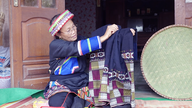
Mr. Nong Van Ho said: "In the past, this liquor was mainly for drinking during Tet (Lunar New Year), entertaining close guests, sometimes only drunk a few times a year. Now, many people ask to buy it, so my family also brews more to sell, but we still maintain the tradition. The water must be taken on the exact day of the Winter Solstice, fermented correctly, and distilled manually as our ancestors passed down. If we do it differently, it's no longer authentic 'lau tong'."
Although it has entered the market, for the people of Xuan Duong, Dong Chi rice wine remains a drink associated with a special time of year, with family memories and village life, where each drop of wine not only carries the taste of glutinous rice and yeast, but also the respect for traditional values preserved through many generations.
| According to astronomy, the winter solstice occurs because the Earth's axis is tilted approximately 23.5 degrees relative to its orbital plane around the Sun. At this time, the Northern Hemisphere receives the least amount of sunlight, resulting in shorter days and longer nights. The winter solstice is the first day of the winter solstice period. The 2025 winter solstice falls on Sunday, December 21st (November 2nd in the lunar calendar). Although an astronomical phenomenon, the winter solstice holds deep cultural significance in many parts of the world . In Vietnam, the winter solstice often coincides with a period of intense cold during winter. Temperatures drop significantly, especially in the northern mountainous regions. During this time, people prepare hot dishes such as porridge and red bean soup to keep warm. It is also an opportunity for families to gather and share warm moments amidst the chilly weather. |
Source: https://baothainguyen.vn/van-hoa/202512/lau-tong-ngay-dong-chi-d2707d2/

















































![[Video] Sunset at Lap An Lagoon – Where the sun sets over the fishing nets](https://vphoto.vietnam.vn/thumb/1200x675/vietnam/resource/IMAGE/2026/05/31/1780192137701_beach-landscape-sea-water-nature-grass-745871-pxhere-com.jpeg)



























Comment (0)