


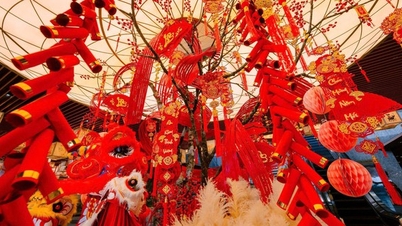
I arrived in the Old Quarter on a late morning at the end of the year. Dew still clung to the leaves. The usually bustling streets suddenly calmed down, as if Hanoi itself was taking a deep breath before the New Year. Hang Ma Street began to blaze with the red of couplets, lucky money envelopes, and paper lanterns. The shops, side by side, were covered with Tet decorations, the colors vying with each other but not overwhelming the inherent tranquility of the neighborhood.
From Hang Luoc flower market, the small street suddenly transforms into a river of fragrant blossoms. Peach blossoms from Nhat Tan are brought in, branch by branch, in various shapes; some trees still have their buds, others have already bloomed with vibrant pink petals. Buyers are unhurried. They stand silently for a long time before each peach tree, admiring its form, gently touching the petals as if choosing a piece of the soul of Tet to take home. Amidst the cool weather, the scent of peach blossoms, kumquats, and damp earth blends together, awakening memories of past springs.
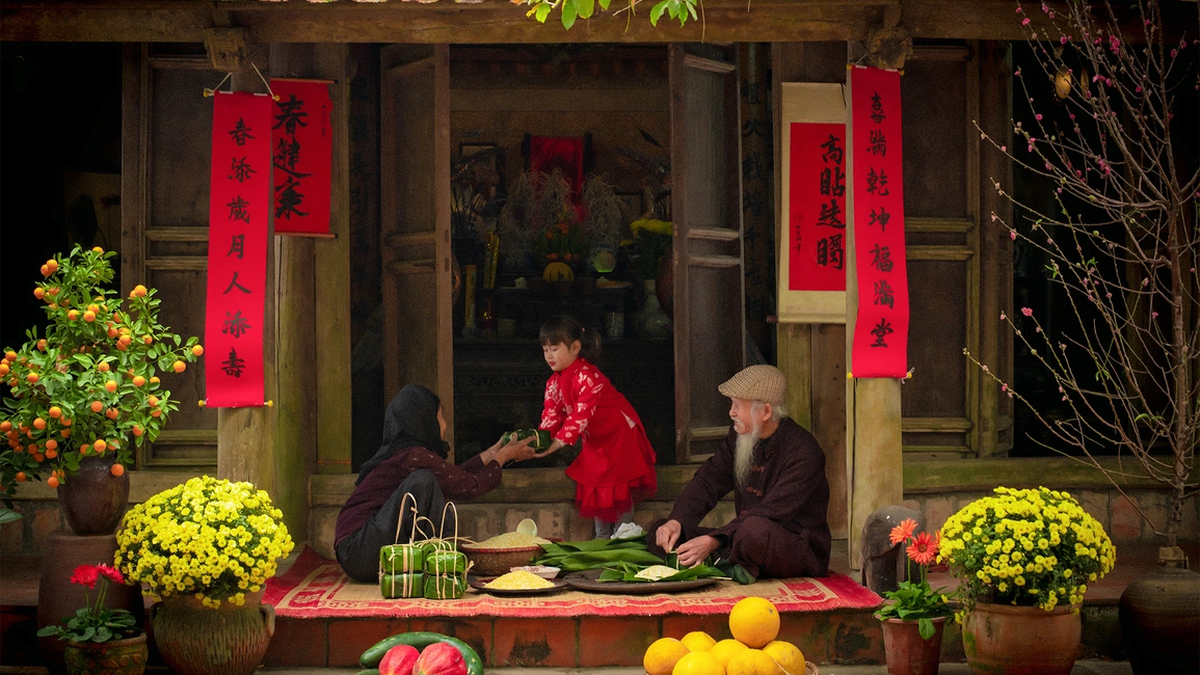
Wandering through the narrow alleys, I encountered familiar scenes of old Hanoi: an elderly man meticulously cleaning a set of horizontal and vertical couplets, an old woman sitting and wrapping banh chung (traditional Vietnamese rice cakes) while a group of children played together. In the old house with its dark brown tiled roof, time seemed to slow down. The clinking of teapots placed on wooden trays, the murmuring conversations—all created a warm and intimate Tet atmosphere.
These days, the Old Quarter still preserves a special beauty: the art of calligraphy. On the sidewalk in front of the Temple of Literature, or right in the heart of the city, old calligraphers display their ink and red paper. Their soft, flowing brushstrokes form the characters for "Happiness," "Prosperity," and "Peace." Those seeking calligraphy not only hope for a piece to hang on the wall, but also entrust their wishes for the new year. I stood watching the graceful hands of an old calligrapher, each stroke seemingly distilling the essence of time. Perhaps the traditional Tet (Lunar New Year) lies in these very moments – where the past and present meet on the vibrant red paper.
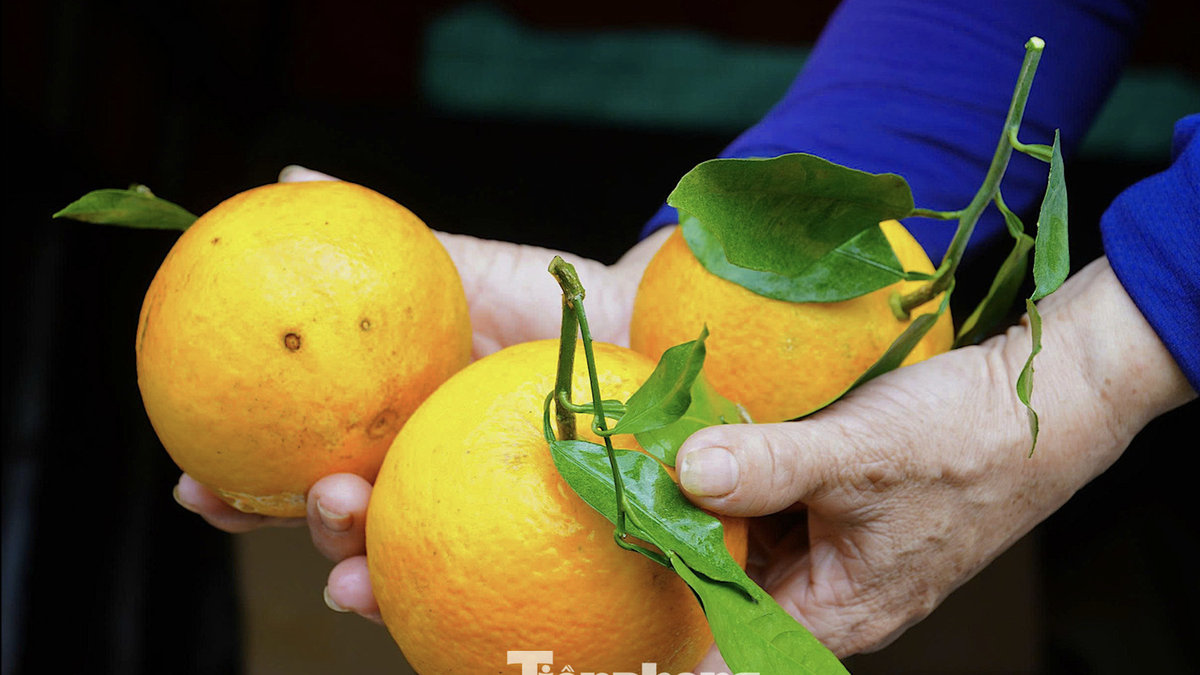
In the afternoon, I visited an old house on Ma May Street. The house was narrow horizontally but incredibly deep, with a skylight letting in sunlight. The homeowner was preparing a platter of five fruits: green bananas, yellow pomelos, red tangerines, papayas, and dragon fruit, all arranged skillfully. Each fruit carried its own meaning, representing wishes for abundance and family reunion. I suddenly realized that Tet in Hanoi is not just about the outward scenery, but about the meticulous attention to detail in every family's life.
As night falls, the old town takes on a different beauty. Yellow lights illuminate the streets, making the ancient rooftops appear solemn and dignified. The distant bells of the Grand Cathedral ring out, harmonizing with the footsteps of passersby. In the crisp spring air, I can more clearly sense the faint scent of incense. It's the scent of memories, of incense sticks lit on ancestral altars, of the connection between generations.
 |
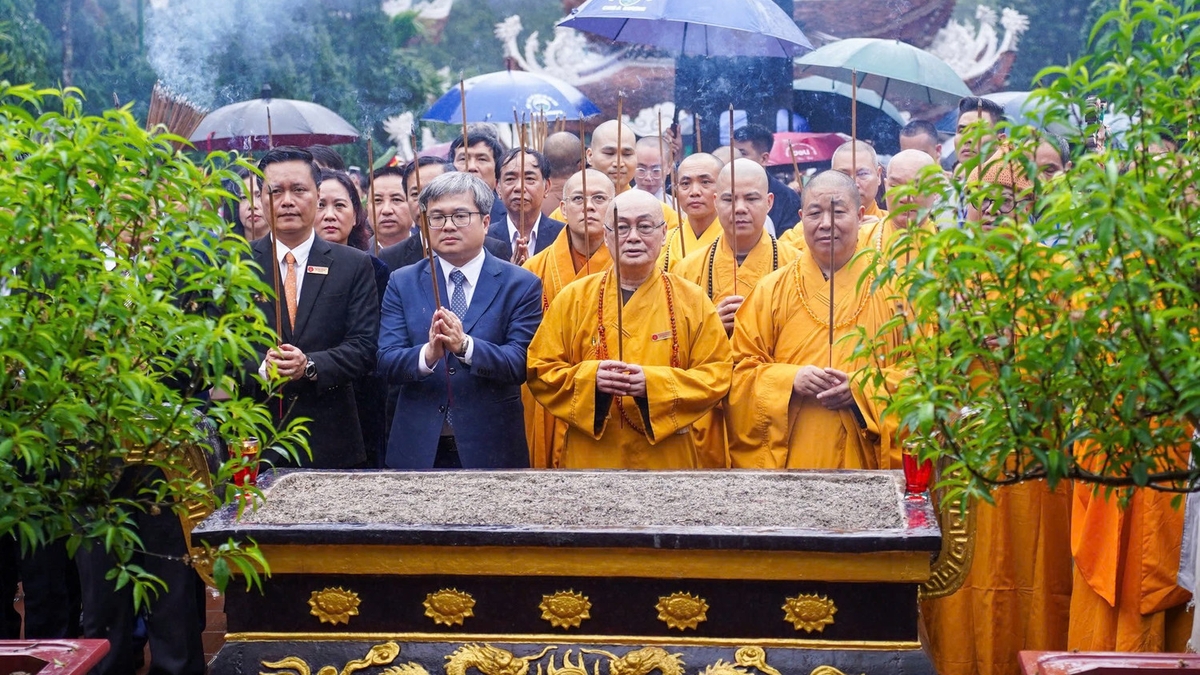
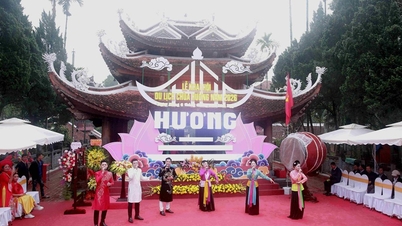
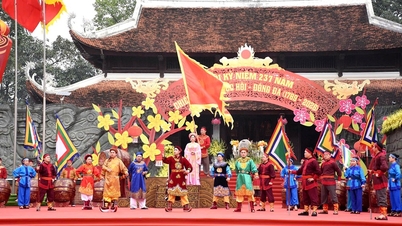
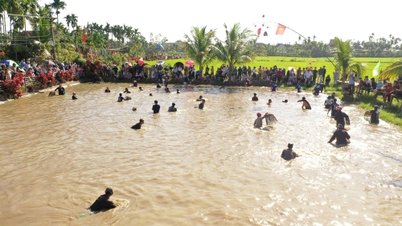
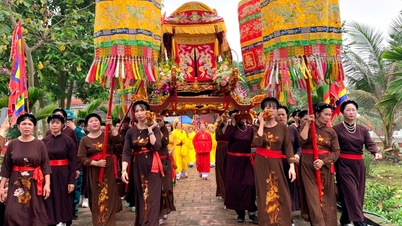
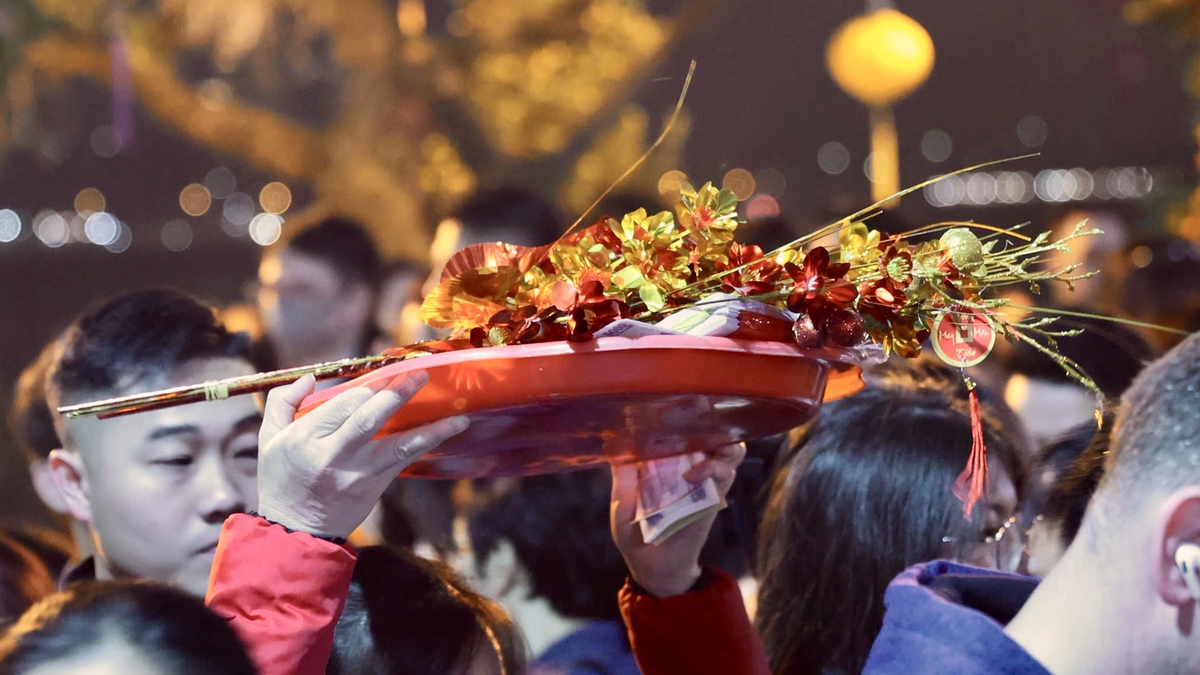
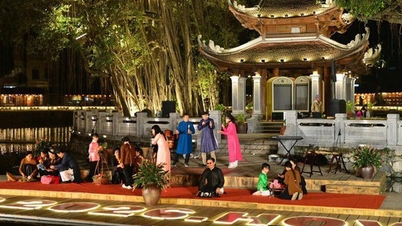
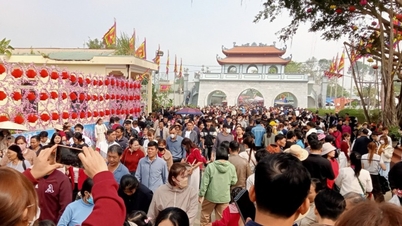
| The ritual of carrying offerings to the tutelary deity at Kim Ngan communal house. Photo: Ministry of Culture, Sports and Tourism. |
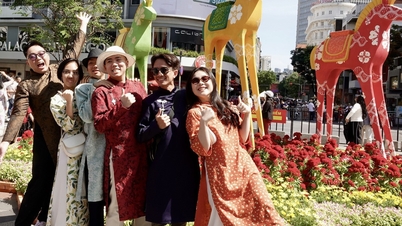
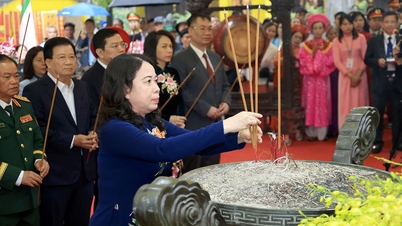
On the morning of the first day of the Lunar New Year, the old quarter seemed to awaken in the spring sunshine. Hanoians chose elegant attire to visit temples and exchange New Year greetings with relatives. The graceful, soft colors of the traditional ao dai dresses shimmered in the streets. I followed the crowd to Tran Quoc Pagoda, a nearly 1,500-year-old pagoda considered the oldest in Thang Long - Hanoi. Incense smoke billowed, the temple bells rang out, and everyone sincerely prayed for peace and well-being for their families.
Amidst the hustle and bustle of modern life, Hanoi's Old Quarter still retains its own unique Tet (Lunar New Year) atmosphere. It's not ostentatious or noisy, but it's profound enough to draw people back. Walking through the streets during these days, I feel like I'm stepping on layers of memories. Every tiled roof, every wooden window, every stone step has witnessed countless springs pass by.
Experiencing traditional Tet in the Old Quarter is a journey of feeling. Feeling with your eyes the vibrant red of couplets and the pink of peach blossoms. Feeling with your ears the joyful laughter and family gatherings. Feeling with your nose the scent of incense and freshly cooked banh chung (traditional rice cakes). And most importantly, feeling with your heart the sacred bond between people and their families, their ancestors, and the land they live on.
Leaving the Old Quarter in the late afternoon, I looked back at the small streets gradually fading into the sunset. Tet there is not just about the first few days of the year, but is an integral part of Hanoi's soul. And each time I return, it's like reliving my own memories – a place where spring always begins with the simplest, most cherished things.
Source: https://www.qdnd.vn/van-hoa/doi-song/tet-tren-pho-1027117

















































Comment (0)