

Along with the implementation of a two-tiered local government model, the health station system has been streamlined for greater efficiency. From 171 health stations, the province now has 55 main stations and 92 branch stations. By the end of 2025, 96.5% of the province's communes will meet the national criteria for commune-level health services by 2030.
The restructuring of the health station system, coupled with the transfer of preventive health care personnel to the grassroots level, has enabled many stations to have 4 to 6 doctors, achieving the goal two years ahead of the national schedule. As a result, grassroots healthcare is increasingly capable of performing initial medical examinations and treatment, managing community health, and effectively implementing local health programs, especially in mountainous and remote areas.

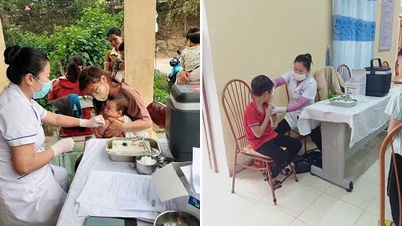
Located in a mountainous area with a large and scattered population, the Dong Ngu commune health station currently manages and provides healthcare for over 18,200 people. After reorganization, the station now has one main station, two branch stations, with 3 doctors and 24 medical staff. The organizational structure was quickly streamlined, professional operations stabilized, and the station fully fulfills its primary healthcare mission for the people.
Here, the examination, management, and treatment of chronic non-communicable diseases such as cardiovascular disease, hypertension, diabetes, asthma, and chronic obstructive pulmonary disease are regularly carried out. Simultaneously, screening and early detection of certain cancers are also promoted at the grassroots level. As a result, people receive regular health monitoring, have easier access to medical services, and this helps reduce the burden on higher-level medical facilities. Ms. Luong Thi Tinh (Dong Thanh village) shared: "I have hypertension, so I regularly go to the health station for check-ups and medication. The doctors monitor me very closely and provide specific guidance, so I feel confident in my long-term treatment. Having the station right near my house makes healthcare much more convenient."
Ms. Tang Nhi Mui (Que Son village) said: "Besides medical examinations and treatment, health workers also regularly educate and guide people on disease prevention and health care. Thanks to this, we people understand more and are more proactive in maintaining our own health and that of our families."

In Hoanh Mo commune, the health station is currently providing primary healthcare to over 9,000 people. The new operational model requires managing the health of each individual citizen, linking it to the responsibility of the local government in caring for social welfare. Dr. Hoang Hai Yen, Director of the Hoanh Mo Commune Health Station, said: After being handed over to local management under the two-tiered government model, the health station has become more proactive in organizing its activities and closely follows the actual needs of the people. Community health management, disease prevention and control, and primary healthcare are implemented more synchronously and effectively.
From January 1, 2026, commune, ward, and special zone health stations in the province will be transferred to the management of local People's Committees, thereby increasing proactiveness in resource allocation, operation, and organization of public health care tasks associated with socio-economic development at the grassroots level. The health sector will continue to maintain unified professional management, ensuring that medical examination, treatment, preventive medicine, and primary healthcare activities are maintained stably and effectively. The goal is to gradually increase the percentage of people receiving medical examination and treatment at health stations from approximately 16% currently to 20% in the near future. Mr. Nguyen Minh Tuan, Deputy Director of the Department of Health, emphasized: When grassroots healthcare is strengthened, rural people will receive more timely, convenient, and comprehensive healthcare right in their localities. This is an important foundation for the health criteria in building new rural areas to become more substantive, contributing to improving the quality of life and ensuring sustainable social security.
Source: https://baoquangninh.vn/lay-suc-khoe-va-hanh-phuc-cua-nhan-dan-lam-thuoc-do-3402716.html




![[Image] Close-up view of the interchange connecting the two expressways and Long Thanh Airport.](https://vphoto.vietnam.vn/thumb/1200x675/vietnam/resource/IMAGE/2026/05/25/1779703378210_ndo_br_z7863716673926-224453a31600126cce10622af6290afd-4549-jpg.webp)
![[Image] Hanoi's urban life under the challenge of a "scorching hot" environment](https://vphoto.vietnam.vn/thumb/1200x675/vietnam/resource/IMAGE/2026/05/25/1779706979265_nang-nong-t5-2026-minh-duy-7-4636-jpg.webp)













































































Comment (0)