

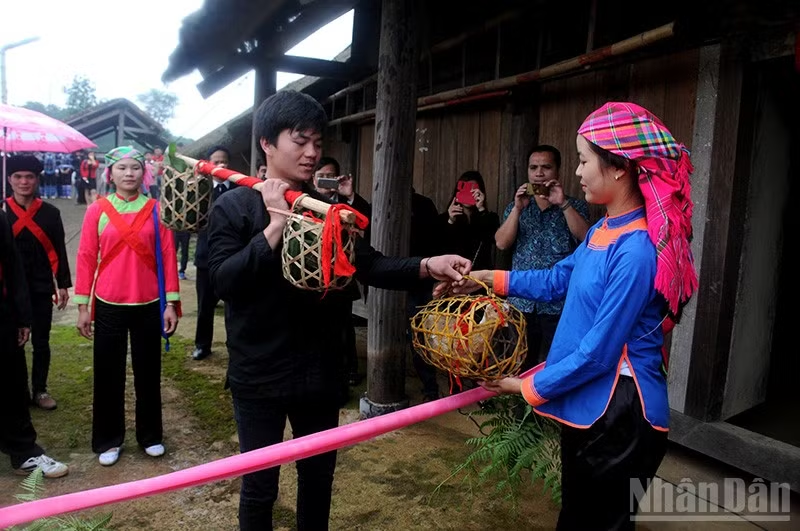
Having lived for generations in the mountains and forests of Northwest Vietnam, the Giáy people in Sa Pa ( Lao Cai ) are one of the ethnic minority communities rich in cultural identity. They live in harmony with nature, are skilled in slash-and-burn agriculture, and cherish their traditional cultural heritage. Within this treasure trove, the wedding ceremony is not only a significant event for a young couple but also an opportunity for the entire community to preserve sacred traditions passed down through generations.
Cultural imprint in each wedding ceremony
For the Giáy people, marriage not only marks the coming of age of the couple but also serves as an opportunity to connect the two families, extend the lineage, and spread affection. The Giáy people's criteria for choosing a life partner are not based on wealth, but rather on virtue, family traditions, and harmony between the two sides. A traditional wedding ceremony consists of three main rituals: the engagement ceremony (xam dà, xam pấu), the betrothal ceremony (cun cơ lý), and the wedding ceremony (cun láu).
The engagement ceremony marks the beginning of the marriage journey, where the two families meet, exchange ideas, and choose an auspicious day called the "day of vows," signifying a request to the ancestors to witness and bless the auspicious union. This is followed by the betrothal ceremony, where the groom's family brings gifts to the bride's family, including a pair of chickens and ducks and a pig weighing about 40kg. This is also the occasion for the bride's family to present the dowry: food and drink for guests, jewelry and new clothes for the bride, and rice and grain as gifts to her parents, expressing gratitude for their upbringing.
The Giáy people believe that the more lively and crowded a wedding is, the more lasting the happiness will be. Therefore, the wedding season usually takes place from October to February of the lunar calendar, a period of agricultural leisure, making it convenient for the whole village to come together to celebrate, contributing to a vibrant and close-knit atmosphere.
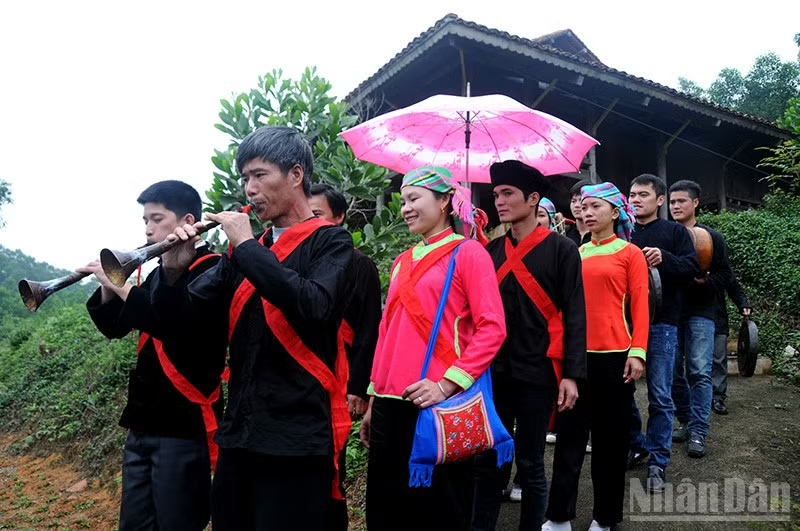
The Giáy wedding ceremony is a vibrant tapestry of rituals and emotions. The wedding procession, accompanied by the lively sound of the Pí Lè horn, is led by the matchmaker, followed by the groom, best man, two young women, two elderly people, a boy leading a horse, and those carrying the wedding gifts. Each person plays a symbolic role, reflecting the depth of their culture and the order of the community.
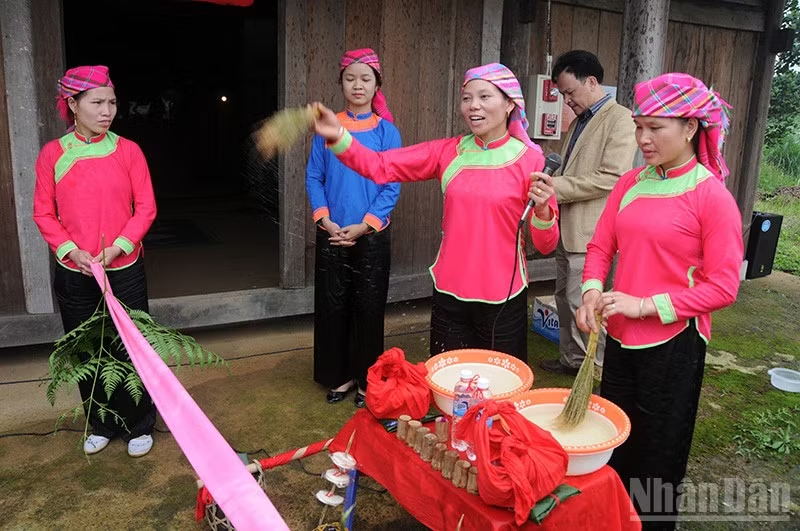
Upon arriving at the bride's house, the groom's procession must overcome a "guarding ceremony," a series of challenges including a red thread, thorny branches, a basin of water, two cups of wine, and a straw broom, as proof of their sincerity and determination to welcome the bride. This is followed by a charming call-and-response singing performance between the two families, aiming to "ask for permission" to pass through the red cloth into the bride's house—a ritual that is both joyful and full of cultural significance.
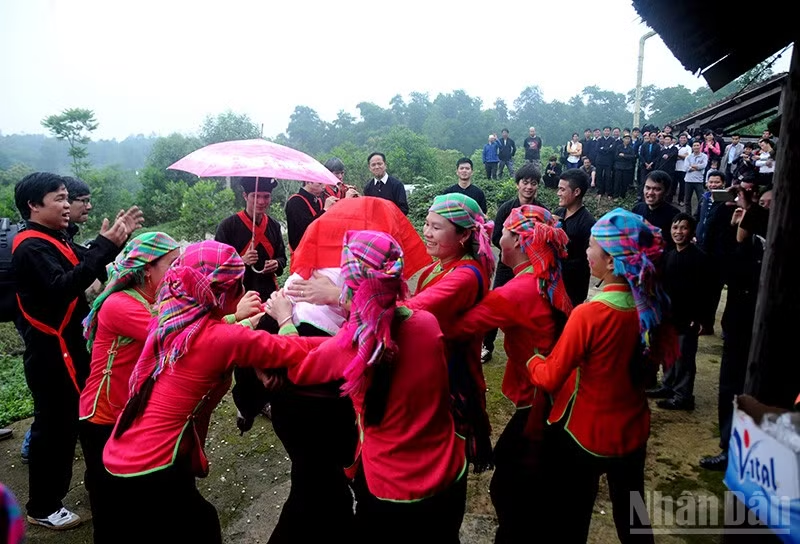
The bride emerges in traditional attire, her head adorned with a red veil symbolizing modesty and grace. As the procession enters, the bride's family sprinkles water and applies red paint to each person's cheeks – a ritual for good luck, purification, and blessings. Particularly touching is the "bride-holding" ritual: relatives of the bride's family cling to and embrace her, expressing their reluctance and regret at this moment of parting. This is not just a ritual, but a profound humanistic message about kinship and the sacredness of family.
A journey of fortunate encounters and community bonding.
A highlight of the Giáy wedding ceremony is the image of the groom fetching the bride on a paper horse, a cultural symbol deeply rooted in folk traditions. Whether a real or paper horse, the journey to bring the bride to her husband's home is always greeted with the melodious sound of the Pí Lè horn, with songs of blessing, and in the presence of the entire village. In some places, the groom's family even assigns a strong woman to carry the bride home, a unique image that shows how much care and respect the girl has for her on her special day.
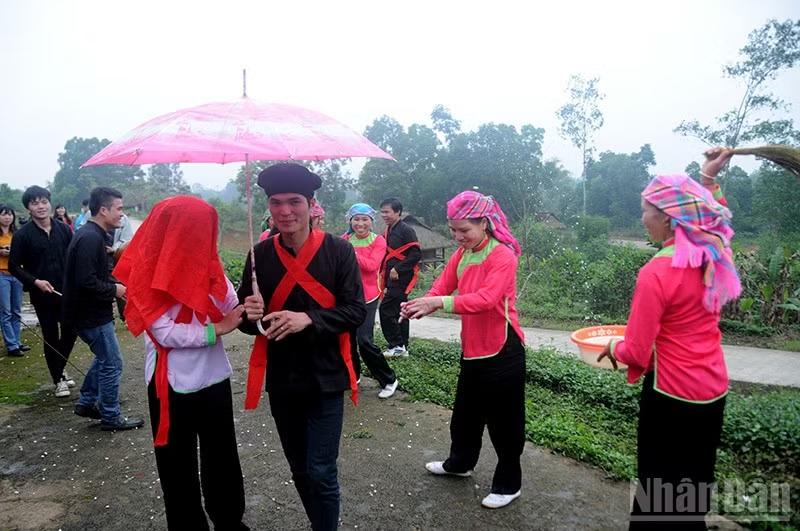
Upon arriving at the groom's house, the ceremony continues with the ritual of lighting incense for the ancestors, removing the veil, and untying the red ribbon, marking the transition from a daughter of the bride's family to a wife and daughter-in-law in her new family. The wedding feast takes place amidst songs of farewell, words of gratitude, and advice for the young couple to live in harmony, fidelity, and love for each other for life.
Every detail in a Giáy wedding ceremony carries profound cultural meaning. It embodies moral principles, serves as a bond connecting the community, and transmits behavioral norms between generations. Rituals such as the "keeping ceremony," "bride-binding," "applying red dye," and "sprinkling water for blessings" not only create uniqueness but also contribute to preserving the ethnic group's cultural values in the modern era.
Today, despite many changes in life, the Giáy people's wedding ceremony still preserves many traditional customs. This is not only an expression of national pride, but also an affirmation that wedding culture, as a cultural source, continues to be passed on and spread throughout the colorful tapestry of Vietnam's 54 ethnic groups.
Source: https://nhandan.vn/le-cuoi-nguoi-giay-duyen-dang-mot-ban-sac-post889310.html
![[Image] Hanoi's urban life under the challenge of a "scorching hot" environment](https://vphoto.vietnam.vn/thumb/1200x675/vietnam/resource/IMAGE/2026/05/25/1779706979265_nang-nong-t5-2026-minh-duy-7-4636-jpg.webp)

![[Image] Close-up view of the interchange connecting the two expressways and Long Thanh Airport.](https://vphoto.vietnam.vn/thumb/1200x675/vietnam/resource/IMAGE/2026/05/25/1779703378210_ndo_br_z7863716673926-224453a31600126cce10622af6290afd-4549-jpg.webp)






































































Comment (0)