

In Con Cuong commune, the reality shows that when the "four-party" linkage model is implemented with the farmers' association playing a connecting role, the medicinal herb value chain is gradually forming, opening up a more stable direction for people and businesses.
Forming concentrated medicinal plant growing areas.
.jpg)
Despite its abundant potential and high expectations, Nghe An's medicinal herbs have been mired in a vicious cycle for many years: small-scale production, uncertain markets, and a lack of cohesion among stakeholders. Until this "bottleneck" of linkage is resolved, this "green treasure" remains difficult to transform into real economic value. The challenge is not simply expanding cultivation areas, but reorganizing production into a value chain, closely linking farmers, businesses, and other stakeholders.
Nghe An is considered one of the provinces with the richest medicinal plant resources in the country, with nearly 1,000 species of medicinal plants and mushrooms, accounting for about 25% of the total number of medicinal plant species in Vietnam. In particular, the southwestern region of Nghe An, with its diverse ecosystem, is likened to a "green treasure" with many rare species such as Puxailaileng ginseng, seven-leaf one-flower ginseng, red Polygonum multiflorum, golden orchid, yellow flower tea, Codonopsis pilosula, red reishi mushroom, etc.
Beyond its abundant reserves, Nghe An's advantage lies in its suitable natural conditions for developing medicinal plants under the forest canopy, a direction that both creates livelihoods and contributes to forest protection. According to the Department of Agriculture , many types of medicinal plants yield superior economic returns compared to traditional crops such as rice, corn, or acacia, opening up a sustainable crop restructuring direction for mountainous regions.
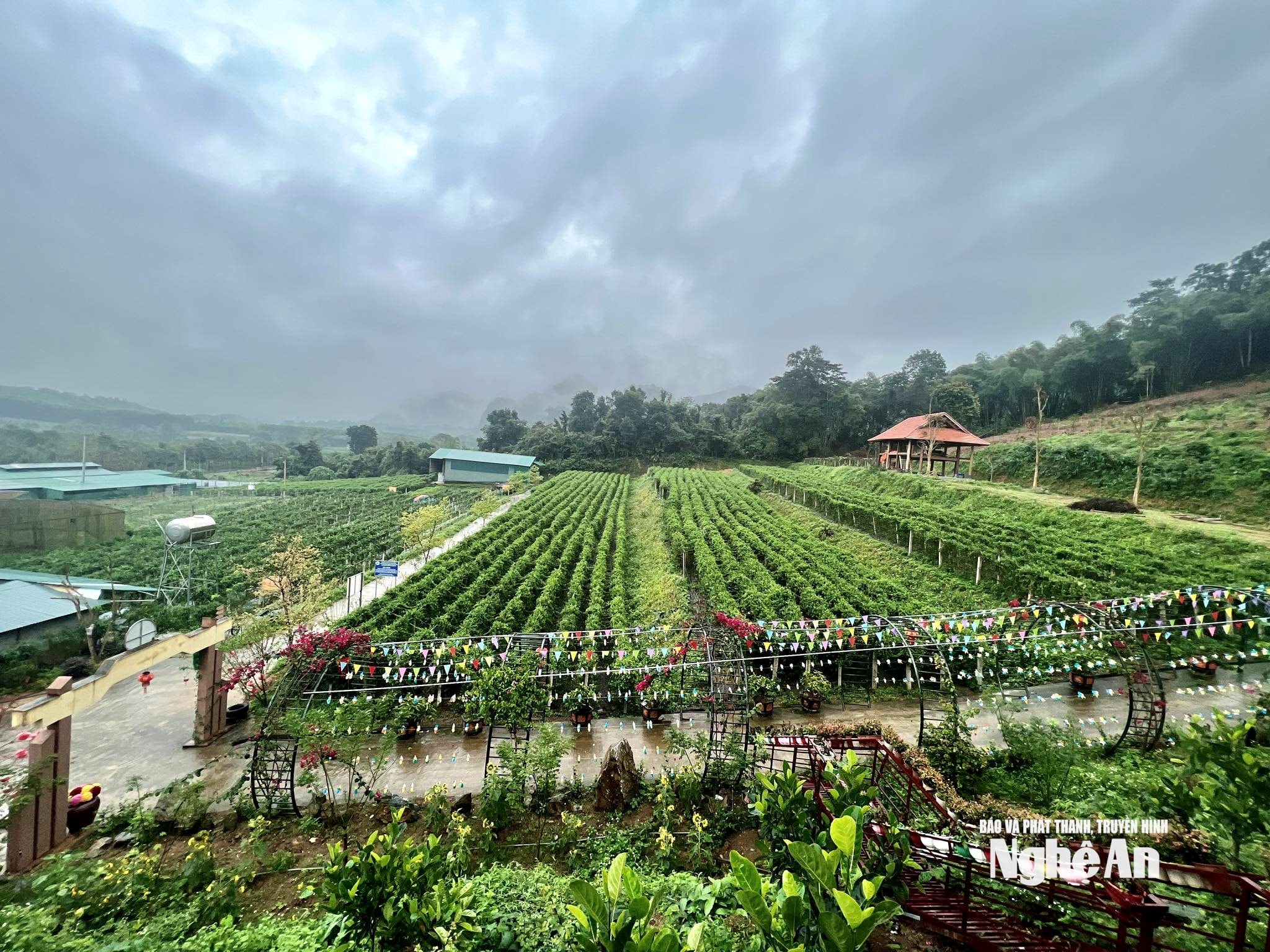
Within that overall picture, Pu Mat (Con Cuong commune) stands out as a bright spot. Located in the buffer zone of Pu Mat National Park, it boasts a clean climate and nutrient-rich soil, suitable for many valuable medicinal herbs. In recent years, medicinal herb cultivation models here have not only remained on a small scale but have gradually formed concentrated raw material areas, linked to processing and consumption.
A prime example is Pu Mat Medicinal Herbs Joint Stock Company, which has developed a 23-hectare medicinal herb cultivation area, with the majority of the land managed in partnership with local people. The main crops include Solanum torvum, Gymnema sylvestre, Gynostemma pentaphyllum, and wild bitter melon, yielding over 1,000 tons annually.
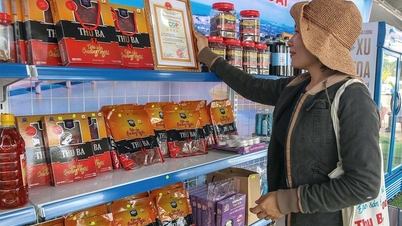
Notably, medicinal herb production in the Con Cuong area is no longer fragmented but is gradually forming concentrated raw material zones, linked between local people and purchasing and processing units. Through support in terms of seeds, technology transfer, organized purchasing, and guidance on preliminary processing and manufacturing, medicinal herb cultivation has gradually become part of the value chain, creating a stable market for the products. As a result, many local medicinal herb products have been standardized, participated in the OCOP program, and expanded their consumer markets.
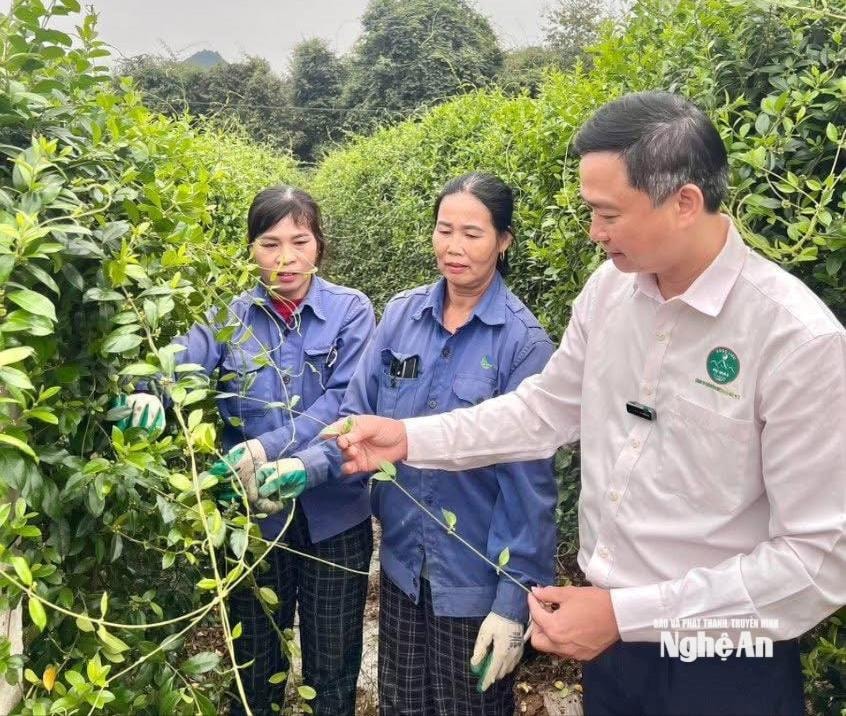
Initial economic benefits have been observed as people switch from traditional crops to medicinal plants. With relatively small land areas and short harvesting times, many households have achieved a stable and higher income than before.
In some buffer zone communes, hundreds of households participate in production linkages, gradually increasing their income, contributing to sustainable livelihoods, and reducing pressure on forest resource exploitation. Besides bringing economic benefits, the development of medicinal plants also helps limit the exploitation of natural forest products, in line with the policy of developing the economy under the forest canopy as outlined in Resolution No. 39 of the Politburo.
The "four stakeholders" linkage and its bridging role .
Despite its great potential, the development of medicinal plants still faces many "bottlenecks": fragmented production, lack of linkages, inconsistent quality, and unstable output. This reality shows that, without reorganizing production into a value chain, the sustainable development of medicinal plants will be difficult.
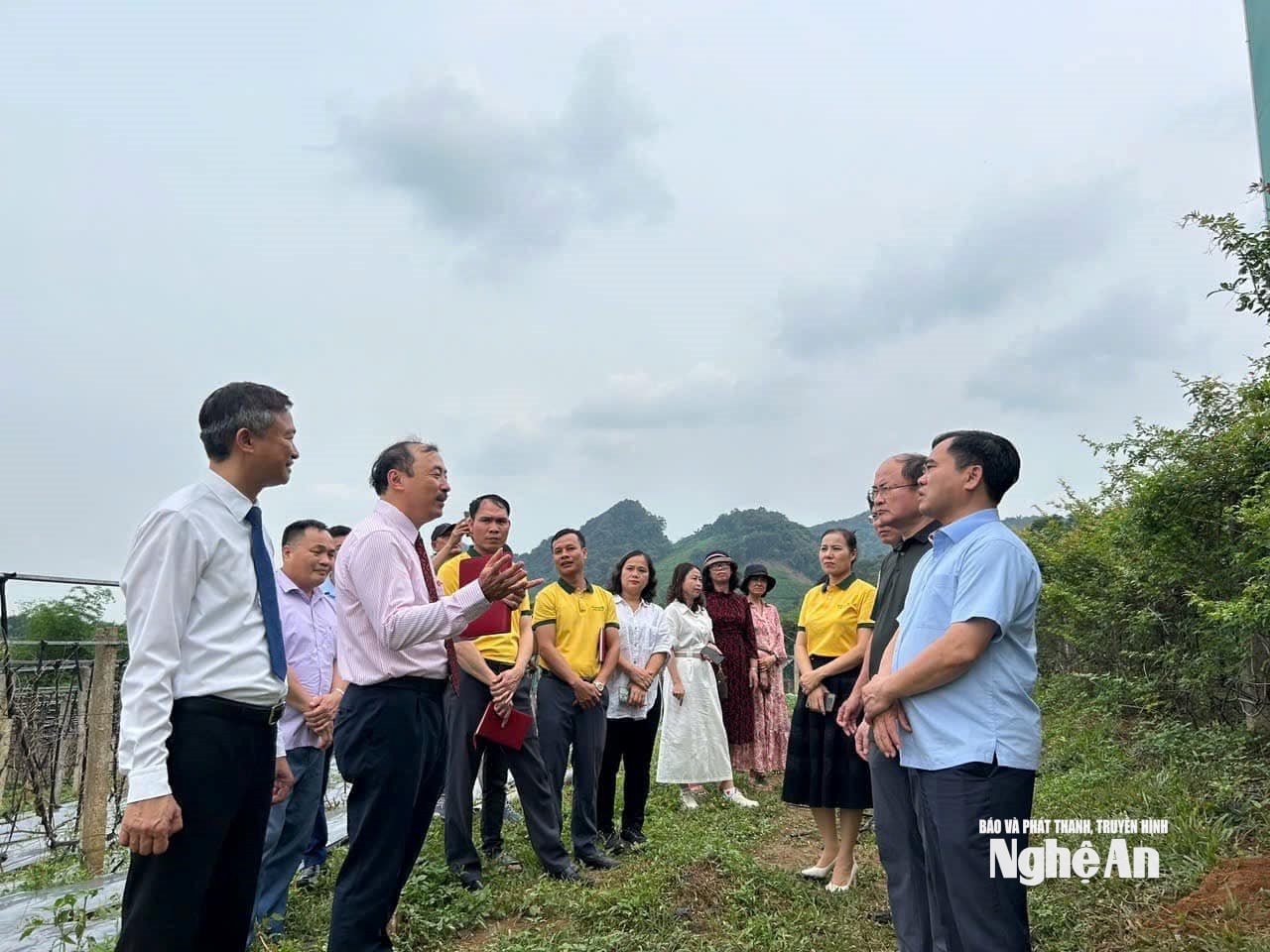
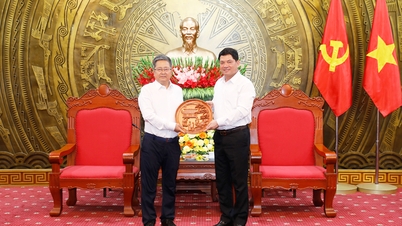
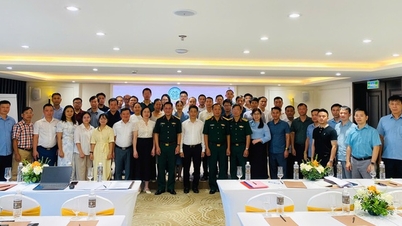
A notable development is the collaboration between Pu Mat Medicinal Herbs Joint Stock Company and Nam Duoc Joint Stock Company, facilitated by the Nghe An Provincial Farmers' Association. This is not just a commercial agreement, but a concrete model of the "four-party" linkage in actual production.
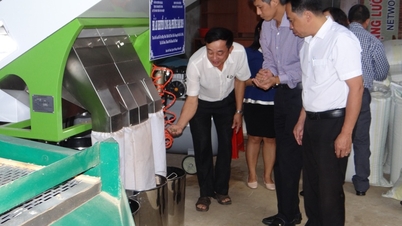
According to the agreement, Pu Mat Medicinal Herbs Joint Stock Company will organize the raw material area, implement planting, caring for, harvesting, and preliminary processing of medicinal herbs in Con Cuong commune. Meanwhile, Nam Duoc Joint Stock Company will provide technical support, develop production processes, train personnel, and guarantee the purchase of standardized products.
.jpg)
A key aspect of this collaboration is the focus on standardizing cultivation areas according to GACP-WHO standards – an international standard for good agricultural and harvesting practices for medicinal plants. This is considered a foundation for improving product quality and gradually integrating medicinal plants more deeply into the value chain.
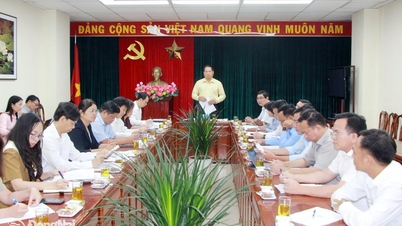
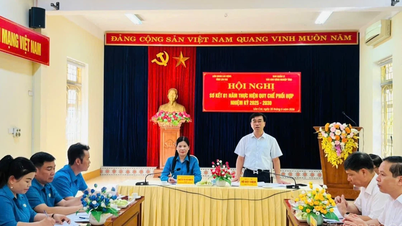
More importantly, behind this collaboration is the coordinating role of the Provincial Farmers' Association. Not only did they organize the signing ceremony, but the Association also participated in disseminating information, mobilizing farmers to participate in chain production, supporting the establishment of production organizations, and coordinating efforts to overcome difficulties during implementation.
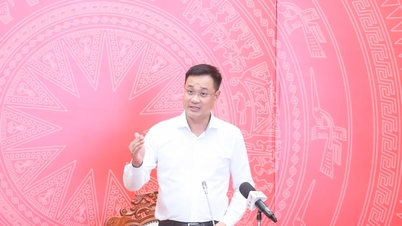
Mr. Nguyen Viet Hung, a member of the Provincial Party Committee and Chairman of the Provincial Farmers' Association, stated: "Promoting the 'four-party' linkage in the field of medicinal herbs helps farmers feel secure in expanding production, improving product quality, and thus increasing income. In reality, with businesses guaranteeing purchase, scientists providing technical support, and the State creating a legal framework, farmers no longer produce in isolation."
.jpg)
At the macro level, the development of medicinal plants is being supported by various policies such as Decision No. 376/QD-TTg on the development of the pharmaceutical industry, along with the medicinal plant planning of Nghe An province. National target programs, especially in mountainous areas, are also creating additional resources to form raw material areas.
However, to effectively capitalize on these opportunities, the key factor remains collaboration. The "four stakeholders" model cannot be formed spontaneously; it requires guidance, coordination, and trust among the entities involved. When strong linkages are established, medicinal plants will not only remain a potential but can become an economic sector providing stable and long-term value.
Source: https://baonghean.vn/lien-ket-4-nha-go-nut-that-vung-duoc-lieu-10336847.html
![[Image] Hanoi's urban life under the challenge of a "scorching hot" environment](https://vphoto.vietnam.vn/thumb/1200x675/vietnam/resource/IMAGE/2026/05/25/1779706979265_nang-nong-t5-2026-minh-duy-7-4636-jpg.webp)



![[Image] Close-up view of the interchange connecting the two expressways and Long Thanh Airport.](https://vphoto.vietnam.vn/thumb/1200x675/vietnam/resource/IMAGE/2026/05/25/1779703378210_ndo_br_z7863716673926-224453a31600126cce10622af6290afd-4549-jpg.webp)



















































































Comment (0)