

Forming large-scale raw material areas
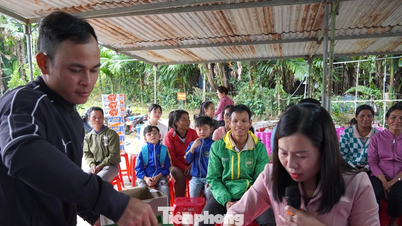
On the morning of December 18th, in Go Quao commune, the An Giang Agricultural Extension Center organized a seminar titled "Linking rice consumption along the value chain to meet MRL standards under the large-scale field project to meet raw material needs and respond to climate change." Over 50 delegates attended, including farmers, cooperatives, specialized agencies, local authorities, and businesses involved in purchasing, processing, and exporting rice.
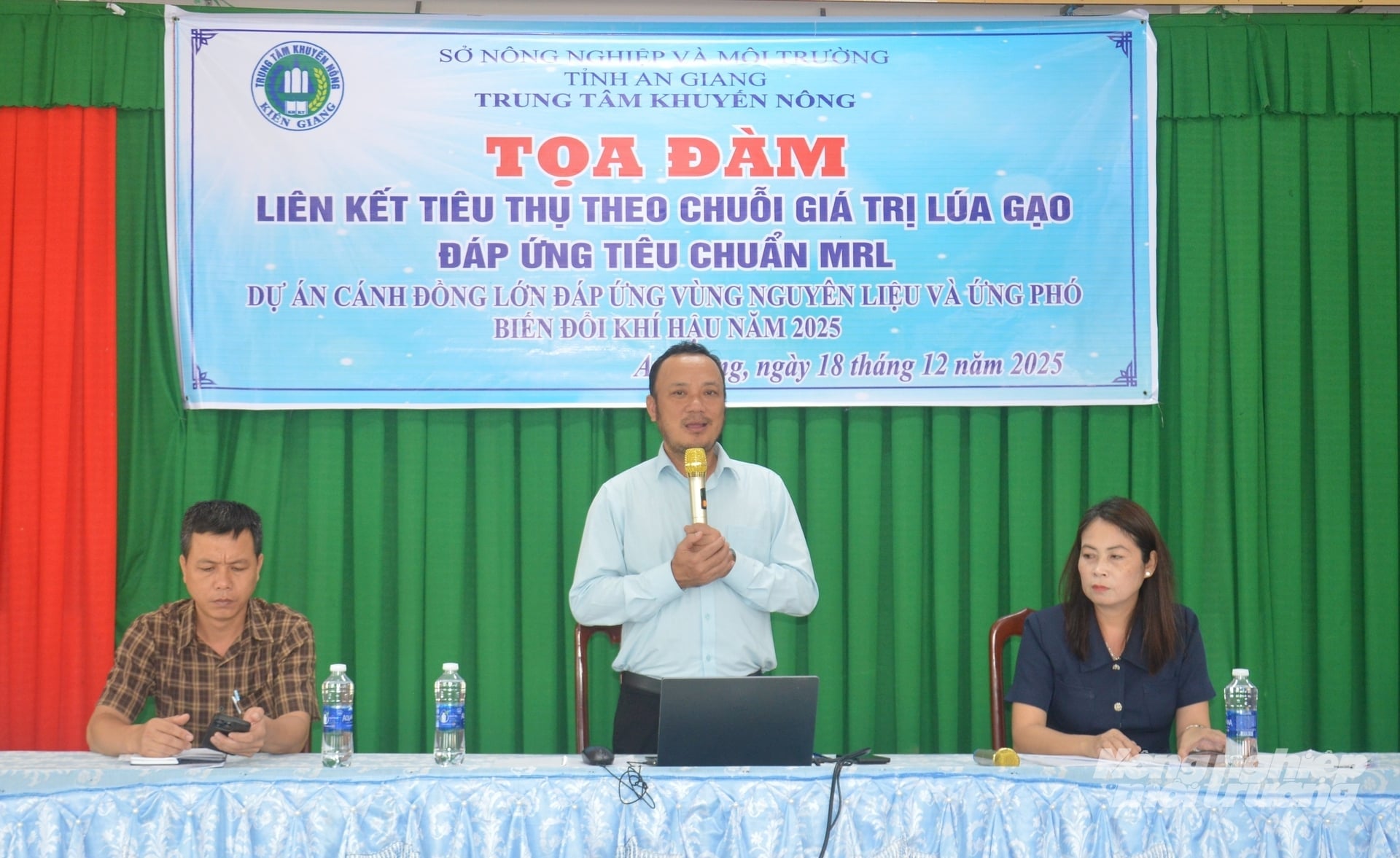
Mr. Le Van Dung, Deputy Director of the An Giang Agricultural Extension Center, provided information about the large-scale rice farming project and value chain linkage for rice meeting MRL standards. Photo: Trung Chanh.
An Giang province has the largest rice cultivation area in the Mekong Delta region, with an estimated 1.3 million hectares planted in 2025, yielding approximately 8.8 million tons of rice, contributing a significant amount to domestic consumption and exports. However, traditional rice farming methods still face many challenges, such as the overuse of chemical fertilizers, excessive nitrogen fertilization leading to increased NO₂ emissions, burning rice straw to produce CO₂, and burying straw in flooded conditions to release CH₄ emissions. In particular, the uncontrolled use of pesticides causes environmental pollution and poses risks to public health.
Meanwhile, the global market is increasingly tightening requirements for traceability, food safety, and maximum residue limits (MRLs). Traditional rice farming practices easily become a barrier to the entire value chain. Based on this requirement, the An Giang Agricultural Extension Center was tasked with implementing the "Large-Scale Rice Farming" project to meet raw material needs and respond to climate change (2022-2025) in order to reorganize production.
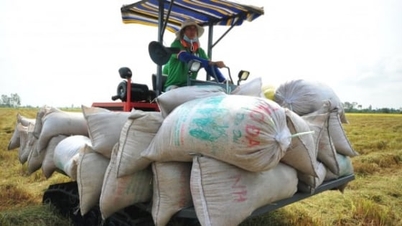
From 2022 to 2025, the project has implemented 5,582 hectares across 73 fields, involving more than 2,000 farming households. Each field has a minimum size of 50 hectares, with some reaching up to 275 hectares. A notable point is that the project prioritizes concentrated production areas with uniform varieties, aiming for large-scale production for export. Simultaneously, it creates conditions for farmer organizations (cooperatives, production groups) to improve their management and operational capabilities, acting as intermediaries in signing and implementing contracts.
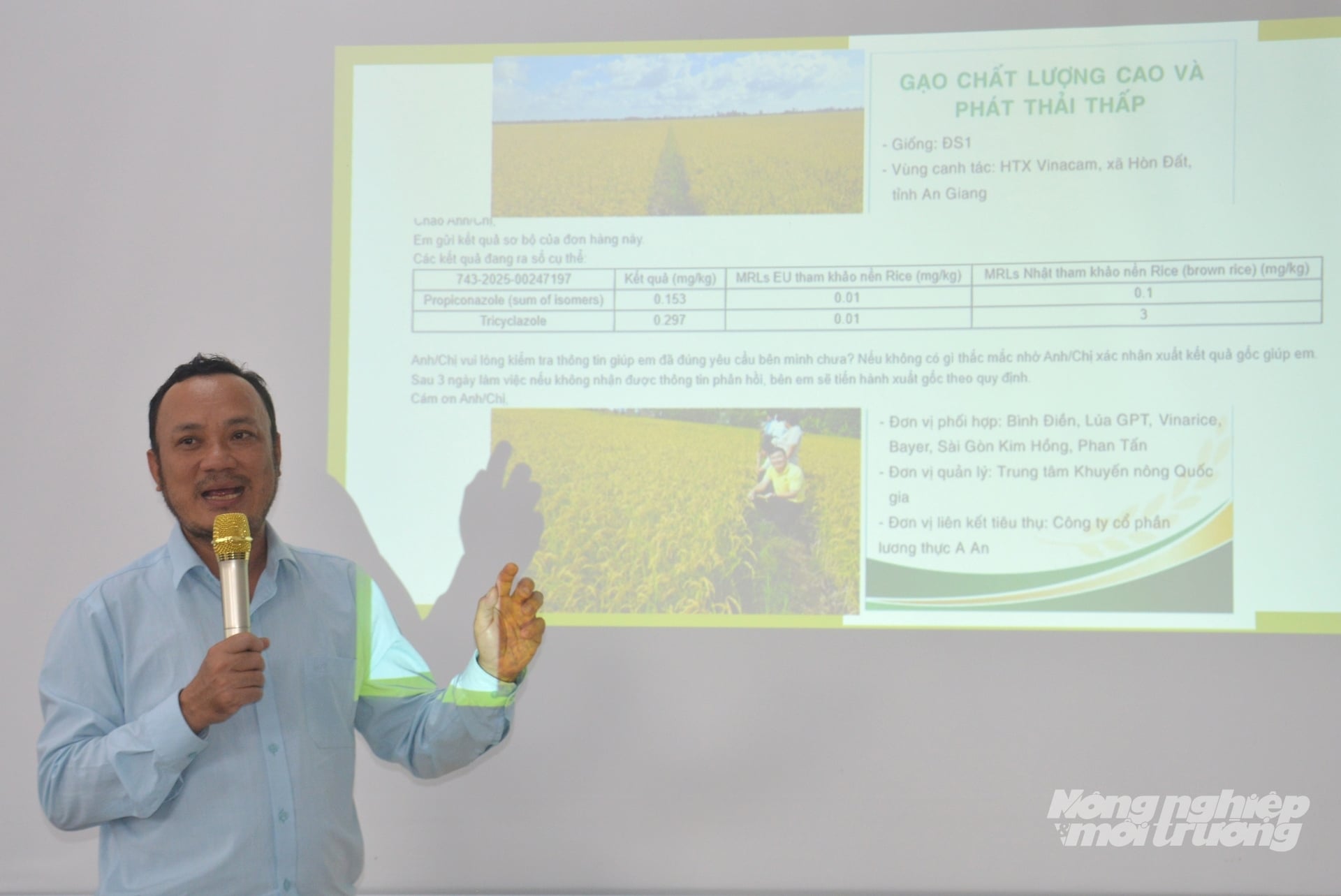
Mr. Le Van Dung, Deputy Director of the An Giang Agricultural Extension Center, presented on the maximum residue limit (MRL) standards for rice raw materials. Photo: Trung Chanh.
According to Dr. Le Van Dung, Deputy Director of the An Giang Agricultural Extension Center, building large-scale rice fields is not simply about merging fields to make them larger, but rather a method of linking farmers - cooperatives - businesses - specialized agencies in a way that follows the same process, the same varieties, the same planting schedule, and the same standards. In other words, if you want rice to reach a wider market, you must start by cleaning up the fields and doing it right from the beginning of the season.
In this model, farmers' organizations are at the heart of the value chain. Farmers voluntarily participate in the organization and commit to applying the correct procedures, controlling inputs from seeds, fertilizers, pesticides, and cultivation techniques, and keeping records. Harvesting at the same time and with a sufficiently large yield is a condition for signing consumption contracts, meeting market requirements, including MRL (Maximum Residue Limit) requirements.
Increased profits by over 6.6 million VND/ha.
The "Large Field" project, implemented by the An Giang Agricultural Extension Center, aims to reorganize production using standardized procedures. Regarding seeds, participating farmers use 100% certified seeds (Grade 1). Priority is given to high-quality varieties such as Dai Thom 8, OM18, DS1, and ST25 (for rice-shrimp farming areas). Sowing density is also tightened; from 2022-2024, it is regulated at 100 kg/ha or less, and by 2025, it will be reduced to 70 kg/ha. Reducing seed usage not only lowers costs but also reduces pest and disease pressure, minimizes pesticide spraying, and effectively meets MRL (Maximum Residue Limit) requirements.
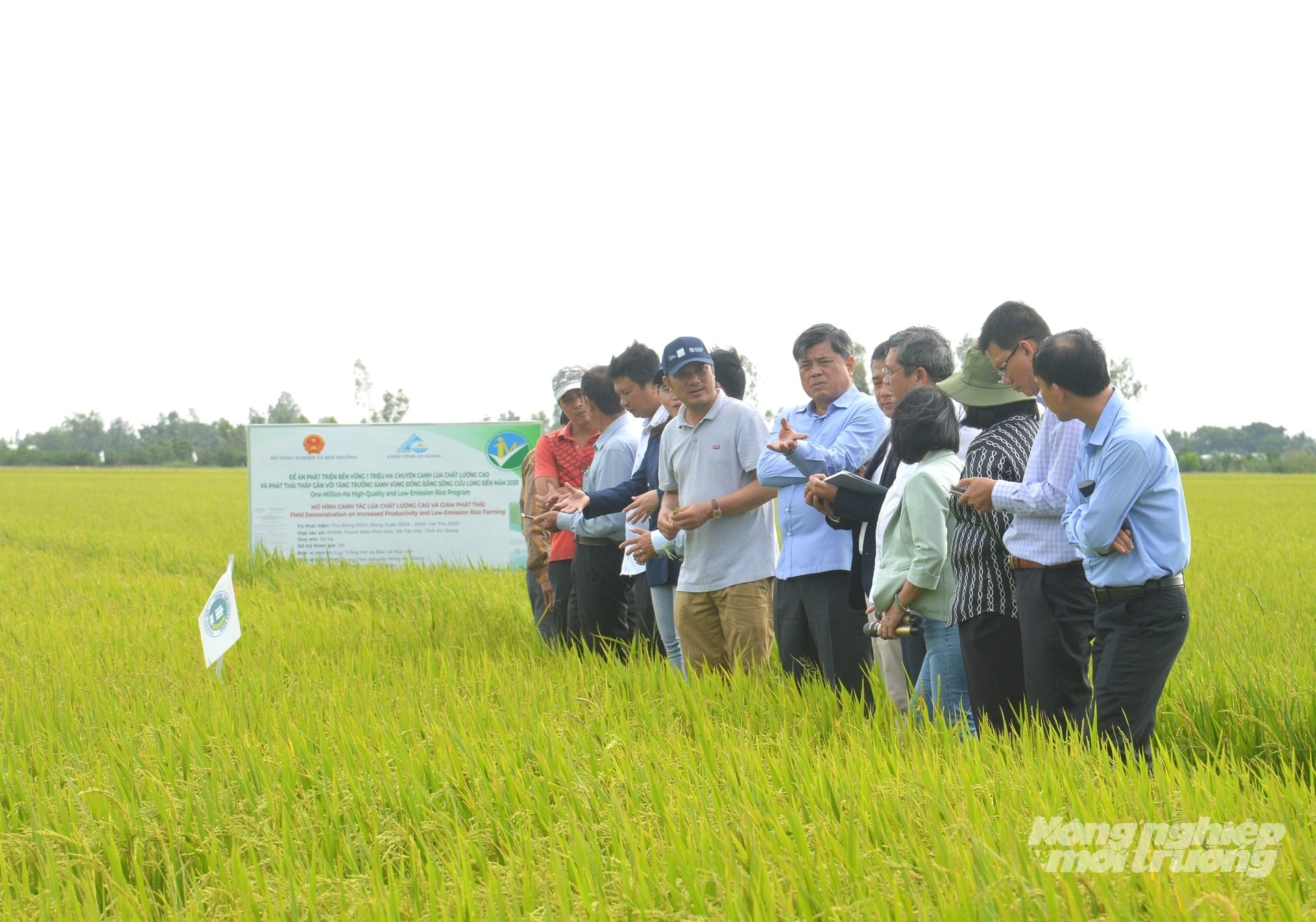
From 2022 to 2025, the An Giang Agricultural Extension Center implemented 73 large-scale farming projects. Photo: Trung Chánh.
Regarding input materials, the project aims to shift from a reliance on chemical fertilizers to the use of bio-organic fertilizers and solutions for straw treatment. From 2022 to 2024, farmers received support in the form of a diverse input package, combining inorganic fertilizers, microbial organic fertilizers, bio-organic fertilizers, and straw treatment products to reduce field burning. This is a suitable approach given that many rice importing markets increasingly prioritize sustainability, traceability, and safety.
In addition, the project applies technology in pest and irrigation management. Specifically, 10 smart pest monitoring stations, incorporating alternating wet-dry (AWD) sensors, have been built in the fields. This system helps identify and statistically analyze pest density, providing warnings and forecasts through management software. Hundreds of AWD sensor tubes have been installed to regulate water levels in the fields.
The project also connects businesses to sign procurement contracts based on the principle of mutual benefit. From 2022 to 2025, the area under linked consumption reached 4,556 hectares. Participating businesses include: Thoai Son Foodstuff Co., Ltd., Nong Phat Dat Co., Ltd., Duc Hiep Investment and Development Joint Stock Company, VinaTech, Dai Duong Xanh Import-Export Co., Ltd., Trung An High-Tech Agriculture Joint Stock Company, etc.
Economic efficiency is the most convincing measure for people to continue maintaining and expanding the model. Thanks to the application of advanced farming processes, farmers reduced costs by an average of about 3.3 million VND/ha and increased profits by more than 6.6 million VND/ha compared to areas outside the model.
Through numerous implementations, the "Large Field" project has helped farmers' groups develop new production habits, follow the same procedures, keep production logs, and establish linked consumption contracts. This forms the foundation for An Giang's rice value chain to move towards the major goal of meeting market demands, increasing farmers' income, and adapting to climate change.
Notably, the project prioritizes concentrated production areas with uniform varieties, aiming for large-scale production for export, while also creating conditions for cooperatives and production groups to improve their management and operational capabilities, acting as key intermediaries in signing and implementing production linkages.
Source: https://nongnghiepmoitruong.vn/lien-ket-chuoi-gia-tri-lua-gao-dap-ung-tieu-chuan-xuat-khau-d790055.html


![[Photo] Prime Minister Pham Minh Chinh attends the Conference on the Implementation of Tasks for 2026 of the Industry and Trade Sector](/_next/image?url=https%3A%2F%2Fvphoto.vietnam.vn%2Fthumb%2F1200x675%2Fvietnam%2Fresource%2FIMAGE%2F2025%2F12%2F19%2F1766159500458_ndo_br_shared31-jpg.webp&w=3840&q=75)





























































Comment (0)