

There are still many "bottlenecks" in the development of cooperative and collective economic models.
In the period of 2021-2025, Nghe An province will establish 200 new cooperatives, including 160 agricultural cooperatives, 35 commercial service cooperatives... The types of cooperatives are diverse, contributing to economic development and social security in the province, especially in ethnic minority and mountainous areas.
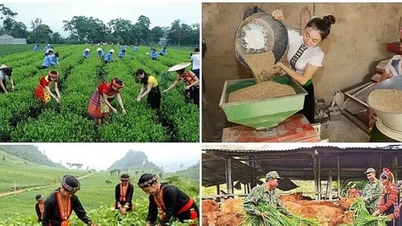
Through the forms of cooperation and association, it has created more conditions for cooperatives, cooperative groups, members and households to have more resources to invest in infrastructure, machinery and equipment for production and processing, expand production scale, improve product quality and connect and expand product consumption markets. There have been many cooperative models in the province that have effectively implemented cooperation and association. In the field of rice production and processing, many cooperatives have effectively cooperated and linked (from providing services, applying mechanization in production, to preservation, connecting consumption, building product brands, etc.) such as: Tho Thanh Agricultural and General Service Cooperative, Lien Thanh Agricultural and Service Cooperative, Minh Thanh Agricultural and Construction Service Cooperative, Dien Dong Agricultural and Service Cooperative, etc. Thanks to the application of new scientific and technological advances, Nghe An province's agricultural products have increased significantly in both quantity and quality, better meeting diverse market needs.
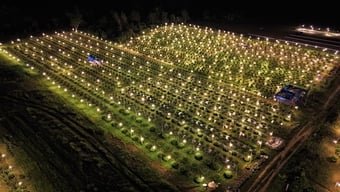
.jpg)
Objectively speaking, despite certain achievements in quantity and diversification, the activities of cooperatives in the province are still facing many barriers and "bottlenecks". Although the number of cooperatives is large compared to the national average, the quality and sustainability of linkage models in Nghe An are still limited. These challenges not only exist in the scale of production but also deeply ingrained in management capacity, linkage thinking and the lack of synchronization of the support system.
Most agricultural cooperatives in Nghe An are small in scale, leading to low production, processing and consumption capacity. Lack of capital and modern processing and primary processing infrastructure makes it difficult for agricultural products to achieve high added value. Although the products are diverse in types, they cannot create competitive strength in the large market and lack uniformity in quantity and quality. Poor post-harvest preservation is also the cause of reduced quality and increased loss of agricultural products.
Cooperation and linkage within cooperatives and between cooperatives in many places are not high. There are still some linkage models that lack sustainability. What is worrying is that many cooperatives, members and households do not fully understand the importance of linkages along the value chain. The mentality of small-scale production, lack of confidence and willingness to participate in linkages, especially multi-cooperative linkages on the same product line (such as rice, tea, medicinal herbs), is still a major barrier. The lack of boldness in investing and linking to carry out common production, processing and consumption tasks has lost the opportunity to create a large enough scale to negotiate with the market and businesses.
In communes such as Huu Kiem, Muong Long, Huoi Tu, Na Loi, Nam Can... many ethnic products such as sticky rice, black chicken, black pig, plum, peach, tea, ginger... are consumed mainly through traditional channels such as markets and traders...
According to local leaders, awareness of product value chains among producers is not high, production scale is small, and does not meet the standards and quality of the associated units. On the other hand, due to the characteristics of the area which is still highly self-sufficient, the market demand for linked chains in production and consumption is not high.
Production, processing and consumption activities of people, cooperatives and enterprises still lack accurate and timely information about the market. Meanwhile, the work of production orientation, planning of concentrated raw material areas, along with the construction of information, statistics and forecasting systems of functional sectors still has many limitations. This shortage leads to passive production, easily falling into a vicious cycle of "good harvest, low price", negatively affecting the trust and participation of members in cooperatives.
Although there are many support policies, some contents are still lacking, inappropriate or impractical in attracting strong participation of enterprises in developing chain linkages. In particular, post-investment support policies, focusing on preliminary processing, processing, labeling, traceability and product preservation, are not strong enough to encourage cooperatives to increase added value and expand markets.
Raising awareness and capacity to connect
To overcome difficulties and effectively develop forms of association and cooperation along the agricultural value chain in Nghe An, there needs to be synchronous and drastic participation, based on a solid institutional foundation and application of science and technology.
First of all, it is necessary to thoroughly grasp Resolution No. 20 of the 13th Party Central Committee and the 2023 Law on Cooperatives to all levels of management and people. Promote diversified propaganda on the role of cooperative economy, to raise awareness and create peace of mind for members when participating in the association. In particular, it is necessary to review and supplement post-investment support mechanisms and policies in a more practical manner. Policies need to focus on the stage of creating added value (preliminary processing, processing, product labeling, traceability) to encourage cooperatives and farmers to focus on investing in forming large-scale commodity production areas, creating a stable source of raw materials for businesses.
Promote the synchronous application of scientific and technological advances to the entire value chain. The achievements of the Fourth Industrial Revolution, biotechnology, mechanization, automation and circular economy must be applied from production, preliminary processing, packaging to processing. Develop a mechanism to encourage investment in large-scale farms, value chain production, and high-tech applications to create safe and quality products. At the same time, continue to promote the registration and management of production area codes, and synchronously apply new technologies to overcome technical barriers of potential export markets.
The key factor is to establish a value chain management ecosystem with a clear division of roles among stakeholders. Party committees and authorities at commune and ward levels must strengthen state management of planning and mobilize people to participate in concentrated production according to planning. Specialized cooperatives must promote their role as focal points for receiving and transferring new technical applications to members.
Pay more attention to training and improving the management and operation capacity of cooperatives. Training should focus on building strategies, production and business plans, and contract negotiation skills. At the same time, it is necessary to raise awareness and capacity for multi-dimensional linkages between farmers, cooperative members, cooperative groups and enterprises to create synchronization and efficiency in production, processing and consumption of products. The ultimate goal is to build a strong, self-reliant collective economic system, contributing to improving the efficiency of agricultural production and value growth rate, effectively implementing the tasks of the National Target Program on socio-economic development of ethnic minority and mountainous areas.
Source: https://daibieunhandan.vn/nghe-an-go-kho-trong-phat-trien-mo-hinh-hop-tac-xa-to-hop-tac-vung-dan-toc-thieu-so-va-mien-nui-10399462.html


![[Photo] 60th Anniversary of the Founding of the Vietnam Association of Photographic Artists](/_next/image?url=https%3A%2F%2Fvphoto.vietnam.vn%2Fthumb%2F1200x675%2Fvietnam%2Fresource%2FIMAGE%2F2025%2F12%2F05%2F1764935864512_a1-bnd-0841-9740-jpg.webp&w=3840&q=75)
![[Photo] National Assembly Chairman Tran Thanh Man attends the VinFuture 2025 Award Ceremony](/_next/image?url=https%3A%2F%2Fvphoto.vietnam.vn%2Fthumb%2F1200x675%2Fvietnam%2Fresource%2FIMAGE%2F2025%2F12%2F05%2F1764951162416_2628509768338816493-6995-jpg.webp&w=3840&q=75)


















































































Comment (0)