

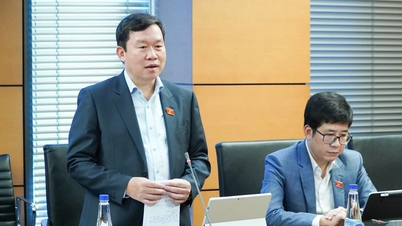
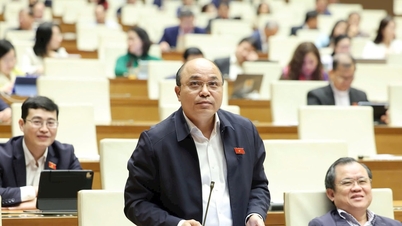
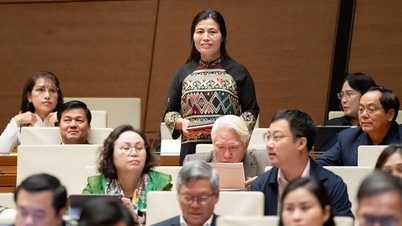
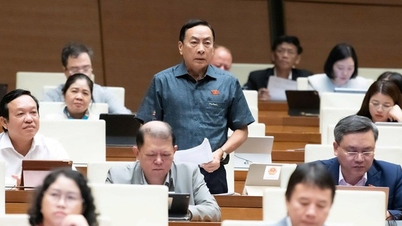
Speaking at the discussion at the Hall on the morning of December 5 about the investment policy of the National Target Program on new rural areas, sustainable poverty reduction, and socio -economic development in ethnic minority and mountainous areas until 2035, Ms. Xo Vi (Quang Ngai delegation) - a female delegate of the special ethnic minority group Brau - emphasized the 3 specific goals of the Program; at the same time, proposed solutions related to the actual situation to be able to successfully implement the goals.
- For goal (1) by 2030 , "The average income of rural people in 2030 strives to increase 2.5 to 3 times compared to 2020. In which, the average income of ethnic minorities is equal to 2/3 of the national average".
Delegate Nang Xo Vi said that currently, the average income of ethnic minority people is still very low compared to the general level. Setting the target of reaching 2/3 of the national average is a challenging but feasible goal, if there is a strong mechanism to promote economic and labor restructuring and mobilize businesses to participate.

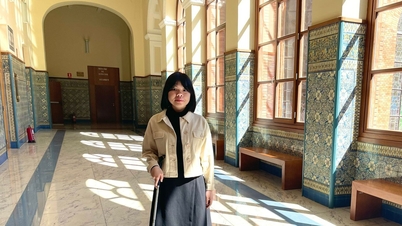
Brau ethnic women. Photo TL
To increase income, according to the female delegate, it is necessary to diversify livelihoods, not only rely on traditional agriculture but also develop OCOP, forest economy, community tourism, border trade economy, and craft villages. At the same time, improve the quality of human resources, increase vocational training, digital skills, and connect the labor market so that ethnic minority youth do not only work in agriculture.
In particular, it is necessary to create incentives to attract businesses to disadvantaged areas with reasonable and transparent incentive policies and mechanisms to protect people's rights.
"If we do not change the endogenous development model, it will be very difficult for us to narrow the gap between rich and poor. Therefore, we need to evaluate this goal based on many other aspects," delegate Nang Xo Vi emphasized.
- For goal (2) by 2030 , "The multidimensional poverty rate of the whole country will maintain a reduction of 1% to 1.5%/year, striving for the multidimensional poverty rate in ethnic minority and mountainous areas to fall below 10%; the multidimensional poverty rate in poor communes will decrease by at least 3%/year".
Delegate Nang Xo Vi said that this is an essential and core goal. The delegate said that we are not only aiming to "escape poverty in terms of income", but also aiming to escape poverty in terms of access to basic social services such as education , health care, housing, clean water, information, and insurance.
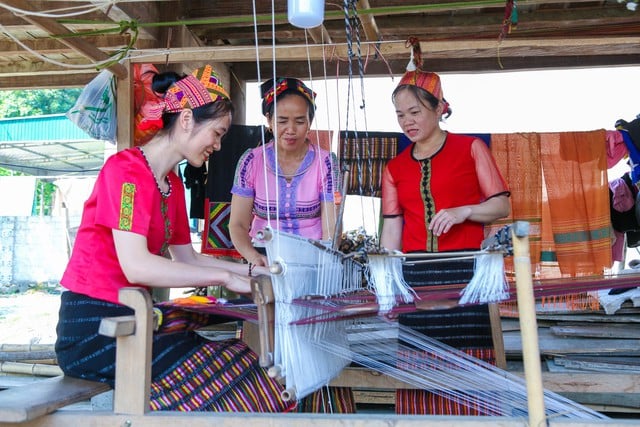
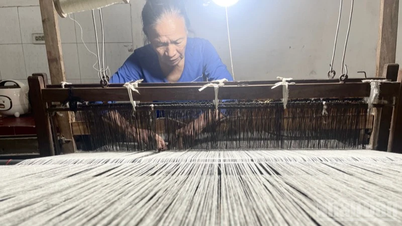
Preserving and developing the brocade weaving craft of the Thai ethnic group in Nghe An contributes to socio-economic development, sustainable hunger eradication and poverty reduction. Photo: dantocmiennui.vn
"Multidimensional poverty is poverty in terms of development opportunities. Setting a target of less than 10% by 2030, in the current context, demonstrates the strong political commitment of the Party and State to not leave anyone behind. However, to achieve this goal, simple social security support will not be enough; it is important to create sustainable livelihoods, shift from support to providing fishing rods, expand non-agricultural employment, develop the green economy, community tourism and commercial agriculture," the delegate analyzed.
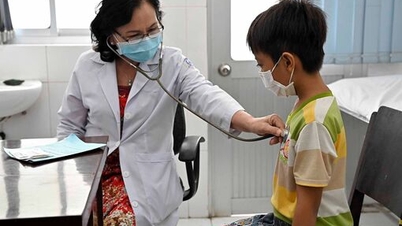
In addition, according to the female representative of the Brau ethnic group, it is necessary to reduce the shortage of education and health services, ensuring that 100% of ethnic minorities and poor people in ethnic minority and mountainous areas have health insurance and access to free basic health services; at the same time, it is recommended that the Government review and unify the way to regulate this indicator in the documents of the Program. "If we do not solve the shortage of education, health care and infrastructure, people will continue to fall back into poverty," the representative affirmed.
- For goal (3) by 2030 "Strive for 100% of poor communes nationwide to escape poverty; ethnic minority and mountainous areas to basically have no more particularly difficult communes and villages".
Delegate Nang Xo Vi assessed that this is a goal that goes directly to the biggest bottlenecks - the "development depressions". Poor communes and especially disadvantaged villages are often places with insufficient infrastructure, scattered populations, limited access to public services, and are vulnerable to natural disasters and climate change.
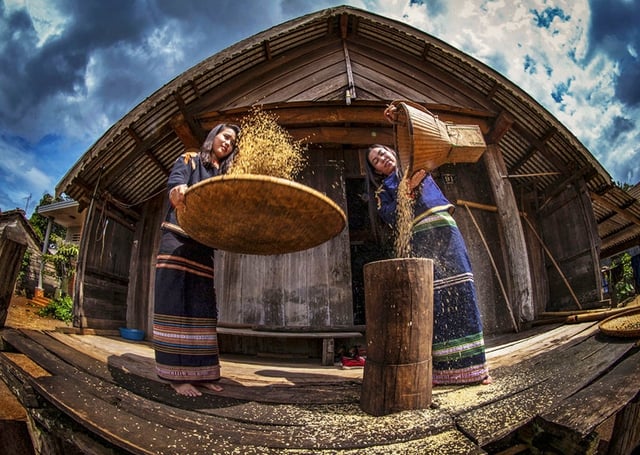
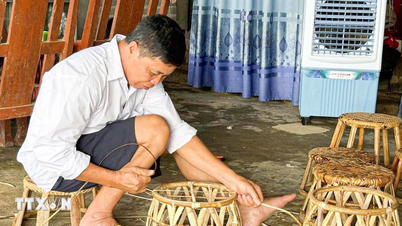
Promoting the spirit of self-reliance and self-improvement of ethnic minorities in the Central Highlands is a key factor to bring about sustainable efficiency in socio-economic development. Photo: nhiepanhdoisong.vn
"This is a high goal, we are still struggling. Because many poor communes are associated with historical factors, difficult geographical locations and unfavorable natural conditions. Therefore, it is necessary to invest with focus, key points, prioritizing essential infrastructure such as roads, water for daily life, schools, medical stations, internet - instead of investing in scattered, fragmented areas. The program has mentioned the principle of focused, key investment, aiming for sustainable efficiency and is completely correct," the delegate affirmed.
From a personal perspective, analyzing the actual situation, in order for the National Target Program on new rural construction, sustainable poverty reduction and socio-economic development in ethnic minority and mountainous areas to achieve the set targets, the female delegate of the Brau ethnic group proposed 4 solutions, which are: Focused investment, focusing on essential infrastructure in the most difficult communes and villages. Prioritizing resources for education - health - digital infrastructure because this is a decisive factor in sustainable poverty reduction. Building independent and transparent monitoring tools, digital transformation in governance to avoid escaping poverty on paper. Promoting the role of the people as subjects, giving the community the right to monitor and participate.
Source: https://phunuvietnam.vn/nu-dai-bieu-brau-hien-ke-giam-ngheo-ben-vung-cho-dong-bao-dan-toc-thieu-so-238251205163546328.htm

![[Photo] National Assembly Chairman Tran Thanh Man attends the VinFuture 2025 Award Ceremony](/_next/image?url=https%3A%2F%2Fvphoto.vietnam.vn%2Fthumb%2F1200x675%2Fvietnam%2Fresource%2FIMAGE%2F2025%2F12%2F05%2F1764951162416_2628509768338816493-6995-jpg.webp&w=3840&q=75)

![[Photo] 60th Anniversary of the Founding of the Vietnam Association of Photographic Artists](/_next/image?url=https%3A%2F%2Fvphoto.vietnam.vn%2Fthumb%2F1200x675%2Fvietnam%2Fresource%2FIMAGE%2F2025%2F12%2F05%2F1764935864512_a1-bnd-0841-9740-jpg.webp&w=3840&q=75)















































































Comment (0)