

"First the capital, second Pho Hien" , the familiar song affirms the special position of Hung Yen , which used to be a bustling ancient urban area, second only to Thang Long citadel during the 16th - 17th centuries.
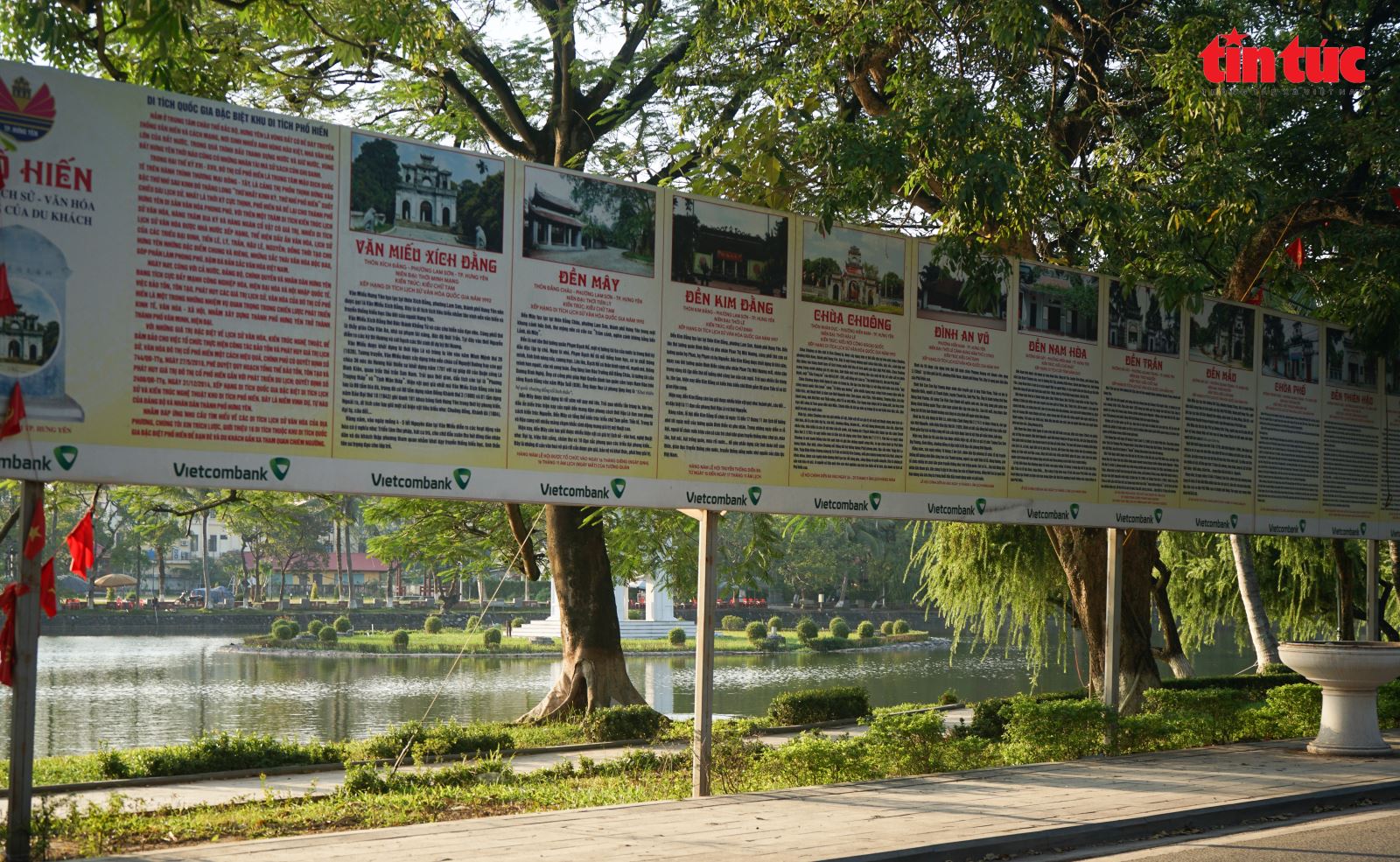
Pho Hien relic site, Hung Yen is ranked as a special national "Historical, Cultural and Architectural Relic".
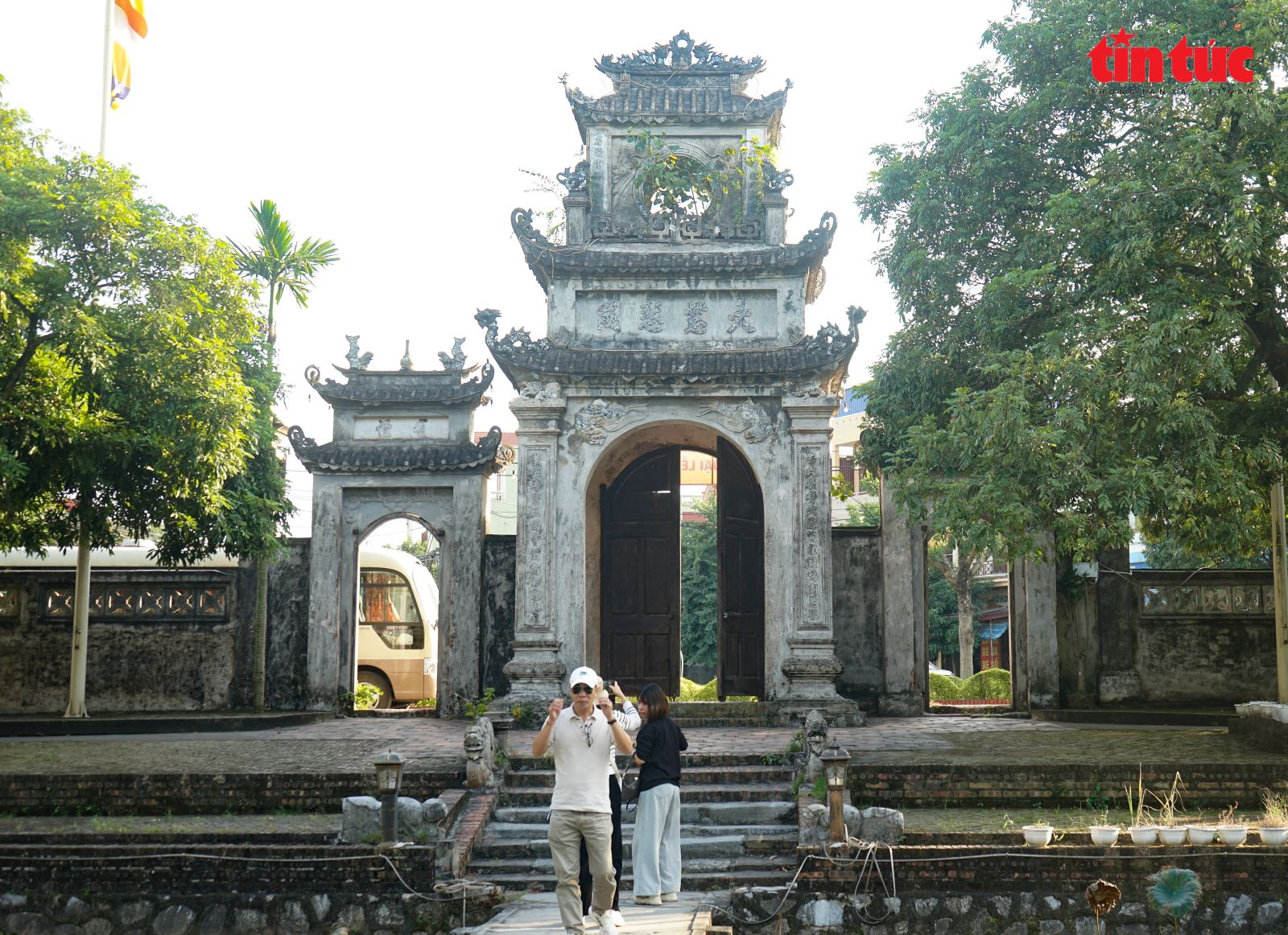
Every year, many people and tourists visit the relic sites.
Today, that golden mark is still preserved at the Pho Hien National Special Relic Site, a complex that concentrates many relics with outstanding historical, cultural and architectural values, and at the same time possesses great potential for tourism development. In 2014, this place was ranked as a "Special National Historical, Cultural and Architectural Relic".
The complex consists of 17 typical relics, creating a rich cultural space, namely: Xich Dang Temple of Literature, Chuong Pagoda, Mau Temple, Tran Temple, Hien Temple - Temple, Pho Pagoda, Ne Chau Pagoda, Thien Hau Temple, Vo Temple, Dong Do Quang Hoi - Thien Hau Palace, May Temple, Cuu Thien Huyen Nu Temple, Ba Chua Kho Temple, An Vu Temple, Kim Dang Temple, Nam Hoa Temple and Tra Temple.
Pho Hien Stele System - a treasure trove of documentary heritage submitted to UNESCO
Ms. Nguyen Hai Yen, tour guide, officer of the Monument Management Board of Hung Yen province, said that based on the remaining Han Nom documents, Pho Hien was formed and developed very early, around the 13th century. The most prosperous period of this land was in the 16th - 17th centuries. At that time, thanks to the open-door policy of the Le and Trinh feudal governments, which allowed foreign merchants to trade with the capital and neighboring areas (although not allowed to settle permanently), Pho Hien quickly became a bustling international trading port.
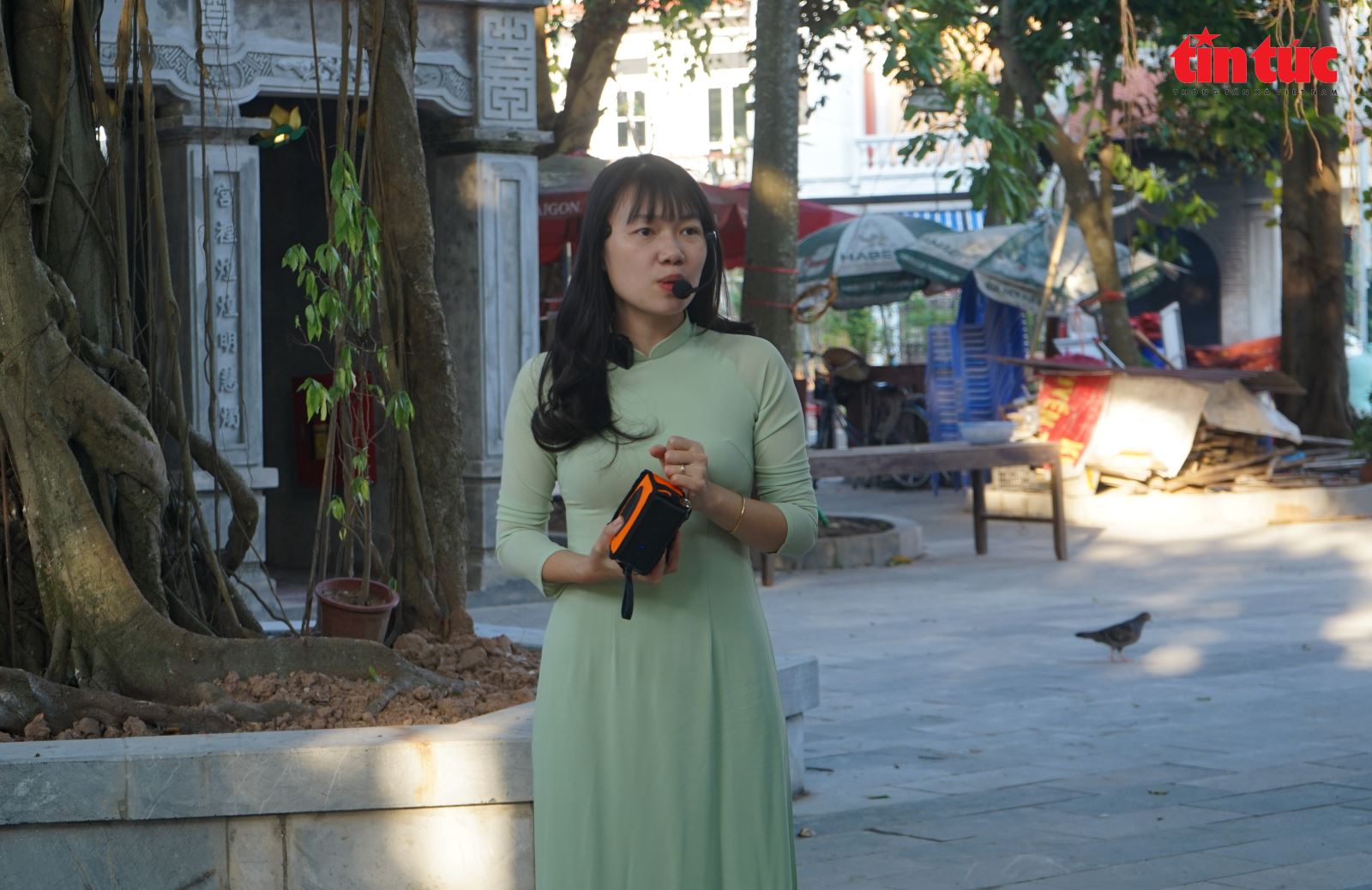
Ms. Nguyen Hai Yen, tour guide, officer of the Monuments Management Board of Hung Yen province, introduced the unique features of the monuments.
The geographical advantage of being near the Thang Long citadel, and being the intersection of many large rivers, river mouths and seaports, has turned Pho Hien into a gathering place for foreign merchants. They came here to trade, expand their business, and at the same time brought with them architectural works, beliefs, and worship customs typical of their homeland, enriching the local cultural life.
However, in the following centuries, natural changes such as the Red River changing its course and silting up its channels made it difficult for merchant ships to dock; along with the effects of war and historical changes, Pho Hien gradually lost its position as a prosperous commercial port and quickly declined. Today, only ancient relics remain, testifying to a period of prosperity in Pho Hien. Among them, many relics bear the mark of ancient Chinese cultural and architectural exchange, and especially still preserve many systems of artifacts, stone steles, and valuable historical documents.
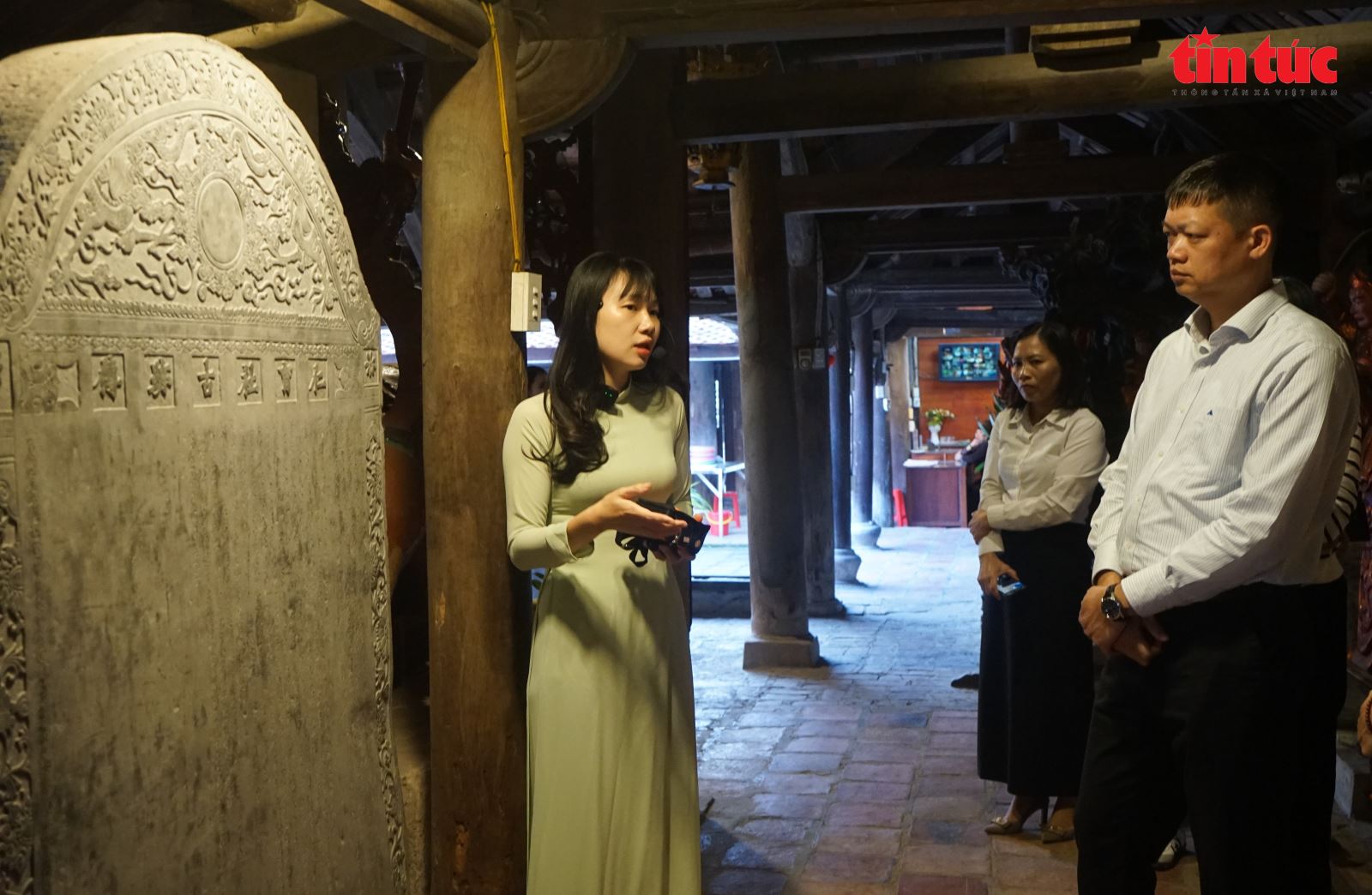
The most beautiful and oldest stone stele at Chuong Pagoda (in Pho Hien Relic Site) is still preserved today.
Recently, the Department of Culture, Sports and Tourism of Hung Yen province has completed the scientific dossier for the Pho Hien Stele System, submitting it to UNESCO for recognition as a Documentary Heritage of the Asia- Pacific region.
This system consists of 41 steles, a treasure trove of valuable documents in Chinese and Nom characters, with a large quantity, rich content and unique expression. The steles also preserve ancient literary forms, combined with diverse decorative carvings, dating from the 17th to the 20th century, distributed at the relics of the Pho Hien National Special Relic Site. This is an invaluable source of historical documents in the treasure trove of Vietnamese steles, considered a "living encyclopedia" of the history and culture of Pho Hien land.
Ms. Nguyen Thi Thu Huong, Director of the Monuments Management Board of Hung Yen province, said: Since July 2025, the dossier has been completed and submitted to the Ministry of Culture, Sports and Tourism... By October 2025, the dossier has been preliminarily reviewed, meeting the conditions for the Asia - Pacific region to meet and officially review in 2026.
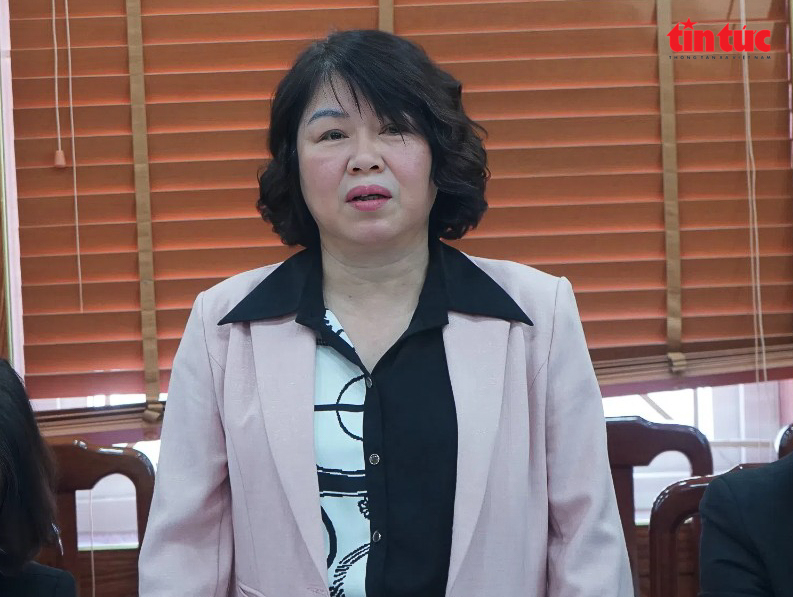
Ms. Nguyen Thi Thu Huong, Director of the Monuments Management Board of Hung Yen province.
Last July, a delegation of Documentary Heritage experts from the UNESCO Memory of the World Program came to Hung Yen to survey and advise on the nomination dossier for the inclusion of the Pho Hien Stele System in the Memory of the World List for the Asia-Pacific region.
According to the Director of the Monuments Management Board of Hung Yen province, in July 2025, the UNESCO Regional Representative Office sent experts to attend a meeting in Hanoi. After that, the Department of Culture, Sports and Tourism of the province also invited experts from Denmark and the US to directly survey the Pho Hien stele system in Hung Yen province.
Experts have made many recommendations regarding preservation plans after the records were honored. For example, the steles still inside the walls of the relics need to be taken out and have appropriate preservation measures. Taking into account these opinions, the Relic Site Management Board has implemented the work of protecting the steles at Chuong Pagoda, Tran Temple, Mau Temple, etc.; arranging a separate location for preservation, at the same time creating favorable conditions for tourists and researchers to visit and learn.
"Telling stories" of ancient cities
Known as the "first scenic spot" and the pride of Hung Yen people, Chuong Pagoda has existed for centuries, affirming its special position in the cultural and spiritual life of Pho Hien region.
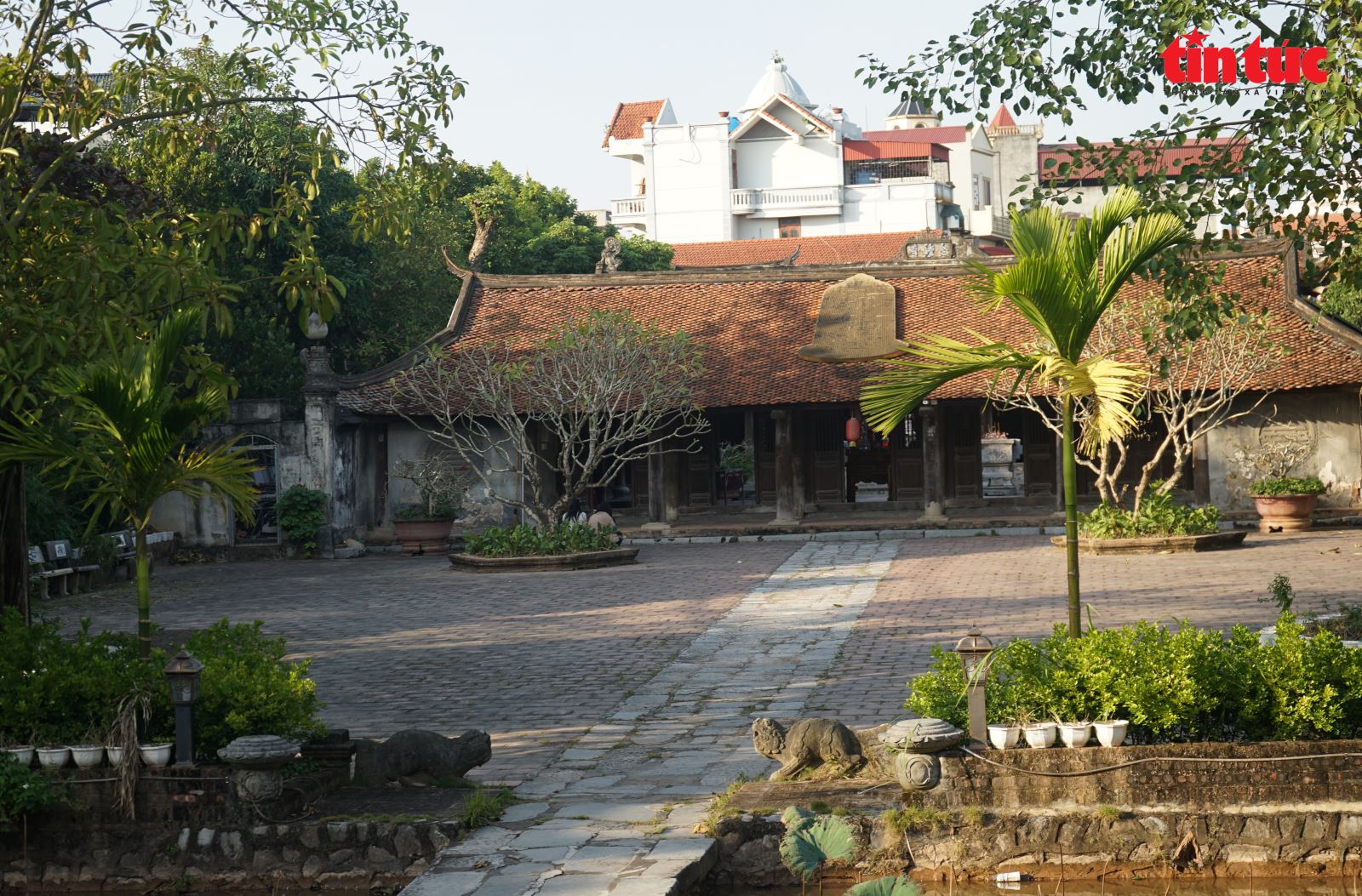
The temple was built quite early and underwent a major restoration in 1702. To date, the items and architecture are kept almost intact.
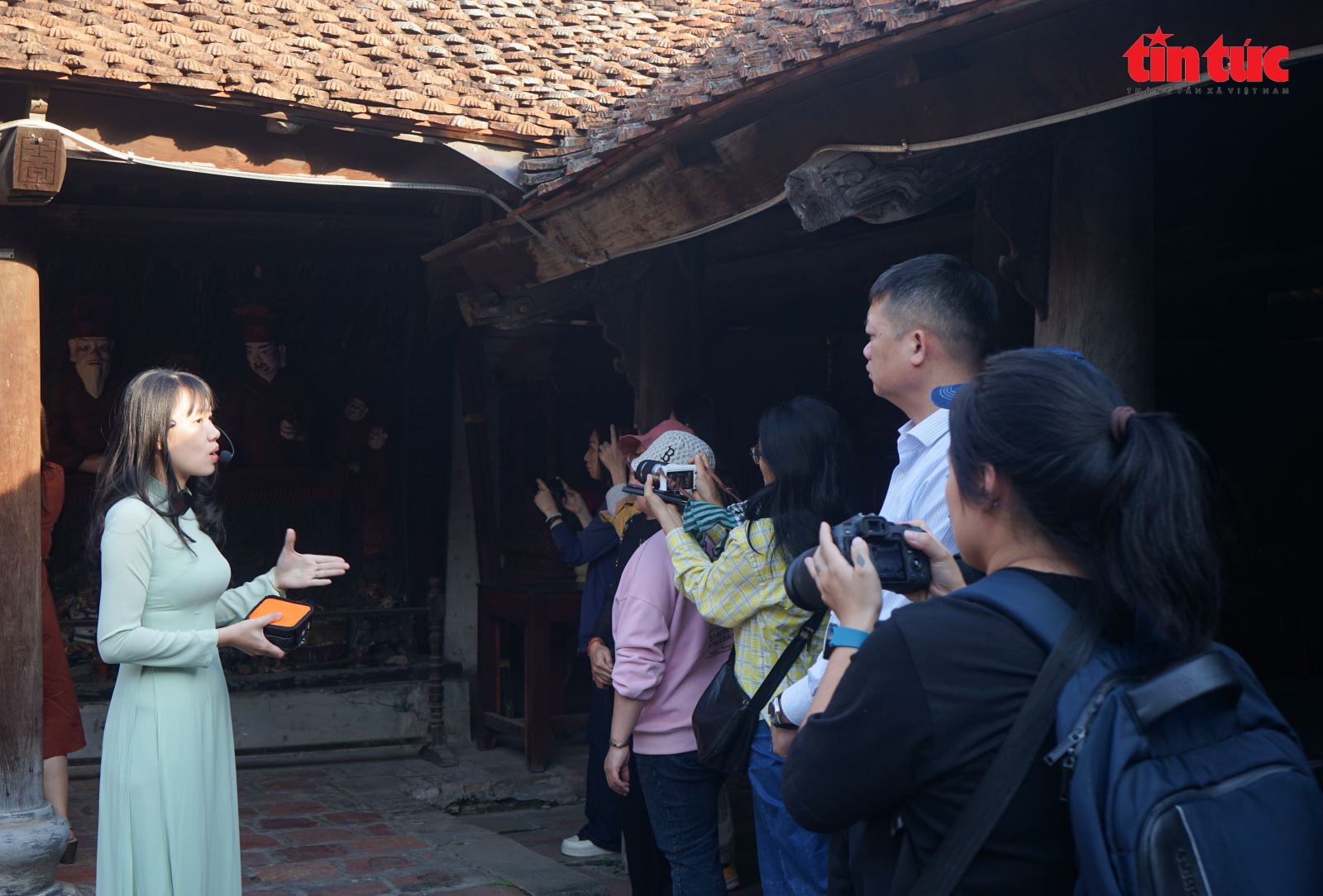
Chuong Pagoda is not only famous for its ancient and quiet appearance, but also for its folk stories and unique architectural layers that arouse curiosity in locals and tourists every time they visit.
The relic site tour guide Nguyen Hai Yen said that the Bell Pagoda (Kim Chung Tu) is one of the typical relics in the Pho Hien Special National Relic Site, recognized in 2014. The reason it is called the Bell Pagoda is because it is associated with the legend of the Golden Bell.
“In the past, there was a golden bell placed on a wooden raft, floating on the river and the golden bell drifted through many areas. People told each other to pull it back but failed and finally the golden bell drifted down to Nhan Duc village, Hien Nam ward (now Pho Hien ward)...”, Ms. Hai Yen said.
The Chuong Pagoda was built quite early, associated with the legend of the golden bell. In 1702 and 1711, the pagoda was extensively renovated on a large scale and completely bearing the architectural mark of the Later Le Dynasty. The pagoda has a continuous "Inner Public and Outer National" structure, with "Four Waters Returning to the Road" including many items arranged symmetrically and harmoniously on the axis of symmetry from Tam Quan to Mau House.
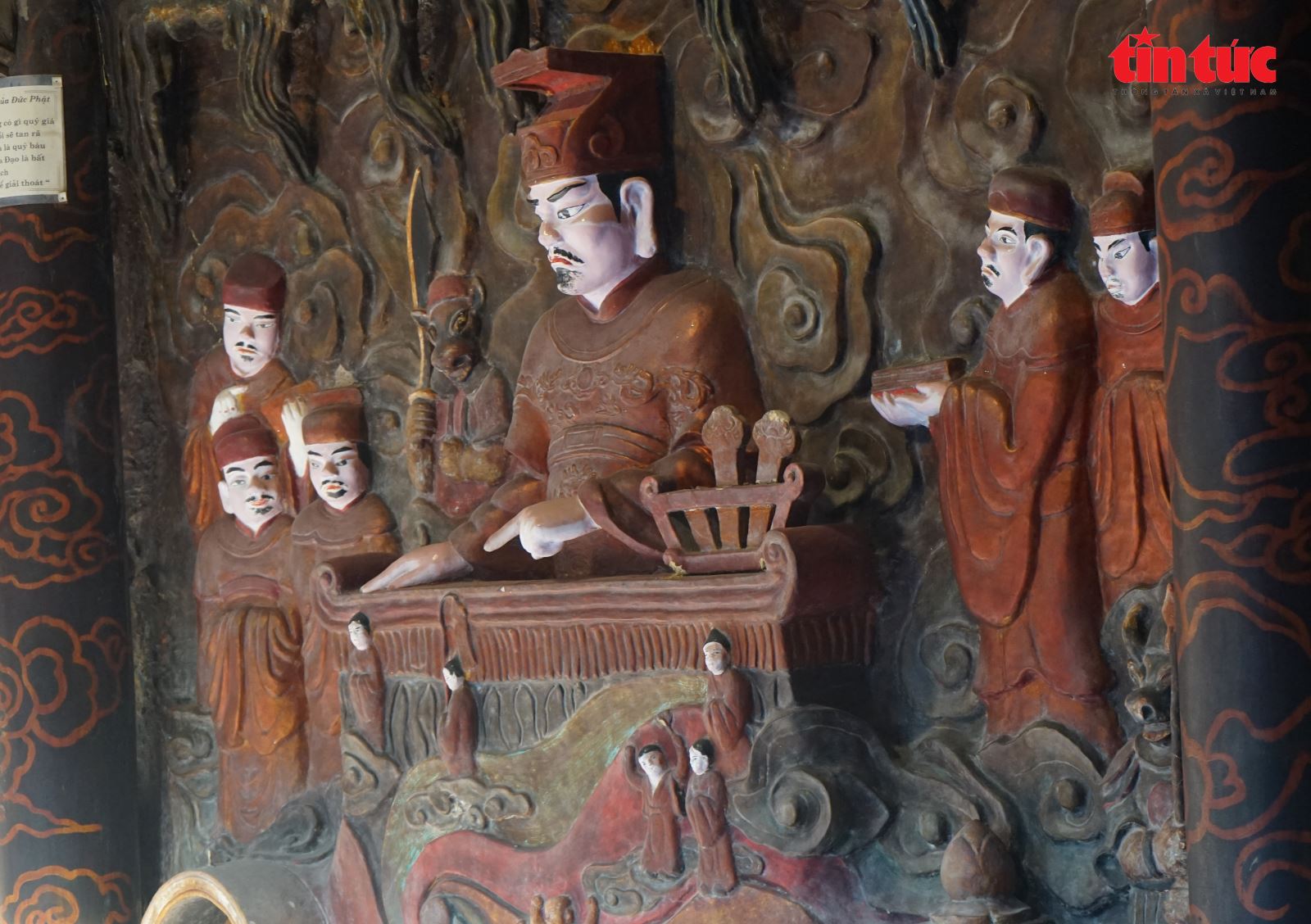
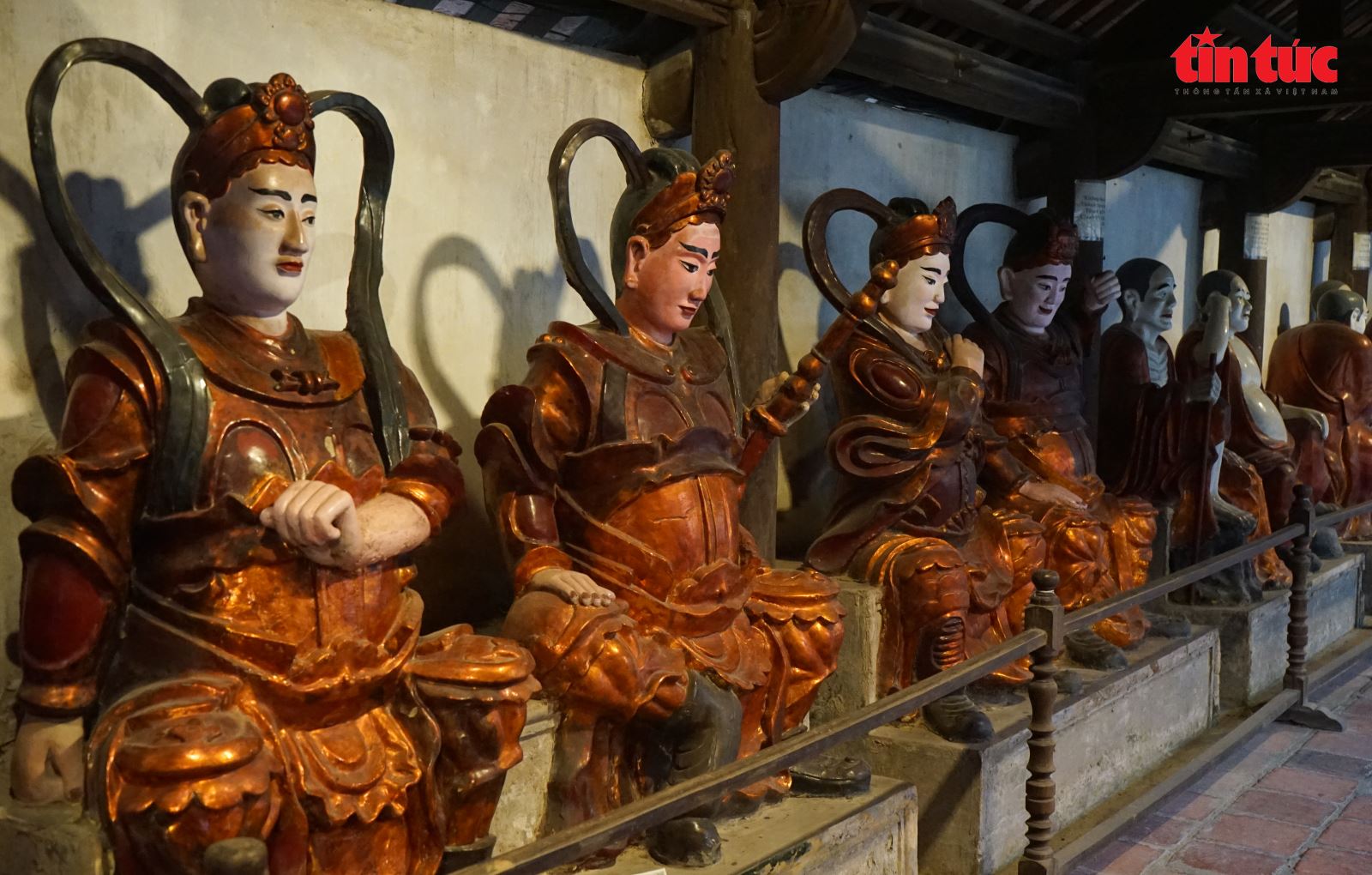
The system of Buddha statues has high artistic and historical value, notably the Eight Vajrapani, 18 Arhat statues, 4 Bodhisattva statues... running along two corridors.
Not only famous for its legend, the Chuong Pagoda is also known for its rich system of Buddha statues, arranged symmetrically along two corridors. “All the statues are made of clay. After many floods and storms, they are still almost intact. Most notable are the 10 reliefs of the Ten Kings of Hell, depicting the ten gates that people must face when returning to the underworld, each gate corresponding to a different merit or sin…”, Ms. Hai Yen shared.
As a relic bearing the architectural imprint of the Later Le Dynasty, Chuong Pagoda still preserves many precious relics: a stone incense tree, a stone bridge built in 1702 and especially a stone stele erected in 1711, one of the two oldest remaining steles in Pho Hien... The statues are crafted very elaborately and skillfully, each statue has its own posture, appearance and different expressions. The wooden relief of the Ten Kings of Hell depicts the scene of Tang Monk going to get the scriptures, the scene of hell on earth on both sides of the corridor advises each person to cultivate himself and accumulate more virtues.
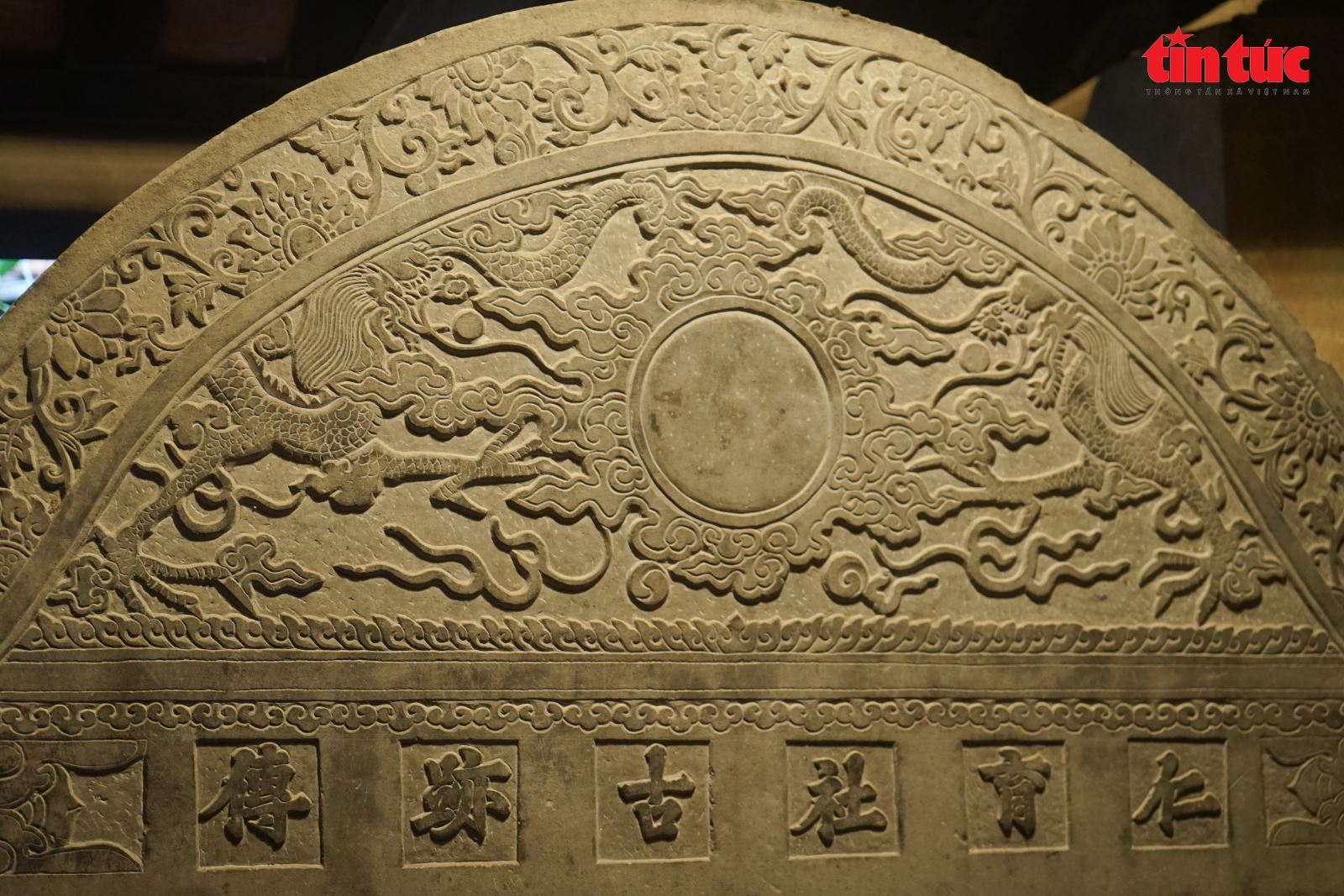
Ancient stele at Keo Pagoda, recording the restoration process and prosperous development period of Pho Hien.
In particular, the pagoda also preserves the most beautiful stone stele of Pho Hien. The stone stele is engraved with Chinese characters on both sides, not only recording the process of restoring the pagoda but also reflecting the prosperous period of Pho Hien trading port. "The carvings on the forehead and body of the stele are still sharp, showing the exquisite craftsmanship of ancient artisans. This stele also clearly states that if Thang Long had 36 streets, then Pho Hien in the past also had 25 wards," said Ms. Yen.
The Mother Temple is also one of the most typical relics of Pho Hien, located along the poetic Crescent Lake, in front of the Red River and Ben Da, where domestic and foreign merchant ships used to dock for trade during the prosperous Pho Hien period. The temple worships Yang Guifei of the Song Dynasty (China), built in 1279 under the Tran Dynasty.
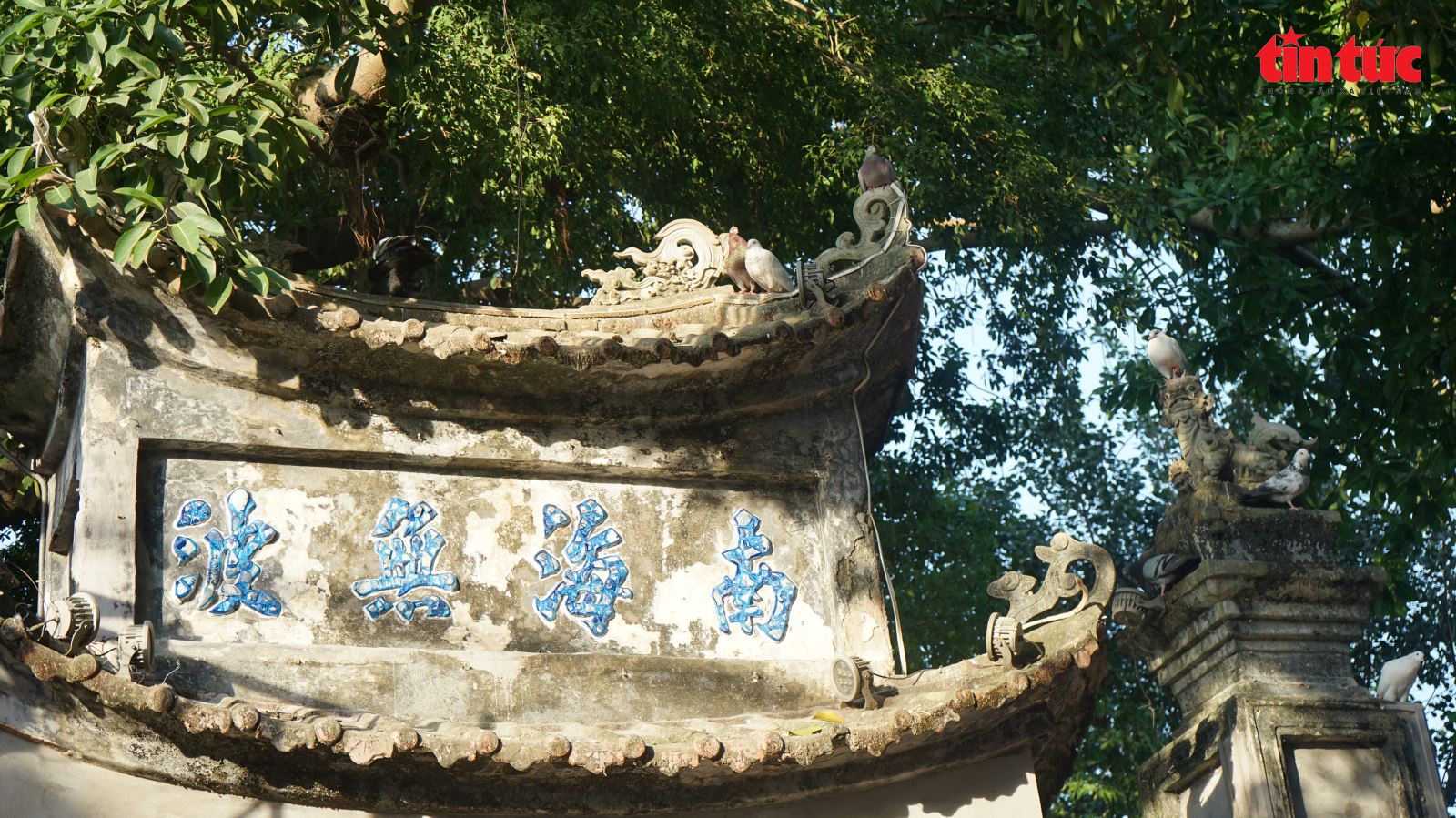
Mau Temple is also one of the most typical relics of Pho Hien.
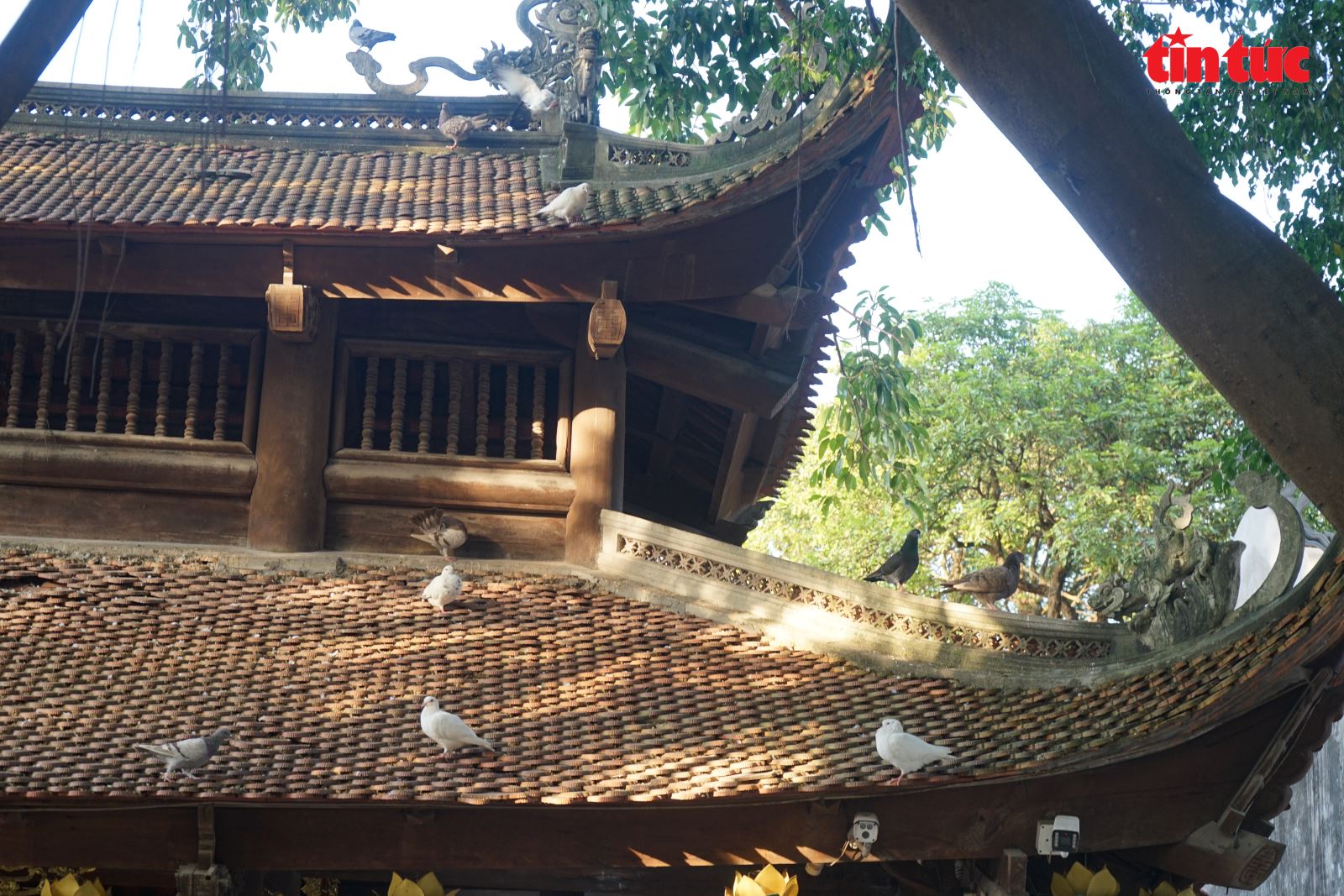
Visitors to the temple are impressed by the ancient architecture, the surrounding landscape with flocks of pigeons perched on the temple roof...
Ms. Nguyen Hai Yen, an officer of the Monument Management Board of Hung Yen province, said that through many historical ups and downs, Mau Temple still retains almost intact its ancient architectural system. After a major restoration in 1896, the temple has fully preserved its items: the main worship hall, the first palace, the second palace, the third palace, the rear palace, the forbidden palace... All hidden under the shade of a nearly 800-year-old tree, creating a sacred space typical of Pho Hien.
The unique feature is the rare “one trunk, three roots” tree, created from three types of trees: banyan, green, and ficus. Legend has it that in the past, in front of the temple there was an ancient banyan tree. Birds carried seeds from the three trees and dropped them down, which took root and combined to form a sturdy trunk like a tripod, symbolizing the longevity of the temple.
Presently, the Mau Temple still preserves many precious antiques, notably the Bat Cong palanquin (8 arms) and That Cong palanquin (7 arms), and unique carved works of art from the Later Le period. In addition, there is a system of valuable worship objects: 15 royal decrees, dragon beds, dragon tables, palanquins, acupuncture books... bearing the bold Le - Nguyen art style.
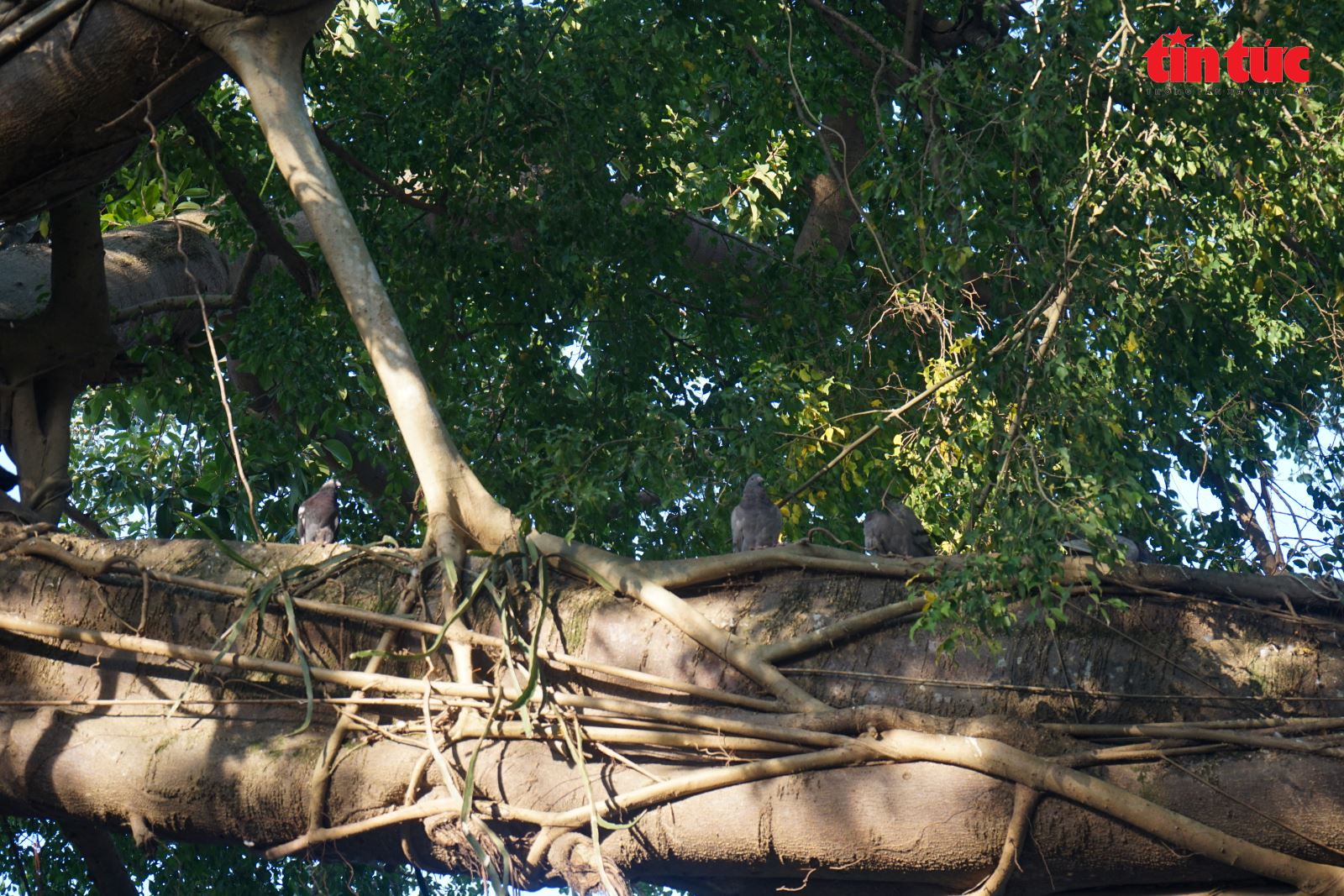
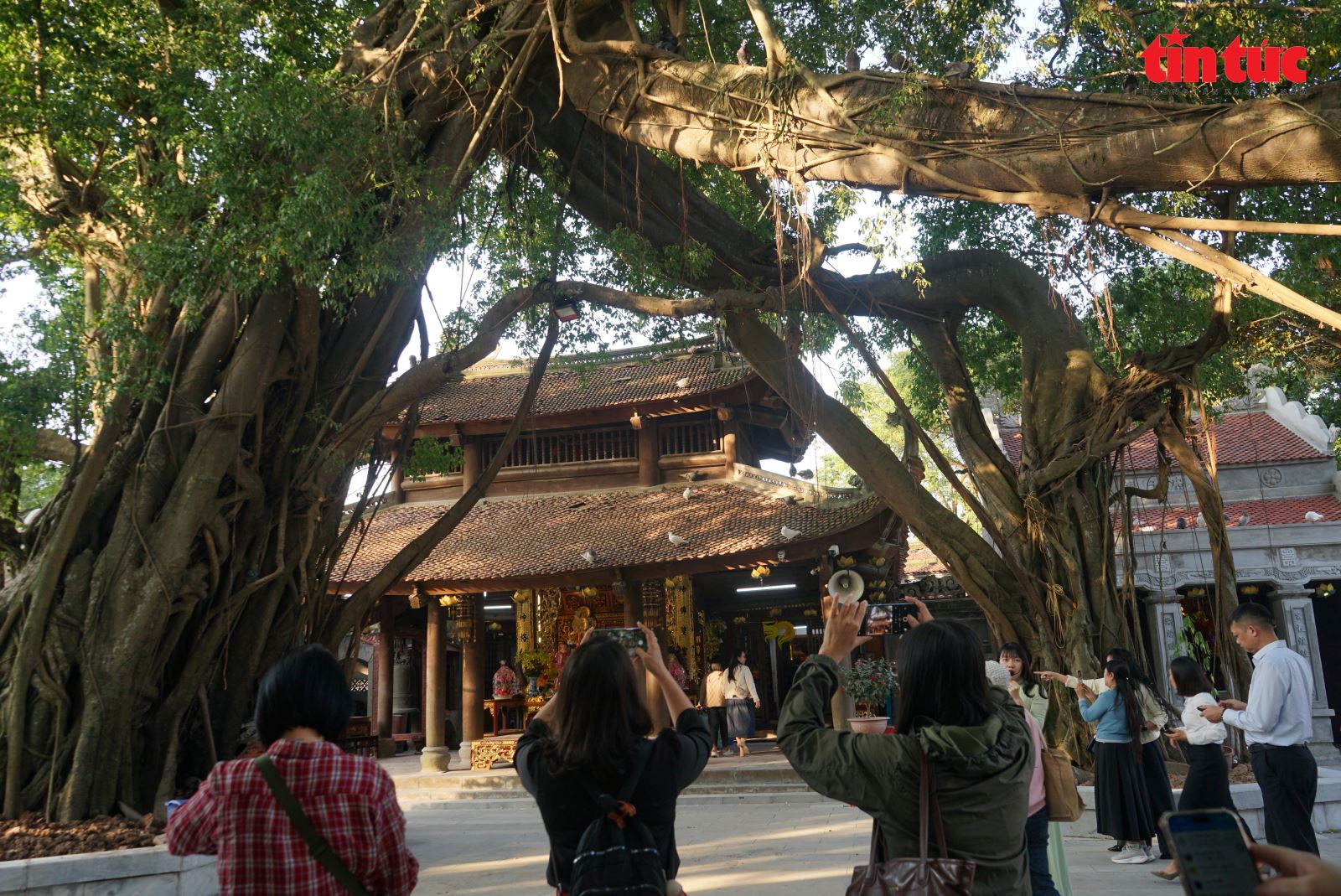
The nearly 800-year-old tree is one of the impressive and attractive features of Mau Temple.
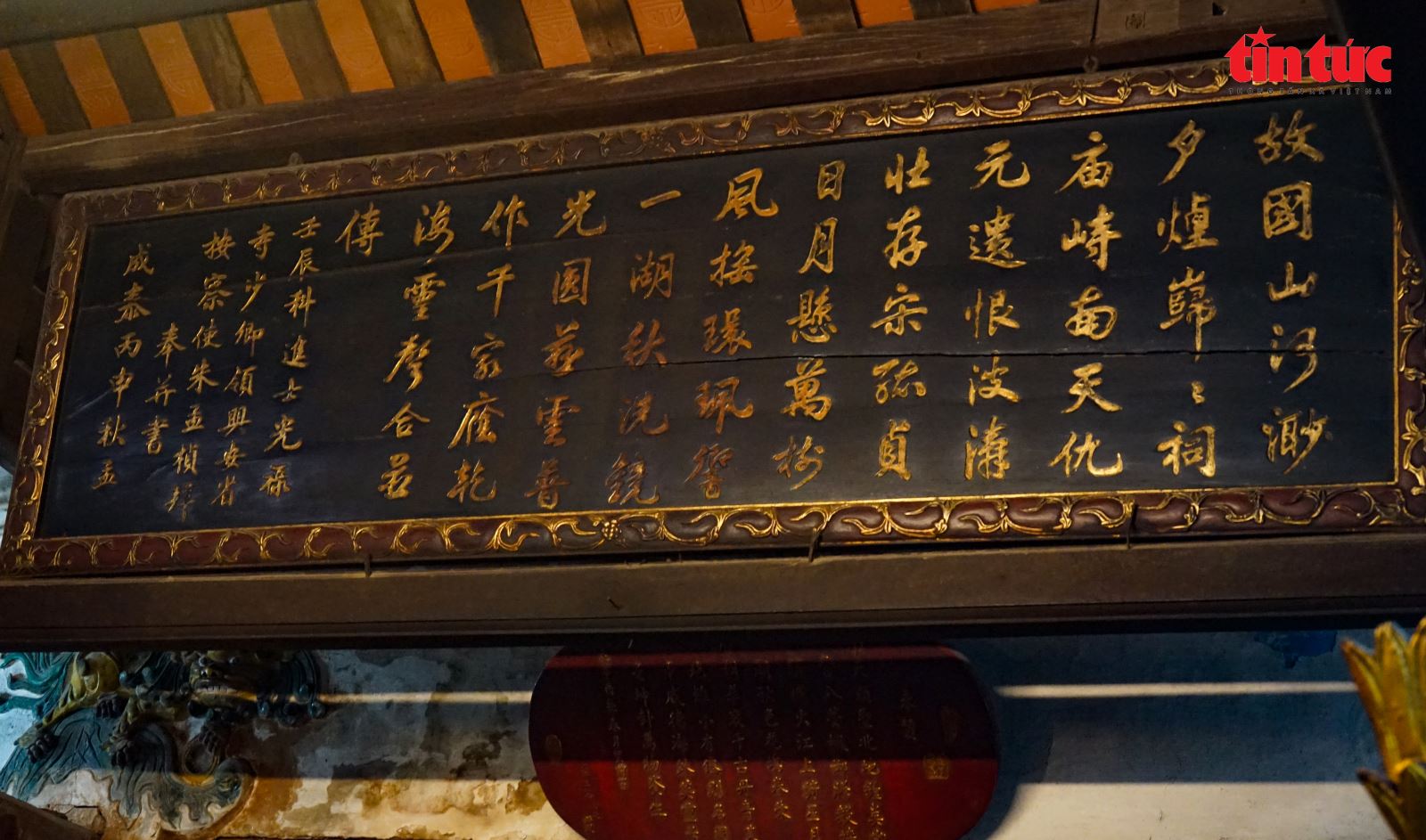
The apocryphal letter written by Dr. Chu Manh Trinh.
In which, the epitaph was written in gold letters, prefaced by Dr. Chu Manh Trinh himself, praising the beauty of the temple and the chastity of the mother... Dr. Chu Manh Trinh is one of the famous people who contributed greatly to the construction of the temple to worship love and the temple to worship Chu Dong Tu, one of the four immortals of Vietnam. The Mother Temple Festival takes place from March 10 to 15 (Lunar calendar), is a big festival that still preserves many values that create the unique identity of Hung Yen culture in the Northern Delta region.
Coming to Tran Hung Yen Temple, according to legend, this land was once the military base of Hung Dao Vuong Tran Quoc Tuan. After his death, Hung Yen people built Tran Temple to worship him. The temple was built quite early and underwent a major restoration in 1894.
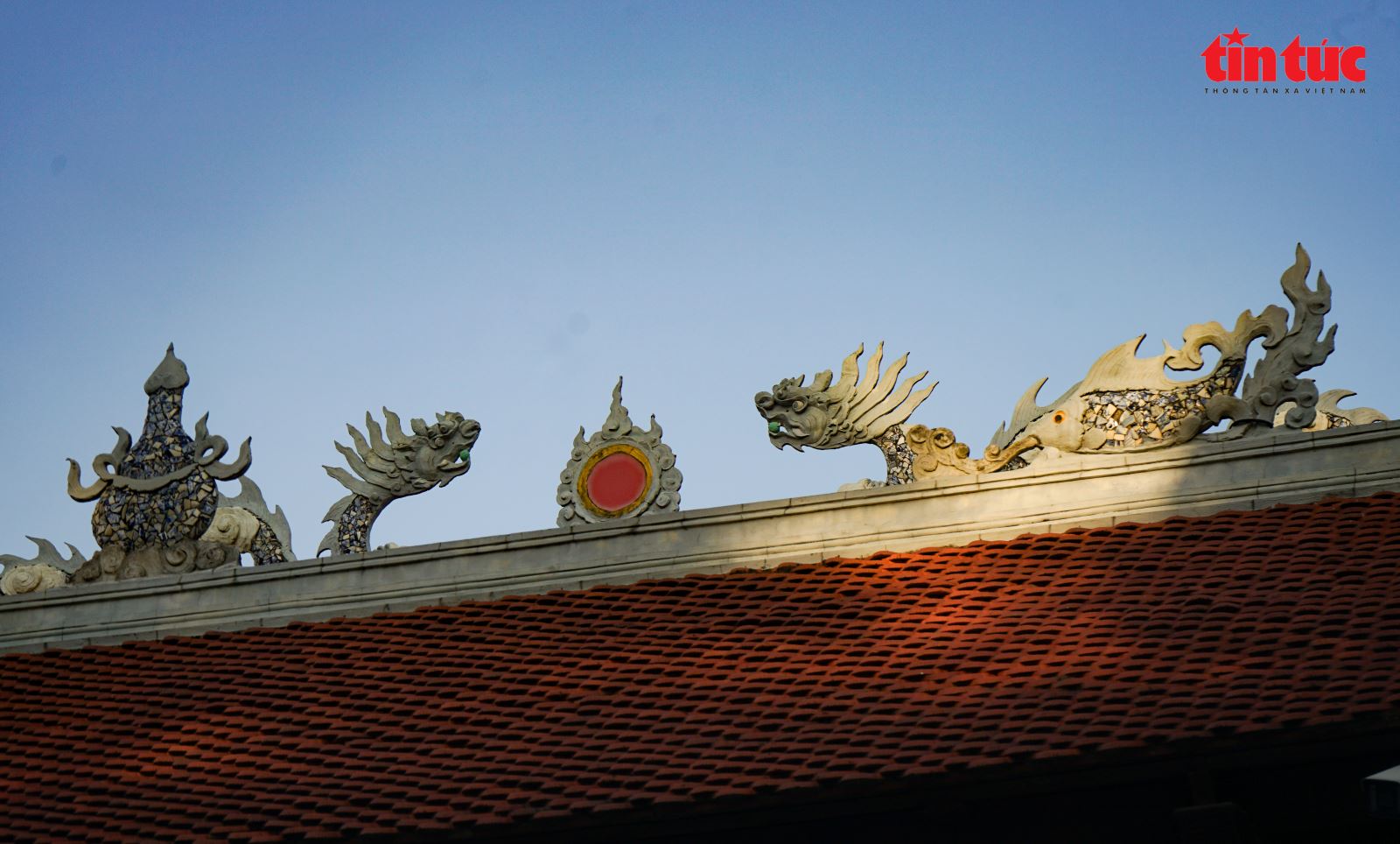
Majestic dragon motifs stretch out on the temple roof, softly curving but still exuding sacredness and authority.
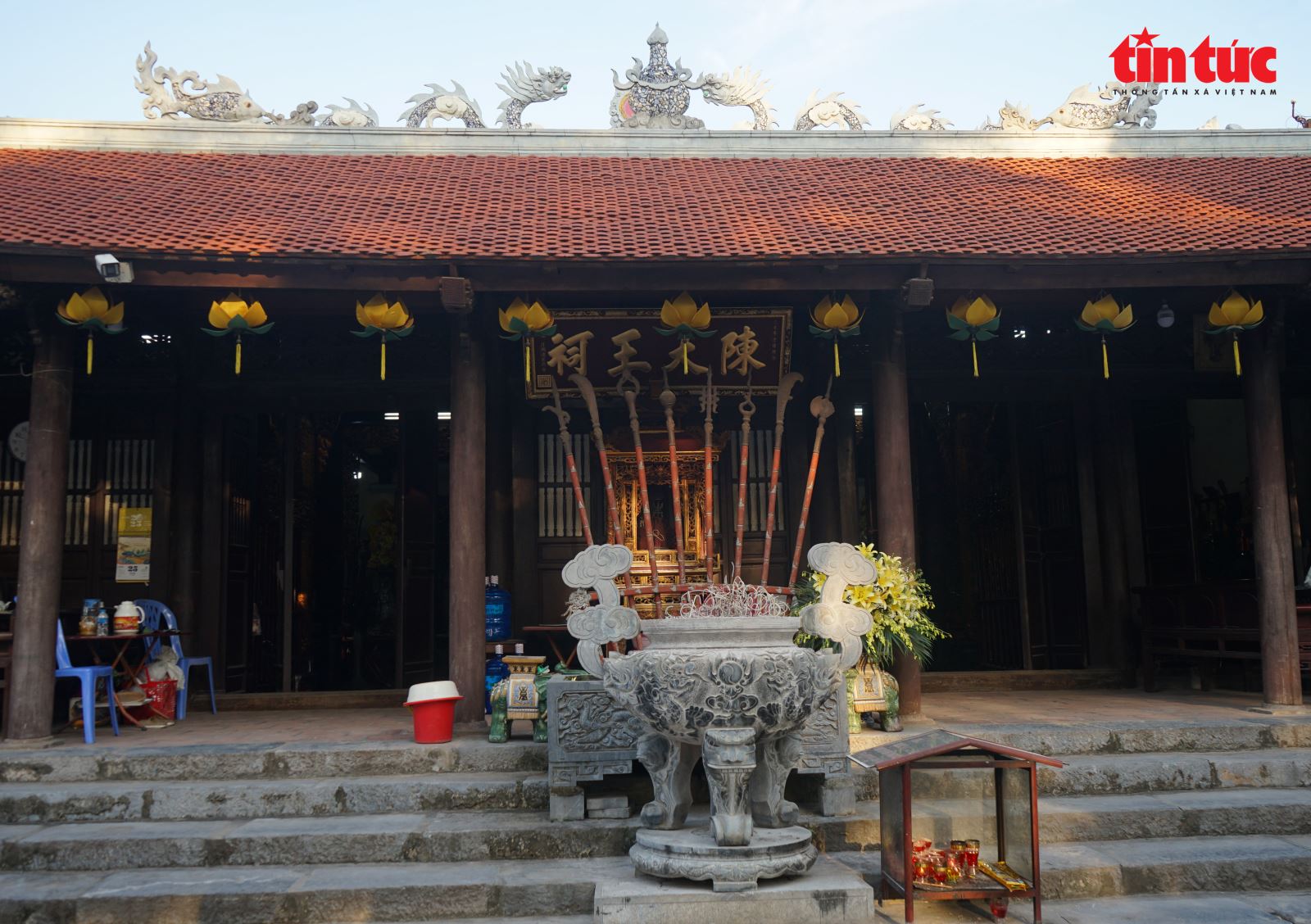
Coming to Tran Temple, Hung Yen is the place to commemorate the merits of Hung Dao Vuong Tran Quoc Tuan, his family and General Pham Ngu Lao.
Ms. Nguyen Hai Yen, a tour guide of the relic site, said: “Currently, the architectural items are kept almost intact, the entire campus has also been expanded and made more spacious. The main inner temple area is built in the shape of the letter Tam, including three buildings: the Front Hall, the Middle Hall and the Rear Palace. This is where Hung Dao Vuong Tran Quoc Tuan and his family are worshiped, and at the same time, an altar is placed to worship General Pham Ngu Lao, a son of Hung Yen land.”
Many valuable artifacts are still preserved here, such as: 10 royal decrees, engraved cards, stone steles, worshiping thrones, etc. Every year, Tran Temple holds a festival on August 20 and March 8 (Lunar calendar) at the same time as Pho Hien folk culture festival.
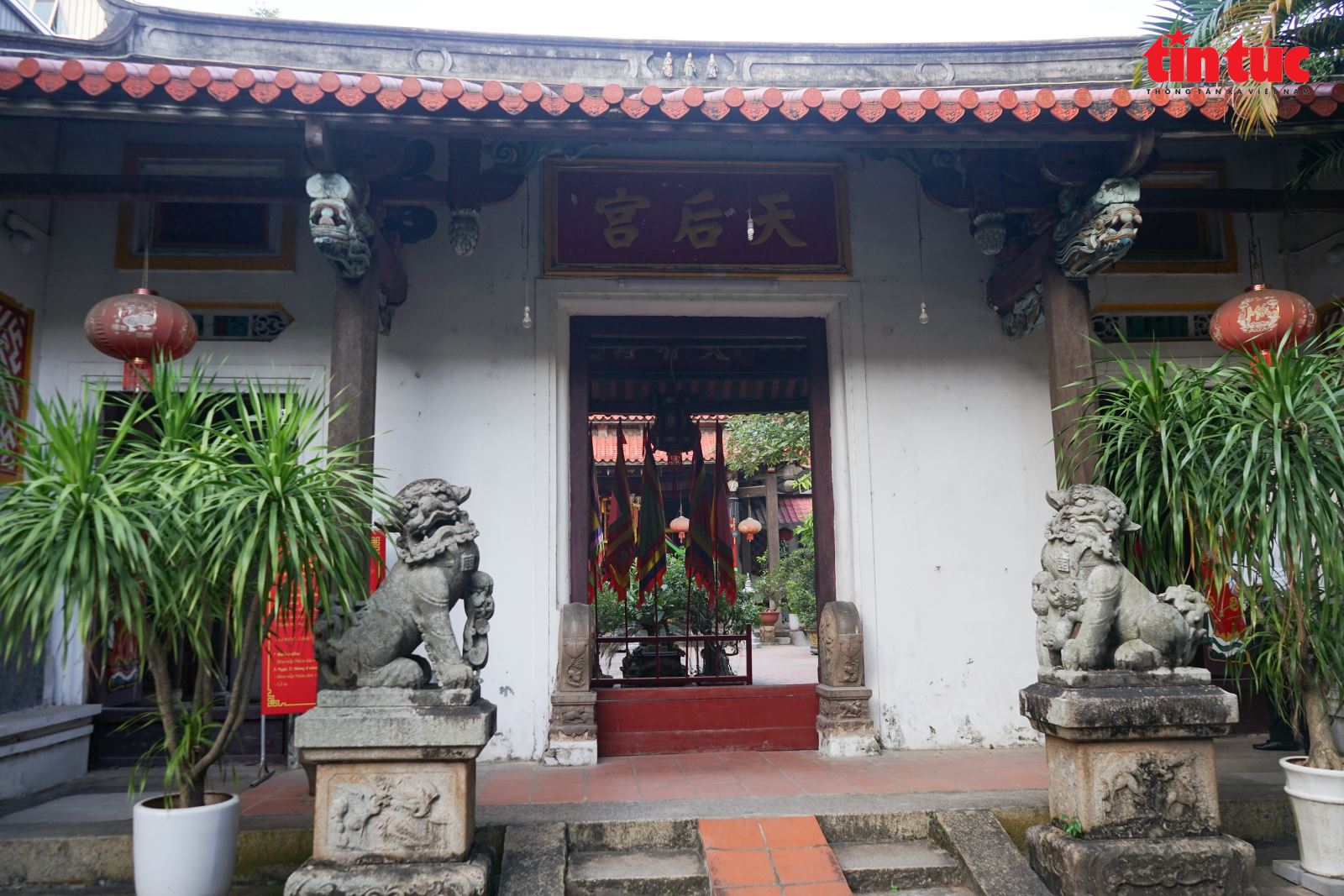
Thien Hau Temple has bold ancient architecture and is also one of the typical relics of Pho Hien National Special Relic Site.
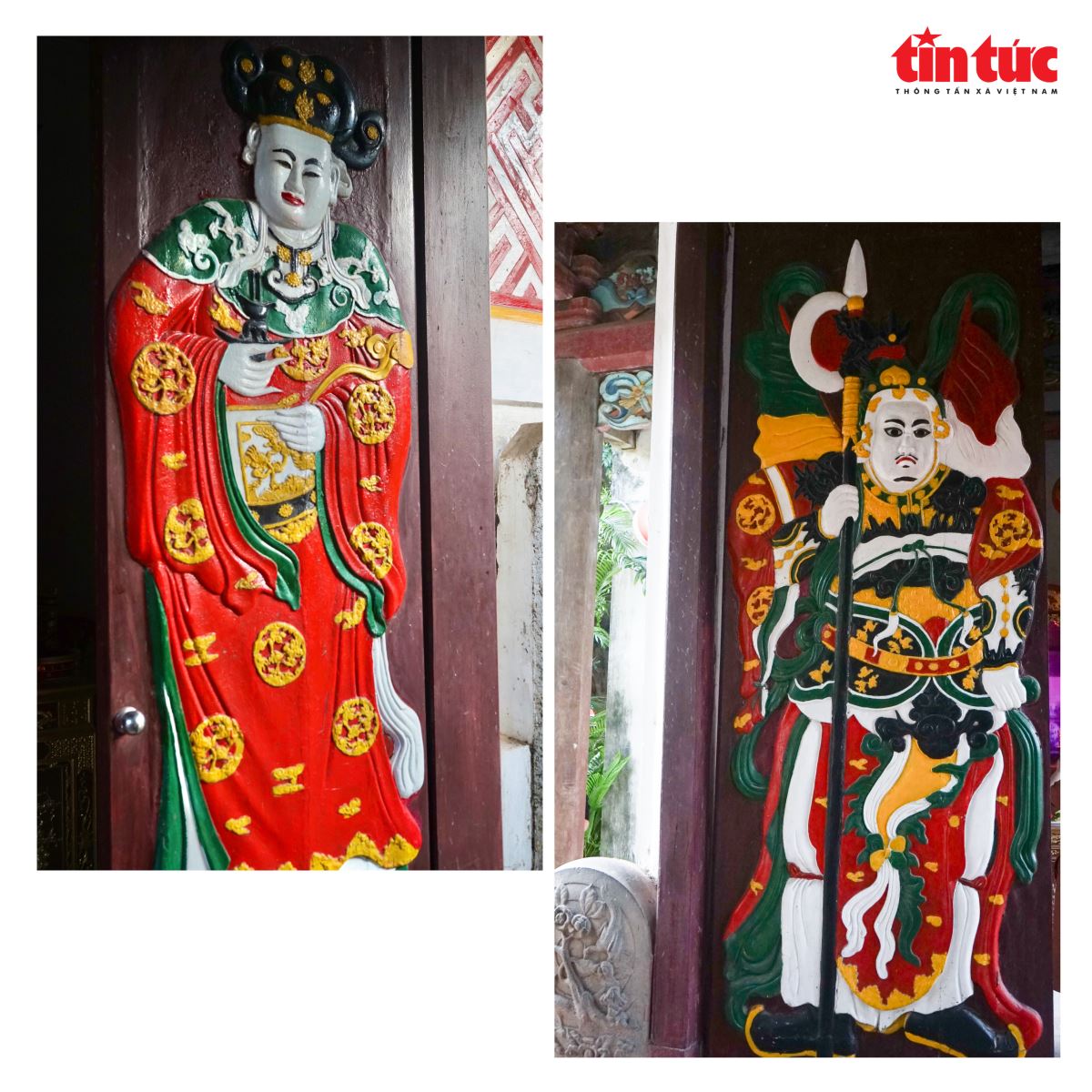
The main and side doors of the temple are carved with images of civil and military mandarins, along with eye-catching and impressive patterns.
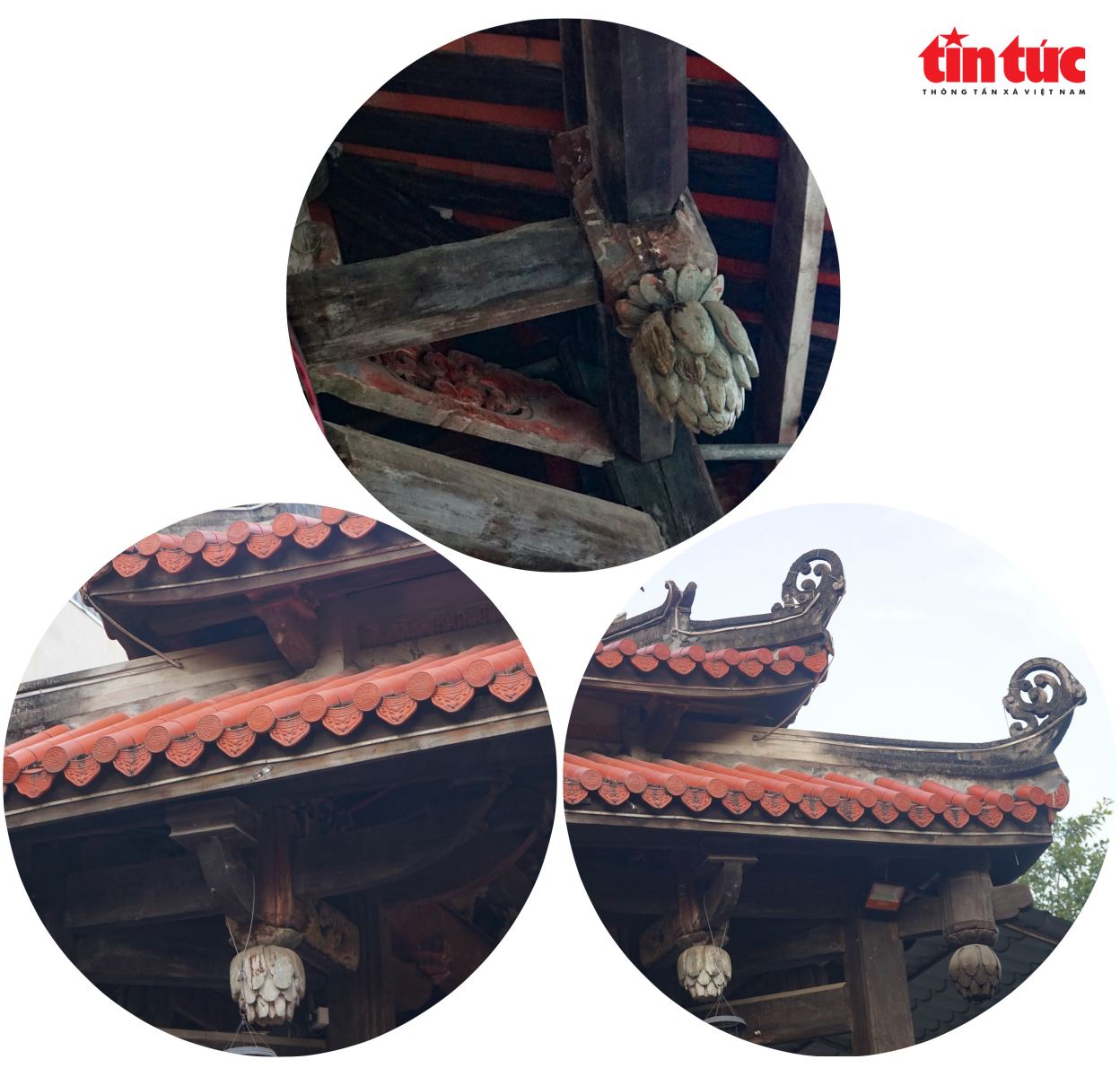
The upside down lotus flowers bear a strong mark of ancient culture.
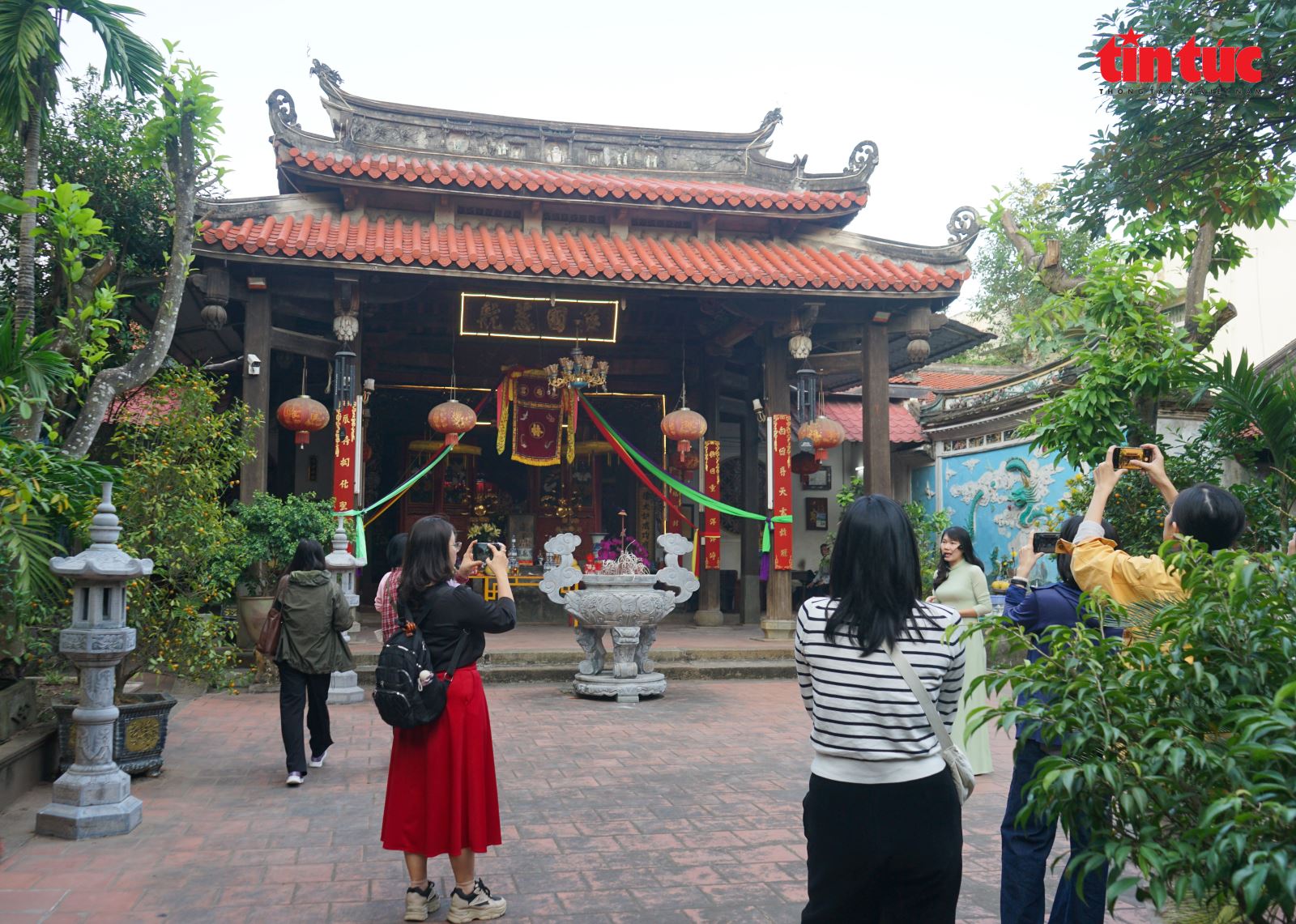
Thien Hau Temple possesses many unique architectural features, arousing curiosity for tourists to visit, worship and learn about the cultural and historical values here.
According to Ms. Nguyen Hai Yen, the main and side doors of the temple are carved with images of civil and military mandarins, along with typical patterns... Especially the incense burning hall inside is built in the style of a 2-storey, 8-roofed house without surrounding walls. The upside-down lotus flowers, along with the two main rafters in the incense burning hall, are crafted according to ancient stories... The inner temple is decorated with images of bats, birds, flowers, leaves, and a palanquin from the Nguyen Dynasty, on which are carved "a group of fairies playing music", recreating the scene of the Holy Mother Thien Hau returning to heaven.
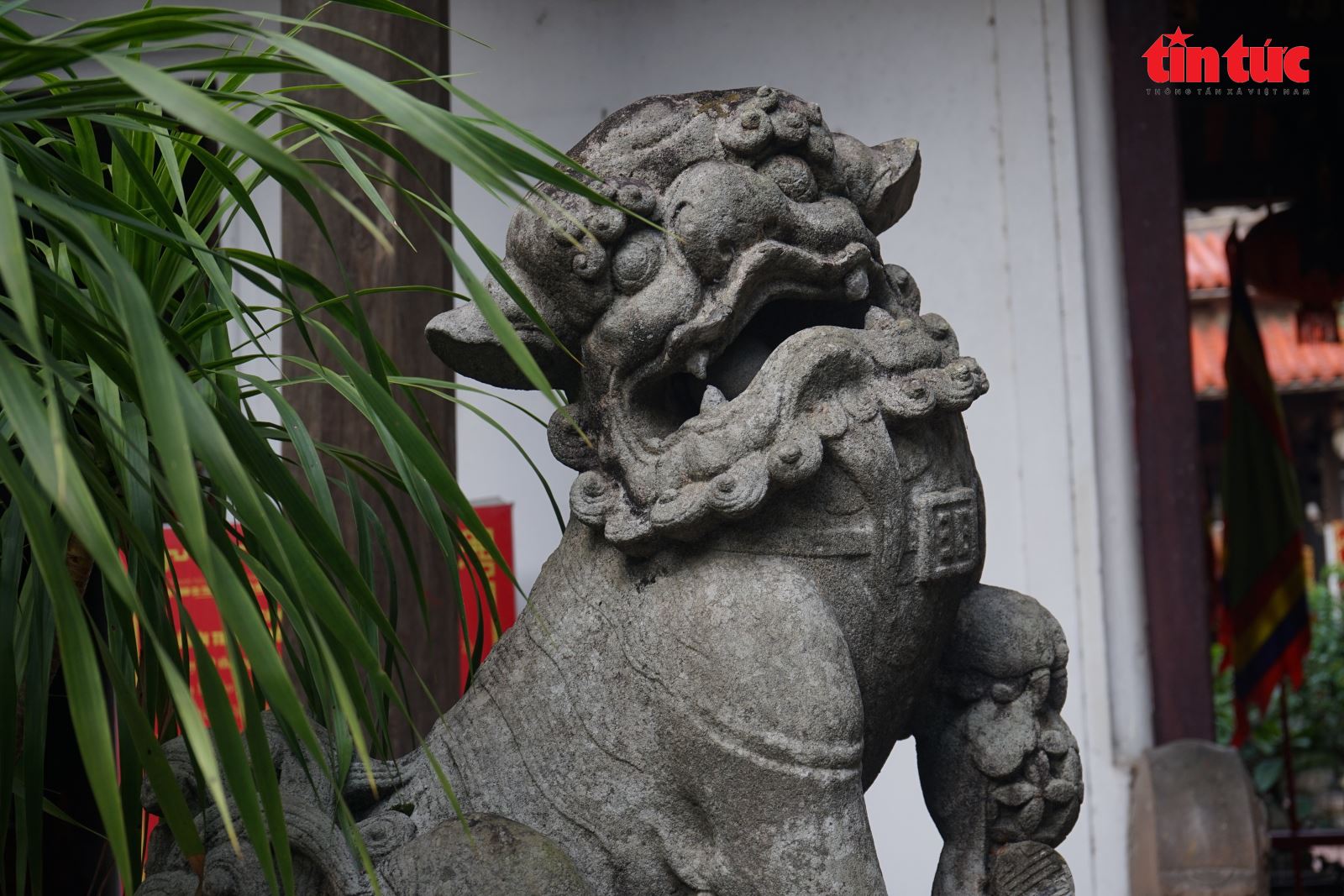
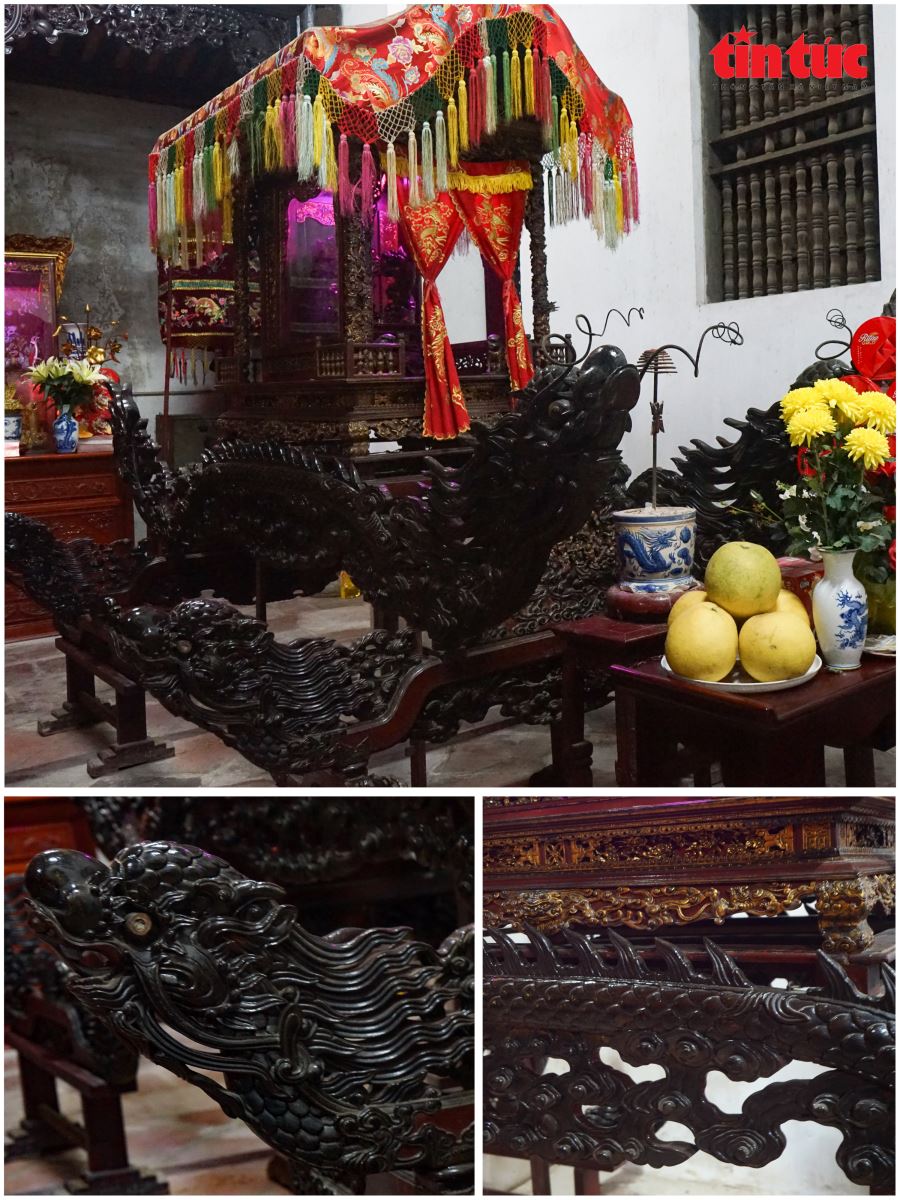
The temple still preserves many valuable antiques such as: stone steles, stone unicorns, horizontal lacquered boards, parallel sentences, Mau Mau palanquin...
Presently, Thien Hau temple still preserves many valuable objects of worship and antiques related to the journey of sailing and praising the goddess's talent such as: royal decree, stone stele, stone unicorn, horizontal lacquered board, parallel sentences, Mau palanquin...
Every year, Thien Hau Temple holds a festival on March 23 and September 9 (Lunar calendar) to commemorate the birth and death of the Holy Mother. This is a unique festival, a combination of cultures.
Amidst the constant changes of modern life, Pho Hien still quietly preserves the memories of a golden trading port. The quiet communal houses, ancient pagodas, time-stained steles… all combine to form a special layer of cultural sediment, making Hung Yen land a meeting place for those who seek historical depth and the beauty of intersection.
The journey of preserving and “awakening” Pho Hien heritage today is not only to preserve the values of the past, but also to give future generations a sense of pride and identity that has been forged over centuries. From the dossier submitted to UNESCO to the daily efforts of managers, experts and local communities, all are contributing to brightening the value of the system of steles, architecture, beliefs and culture here. So that, every step of tourists when walking around Thien Hau Temple, Chuong Pagoda or Xich Dang Temple of Literature… is not just a sightseeing trip, but a return to history.
Source: https://baotintuc.vn/van-hoa/ke-chuyen-do-thi-co-dua-pho-hien-len-ban-do-di-san-unesco-20251204092117249.htm

![[Photo] Cat Ba - Green island paradise](/_next/image?url=https%3A%2F%2Fvphoto.vietnam.vn%2Fthumb%2F1200x675%2Fvietnam%2Fresource%2FIMAGE%2F2025%2F12%2F04%2F1764821844074_ndo_br_1-dcbthienduongxanh638-jpg.webp&w=3840&q=75)


























































Comment (0)