

5th generation descendant of King Ham Nghi
One day in January 2023, in the ancient Hue Imperial City, Dr. Amandine Dabat walked slowly.
A surge of emotion filled the female doctor as she knew she was standing on the land where many years ago her ancestors lived and experienced the vicissitudes of a turbulent period of history.
On the same day, Dr. Amandine Dabat attended the death anniversary of King Ham Nghi for the first time at the Hue Imperial City, performing worship rituals to pay respect to his ancestors in the way he wanted his descendants to do. These rituals had never been practiced in her family in France.
Dr. Amandine Dabat is the great-granddaughter of Princess Nhu Ly (daughter of King Ham Nghi). Although her ancestors were Vietnamese kings, since childhood, she had hardly heard anything from her family members.

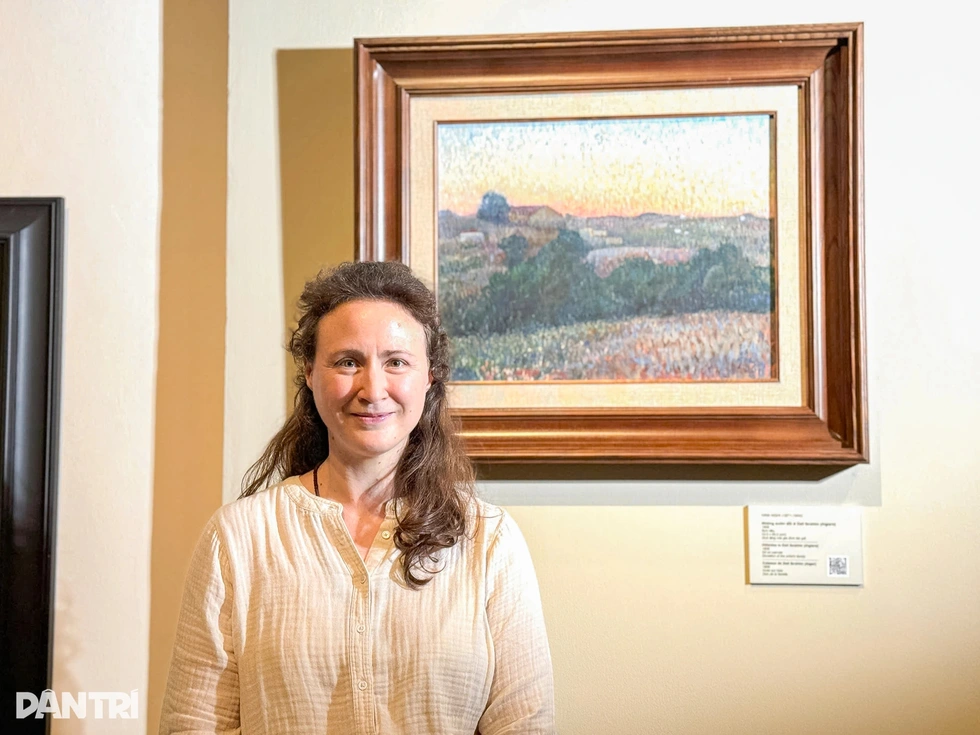
Dr. Amandine Dabat next to the painting of King Ham Nghi that was brought back to Vietnam in early 2025 (Photo: Pham Hong Hanh).
There seems to be an invisible connection that urges Amandine Dabat to proactively learn about the family's mysterious story.
In particular, when coming into contact with the archive of 2,500 letters and manuscripts of King Ham Nghi kept by his eldest daughter - Princess Nhu Mai - Amandine Dabat made a turning point decision. The journey back to the homeland of King Ham Nghi's descendants also began here.
King Ham Nghi was Prince Nguyen Phuc Ung Lich, born in 1871 in Hue, the son of Nguyen Phuc Hong Cai (1845-1876) - the 26th prince of King Thieu Tri.
His brother Kien Phuc died in 1884, Ham Nghi succeeded to the throne but this period only lasted for nearly 1 year. After the Can Vuong movement failed, in 1888, he was arrested by the French and exiled (forced, isolated) in Algeria - a North African country.
In this faraway land, he married a French woman and lived here for the rest of his life. No one thought Ham Nghi would become an artist until he painted landscapes or showed off his sculpting skills. It is said that behind each painting and statue is a hidden meaning of a soul exiled from the age of 18 and exiled for 55 years.
Sharing with Dan Tri reporter , Dr. Amandine Dabat said that in her family, no one mentioned King Ham Nghi. She does not remember exactly when she knew King Ham Nghi was her ancestor, but she is sure that she had to look up information about him in the encyclopedia.
“There is a taboo sadness. The pain of exile prevented King Ham Nghi from talking about his homeland to his children. All I know is from reading through archives in France and Ham Nghi’s private documents,” the female doctor said.
Since learning that her family had a king, an artist, Dr. Amandine Dabat decided to dedicate her education to her ancestors, focusing on researching art history to portray his life and thoughts.
Ham Nghi is known as a patriotic king, but his life is a mystery. Charles Fourniau, a French researcher, believes that without private archives, “what he thought about his turbulent fate would forever remain a mystery.”
From decoding paintings and documents, Amandine Dabat realized that her father was a patriotic emperor, a historical figure, a national hero.
King Ham Nghi's personal letters also help his female descendants better understand the personality and private corners of a historical figure who was considered by the French authorities throughout his life as an "influential figure".

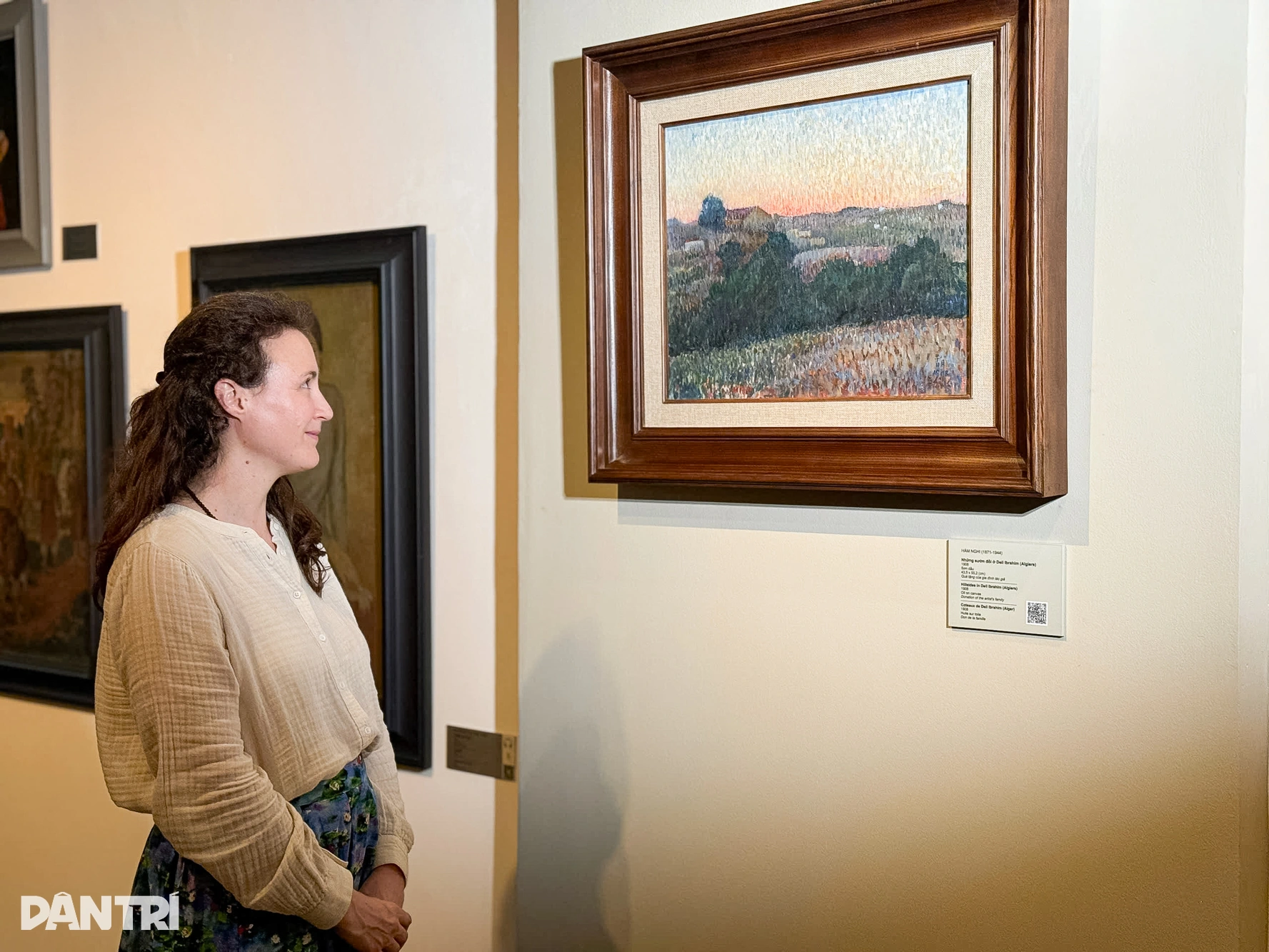
Female descendant deciphers King Ham Nghi through paintings and thousands of letters and documents (Photo: Pham Hong Hanh).
Marriage with the daughter of the chief justice of King Ham Nghi
According to documents that Dr. Amandine Dabat learned, in the early days of exile, King Ham Nghi sent a provocative business card to the French authorities and called himself a "French resistance fighter". He was aware of his role but was isolated in Algeria.
The conditions of his exile were negotiated by various factions within the French government. The French government placed Ham Nghi under house arrest through the French education that Ham Nghi received.
He was forbidden to communicate with Indochina, and his correspondence, travel, and friendships were monitored. However, these measures were somewhat relaxed, so King Ham Nghi could still develop his creativity.

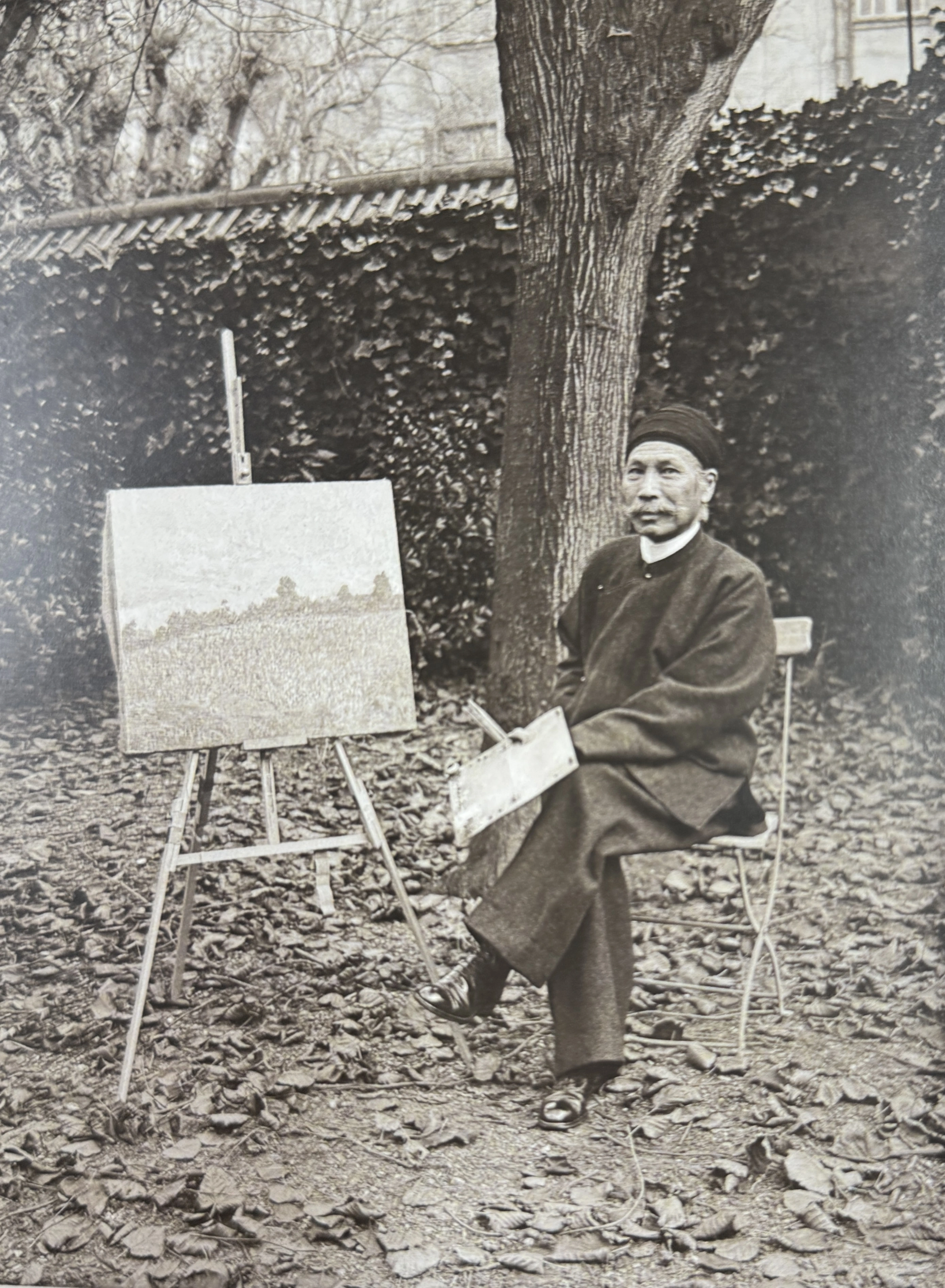
King Ham Nghi in 1926 (Photo courtesy of the Bancroft Library, University of California, Berkeley).
He established trustworthy relationships with various politicians to create a network ready to help him in case of threats from the French government in Indochina or consideration of subsidy adjustments.
As a result, he received special economic privileges compared to other exiled emperors of the same period in Algeria. He lived like the upper-class French people of the time.
“He must have understood that he could not resist the isolation. Left alone, he devoted himself to studying French and painting, hoping one day to be sent back to Indochina...
He adapted to exile by not passively enduring it. Education occupied the top priority in his life,” Dr. Amandine Dabat shared.
Nguyen Dynasty researcher - Nguyen Dac Xuan, who had a meeting and conversation with Princess Nhu Ly in France many years ago - in the book King Ham Nghi, a Vietnamese soul in exile published in 2008, recounted that, after 10 years in Algeria, King Ham Nghi learned French well and French culture well.
He spoke and wrote French like a French person. However, he always spoke Vietnamese and ate Vietnamese food with people sent by Vietnam. Once, when someone praised the history of France, King Ham Nghi immediately replied: “The history of France is fascinating, but the history of my country is no less fascinating.”
In 1904, King Ham Nghi married Mrs. Marcelle Laloe (born 1884) - daughter of Mr. Laloe, Chief Justice of the Algerian Supreme Court. The Laloe family originally lived in France but moved to Algeria.
As the Chief Justice of the Supreme Court, Mr. Laloe often cared for and helped the natives, so he was respected by the local people. The feelings of a man who had to live as a "single father" made the Chief Justice somewhat sympathetic to the exiled emperor. He decided to ignore old customs and marry his daughter to the former King of Annam.
The wedding of King Ham Nghi and Mrs. Marcelle Laloe was an unprecedented event in the capital of Algeria. On the morning of the wedding, from the Tung Hien villa, King Ham Nghi got on a carriage and went straight to the center of the Algerian capital.
Seeing the car coming to pick him up, Mr. Laloe held his daughter's hand and handed her over to the former King of Annam. While his wife wore a gorgeous dress, King Ham Nghi still wore Vietnamese clothing - long pants and turban.
The sight of the former King of Annam wearing a black ao dai and a turban, walking next to a French lady in a pure white wedding dress in a carriage stirred up the streets of Algeria.
They were accompanied by hundreds of guests. Postcard makers in Algeria took full advantage of the wedding, capturing the moment when Mrs. Marcelle left the palace with King Ham Nghi to go to the church, the crowded scene during the wedding, or when the newlyweds went around the city in a horse-drawn carriage.

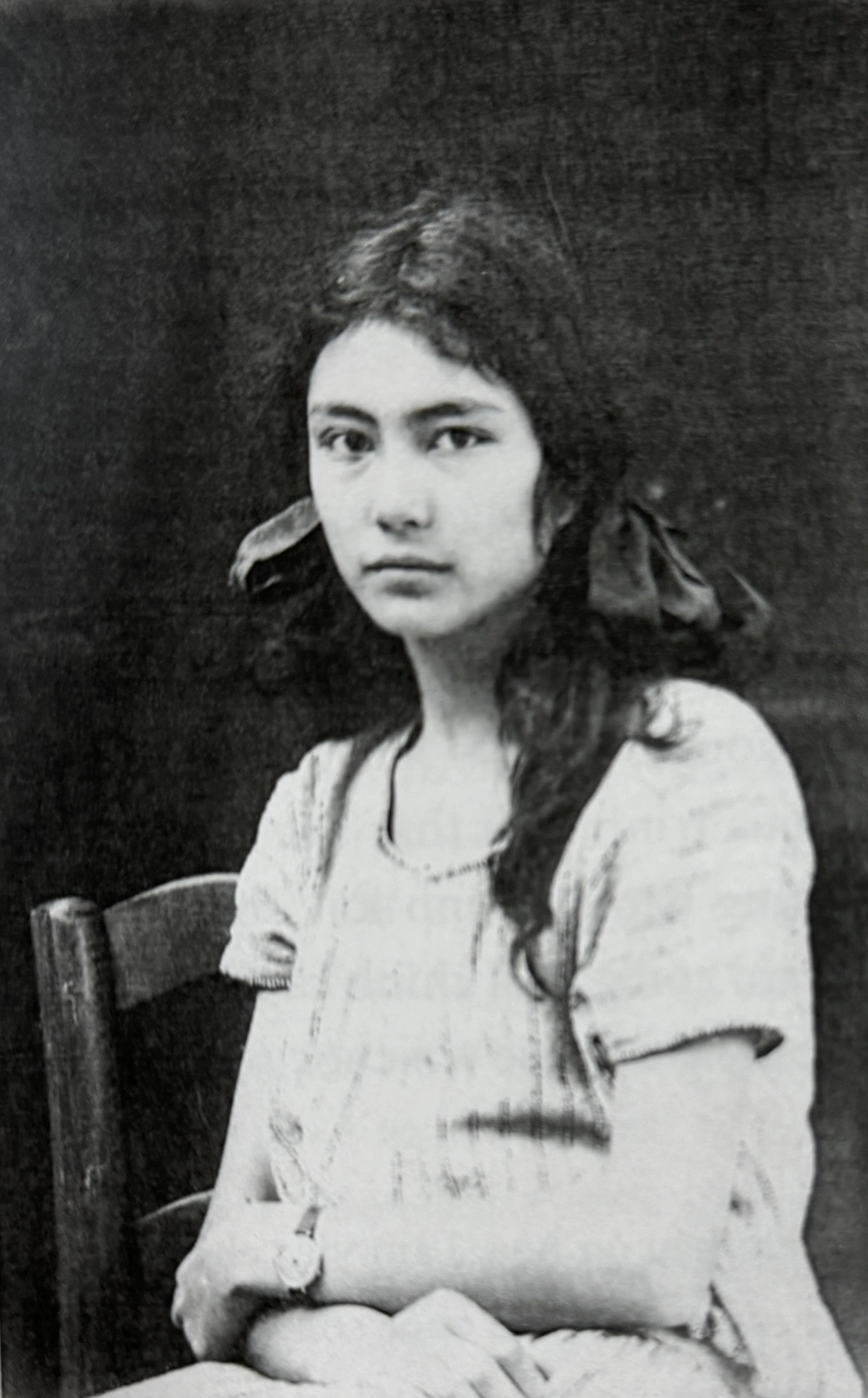
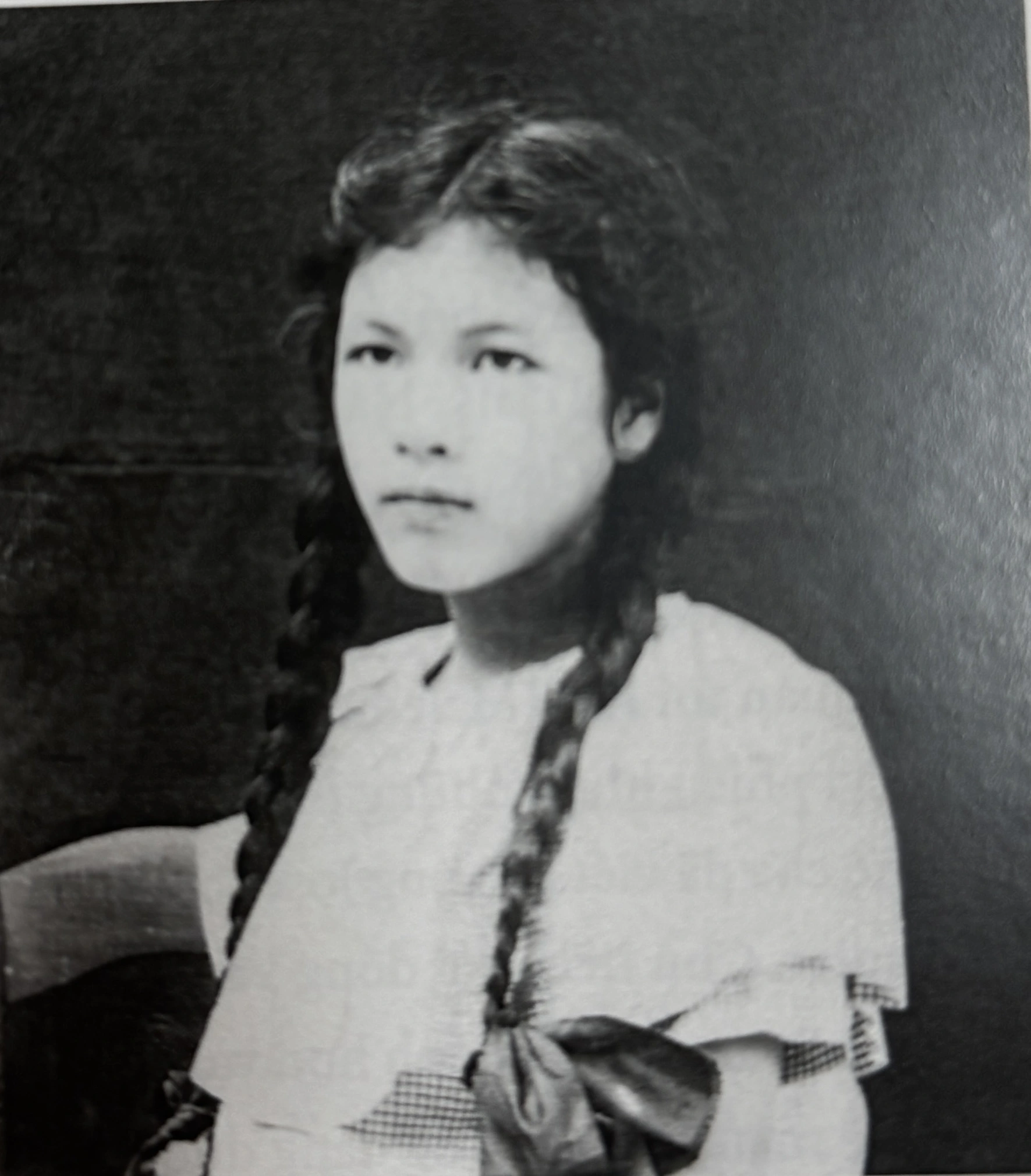
 Princess Nhu Mai and Princess Nhu Ly, daughters of King Ham Nghi and his French wife (Photo: Document)
One year after his wedding, King Ham Nghi wrote a letter to Hue to inform them that he was married and had his first daughter, Nhu Mai. Later, the couple had another daughter, Nhu Ly, and a son, Minh Duc.
King Ham Nghi let his wife raise their children according to French culture, while he himself maintained Vietnamese lifestyle. Knowing that he could not bring his wife and children back to his homeland, he often taught his children: "If you cannot be good Vietnamese, then be good French people."
According to Dr. Amandine Dabat, after renting the Tung Hien villa for more than 15 years, Ham Nghi bought two adjacent plots of land in El Biar and built a massive villa named Gia Long, the name of his ancestor, the founder of the Nguyen Dynasty. At this villa, every year, he held a memorial service for the Nguyen Phuoc family's martyrs.
Ham Nghi used art objects and everyday objects of Vietnamese origin. He kept a Vietnamese servant in his house who cooked for him once a week.
Vietnam seemed to bring a touch of folklore to his family life. The prince (King Ham Nghi) built a pavilion shaped like a Vietnamese pagoda in the middle of a lotus pond for his children to play in. In the garden, he planted some of his native trees in dozens of different varieties.
“Ham Nghi probably never forgot the past, but he accepted his new life. He found happiness in art and family life. He supported his children's freedom of choice. He encouraged his son to become an officer in the French army.
He encouraged his eldest daughter to become an agricultural engineer and helped her financially to maintain an unprofitable estate. His youngest daughter married a Frenchman, the son of his friend.
Ham Nghi wrote a diary when his eldest daughter was born, and the letters he sent to his children showed his love for them,” King Ham Nghi's descendants recounted.

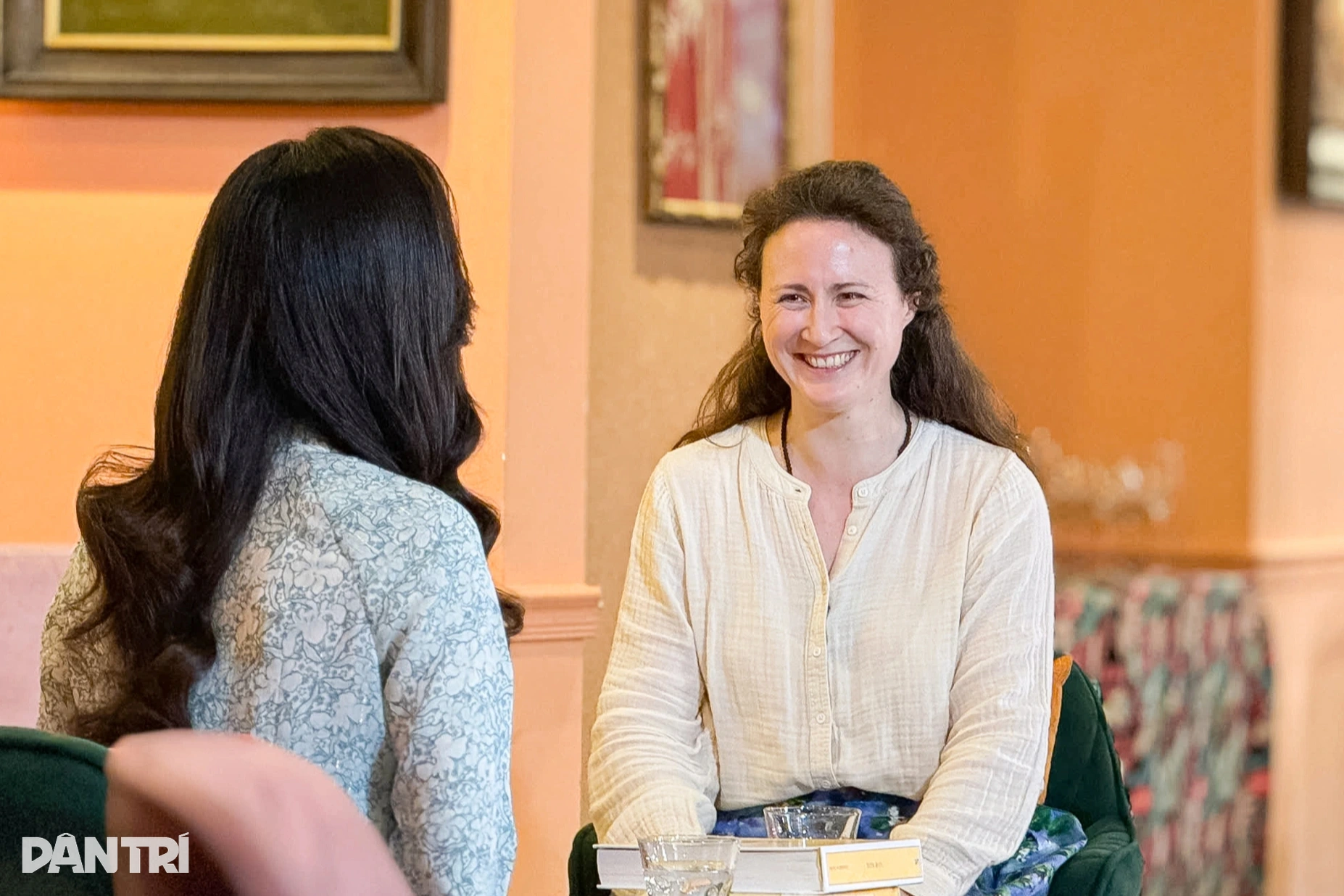
Dr. Amandine Dabat in a conversation about King Ham Nghi when returning to Vietnam (Photo: Pham Hong Hanh).
Hidden feelings through paintings without people
According to Dr. Amandine Dabat, Ham Nghi and his family integrated into French high society and French intellectuals because that was how he maintained his freedom in exile. It seems that only when he practiced art - painting, sculpting - could he be himself.
He mainly drew landscapes in pencil and oil. Looking at the paintings, viewers can understand that it is the countryside of his homeland or it can also be a natural landscape depending on their imagination. However, the common point is that the works are not a dialogue with the times he lived in, but an expression of a deep desire to record emotions before beauty.
In Paris, King Ham Nghi held three successful exhibitions that attracted the attention of the public and the press.
“What impressed me most was his resilience through art. I felt in his paintings his homesickness and the pain of exile. Looking at and painting landscapes was how he found meaning in his life. Art gave him freedom,” the female descendant expressed.
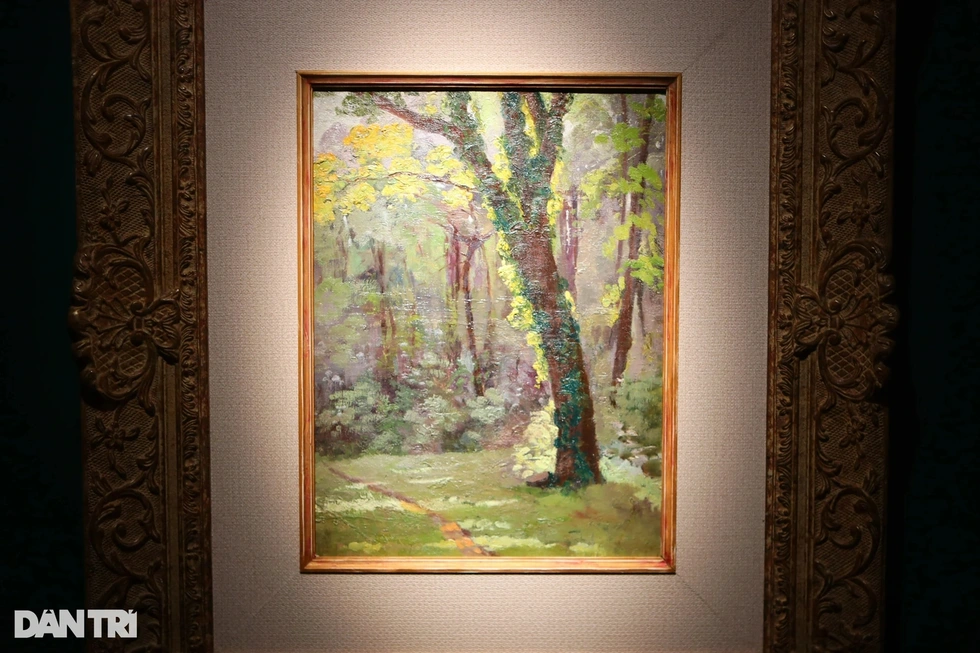
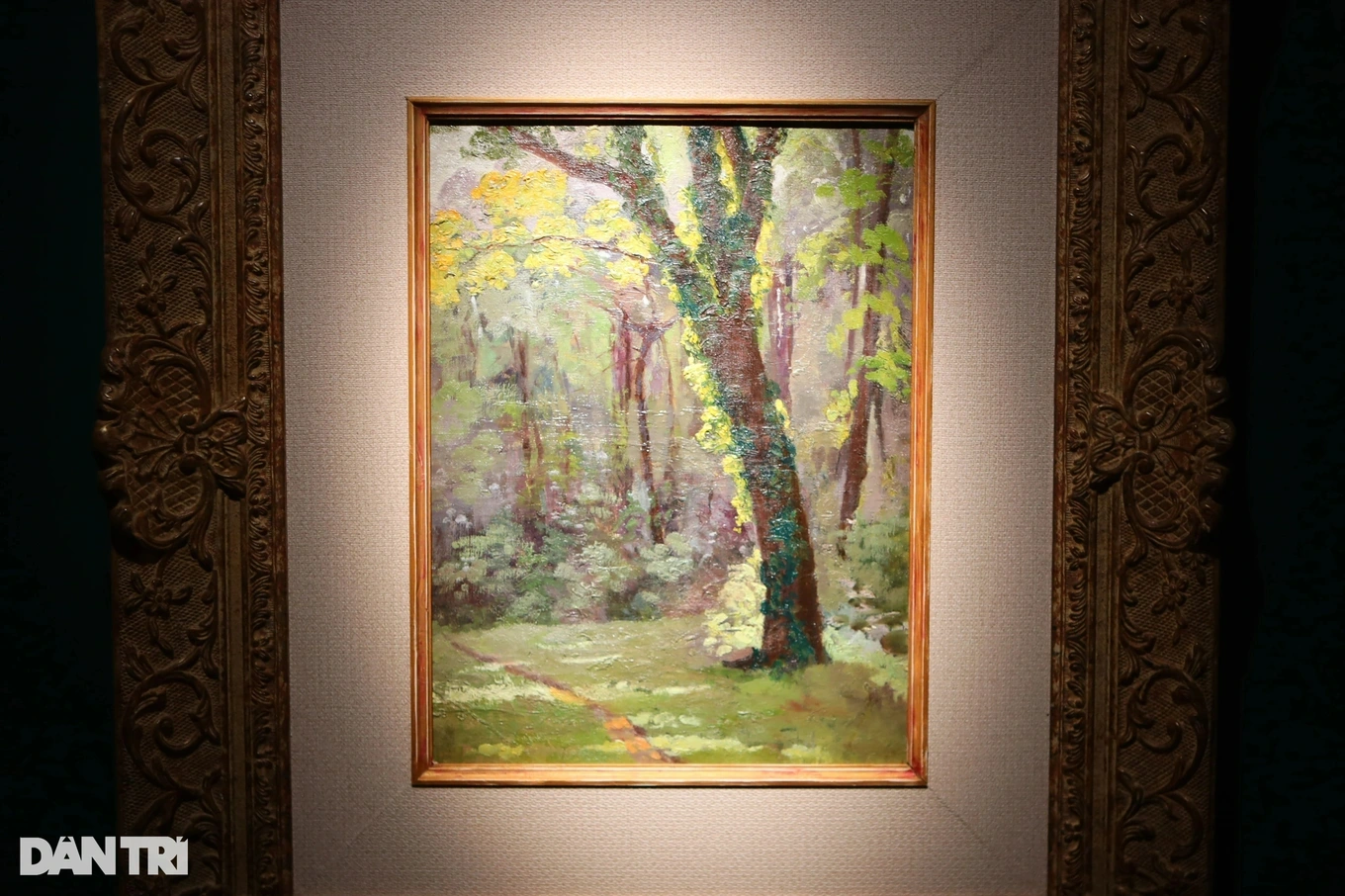
A painting created by King Ham Nghi during his exile in Africa (Photo: Vi Thao).
According to Amandine Dabat, King Ham Nghi never sold his paintings but only gave them to friends. These works were later traded regularly in the French art market and are very valuable to this day.
In the summer of 1937, King Ham Nghi's health began to decline. He passed away on January 14, 1944, at the age of 73. He had wished to be buried in his homeland, but the war prevented his body from being returned to the country. His family buried King Ham Nghi's body in Algeria and later transferred it to France.
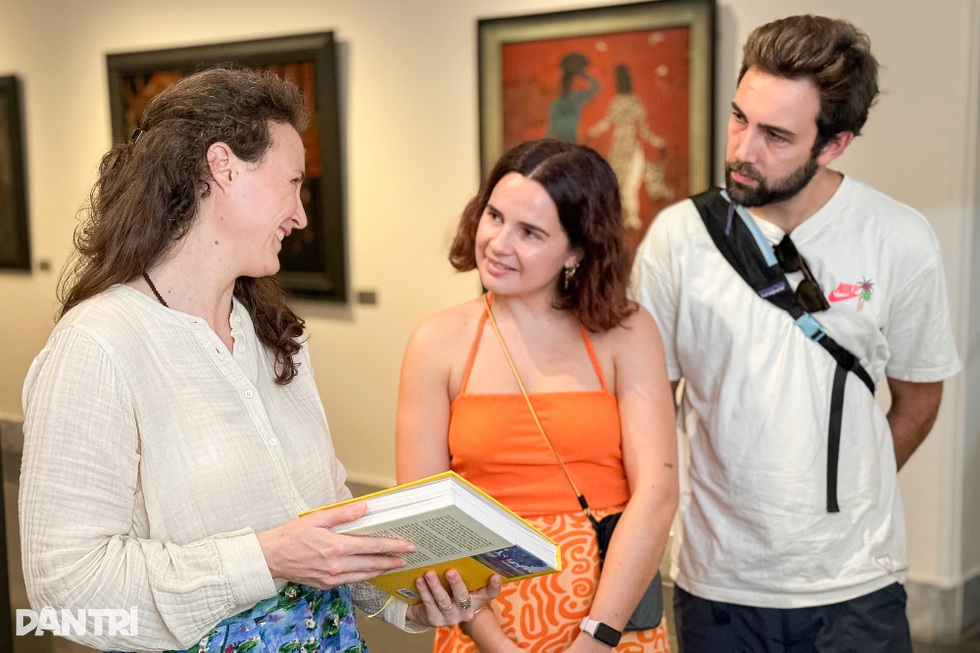
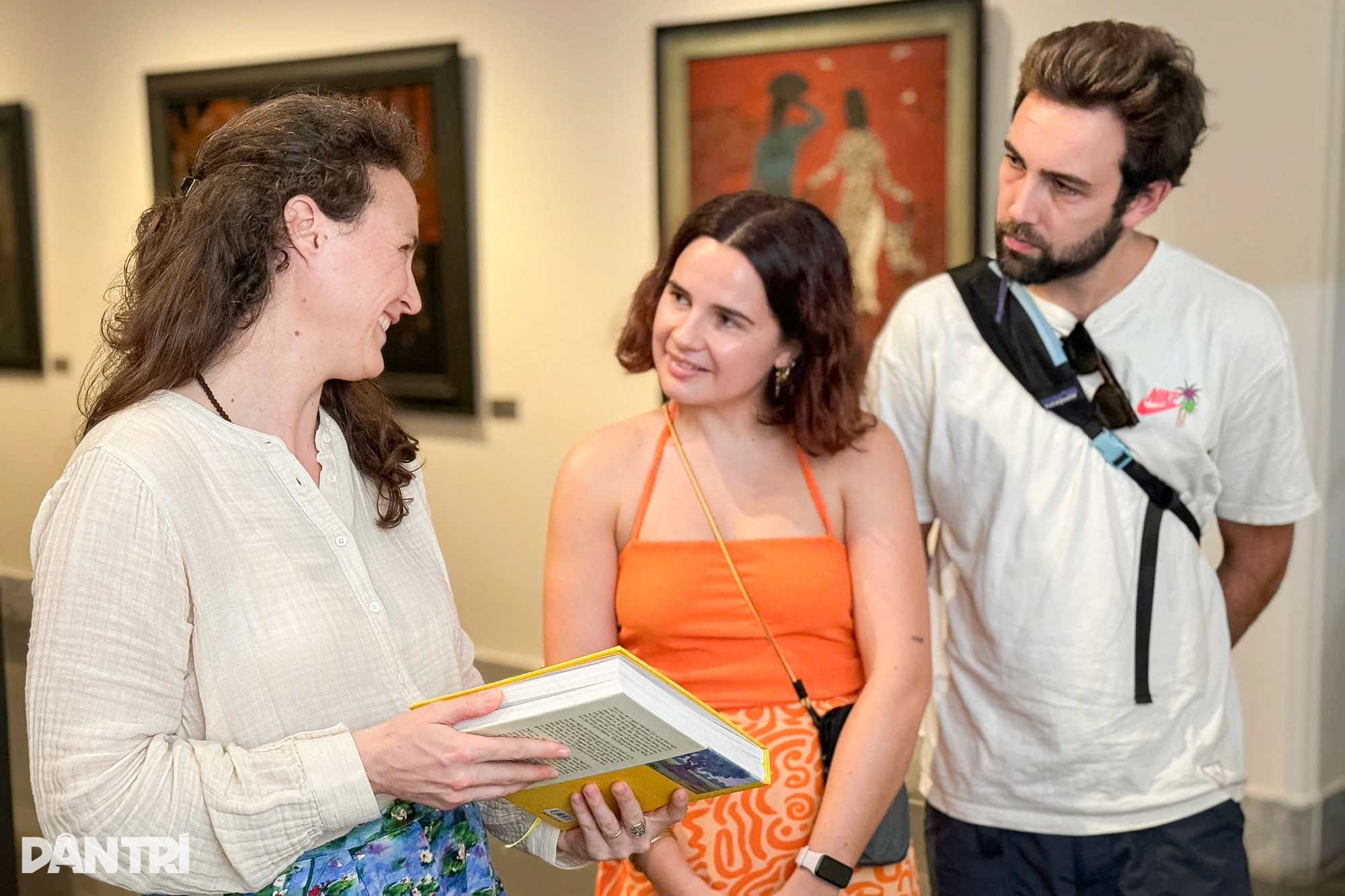
The female doctor always feels proud when talking about her ancestors (Photo: Pham Hong Hanh).
Recalling stories about her ancestors, Dr. Amandine Dabat always feels extremely emotional. Turning through the pages of King Ham Nghi’s letters and documents, the female descendant has portrayed the image of a king who is “upright, resilient but also very sensitive”. All of this urged her to return to Vietnam to complete her research about him.
Dr. Amandine Dabat first came to Vietnam in 2011. At that time, she knew absolutely nothing about Vietnam except the Vietnamese language she had learned for a year and a half. But since then, she has come to Vietnam almost every year to explore Vietnamese culture and research archival documents.
In 2015, she successfully defended her PhD thesis at the French Institute of Art History (Paris) with the topic "Ham Nghi - Emperor in exile, artist in Algiers".
Most recently, the female descendant published a book about King Ham Nghi, bringing back to Vietnam relics such as cigarettes, mother-of-pearl inlaid wooden trays, Chinese books, paintings, etc. of King Ham Nghi.

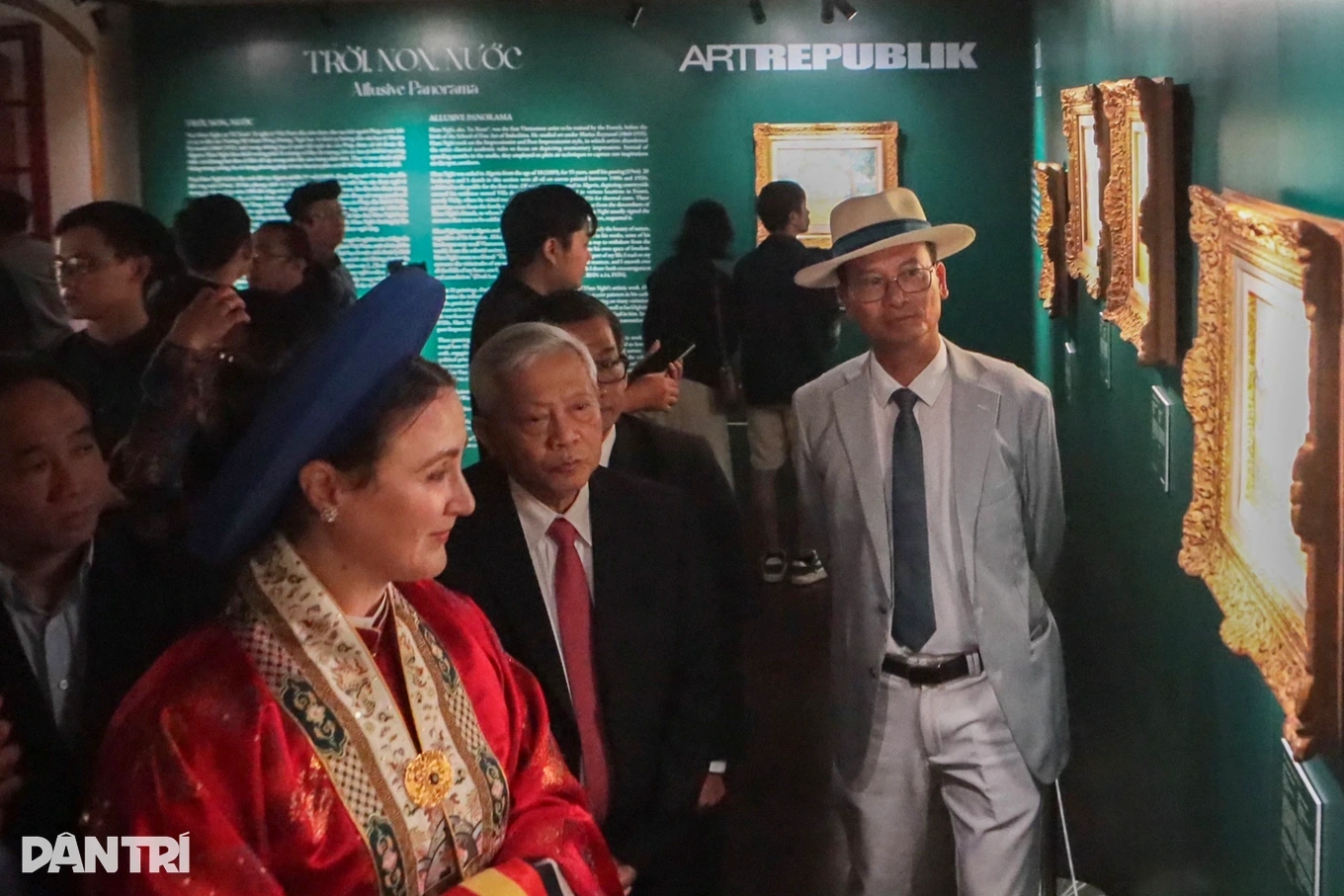
The 5th generation descendant of King Ham Nghi with Mr. Nguyen Khoa Diem (middle), former member of the Politburo, Head of the Central Ideology and Culture Committee and visitors to the exhibition gathering 21 paintings of King Ham Nghi in March (Photo: Vi Thao).
She also organized exhibitions about King Ham Nghi in Vietnam and France to introduce Ham Nghi as an artist alongside a patriotic emperor or national hero. Each trip and event brought her unforgettable memories and feelings of pride in Vietnam.
The female doctor said she wants to build meaningful projects in Vietnam. “Vietnam is the homeland of my ancestors, and also my homeland. Vietnam holds a very dear place in my heart. It is my second home,” Dr. Amandine Dabat emphasized.
* The article uses materials from the book King Ham Nghi, a Vietnamese soul in exile, author Nguyen Dac Xuan and Ham Nghi - Emperor in exile, artist in Alger, author Amandine Dabat.
Source: https://dantri.com.vn/doi-song/hau-due-vua-ham-nghi-tu-phap-ve-viet-nam-giai-ma-nhung-bi-an-bo-ngo-20251125151906902.htm


![[Photo] Cat Ba - Green island paradise](/_next/image?url=https%3A%2F%2Fvphoto.vietnam.vn%2Fthumb%2F1200x675%2Fvietnam%2Fresource%2FIMAGE%2F2025%2F12%2F04%2F1764821844074_ndo_br_1-dcbthienduongxanh638-jpg.webp&w=3840&q=75)













![[Photo] 60th Anniversary of the Founding of the Vietnam Association of Photographic Artists](/_next/image?url=https%3A%2F%2Fvphoto.vietnam.vn%2Fthumb%2F1200x675%2Fvietnam%2Fresource%2FIMAGE%2F2025%2F12%2F05%2F1764935864512_a1-bnd-0841-9740-jpg.webp&w=3840&q=75)












































Comment (0)