

This milestone is not only a source of pride for the Southern community but also poses a great responsibility for preserving, teaching and promoting values in the context of urbanization and social change.
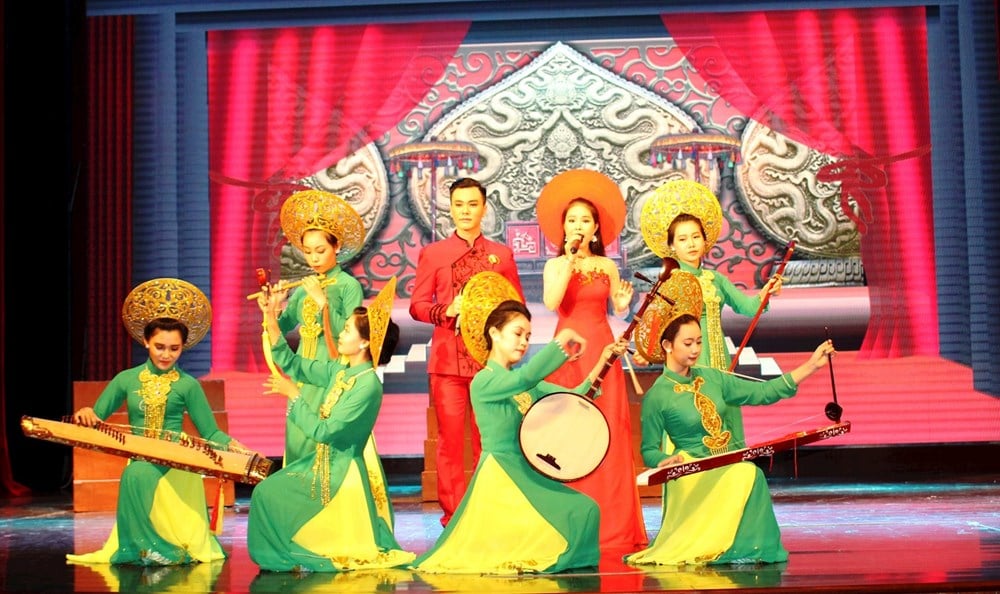
Dramatizing amateur music. Photo: Cong Ly Newspaper
Events and international significance
UNESCO's decision on December 5, 2013 to include the Art of Don ca tai tu music and song in southern Viet Nam in the Representative List of the Intangible Cultural Heritage of Humanity affirmed the unique position of this musical and singing art form in the Vietnamese cultural treasure.
The nomination dossier is elaborately drafted, clearly presenting the history, artistic structure, ancestral works, musical instruments and related ritual practices.
The inclusion in the UNESCO list has a double meaning: it is both an international recognition and opens up opportunities for cooperation, technical support and resource mobilization for the conservation of Southern Vietnamese traditional music.
Conservation activities, promotion and recent results
Since being honored by UNESCO, many provinces and cities in the Southern region have carried out activities to preserve and transmit the music, organize festivals, seminars and include Don ca tai tu in community cultural programs.
The Ministry of Culture, Sports and Tourism and localities have developed training programs for artisans, vocational classes, exhibitions of documents and encouraged new creations based on amateur materials to revitalize the heritage.
In recent years, there have been initiatives to establish research centers, connect Don ca tai tu clubs with schools and international events to introduce heritage to international friends.
However, on-the-ground assessments show that the level of implementation and quality of teaching still varies between localities; more sustainable policies and resources are still needed to ensure that the heritage does not only exist in the form of festival performances but actually lives in community life.
Challenges, expert views and directions
Despite many achievements, traditional music still faces great challenges: urbanization, changes in rural life, lack of successor artists and fragmented teaching methods.
Experts and heritage workers have repeatedly emphasized the need for a long-term strategy, combining community-based conservation and incorporating appropriate content into educational programs. Prof. Dr. Nguyen Tan Anh - Director of the UNESCO Center for Conservation and Development of Southern Amateur Music affirmed: "The most important milestone was December 5, 2013 when UNESCO recognized Southern Amateur Music; from there, it is necessary to focus on improving the organization, training young artisans and building a sustainable conservation profile."
Similarly, Dr. Le Hong Phuoc - University of Social Sciences and Humanities, VNU-HCM pointed out the reality in some places that the introduction of traditional music into schools is still arbitrary. Dr. Phuoc suggested that it is necessary to study appropriate integration methods for each level of education so that students can access it systematically and vividly.
These opinions show that preserving Don ca tai tu requires the initiative of the state, community, social organizations and the entire education system so that the heritage can truly "have a place to live" for a long time.
The anniversary of UNESCO's inscription (December 5, 2013) is an opportunity to look back on the journey of conservation - from international recognition to concrete domestic action. For Southern Vietnamese traditional music to continue to shine and inspire the younger generation, it is necessary to continuously transform international recognition into practical policies, resources and educational programs, linked to the life of the community where the heritage was born and developed.
Source: https://baovanhoa.vn/van-hoa/bai-toan-trao-truyen-va-phat-huy-di-san-don-ca-tai-tu-nam-bo-sau-12-nam-duoc-unesco-ghi-danh-185833.html



![[Photo] 60th Anniversary of the Founding of the Vietnam Association of Photographic Artists](/_next/image?url=https%3A%2F%2Fvphoto.vietnam.vn%2Fthumb%2F1200x675%2Fvietnam%2Fresource%2FIMAGE%2F2025%2F12%2F05%2F1764935864512_a1-bnd-0841-9740-jpg.webp&w=3840&q=75)
![[Photo] National Assembly Chairman Tran Thanh Man attends the VinFuture 2025 Award Ceremony](/_next/image?url=https%3A%2F%2Fvphoto.vietnam.vn%2Fthumb%2F1200x675%2Fvietnam%2Fresource%2FIMAGE%2F2025%2F12%2F05%2F1764951162416_2628509768338816493-6995-jpg.webp&w=3840&q=75)















































































Comment (0)