Searching for the ancient capital of Hoa Lu (Part 1): Surprising construction of the Den citadel.
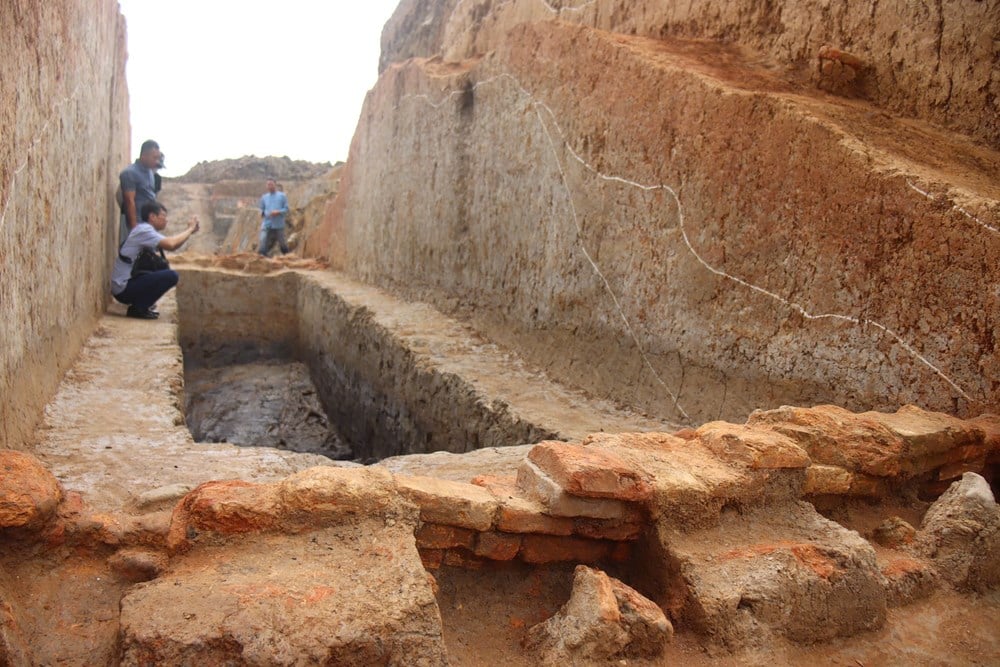
Experts hypothesize that the Citadel of Dền was likely built during the Early Lê Dynasty.
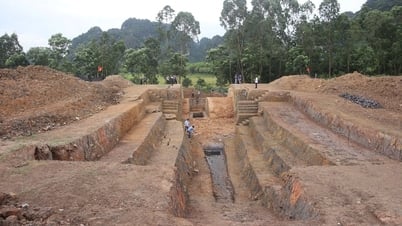
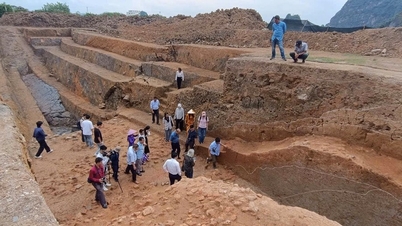
The archaeological excavation of Hoa Lu citadel (Den section), which temporarily concluded in mid-June, was not only the first time this area had been "deeply explored" through the layers of relics, but also a rare opportunity for researchers and archaeologists to directly "read" history from the very structure of the cultural layers. Two large excavation pits with a total area of over 600m² were opened at two key locations: a 450m² pit cutting across the citadel at its longest section, and a 150m² pit at the eastern end of the wall.
The technique of building ramparts is Vietnamese.
As mentioned, Den Citadel is a section of earthen ramparts within the ancient Hoa Lu citadel system, holding a particularly important position. However, this section of rampart, still shrouded in mystery, has not been comprehensively studied in terms of scale, structure, and construction techniques, making its identification difficult. Therefore, the selection of the excavation site at Den Citadel was carefully considered to serve both the goals of restoration and structural comparison. As a result, the stratigraphic layers are clearly revealed, from the modern embankment (up to 6m thick due to decades of waste disposal), to the dike embankment from the mid-20th century, and gradually revealing the city wall embankment dating back to the 10th century.
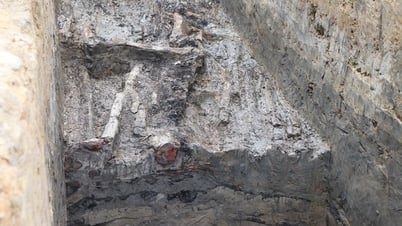
The most remarkable layer is the city wall foundation, a discovery of exceptional value to Vietnamese archaeology. The foundation is approximately 2 meters thick and lies 1.4 meters below the surface of the present-day rice fields. Unlike later constructions that used stone or mortar, the ancients built the foundation using a unique method, alternating layers of leaves, tree trunks, and clay in a clear sequence.
According to Dr. Nguyen Ngoc Quy (Institute of Archaeology), who led the excavation, this technique allowed the wall to stand firmly on weak, marshy soil without sinking or cracking. “The ancients built the foundation using a ‘biological compaction’ method: a layer of leaves for waterproofing, tree trunks for elasticity, and clay for binding. Natural compression from above pressed the layers together into a stable mass,” Dr. Quy explained. Beneath the foundation, archaeologists also discovered compressed vegetation, a testament to long-term load bearing. This is compelling evidence demonstrating the high level of technical skill of the Vietnamese people in the 10th century.
Above the foundation is the wall, built in a "buffalo ridge" style, meaning the earth is piled in undulating layers to create a solid structure. The core of the wall is approximately 6.6m wide, using fine, grayish-white clay, compacted thoroughly. The two sides are covered with a layer of pliable reddish-brown earth, creating a slope for drainage. Above this is a layer of clay 0.5-0.9m thick, reinforced with evenly spaced broken bricks, both to prevent erosion and to increase surface durability. A cross-section of the wall reveals a distinct trapezoidal shape: the outer slope is approximately 33 degrees, and the inner slope is approximately 23 degrees, making it difficult to overcome and utilizing lateral pressure for stability. The total surface width reaches 16.5m.
According to Mr. Quy, based on the excavation results, the research team hypothesized that this section of the wall may have been built during the Early Le Dynasty. The first basis for this hypothesis is that the entire wall was constructed in a single step using a standardized technique, indicating a synchronized construction process. Secondly, the brick covering the wall's roof consists entirely of reddish-brown broken bricks, a common type in Cham architectural structures.
Historical records state that in 982, Lê Hoàn sent Ngô Tử Canh and Từ Mục as envoys to Champa, but they were captured by the Champa king, Bê Mi Thuế. Enraged, Lê Hoàn personally led his army to attack Champa, killing Bê Mi Thuế in battle, capturing thousands of prisoners and valuable treasures, destroying the city's fortifications, and returning to the capital within a year. The Song Dynasty historical records also document Lê Hoàn sending envoys to present 93 Champa prisoners to the Song emperor to demonstrate the strength of Đại Cồ Việt. After this victory, the king ordered the construction of many large palaces within the citadel. Excess materials, such as broken bricks, may have been moved to the expanded northern defense area to reinforce the city walls, including the Thành Dền section.
"The walls built during the Dinh Dynasty were mainly concentrated in the inner citadel. The expansion of the defensive line outwards likely occurred during the Early Le Dynasty, when the court had manpower and resources, including prisoners of war," one expert commented.
Another notable discovery was the outer moat system. The first excavation pit, extended northward to the Hoang Long River, revealed a depression about 1.2 meters deeper than the wall foundation, likely a water entrance where ships could enter and exit the citadel. This was identified as a defensive moat, now filled with modern excavated soil, with only traces remaining in the stratigraphy. Within the moat, there are still traces of unevenly spaced wooden piles.
Preliminary analysis suggests these stakes were most likely used to block boats or prevent the enemy from crossing the moat. The moat surface still bears traces of wood, brick, earthenware, and glazed materials, indicating sedimentation from the ramparts. Notably, the earth used to build the walls appears to have been taken from the moat itself, a kind of "earth-crossing" where the moat was dug and the ramparts built simultaneously, saving effort and creating a double defense system.
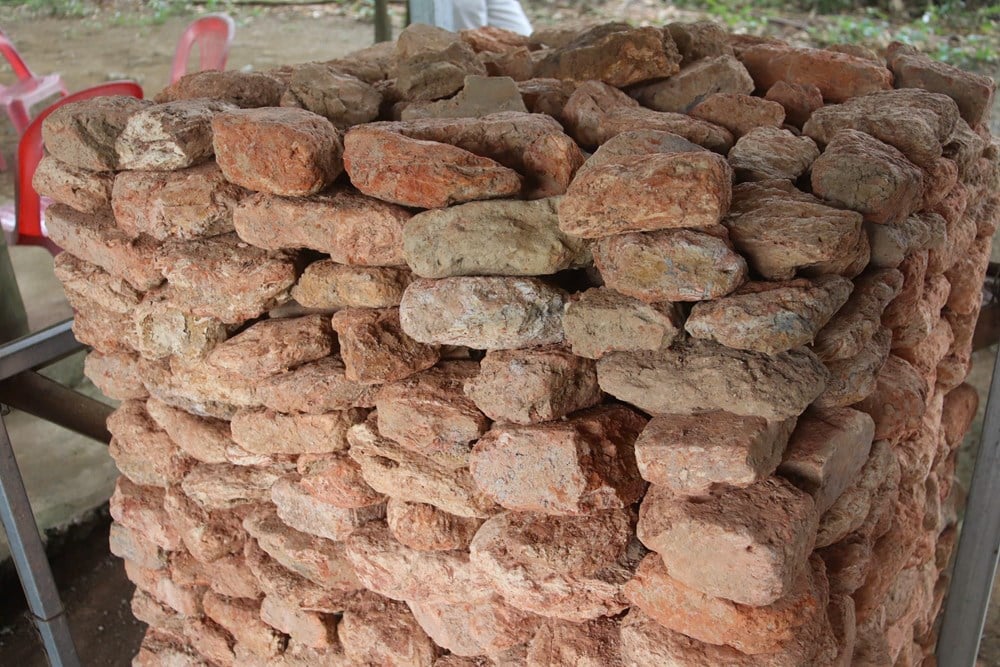
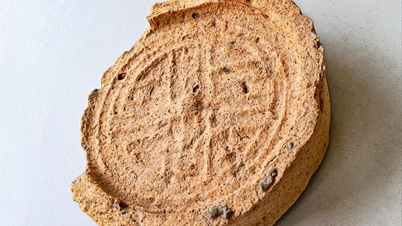
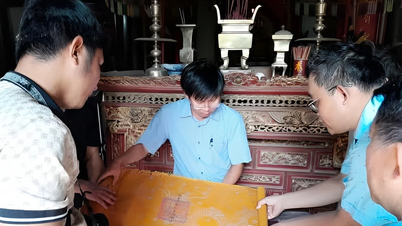
Brick fragments discovered during excavation of Den citadel.
Location and people
The Dền citadel wall did not exist in isolation. By comparing it with other sections of the ancient Hoa Lư citadel such as the East wall (1969), the Northeast wall (2024), and the South wall (2000), it can be confirmed that the Vietnamese people of the 10th century applied a consistent citadel construction model: thick foundation, brick and stone edging, buffalo-ridge-shaped body, and a moat surrounding it.
From the stratigraphic cross-section, the Dền citadel appears as a layer of military sediment molded by both experience and intuition. The 2-meter-thick foundation, like a giant cushion made of leaves, tree trunks, and clay, seems fragile but is surprisingly stable. Both sides of the foundation are "locked" with broken bricks and boulders, maintaining stability for hundreds of years. The walls curve like buffalo ridges, the clay compacted and covered with broken bricks to both drain water and prevent erosion. The moat in front, now filled in, was once the last line of defense and the source of earth for building the citadel. The repetition of this model in many sections of the citadel shows that this was not a situational solution, but a proactive strategy based on the terrain, local materials, and military experience accumulated from Cổ Loa, Luy Lâu…
The Citadel of Dền is not just a section of earthen wall. It is a physical symbol of an entire era of nation-building and defense, when people knew how to utilize nature, land, water, and mountains to create solid defensive lines. Each layer of earth is a layer of history. Each broken brick, each branch pressed under the foundation is evidence of a technique never taught, yet enduring for over a thousand years. The citadel is not high, nor made of granite, but it once served as a protective shield for a young nation. With what has just been revealed, the ancient citadel of Hoa Lư deserves to be recognized not only as an archaeological site, but also as a witness to a dynasty that knew how to use geographical location and the will of its people as strength in nation-building and defense.
(To be continued)
Source: https://baovanhoa.vn/van-hoa/lo-dau-tich-kien-truc-moi-la-144302.html

























![[Photo] Reception to welcome General Secretary and President To Lam and his wife on their State visit to the Philippines](https://vphoto.vietnam.vn/thumb/1200x675/vietnam/resource/IMAGE/2026/06/01/1780295488620_vna-potal-chieu-dai-chao-mung-tong-bi-thu-chu-tich-nuoc-to-lam-va-phu-nhan-tham-cap-nha-nuoc-toi-philippines-8798060-7855-jpg.webp)
































































Comment (0)