

The Ministry of Education and Training has just posted the draft Circular promulgating the Regulations on postgraduate admissions and training on the Ministry's electronic portal to solicit public opinion as prescribed. One of the notable points of the draft is the strong shift from managing the training process to managing the quality of training, output standards, and accountability of training institutions.
Transforming the management model
For the first time, the draft introduces a mechanism to exempt doctoral students with outstanding research results that meet high international standards from independent peer review, requiring at least 3 WoS/Scopus publications (from prestigious international journals) directly related to the dissertation, including at least 2 publications in the Q1 group (highest ranking).
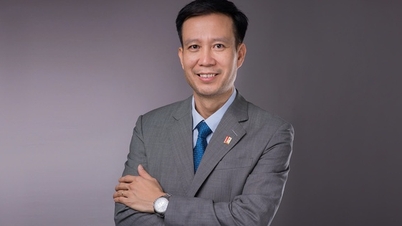
Dr. PKT believes this is a necessary adjustment in the context of Vietnamese higher education shifting strongly from expanding scale to improving quality, output standards, and accountability.
On the positive side, the draft clearly demonstrates the spirit of increasing autonomy for higher education institutions, but without loosening management. The Ministry of Education and Training shifts from detailed process management to management based on minimum standards, quality, output standards, transparency, and accountability.
The draft also shows progress by clarifying the requirements for scientific publication and independent peer review of doctoral dissertations; it also proposes a mechanism to exempt doctoral students with outstanding research results from independent peer review. If this regulation is designed rigorously, it will create an incentive for doctoral students to publish internationally in a substantive manner, rather than simply completing their dissertations formally.
However, Dr. PKT argues that this issue needs to be viewed cautiously. Setting international publication standards is correct, but it must be avoided to apply them mechanically across fields. If the regulations are not tiered by discipline and field, it could create pressure to prioritize the quantity of articles, and even lead to the risk of publishing in low-quality journals.
Therefore, it is necessary to clearly define the criteria for journals, the role and contribution of doctoral students, the direct relevance of articles to dissertations, and mechanisms for controlling academic integrity.
Set against the backdrop of the Central Committee's Resolution 71 on breakthroughs in education and training development, this draft aligns with the spirit of developing high-quality higher education, training highly skilled human resources, increasing autonomy, linking training with science and technology, and integration.
The draft is also consistent with the direction of Resolution 57, which considers highly skilled human resources, science and technology, innovation, and digital transformation as drivers of national development.
Warning about the risk of legitimizing dissertations lacking depth.
Professor Phung Ho Hai, from the Institute of Mathematics (Vietnam Academy of Science and Technology), believes that independent peer review is the most objective step in the entire doctoral training process. "Removing the requirement for independent peer review, even for dissertations considered excellent according to certain criteria, is a step backward in scientific evaluation," Professor Phung Ho Hai stated.
Mr. Hai argued that by allowing the opening of a training program domestically, the Ministry of Education and Training had already acknowledged that the university's scientific staff was competent enough to guide and evaluate the results of doctoral students in that field. So why issue a circular allowing the system to rely entirely on evaluations from foreign journals?
Professor Phung Ho Hai affirmed that independent peer review is indispensable for any doctoral student. Any difficulties arising from organizing independent peer review, if they occur, stem from improper implementation, such as selecting reviewers with unsuitable expertise, conflicts of interest, or conducting reviewers beyond the permitted deadline without replacing them.
An expert questioned whether a doctoral dissertation is simply a collection of disparate articles. This expert raised a series of issues regarding the requirement of only three articles under the Ministry of Education and Training's policy of exempting the dissertation from independent peer review.
If the three papers intended to replace the blind peer review lack thematic coherence and are merely patchwork pieces from different topics to meet the required number, then the resulting collection will only create a "junk thesis." Exempting the review in this case would inadvertently legitimize low-quality, shallow, and unsystematic works.
In academia, the value of different publication formats varies greatly. The draft currently fails to clarify: what is the length of those three articles? Are they journal articles or conference proceedings, review papers, commentaries, or part of a lecture series?
In terms of length, a 30-page article can be equivalent to, or even surpass, 3-4 short articles. Regarding type, if the ministry equates all types of publications, the consequences will be significant.
According to this expert, another major challenge that regulators need to confront is the phenomenon of "slicing," meaning that a large study is deliberately fragmented, data is altered, certain variables are manipulated, or the model/target subjects are changed in order to publish multiple papers in different journals. Without a closed peer review system to assess originality, how can the authorities prevent this academic exploitation?
On the other hand, there must be criteria to determine how a doctoral student contributes to that paper. This expert stated that international experience always requires doctoral students to demonstrate that their independent contribution is significant enough to constitute a worthy dissertation, regardless of how many papers they co-author.
The final criterion to consider is the standard of the field of publication. If three papers that are "out of sync" with the research specialization are used to exempt a doctoral degree from blind peer review, it clearly demonstrates a blurring of the lines regarding the quality standards of the specialization.
Source: https://znews.vn/lo-ngai-ha-chuan-dao-tao-tien-si-post1653204.html
![[Image] Hanoi's urban life under the challenge of a "scorching hot" environment](https://vphoto.vietnam.vn/thumb/1200x675/vietnam/resource/IMAGE/2026/05/25/1779706979265_nang-nong-t5-2026-minh-duy-7-4636-jpg.webp)


![[Image] Close-up view of the interchange connecting the two expressways and Long Thanh Airport.](https://vphoto.vietnam.vn/thumb/1200x675/vietnam/resource/IMAGE/2026/05/25/1779703378210_ndo_br_z7863716673926-224453a31600126cce10622af6290afd-4549-jpg.webp)





































































Comment (0)