

 |
| Vietcombank will offer 6.5% of its capital for sale in 2026, making it the most anticipated investment deal of the year. |
Bustling since the beginning of the year.
Entering 2026, M&A activity in the banking sector will see many acquisitions, share sales, and divestments in major banks, with state-owned commercial banks leading the way.
In mid-January 2026, the Vietnam Investment and Development Bank ( BIDV ) announced a list of 33 investors participating in a private placement of over 264 million shares. The offering is expected to take place in the first quarter of 2026 and will bring BIDV 10,272 billion VND. Many professional institutional investors are participating in this offering, including: the State Capital Investment and Business Corporation (SCIC), the group of investors associated with Dragon Capital, SSI Fund Management Company Limited (SSIAM), Darasol Investments Limited, Manulife Vietnam, etc.
However, the most anticipated "mega" deal of 2026 is the offering of 6.5% of Vietcombank's capital. At the end of January 2026, Vietcombank took new steps to activate this transaction. Accordingly, the bank sent invitations to consulting firms to submit quotations for independent valuation services for the aforementioned private placement of shares. This move indicates that the bank is finalizing the crucial technical steps to prepare for the private placement of shares after more than six years of delay.
Previously, Vietcombank's 2025 Annual General Meeting of Shareholders approved a plan to offer up to 6.5% of its capital to a maximum of 55 investors, to be carried out in one or more tranches during 2025-2026. It is estimated that this capital sale could bring Vietcombank $1.3-$1.4 billion, comparable to the sale of 15% of VPBank 's capital to SMBC (Japan) – currently the largest M&A deal in the banking sector.
Resolution No. 79-NQ/TW, issued in early 2026 on the development of the state-owned economy, which sets a target of having at least three state-owned banks in the Top 100 largest banks in Asia by total assets by 2030, is also one of the factors accelerating Vietcombank's capital divestment transaction.
Among private commercial banks, the most attractive deal is the sale of 32.5% of Sacombank's shares. These shares were pledged by Mr. Tram Be's group to VAMC to secure a 10,000 billion VND loan at preferential interest rates, aimed at helping the bank resolve its liquidity crisis at the time of its merger with Phuong Nam Bank in 2015. Previously, analysts predicted the approval process for the sale could take place in the second half of 2026. However, with the change in Sacombank's senior leadership just before the start of 2026, the sale is likely to happen sooner than planned.
Specifically, in late 2025 and early 2026, the market was shaken by a surprising leadership transition. Accordingly, Mr. Nguyen Duc Thuy officially stepped down as Chairman of the Board of Directors of LPBank, completing his divestment and moving to assume the role of Acting General Director of Sacombank. The appearance of additional members on Sacombank's Board of Directors may shed more light on the bank's new shareholder groups.
With the legal impetus, many promising "brides" are waiting to find their grooms.
Looking back over the past two years, the focus of bank M&A has been on "cleaning up" weak banks to serve the restructuring of the system. Accordingly, four weak banks – CBBank, OceanBank, GPBank, and DongA Bank – were compulsorily transferred to Vietcombank, MB, VPBank, and HDBank in 2024-2025.
However, in the coming period, M&A activities will be more market-oriented. A prominent feature of M&A in this period is the search for foreign partners to strengthen financial, technological, and management capabilities.
 In the coming period, the M&A market will be very vibrant, not just in the financial and banking sector. With this new trend, we are completely confident in our ability to restructure businesses and attract huge amounts of foreign investment. This will be an important driving force to boost the country's GDP growth to double digits.
- Mr. Do Quang Vinh, Vice Chairman of the Board of Directors of SHB
The legal impetus from Decree 69/2025/ND-CP, which allows for an increase in foreign ownership ratios up to 49% for banks undergoing mandatory transfers, will also create new momentum for bank M&A in the coming period, creating attractive opportunities for banks to attract strategic investors.
Accordingly, thanks to the benefits from the mandatory acquisition of weak banks, MB, HDBank, and VPBank will have the opportunity to increase their foreign ownership limit to 49%. This is a sharp weapon that will help these banks become attractive "brides" waiting for "grooms". If they take advantage of it well, MB, HDBank, and VPBank will be the focal point leading the wave of bank M&A in the 2026-2030 period.
Furthermore, weak banks that have undergone mandatory transfer and successful restructuring (Vikki Bank, MBV, VCBNeo, GPBank) will also be valuable assets in the M&A market. By the end of 2025, all four banks that underwent mandatory transfer will have started to turn a profit.
In addition to the above factors, the pressure for growth in the coming period will also force banks to accelerate their plans to find foreign partners. At the end of 2025, at the extraordinary general meeting of shareholders, LPBank adjusted the maximum ownership ratio of foreign investors from 5% to 30%.
Previously, the CEO of Techcombank stated that the bank would consider selling 15% of its stake to a foreign strategic investor.
At VIB, the divestment of foreign shareholder CBA has created significant room for the bank to attract new strategic partners. Meanwhile, at SHB, the search for a foreign strategic partner continues after numerous unsuccessful negotiations.
Currently, there are more than a dozen banks on the market with foreign ownership limits below 5%, mostly smaller banks. According to analysts, the pressure to increase capital to meet Basel III standards and satisfy double-digit growth targets in the coming period is immense. Therefore, more and more banks will want to attract strategic investors.
Besides direct equity sales, banks will also have more opportunities to attract foreign capital through the stock market, thanks to the upgrade effect. After being officially upgraded by FTSE Russell in September 2026, foreign capital is likely to flood the market, with banks with large market capitalization being among the first to benefit. However, not all banks will attract the attention of foreign investors.
A PwC report indicates that foreign investors are particularly interested in the digital transformation capabilities, ESG (Environmental, Social, and Governance) models, and risk management capabilities of domestic banks. Transparency is considered a key factor in closing deals, creating momentum to drive overall economic growth.
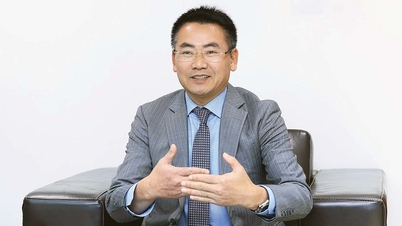
Based on his experience negotiating with foreign partners through numerous M&A deals, Mr. Do Quang Vinh, Vice Chairman of the Board of Directors and Deputy General Director of SHB Bank, shared that the core factor that international investors care about is transparency. Once finances are transparent, the ability to access foreign capital will be higher, helping to enhance the potential and position of businesses in the market.
Regarding SHB, Mr. Vinh stated that the bank is still seeking a suitable strategic partner with a shared vision.
"Support from foreign partners goes beyond just registered capital; it involves strengthening operational processes, improving efficiency, and leveraging global networks. The collaboration shouldn't be limited to a single M&A deal, but rather a partnership for mutual development, joint business operations, and creating advantages for both parties," Mr. Vinh stated.
Banking experts also believe that attracting foreign capital through M&A is a key strategy to elevate Vietnam's banking system. The presence of foreign partners not only provides domestic banks with significant capital to meet medium- and long-term lending needs, but also opens up opportunities to access new technologies, modern business models, and advanced risk management expertise.
Although many Vietnamese banks still lack foreign strategic partners and have significant vacant foreign ownership limits, selling equity is not easy for all banks. Dr. Le Xuan Nghia, a banking expert, notes that foreign investors' preferences have changed. Previously, many foreign banks sought out small, weak banks with the ambition of negotiating and acquiring controlling stakes. Now, however, foreign investors primarily look for banks with transparent operations, risk management approaching international standards, stable profit growth, and a long-term vision.
Therefore, although it is predicted that more foreign capital will flow into Vietnam in the coming period, this expert recommends that banks need to restructure themselves, strengthen their own capabilities, and improve their governance and transparency to seize the opportunity.
Source: https://baodautu.vn/loat-thuong-vu-ngan-ty-cho-chot-so-d512599.html

![[Photo] The General Secretary, President and his wife meet with Vietnamese-Chinese friendship leaders.](https://vphoto.vietnam.vn/thumb/1200x675/vietnam/resource/IMAGE/2026/04/15/1776264829725_vna-potal-tong-bi-thu-chu-tich-nuoc-to-lam-gap-mat-nhan-sy-huu-nghi-viet-nam-trung-quoc-8703641-3130-jpg.webp)
![[Photo] My Son at night: A thousand-year-old heritage site amidst the Milky Way](https://vphoto.vietnam.vn/thumb/1200x675/vietnam/resource/IMAGE/2026/04/15/1776261039184_ndo_br_chon6-jpg.webp)
![[Photo] Mrs. Ngo Phuong Ly meets and exchanges views with Mrs. Peng Li Yuan](https://vphoto.vietnam.vn/thumb/1200x675/vietnam/resource/IMAGE/2026/04/16/1776277858080_phu-nhan-1-jpg.webp)

![[Photo] National Assembly Chairman Tran Thanh Man attends the opening session of IPU-152](https://vphoto.vietnam.vn/thumb/1200x675/vietnam/resource/IMAGE/2026/04/16/1776277863731_ctqh5-jpg.webp)





































































Comment (0)