


According to Dr. Trinh Hong Son, Director of the Center for Nutrition Education and Communication (Institute of Nutrition): Micronutrients are essential vitamins (such as vitamins A, B, C, D, E...) and minerals (such as iron, zinc, iodine, calcium, magnesium...) that the body only needs in very small amounts. However, these micronutrients play an extremely important role, helping the body produce enzymes, hormones, and other substances necessary for normal growth and development; helping to strengthen the immune system, develop stature and intelligence, and improve overall health.
Micronutrient deficiencies can significantly impact human health. In young children, deficiencies in iron, zinc, and vitamin A weaken the immune system, hinder development, reduce concentration, and cause learning difficulties. For pregnant women, deficiencies in iron, zinc, and folic acid increase the risk of maternal immunosuppression, slow fetal development, and reduce productivity.
In Vietnam, the prevalence of anemia in children aged 6 to 59 months is 18.1%, in pregnant women is 25.4%, and in women of childbearing age is 16.2%; the prevalence of subclinical vitamin A deficiency in children aged 6 to 59 months is 8.9%, reaching 13.4% in the Northern Midlands and mountainous regions; the prevalence of low vitamin A levels in breast milk among breastfeeding mothers is 16.7%; and iodine deficiency is still prevalent in many areas…
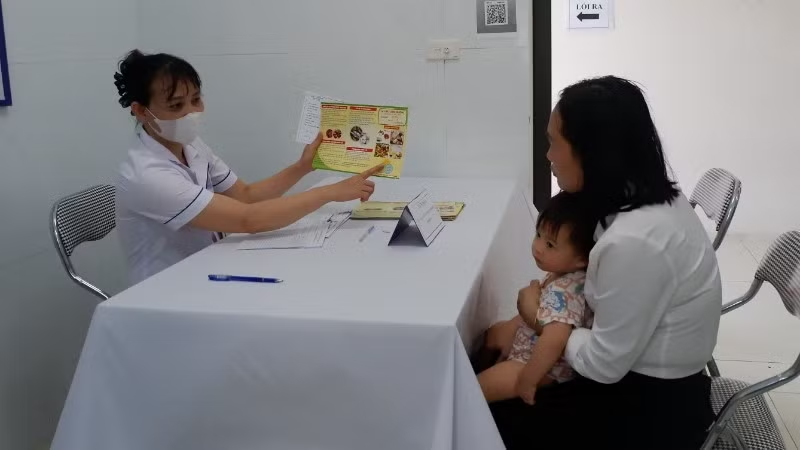
Therefore, preventing and combating micronutrient deficiencies is a task that needs to be carried out regularly and continuously, with the coordination of the health sector, local authorities, schools, families, and the community. The National Institute of Nutrition recommends that families take children of appropriate age to receive vitamin A supplements as guided by the commune/ward health station; at the same time, maintain a diverse and balanced diet, use foods rich in micronutrients, and practice proper nutritional care. These are practical solutions to contribute to improving the health, stature, and intelligence of children, while also improving the health and quality of life of the Vietnamese people.
From nutritional practices
The National Institute of Nutrition has issued seven guidelines for nutritional practice. These guidelines emphasize eating a sufficient and varied diet, combining different food groups; increasing consumption of vegetables, fruits, and foods rich in micronutrients. No single food provides all the necessary nutrients for the body's needs. Vegetables, fruits, and ripe fruits are sources of vitamin C, beta-carotene (precursor to vitamin A), potassium, fiber, and natural antioxidants, contributing to a healthy digestive system and supporting the prevention of non-communicable diseases.
Breastfeed your baby within the first hour after birth; exclusively breastfeed for the first 6 months and continue breastfeeding until 24 months of age or longer, combined with appropriate complementary feeding. Breast milk is the optimal and most perfect source of nutrition for the development of infants and young children. Breastfeed exclusively for the first 6 months. From 6 months of age (180 days), energy needs increase, and children need to eat foods other than breast milk (complementary feeding or solid foods); breast milk continues to be an important source of energy and nutrients until the child is 24 months old or longer.
Children aged 24 months and older should be dewormed twice a year; practicing personal hygiene, food hygiene, and environmental hygiene are essential to prevent and control worm infections. Intestinal worm infections are one of the leading causes of malnutrition, stunting, and iron-deficiency anemia in children in the community.
Women of childbearing age and pregnant women need to take adequate iron, folic acid, or multivitamin supplements as directed by healthcare professionals . Throughout pregnancy, the need for blood-forming substances and micronutrients, especially iron and folic acid, increases significantly to support fetal development and the mother's increased circulatory volume. Therefore, supplementing these substances plays a crucial role in the health of both mother and fetus.
Older adults need to maintain a healthy diet and physical activity; prioritizing foods rich in high-quality protein (meat, fish, eggs, milk, beans, etc.) and micronutrients (calcium, vitamin D, vitamin B12, etc.) to boost health and prevent osteoporosis. A diet rich in high-quality protein combined with sufficient calcium and vitamin D is fundamental to protecting a strong musculoskeletal system.
Daily sun exposure, increased physical activity, and an active lifestyle are essential for healthy bones. Vitamin D acts as a guide, activating the absorption of calcium from the intestines into the bloodstream to participate in bone formation. It's worth noting that 80% to 90% of the body's vitamin D needs are naturally synthesized in the skin's epidermis under the influence of ultraviolet rays from sunlight.
Regular health checkups and nutritional counseling are essential for early detection and prevention of micronutrient deficiencies. In the initial (preclinical) stage, micronutrient deficiencies often show no specific symptoms that can be observed visually. Clinical damage only becomes apparent when the body's micronutrient reserves are completely depleted. Therefore, proactive regular health checkups are the only way to accurately assess micronutrient levels and develop timely nutritional adjustments.
Towards preventive intervention
According to Associate Professor, Dr. Tran Thanh Duong, Director of the Institute of Nutrition, among essential micronutrients, vitamin A plays a crucial role in growth, vision, protection of epithelial integrity, and strengthening the immune system of children. To address vitamin A deficiency, supplementing children with high doses of vitamin A is an effective, safe, and low-cost preventive nutritional intervention that brings significant benefits in preventing vitamin A deficiency and improving children's health...
Over the years, Vietnam has regularly organized annual campaigns to supplement children with high doses of vitamin A. This is an important intervention aimed at preventing and combating vitamin A deficiency, contributing to protecting eyesight, strengthening immunity, and supporting the comprehensive development of children.
According to the report on the implementation of the vitamin A supplementation campaign in 2025, nearly 12 million vitamin A capsules were distributed, including 1,803,123 capsules of 100,000 international units (IU) and 10,190,677 capsules of 200,000 IU. In 2025, the program distributed 14,785,554 multivitamin tablets to pregnant women. The multivitamin tablets contain 15 vitamins and minerals according to the World Health Organization's formula.
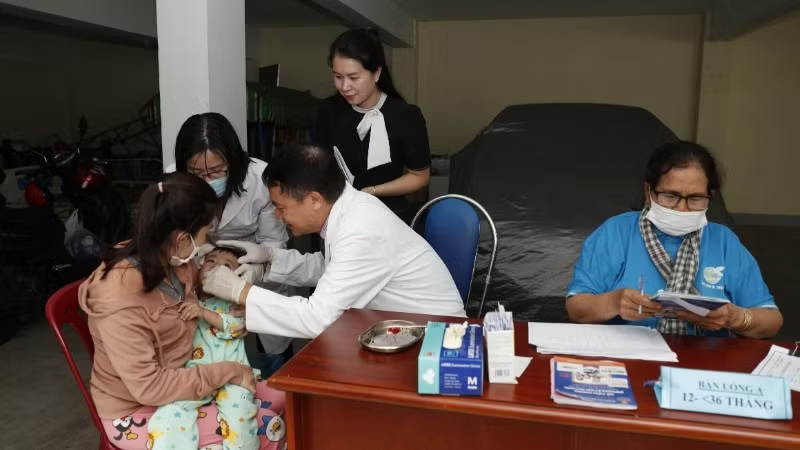
In 2026, the National Institute of Nutrition issued a decision on the allocation of vitamin A supplements to provinces/cities to serve the first phase of the 2026 Vitamin A Supplementation Campaign. According to the guidelines, the campaign will be organized in two phases during the year: phase 1 in June and July, and phase 2 in December; the implementation locations will be at distribution points in communes and wards.
These days, many localities across the country are simultaneously implementing a campaign to supplement vitamin A for children aged 6 months to under 60 months (specific age ranges vary by locality) and other high-risk groups for vitamin A deficiency, such as those with measles, children with severe acute malnutrition, acute respiratory infections, or prolonged diarrhea. The target for vitamin A supplementation is at least 98% of the target group to ensure that children in this age group have full access to this important intervention.
Source: https://nhandan.vn/loi-giai-cho-bai-toan-nan-doi-tiem-an-post966446.html




![[Photo] General Secretary and President To Lam presides over a meeting on preparations for the review of one year of operation of the three-tiered government system.](https://vphoto.vietnam.vn/thumb/1200x675/vietnam/resource/IMAGE/2026/06/02/1780391821195_a1-bnd-4595-9717-jpg.webp)
















![[Photo] General Secretary and President To Lam presides over a meeting on preparations for the review of one year of operation of the three-tiered government system.](https://vphoto.vietnam.vn/thumb/402x226/vietnam/resource/IMAGE/2026/06/02/1780391821195_a1-bnd-4595-9717-jpg.webp)



























































Comment (0)