


She had advised her mother several times to replace the wood-burning stove with a gas stove, but her mother ignored her, seemingly refusing. Even though others had been using electric and gas stoves for a long time, her mother remained loyal to the old stove with its straw-covered burner in the smoky, sooty kitchen. The space, entirely covered in layers of black, so thick it seemed it could be peeled away, strangely captivated her.
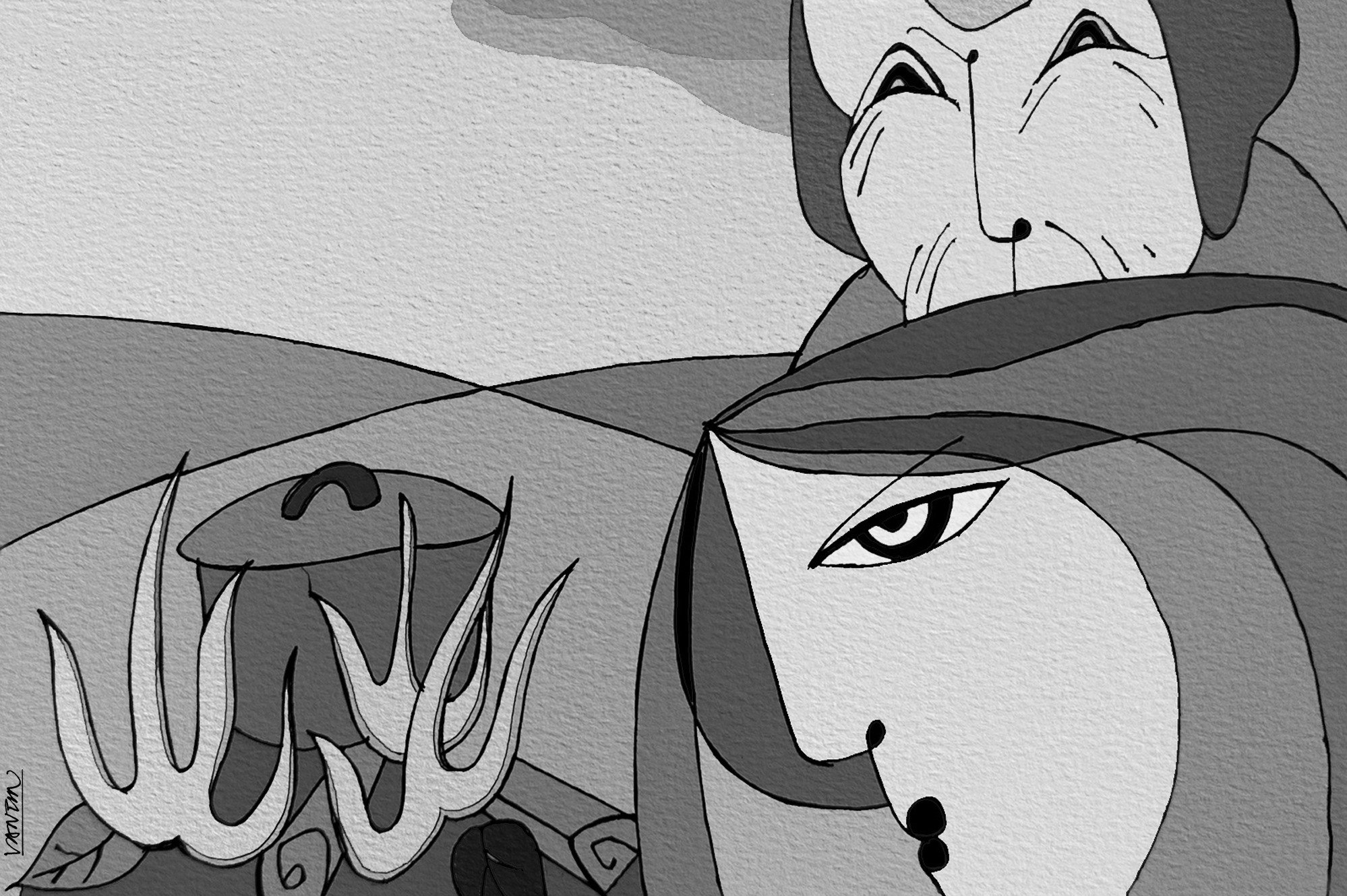
Broken branches and fallen leaves are gathered here, fueling the fire for today and many days to come. The jackfruit, mango, and sapodilla trees in the garden shed their leaves daily, keeping her busy sweeping and thus providing a constant supply for the fire, keeping it burning brightly. The firewood is stacked in piles in the kitchen shed, topped with tightly packed bamboo baskets of dry leaves. The firewood isn't just for cooking daily meals; it's also for some unspecified future: "When our parents pass away, we must have firewood to boil water to offer to our relatives," she often says.
She lives in the city, and every time she returns to her hometown, she makes delicious meals for her parents, sparing no effort or expense, but she feels uneasy in the kitchen. She finds it uncomfortable from the hunched posture in the kitchen to the way she sits with her knees drawn up while cooking; sometimes, the firewood is wet, and blowing on it makes her breathless, and tears well up in her eyes because of the smoke. Burning garbage sends ash flying everywhere, sticking to her clothes. Furthermore, everything she touches is covered in soot; after cooking a meal, she scrubs until her hands are red, yet the hateful black stains remain. The water in the basin is a distance from the stove, so washing dishes or fetching water requires going back and forth, tiring her legs. Even the bowls and chopsticks are covered in soot; the grimy space she was used to suddenly feels unpleasant.
My sister bought sparkling clean pots and pans to replace the old ones with broken handles and blackened inside and out. As soon as I went back to town, my mother cleaned them and put them away, using the old ones as usual. Even the new bowls and plates I bought were carefully stored in the cupboard, reserved for special occasions; normally, we still use the old, dark-colored dishes. The kitchen was smoky and cramped, making me feel suffocated, but it seemed comfortable for my mother, who continued to work there from morning till night, even needing to lean against the wall to stand up or sit down.
"Why do I have to suffer so much with the unreliable firewood?" she wondered to herself, afraid to say it aloud for fear of upsetting her mother, who would think she was losing touch with her roots. She tried to cope by preparing a lot of food in advance and taking it back to her hometown to minimize cooking. The refrigerator was small and couldn't keep food fresh for long, so the best food spoiled after a few days. Confused, she tried to figure out how to manage the firewood situation, the hardest part being getting her mother to agree and change her mind.
She speculated that the first reason her mother hesitated to give up her makeshift firewood stand was the money. Having scrimped and saved her whole life, and also accumulated money from her children and grandchildren, her mother was never short of cash, and every year she asked her children to put money into savings. Despite having money, her thrifty nature had become ingrained. Her children had repeatedly said in unison, "Buy whatever you like, don't be stingy, Mom." Her response left them bewildered: "We're used to it." They were used to the old couple's meals often consisting of just a few shriveled braised fish or pickled vegetables, but they would raise a few ducks or save a dozen eggs to send to the "youngsters" in town. They wouldn't dare eat a ten-thousand-dong steamed bun or a plate of rice cakes, but whenever their grandchildren came to visit, they would slip them hundreds of dong, insisting they take it. She had repeatedly tried to stop them: "They don't lack anything, Mom, keep it for yourself." Seeing the rolled-up banknote held out persistently in the thin hand, as if pleading, the woman turned to the recipient and said, "No, let Grandma buy fish, child." Hearing the child say "no" and run away, the grandmother frowned, "I'm giving it to the child, not to you!"
Despite her repeated attempts to persuade her mother to switch from a straw-burning stove to a gas stove, the daughter lost patience, her voice tinged with annoyance: "Mom, don't stop me anymore. Next week, I'll take a few days off work and have a contractor redo the kitchen annex and install a gas stove." Seeing her mother's indifference, she tried to convince her: "You're getting old, Mom. If you're fumbling around with firewood and trash, you might fall into the stove and cause trouble." She then outlined her kitchen renovation plans, from expanding the space to building a proper stove, tiling, and buying racks for dishes, pots, pans, and baskets. Before her daughter could finish, her mother timidly interrupted: "But we'll still keep the wood-burning stove, right?" The daughter hesitated but somewhat "compromised": "Burning wood is smoky and dusty, but if you like it that way, it's fine." Finally, she concluded with something she thought would please her mother: "As for the cost, just leave it to me."
Father, having long passed the age of sixty and being easily swayed by his daughter's wishes, readily agreed: "Whatever." Mother remained indifferent, seemingly hesitant but not wanting to say anything. The daughter was surprised and disappointed: "Why, Mother?" Mother looked at the garden full of fallen leaves, her voice wistful: "I prefer the fire from wood and rubbish to the cold, blue light of a gas stove." Are fires different? Why not want happiness, but instead choose hardship? Mother's words confused the daughter, but she didn't dare question her rudely. Mother, as if understanding her daughter, softened her tone: "Alright, I'll figure it out."
If the old fisherman in the old story was astonished to see his humble dwelling suddenly transformed into a magnificent castle by a golden fish, then I felt a similar sensation when I saw my mother's kitchen during my subsequent visit home. It felt like a dream; the kitchen annex had been expanded to accommodate a gas stove, and the floor and walls were gleaming with ceramic tiles. From the dish rack to the chopstick holder and the pot rack, everything was made of polished stainless steel, even the spice jars were clear glass. The old, blackened wood-burning stove was still there, but tucked away in the corner, contrasting sharply with the bright space beside it. When I asked about the cost of this dream project, my mother smiled: "It didn't cost much." Still smiling, but her voice firm when I offered to contribute: "Put it away, I have money."
She was surprised once again to learn that her mother had bought a gas stove to please her children. Proof of this was that every time she returned to her hometown, she saw the kitchen always warmed by burning wood and garbage, while the gas stove next to it looked like a discarded item. It turned out that her mother didn't mind spending money on a new stove; she simply preferred the flame from straw and garbage. She then realized something else, from within herself. That was, when her mother could no longer cook for herself, the children living in the city took turns caring for the elderly couple, bringing with them the habit of using gas and induction stoves.
One rainy day, looking at her mother's wood-burning stove, she suddenly felt a pang of nostalgia. It had been so long since she'd cooked; the iron stove stand was cold and bare, standing alone amidst the scattered ashes pecked at by chickens. She suddenly remembered the glowing charcoal stove every morning and evening, the smoldering rice husks that warmed the kitchen day and night; the smoke embracing the thatched roof at dusk; the sweet potatoes and cassava buried in the embers, eaten while blowing on them, their mouths stained with soot. The image of the whole family gathered around the pot of sticky rice cakes, warming their freezing hands over the embers, waiting for New Year's Eve – an image that had been immortalized in music, painting, and poetry, but was now so distant from her, suddenly came to mind.
She suddenly realized that firewood was like a thermometer measuring the warmth in each home. Houses where the fire was rarely lit and smoke rose were often churches or homes without occupants; houses with irregular cooking might be experiencing unpleasant events. Conversely, a regularly burning, blazing fire three times a day was a sign of warmth, abundance, and harmonious family reunion.
In the distant future, many young people will likely only know the hearth fueled by wood and garbage – a familiar image of the countryside – through books or the stories of the elderly. This premonition fills her with a sense of melancholy and regret.
Seeing the fallen leaves scattered all over the garden, she picked up a broom, gathered them up, brought them into the kitchen, and lit a fire. Her mother, who had been dozing in the upstairs room, suddenly sat up, looking puzzled: "Where's that smell of wood and rubbish?" Her daughter came up from downstairs, smiling: "I lit the fire, Mom."
The fire from the hearth radiated warmth, heating the house.
Source

![[Photo] Prime Minister Pham Minh Chinh receives Canadian Minister of International Development Randeep Sarai](/_next/image?url=https%3A%2F%2Fvphoto.vietnam.vn%2Fthumb%2F1200x675%2Fvietnam%2Fresource%2FIMAGE%2F2026%2F01%2F06%2F1767708661052_image123-3433-jpg.webp&w=3840&q=75)


![[Image] Fifth meeting of the Steering Committee for National Projects in the Railway Sector](/_next/image?url=https%3A%2F%2Fvphoto.vietnam.vn%2Fthumb%2F1200x675%2Fvietnam%2Fresource%2FIMAGE%2F2026%2F01%2F06%2F1767712857541_ndo_br_dsc-0581-jpg.webp&w=3840&q=75)











































































Comment (0)