

"There is clear evidence that war crimes have occurred in the latest outbreak of violence in Israel and Gaza," a United Nations committee stated on October 10, just three days after the conflict erupted.
To date, the conflict shows signs of further escalation as the Israel Defense Forces operate deep inside the Gaza Strip. Casualties continue to rise following Israeli airstrikes, such as the two bombings of Jalalia, Gaza's largest refugee camp.
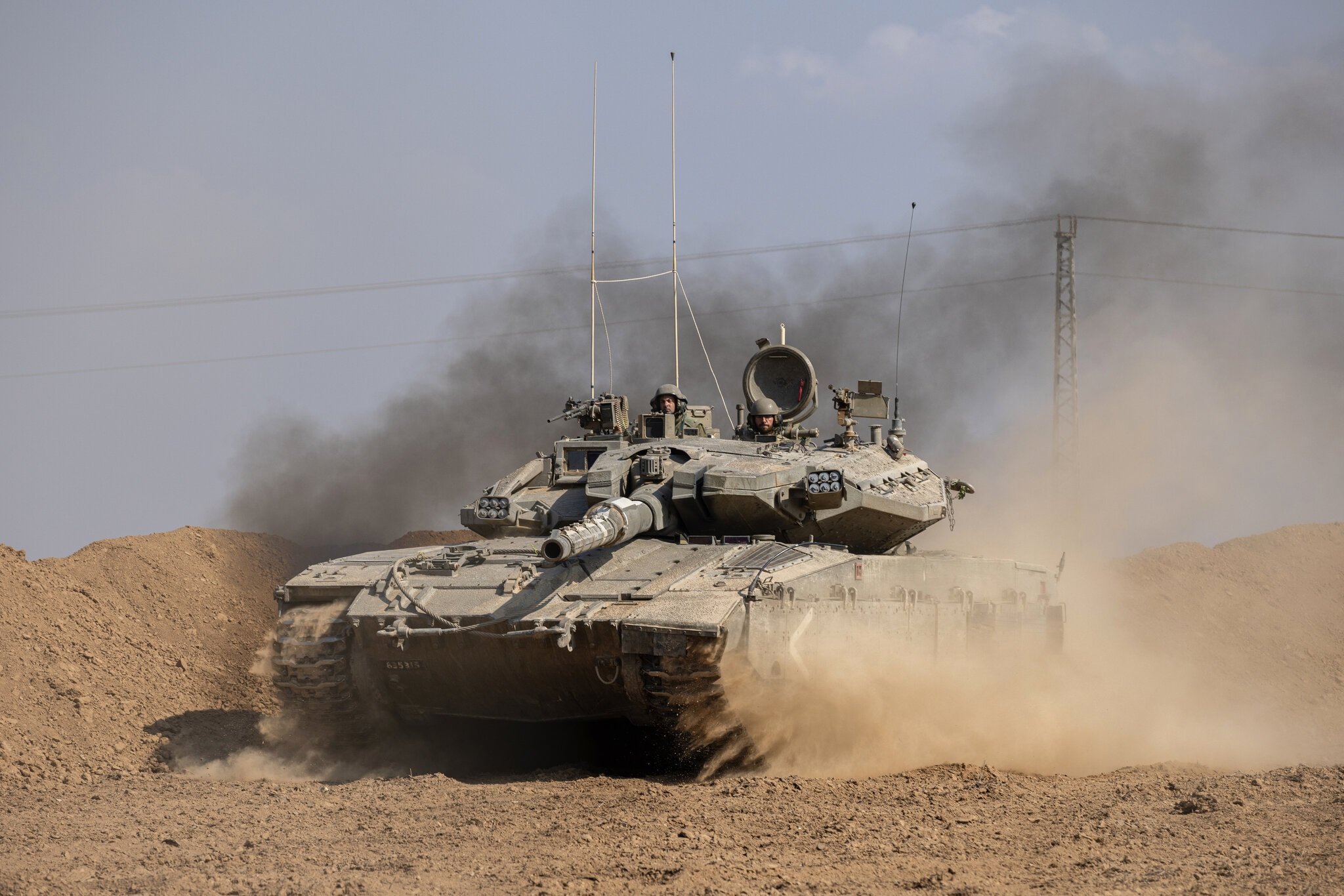
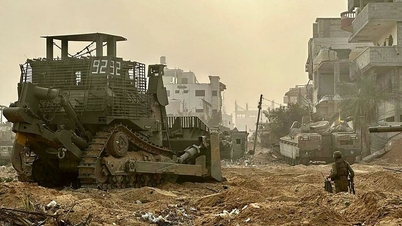
An Israeli tank near the border with the Gaza Strip (Photo: New York Times).
What is the true nature of the Hamas-Israel conflict?
Modern armed conflicts are generally governed by the laws of war, also known as International Humanitarian Law (IHL), which includes the four Geneva Conventions of 1949, the two additional protocols of 1977, the Hague Conventions of 1899 and 1907, as well as several conventions on weapons.
These documents helped protect civilians and those who had been sidelined from combat by setting out restrictions and prohibitions on certain ways of conducting warfare.
In an interview with Dan Tri newspaper, Professor Robert Goldman, a war law expert at the Washington School of Law at American University, stated that based on the characteristics of the warring parties, international law classifies armed conflicts into two types: international conflicts (between two or more countries) and non-international conflicts (between a state and a non-state armed group, or between armed groups).
International conflicts will be governed by the full text of the laws of war. Non-international conflicts will only be governed by Article 3 of the Geneva Convention and various other customary laws, according to Goldman.
"In the case of Hamas and Israel, Hamas is not a state. The current conflict is not between Israel and Palestine – which is represented by the State of Palestine," Professor René Provost, an international law expert at McGill University in Canada, told Dan Tri newspaper . "Therefore, I see it quite clearly as a non-international armed conflict."
In a non-international armed conflict, Hamas fighters captured alive do not qualify as prisoners of war and therefore are not entitled to the accompanying protections, such as immunity from prosecution for legitimate combat. They could be prosecuted by Israel simply for carrying a weapon.
Even though it is a non-international armed conflict, both Hamas and Israel must still adhere to basic rules such as only attacking military targets and responding proportionally.
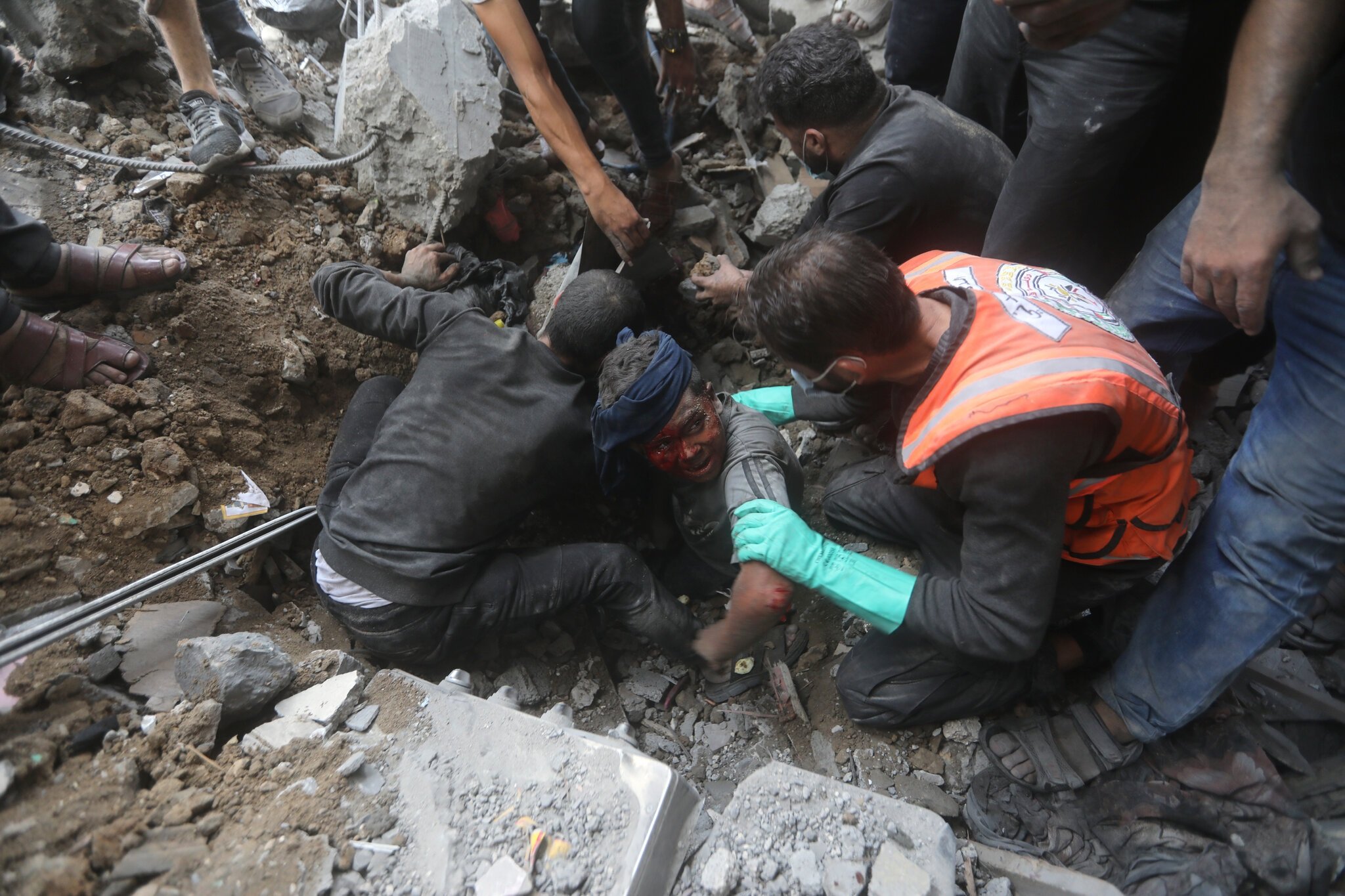
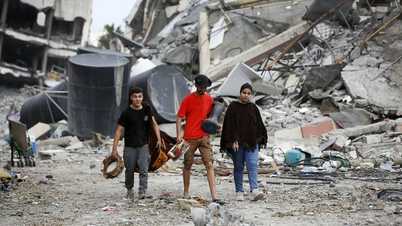
Gaza residents pull an injured boy from the rubble at the Bureij refugee camp after an Israeli airstrike (Photo: AP).
Hamas attack
Mr. Provost stated that the Hamas attack violated international law.
"If Hamas had crossed the border and attacked only Israeli soldiers, that would most likely not have violated international law but only Israeli law," Provost said. "But that's not what happened."
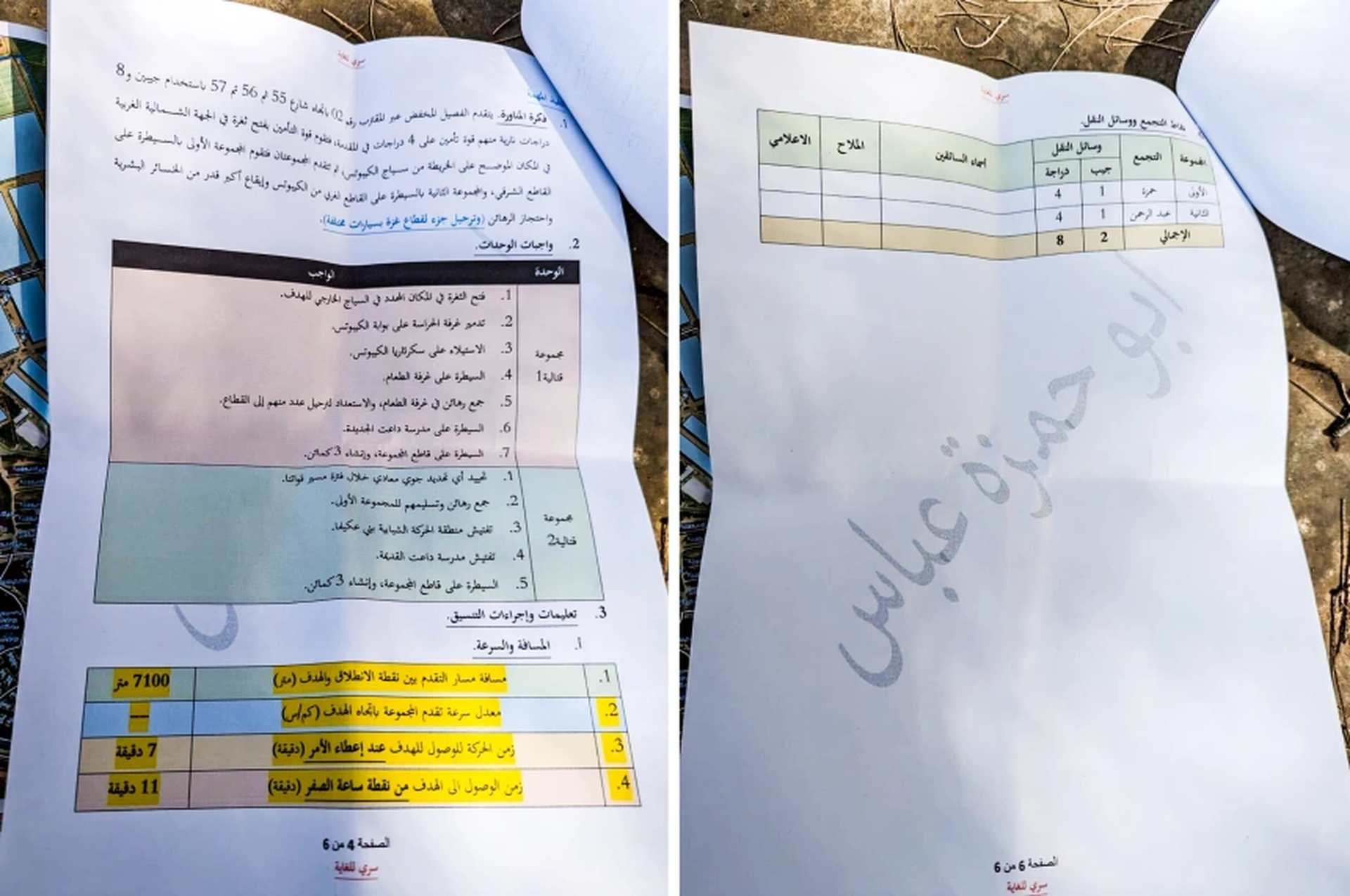
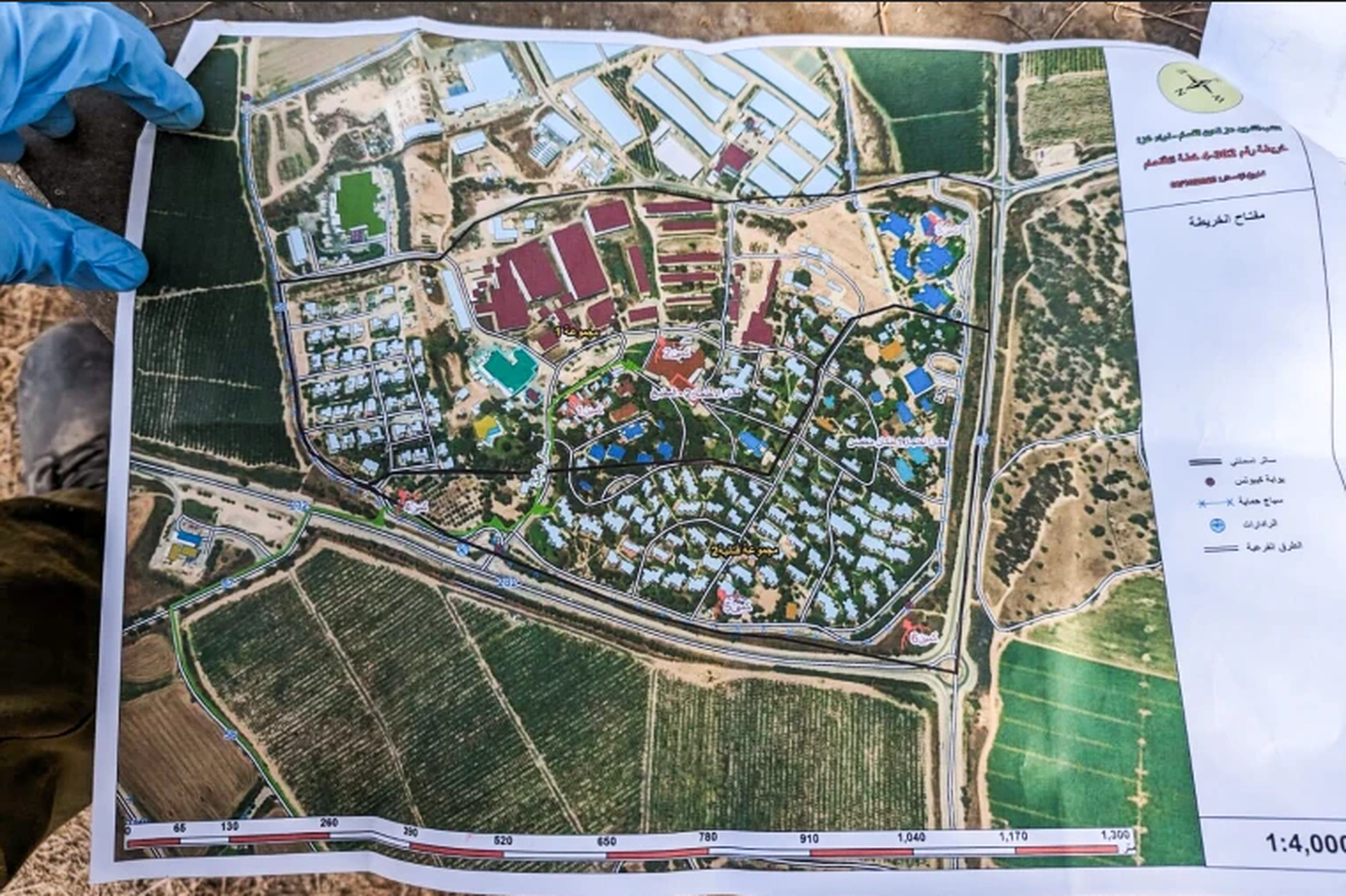
Documents found on the Hamas fighter revealed plans to attack Israel (Photo: NBC, Washington Post).
Does Israel have the right to self-defense?
Prior to the Hamas attack, Professor Provost asserted that Israel had the right to self-defense as it was the victim of an armed attack. Naturally, Israel's response had to adhere to the principle of proportion to the initial attack.
But "at some point, Israel's response will no longer be proportionate," Provost pointed out.
An example of a disproportionate response is the fighting between Israel and Hezbollah forces in southern Lebanon in 2006, according to Provost.
A full blockade order has been issued for Gaza.
According to Goldman, unlike in the past, total encirclement warfare is now contrary to international law, regardless of whether it is an international or non-international armed conflict.
"In principle, a party's violation of the law cannot justify or permit another party to violate the prohibitions set forth in international humanitarian law," Goldman said.
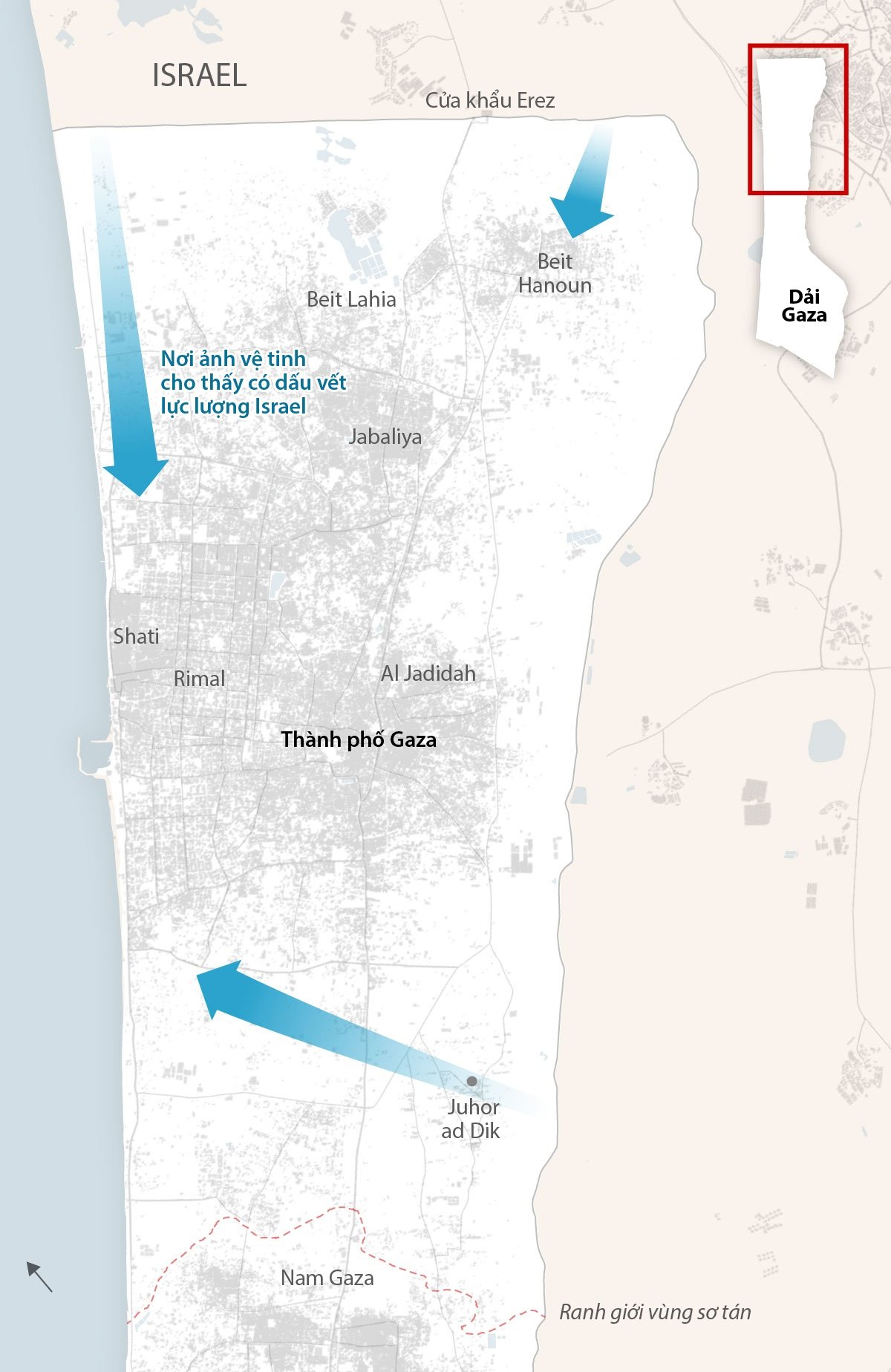
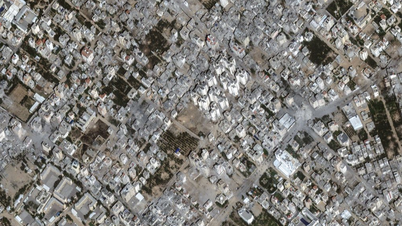
Movement routes of Israeli forces in Northern Gaza (Graphic: New York Times).
As part of the full-scale blockade, Israel cut off electricity, water, and fuel to the Gaza Strip.
According to Mr. Provost, international law prohibits starving civilians, and one of the main ways to starve them is by cutting off their water supply; therefore, cutting off the water supply to Gaza would be a violation of international law.
To date, Israel has reopened one of three water pipelines, but CNN, citing experts, reports that this only meets a very small fraction of the needs of Gaza Strip residents. Most of the water there is sourced from underground, but fuel for pumping stations and desalination plants is running out, and some residents have been forced to drink unsanitary water, or even seawater.
Whether cutting off electricity and fuel is legal is still a matter for debate, according to Provost, because they have both civilian and military (dual-use) purposes.
"Israel must consider the impact on civilians and must restore electricity and fuel if the impact on the population is disproportionate to the impact (compared to the military impact)," Provost said.
Assuming that a power outage causes a serious humanitarian crisis (such as hospitals lacking electricity to treat patients), this would likely be a violation of international law. "The reason is that this action could be foreseen to have consequences," Provost argued.
Meanwhile, Goldman argued that cutting off electricity, water, and medicine is not in itself against international law, but all these measures have led to a severe humanitarian crisis in Gaza.
Therefore, Israel has an obligation to facilitate relief efforts aimed at salvaging the situation, according to Professor Goldman.
Regarding the cutting off of phone and internet services, Mr. Provost stated: "Communications are clearly critical infrastructure for military purposes" and "whether Hamas can use this communications infrastructure for military purposes will make a big difference."
Of course, ordinary citizens also need communication systems to receive information such as evacuation orders, locations for distributing essential supplies, and places for medical care… But if you compare the military benefits gained from cutting off Hamas's military communications with the impact on civilians, cutting off phone and internet access may not necessarily violate international law, according to Mr. Provost.
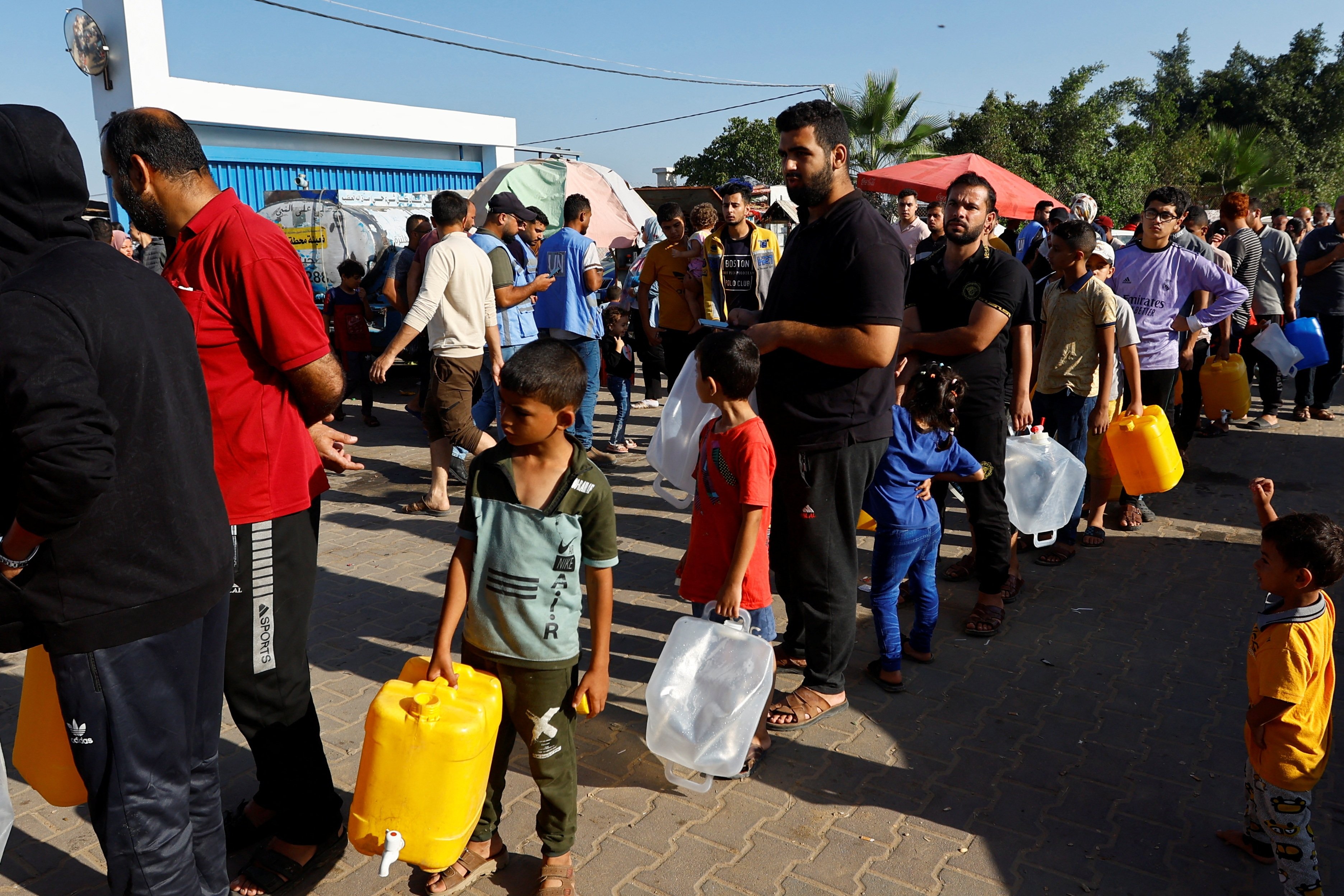
Palestinians line up for water at a UN-run camp in Khan Younis, southern Gaza Strip, on October 26 (Photo: Reuters).
Hamas and Israel's responsibility towards civilians
"The primary requirement in any conflict is that combatants must always distinguish between civilians and combatants, and attacks should only be directed at combatants and other military targets," Professor Goldman said.
Placing civilians around military targets or deploying military equipment in civilian environments (also known as "human shields") is a violation of international law.
Israel frequently accuses Hamas of storing weapons and equipment in civilian buildings. For example, in 2014, the United Nations condemned the concealment of rockets at a school operated by the international organization in the Gaza Strip.
Hamas firmly rejects Israel's accusations.
Nevertheless, the movement often advises Palestinians in Gaza to ignore Israel's calls for evacuation. The Hamas-run interior ministry once sent a message saying that "people must act responsibly and not heed Israel's deceptive instructions," according to The Guardian .
Civilians are still protected under the principle of proportionate international humanitarian law. In the case of the Gaza Strip, this means that before an attack, Israel – the attacking party – must assess the potential impact on civilians. If the planned attack would cause too many civilian casualties compared to the military advantage, they must postpone or cancel it.
Suppose the attacking side spots an enemy fighter among civilians, "it would certainly be disproportionate to use a missile to kill that fighter and simultaneously kill 30 civilians," Provost said. But if the military advantage outweighs the advantage, this would weaken the argument that the attack was disproportionate.
Source


![[Photo] General Secretary and President To Lam and the President of the Philippines hold talks.](https://vphoto.vietnam.vn/thumb/1200x675/vietnam/resource/IMAGE/2026/06/01/1780286997787_anh-man-hinh-2026-06-01-luc-11-09-43.png)




























































































Comment (0)