

The World Health Organization (WHO) has officially confirmed that five Ebola patients have miraculously recovered. These are the first cases of overcoming the extremely rare Bundibugyo strain in eastern Democratic Republic of Congo, offering a great glimmer of hope to a community living in fear and uncertainty due to the epidemic.
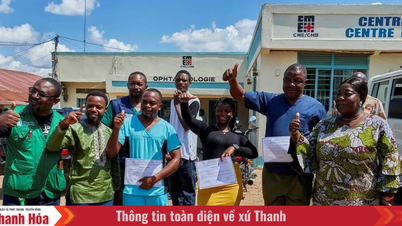
This positive news was announced by WHO Director-General Tedros Adhanom Ghebreyesus on May 31st at the opening of a new Ebola treatment center in Bunia, Ituri province – the epicenter of the outbreak. The WHO head stated that four patients would be discharged that day, and another had been discharged the previous day.
At the same time, Tedros specifically emphasized that while experts are still working on vaccines and treatments, this does not mean that people cannot recover from Ebola.

WHO Director-General Tedros Adhanom Ghebreyesus inspects the Ebola prevention and control situation in Bunia, Democratic Republic of Congo. Photo: Chikwe Ihekweazu/X
From a medical standpoint, these are the first recorded recoveries in the current outbreak of the Bundibugyo variant. This is a dangerous strain of Ebola for which there is currently no approved vaccine or treatment.
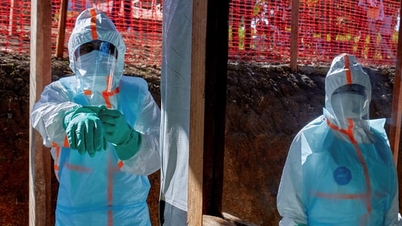
Throughout the treatment process, patients received primarily symptomatic interventions, including intravenous fluids, vomiting control, and pain relief. Therefore, their recovery is not only purely good news for medicine, but also a powerful message to people in affected areas that Ebola, while dangerous, is entirely overcome if detected and treated promptly.
However, the overall picture of the epidemic remains very challenging, as the Ebola virus is showing signs of spreading despite all response efforts. In the Democratic Republic of Congo, the outbreak is no longer confined to Ituri province but has appeared in both North Kivu and South Kivu provinces.
Furthermore, according to updated reports from health authorities, the outbreak has spread to neighboring Uganda, with hundreds of suspected cases and several deaths reported.
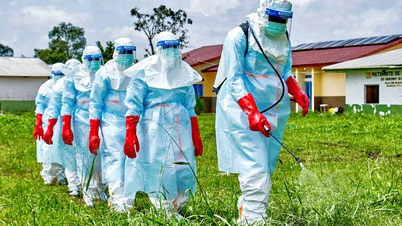
Disease control efforts in these areas faced numerous difficulties due to the complex security situation, a consequence of armed conflicts between rebel groups such as the ADF and M23. Furthermore, attacks on medical facilities and public discontent regarding burial procedures significantly delayed containment efforts.
Nevertheless, local health officials and WHO officials remain confident in their ability to control the situation. Dr. Pierre Akilimali, incident manager at the National Institute of Public Health of the Democratic Republic of Congo, stated that this strain of Ebola virus is not as complex as previous variants. He emphasized that with support from international partners, the epidemic can be completely controlled as soon as possible.
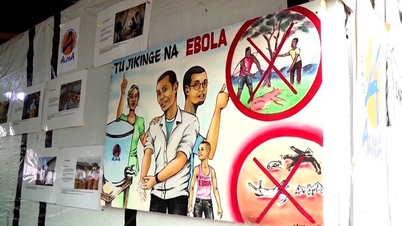
To achieve this goal, healthcare workers and recently recovered patients have collectively urged people to proactively seek medical attention as soon as symptoms appear, and to absolutely not listen to false rumors or self-treat at home.
The WHO also affirmed that the Ebola outbreak can be controlled if the whole society works together. Director Tedros Adhanom Ghebreyesus emphasized the crucial role of the community in early detection and adherence to preventive measures, and called on every citizen to take responsibility in this fight.
Currently, health experts are continuing to closely monitor the epidemiological developments, especially as several suspected Ebola cases have been reported in more remote areas such as Brazil, although these cases have not yet been definitively identified.
Source: https://suckhoedoisong.vn/who-thong-bao-tin-vui-giua-tam-dich-ebola-169260601114340847.htm


























![[Photo] Reception to welcome General Secretary and President To Lam and his wife on their State visit to the Philippines](https://vphoto.vietnam.vn/thumb/1200x675/vietnam/resource/IMAGE/2026/06/01/1780295488620_vna-potal-chieu-dai-chao-mung-tong-bi-thu-chu-tich-nuoc-to-lam-va-phu-nhan-tham-cap-nha-nuoc-toi-philippines-8798060-7855-jpg.webp)






























































Comment (0)