

These policies extend beyond the public sector, reaching experts, scientists , innovative businesses, digital technology professionals, and the startup ecosystem. This is considered the "key" for Hanoi to unlock development resources amidst increasingly fierce competition for high-quality human resources.
It's not just about attracting talent, but also about retaining it.
One of the notable new features of the 2026 Capital City Law is the inclusion of Article 25, which specifically regulates the mechanism for attracting, utilizing, and developing high-quality human resources. Accordingly, the City People's Council is empowered to stipulate specific policies regarding income, salaries, bonuses, housing, residency, and necessary working conditions for high-quality personnel working in the city.

Notably, the law paves the way for the establishment of a special mechanism to attract experts, scientists, managers, chief engineers, chief architects, and highly skilled professionals in priority development areas of the capital city. This is considered particularly significant by many experts, as the challenge of "rolling out the red carpet" for talent has long been hampered by a lack of a sufficiently strong legal framework.
In many cases, talented experts, Vietnamese people living abroad, or international scientists who wish to contribute to Hanoi are not yet attracted enough by the existing mechanisms for recruitment and compensation. Meanwhile, the private sector or major technology centers around the world are willing to offer high salaries and flexible working environments.
During discussions on the amended Capital City Law, National Assembly delegates argued that merely focusing on the slogan "attracting talent" without strong mechanisms for income, working environment, and career development opportunities would make it difficult to achieve real change. Hanoi needs a truly competitive mechanism to attract high-quality human resources, especially in key areas such as digital technology, artificial intelligence, biotechnology, urban planning, smart transportation, and modern urban governance. These fields require not only skilled individuals but also flexible working mechanisms to maximize their potential.
Notably, the 2026 Capital City Law not only aims to attract talent in the public sector but also lays the foundation for developing human resources in the digital technology industry and other key sectors. This demonstrates a new approach: Talent is not limited to managers or scientists in state agencies, but also includes innovative entrepreneurs, technology engineers, international experts, and young intellectuals.
Alongside the policy of attracting talent, the Law also allows the use of the city's budget to invest in education, training, and professional development; support the upgrading of professional skills domestically and internationally; and modernize high-quality colleges to meet regional and international standards. This is considered a fundamental solution to "nurture" human resources instead of just seeking out existing resources.
Create an innovative ecosystem where talented people can contribute.
If Article 25 creates a mechanism to attract high-quality human resources, then Article 26 of the 2026 Capital City Law opens up an additional "runway" for talented individuals to have an environment to develop their abilities.

Accordingly, Hanoi applies many preferential mechanisms for high-tech projects, digital technology projects, innovation projects, and innovative startups in the field of science and technology. Businesses and organizations participating in the innovation ecosystem enjoy preferential tax rates, land lease fees, and support for production and business premises at the city's innovation centers.
Specifically, innovative startups in the science and technology sector are exempt from corporate income tax for a period of 5 years from the date the tax liability arises. Individuals and organizations with income from the transfer of capital contributions to innovative startups are also exempt from tax according to regulations.
For experts, scientists, and exceptionally talented individuals working at innovative startups, innovation centers, or science and technology organizations within the city, the law stipulates a five-year exemption from personal income tax on income from salaries and wages. This is considered a significant incentive mechanism to attract high-quality professionals.
Many experts believe that the attractiveness of talent stems not only from income but also from the working environment, the ability to realize ideas, and opportunities to create new value. Therefore, Hanoi's simultaneous design of both a mechanism to attract talent and an innovation ecosystem is considered a suitable step.
The law clearly defines key areas of science and technology, including digital technology, information and communication technology, biotechnology, new materials, manufacturing and automation technology, environmental technology, carbon emission reduction, and climate change response. These are all sectors with the potential to generate rapid growth, high added value, and play a decisive role in the future urban economic structure.
From a long-term resource development perspective, many opinions suggest that Hanoi should make good use of the network of Vietnamese intellectuals abroad, connecting international experts, scientists, and technology entrepreneurs to the capital's development programs. With sufficiently attractive mechanisms, Hanoi has every opportunity to become a destination for knowledge and innovation in the region.
However, for the progressive provisions of the law to be effectively implemented, the crucial issue lies not only in policy formulation but also in enforcement. Criteria for selecting talent need to be transparent and avoid formality; the work environment must truly encourage creativity, innovative thinking, and proactive action; and there should be a mechanism for evaluating performance based on work efficiency rather than bureaucratic procedures.
The Capital City Law of 2026 opens a new door for Hanoi in the competition for high-quality human resources. More importantly, the challenge is how to ensure that talented individuals feel valued, given opportunities to contribute, and see their future linked to the development of the capital city.
The Capital City Law has granted the Hanoi City People's Council the right to regulate policies to attract, utilize, and develop high-quality human resources, not only in administrative agencies and public service units but also in businesses within the city.
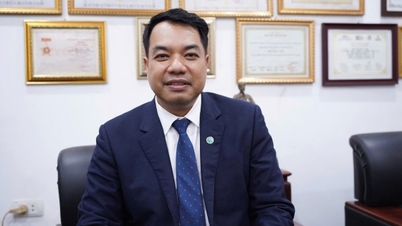
These policies comprise four main groups: policies on salaries, income, bonuses, and other benefits; policies on housing, residency, and necessary working conditions; specific mechanisms to attract and utilize experts, scientists, managers, chief engineers, chief architects, and highly qualified professionals in priority areas for the capital's development; and policies for developing digital human resources and key sectors. These are truly groundbreaking and outstanding policies in human resource development to serve the requirements of a "cultured, civilized, and modern" capital city.Dr. Tran Anh Tuan, former Deputy Minister of the Ministry of Interior
Source: https://hanoimoi.vn/luat-thu-do-nam-2026-trong-dung-nhan-tai-mo-khoa-nguon-luc-phat-trien-972046.html




![[Photo] General Secretary and President To Lam presides over the meeting to approve the draft report on the results of the second inspection by the Politburo of the Standing Committee of the Hanoi City Party Committee.](https://vphoto.vietnam.vn/thumb/1200x675/vietnam/resource/IMAGE/2026/05/26/1779789811432_a2-bnd-4430-9620-jpg.webp)










![[Video] General Secretary and President To Lam: Legislative work must shift strongly from a management mindset to a development-oriented mindset.](https://vphoto.vietnam.vn/thumb/402x226/vietnam/resource/IMAGE/2026/05/26/1779809321490_quoc-hoi-jpg.webp)

![[Video] Prime Minister Le Minh Hung: Vinh Long must establish a new model for achieving "double-digit" growth targets](https://vphoto.vietnam.vn/thumb/402x226/vietnam/resource/IMAGE/2026/05/26/1779809323770_tt-jpg.webp)
![[Video] General Secretary and President To Lam: Transforming the Capital into a Creative Megacity](https://vphoto.vietnam.vn/thumb/402x226/vietnam/resource/IMAGE/2026/05/26/1779809325193_ha-noi-jpg.webp)























































Comment (0)