

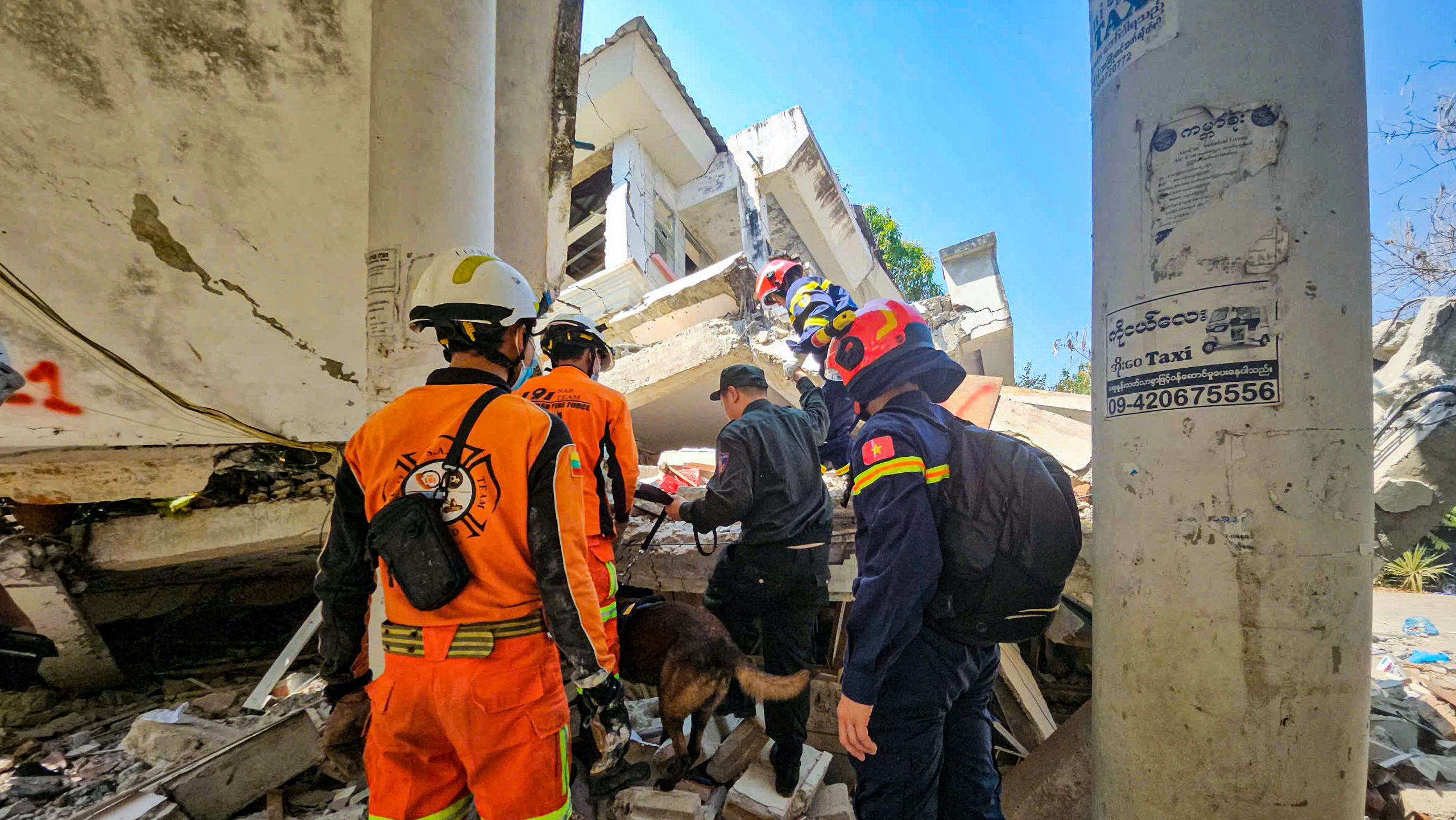
Police forces are urgently beginning their mission to assist in search and rescue operations in Myanmar.
After arriving at Yangon International Airport on the evening of March 30, Vietnamese rescue forces quickly settled into their accommodations and organized their teams to begin assisting in earthquake relief efforts in Myanmar.
Temperatures reach 40 degrees Celsius in Myanmar.
That very night, the group traveled by car for hundreds of kilometers to reach the capital Naypyidaw, arriving in the early morning of March 31st.
After coordinating with the coordinating forces, the authorities, along with the police, were the first to arrive at the scene to conduct search and rescue operations.
The morning temperature here quickly reached 35 degrees Celsius, and it is forecast to rise to 40 degrees by midday to early afternoon.
A delegation of 26 members from the Ministry of Public Security traveled to Myanmar to participate in search and rescue operations, medical examinations and treatment, and disaster relief efforts following the earthquake. The delegation was led by Colonel Nguyen Minh Khuong, Deputy Director of the Fire Prevention, Firefighting and Rescue Police Department (Ministry of Public Security).
Use wall-penetrating radar to find victims.
Immediately upon arriving in Naypyidaw, the head of the Vietnamese rescue team had a brief exchange with representatives from the Fire and Rescue Department of the Ministry of Home Affairs of Myanmar - responsible for coordinating the Vietnamese rescue efforts, and Mr. Heu Kyaw Soe Win - Minister of Tourism and Hotels of Myanmar.
Upon arriving in Myanmar, Vietnamese forces used wall-penetrating radar to search for earthquake victims - Video : NAM TRAN - VU HUNG
Vietnamese rescue forces have arrived, surveyed the scene, assessed the number of trapped people, and used wall-penetrating radar, specialized imaging and acoustic search equipment to locate victims in Myanmar.
Vietnamese rescue forces traveled nearly 500km by car to reach the capital Naypyidaw at just after 3:00 AM on March 31st. The team quickly settled into their accommodations, organized field reconnaissance forces, and began the search for victims.
The Vietnamese military forces were divided into three groups, coordinating with the Ministry of Public Security's team to search in three different directions as quickly as possible.
The Vietnamese search and rescue force has dispatched 10 officers and soldiers from the army and police, including the team leader, deputy team leader, and team leaders of the search teams, to conduct on-site reconnaissance.
After assessing the specific situation in the area and the number of suspected victims still trapped, the rescue team continued to deploy engineering teams to rescue those trapped in the collapse, using wall-penetrating radar systems and visual and acoustic search equipment to accurately pinpoint the victims' locations.
Thirty military medical personnel are also ready to form a small-scale treatment team, capable of providing both medical and surgical first aid to victims and the local population.
Earlier, the Vietnamese rescue team donated 30 tons of dried food to representatives from Myanmar to support the victims of the earthquake.
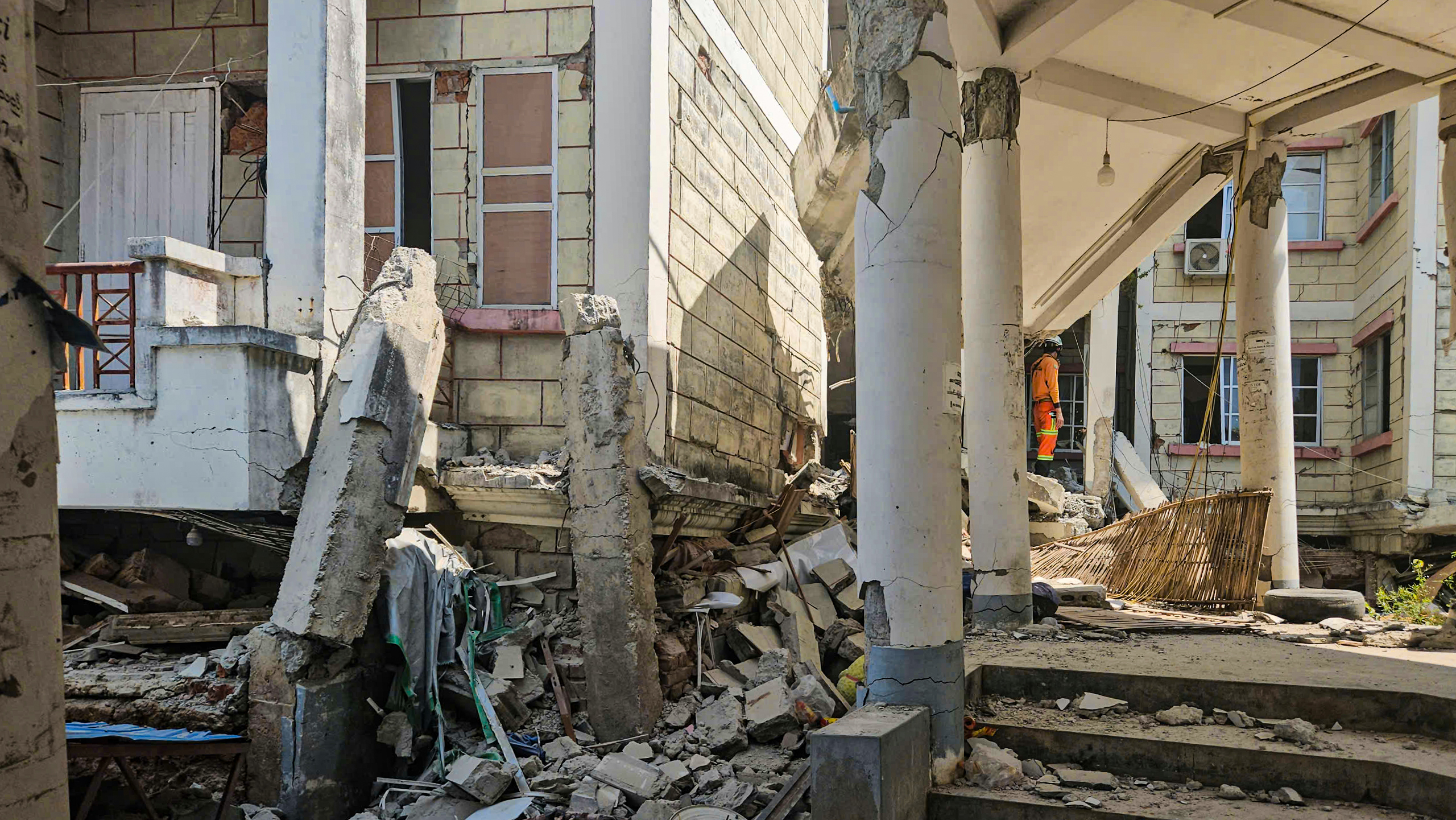
The team's first assignment was about a 20-minute drive from their base. The scene was a three-story building that had completely collapsed over an area of 200 square meters.
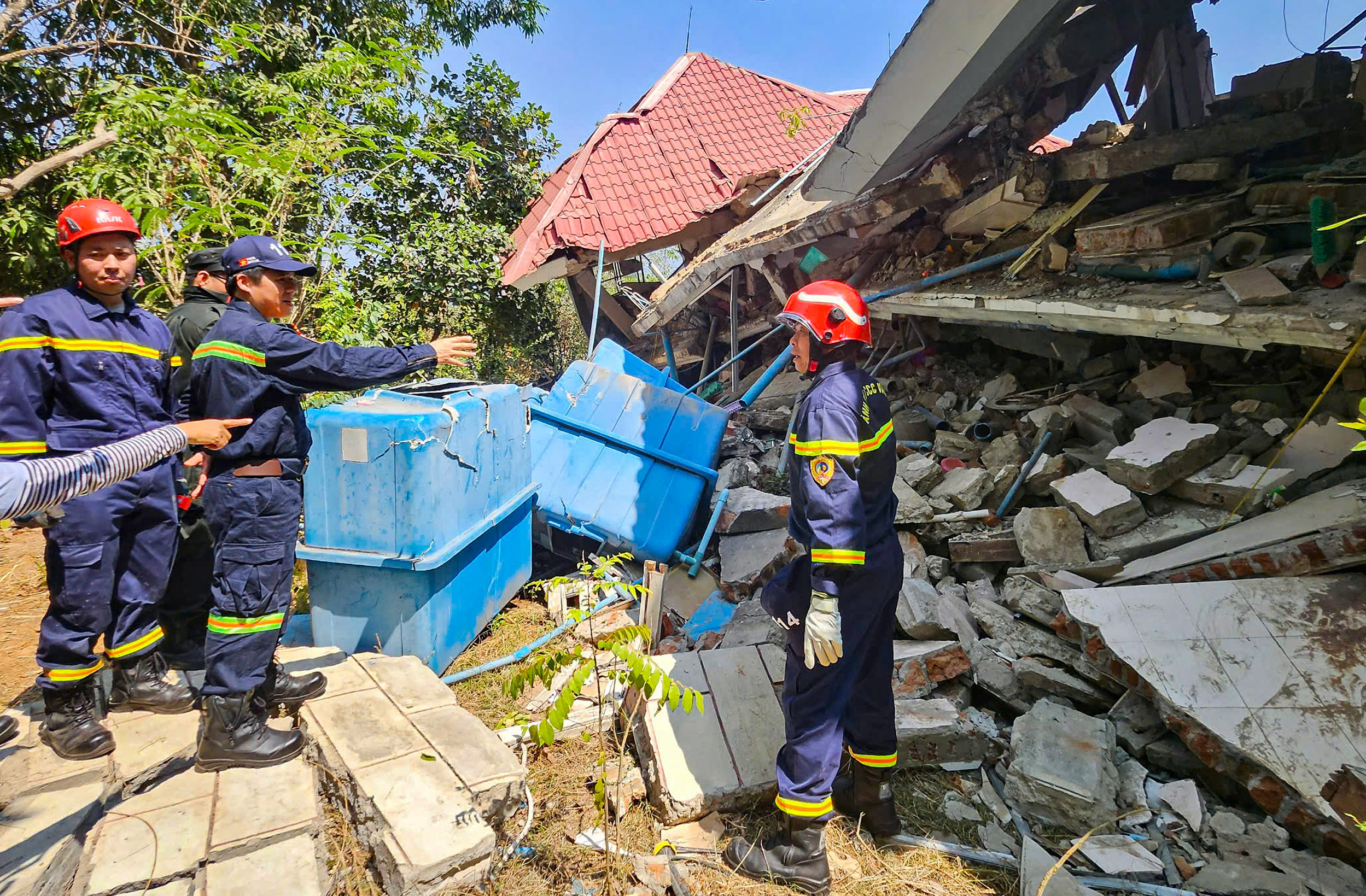
According to information from the Fire and Rescue Police Department, a man over 60 years old was trapped in front of the house, and a woman around 30 years old was trapped behind the building.
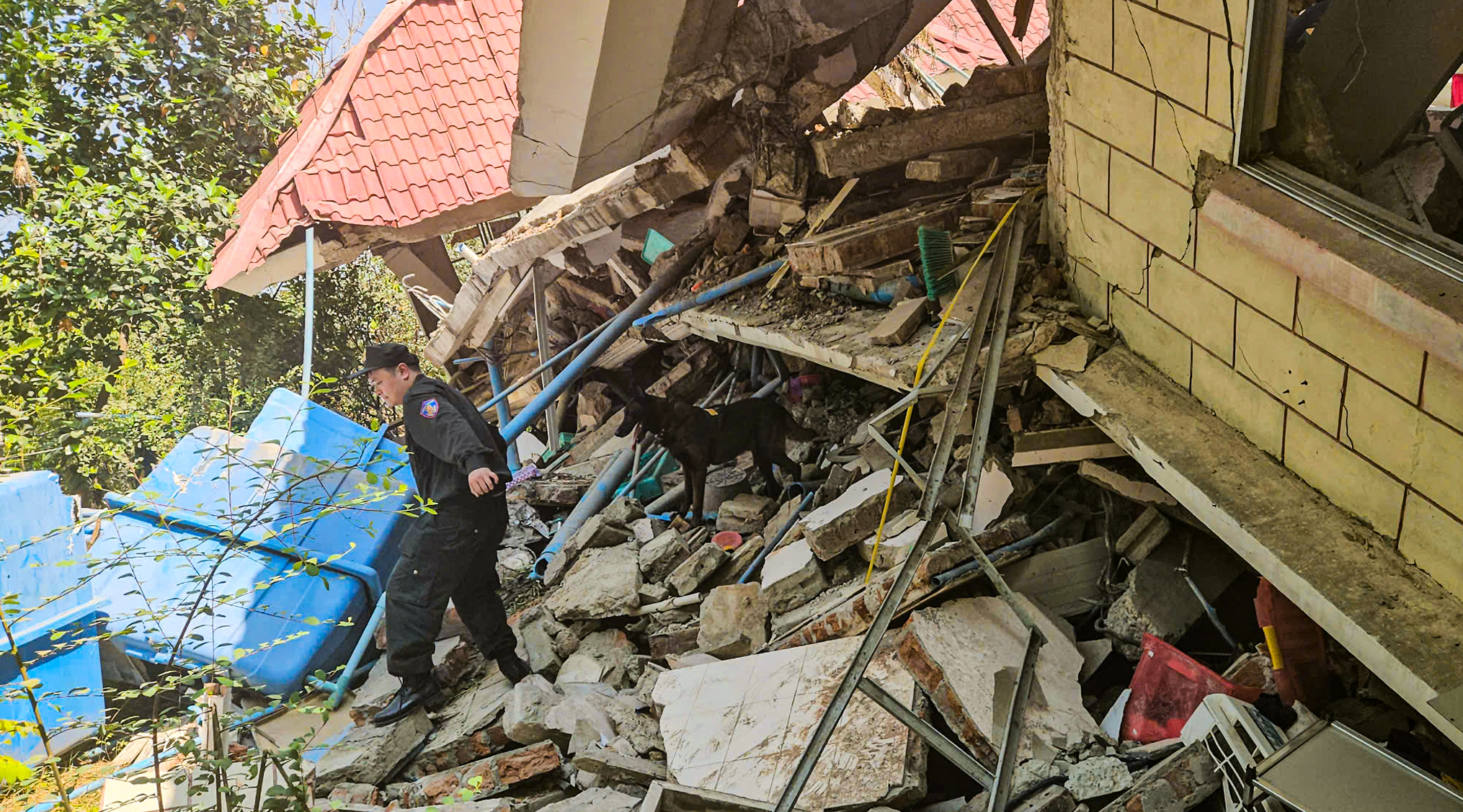
Riot police deployed sniffer dogs to the scene for search and rescue operations.
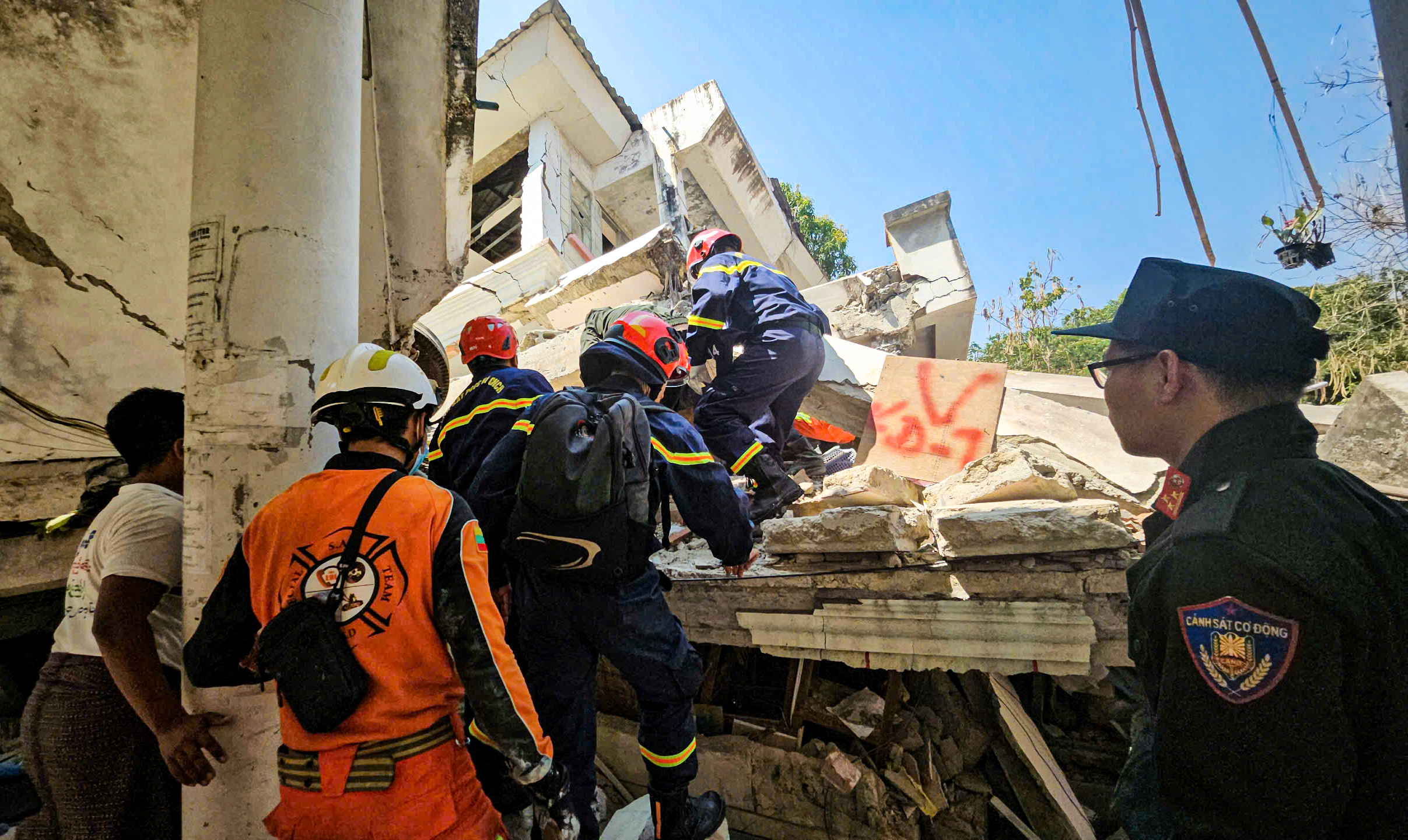
After analyzing the evidence at the scene, authorities discovered the presence of deadly fumes.
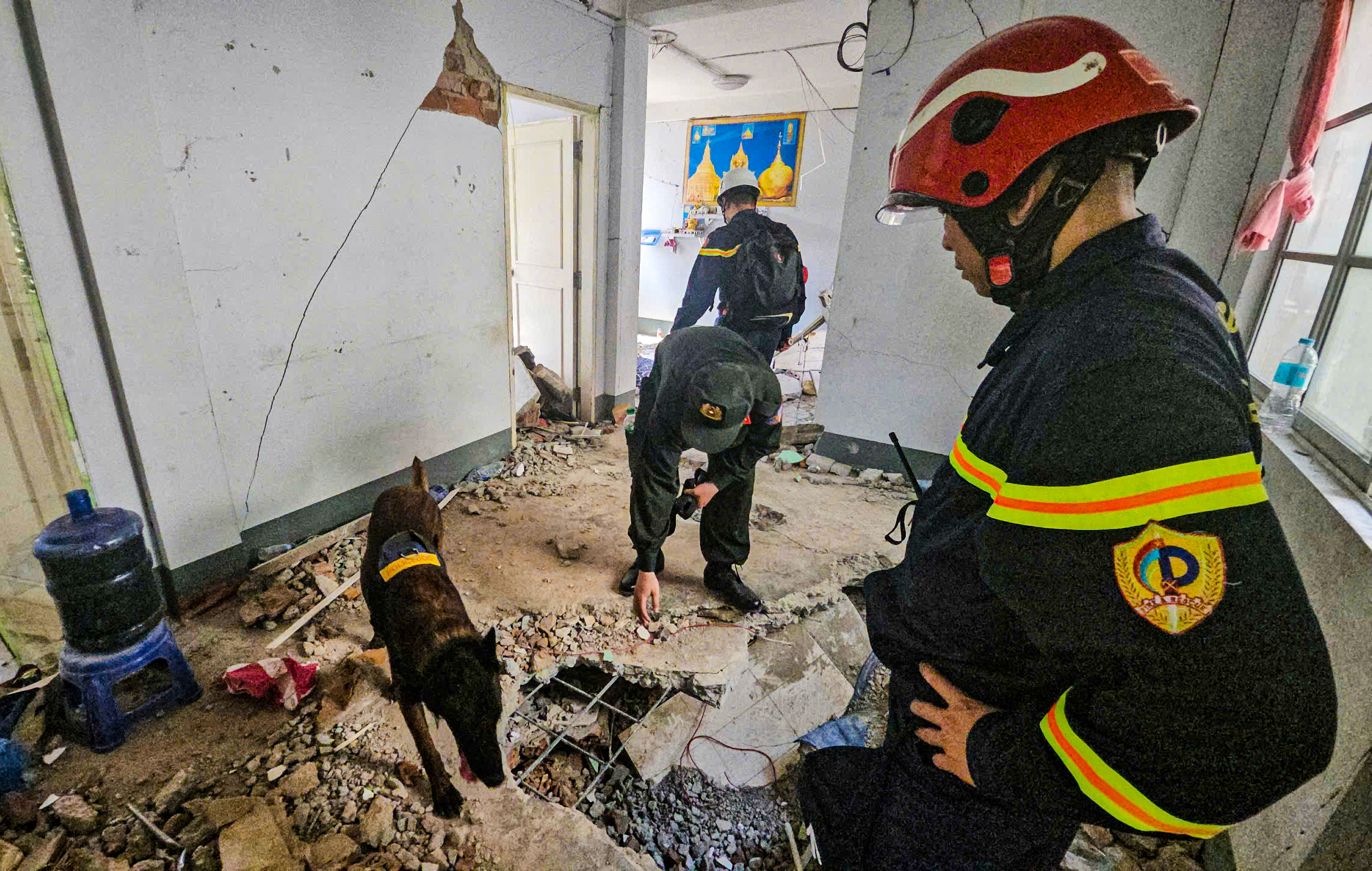
Inside the ruined house, with the floor churned up after the devastating earthquake on March 28, sniffer dogs search for missing people.
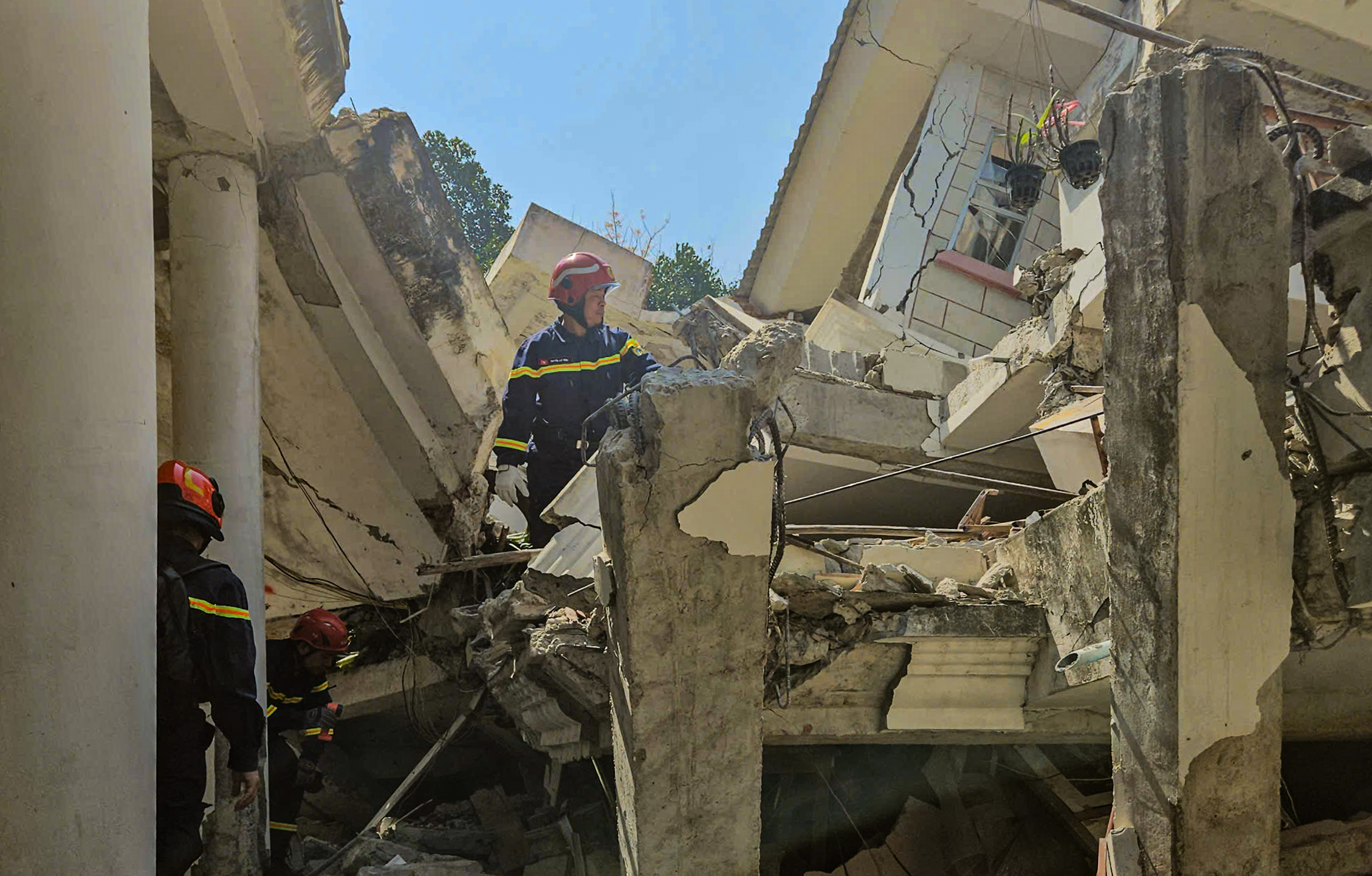
The scene was described as one of devastation. The police force worked closely with the military, striving to overcome difficulties with the spirit of "helping others as if helping ourselves."
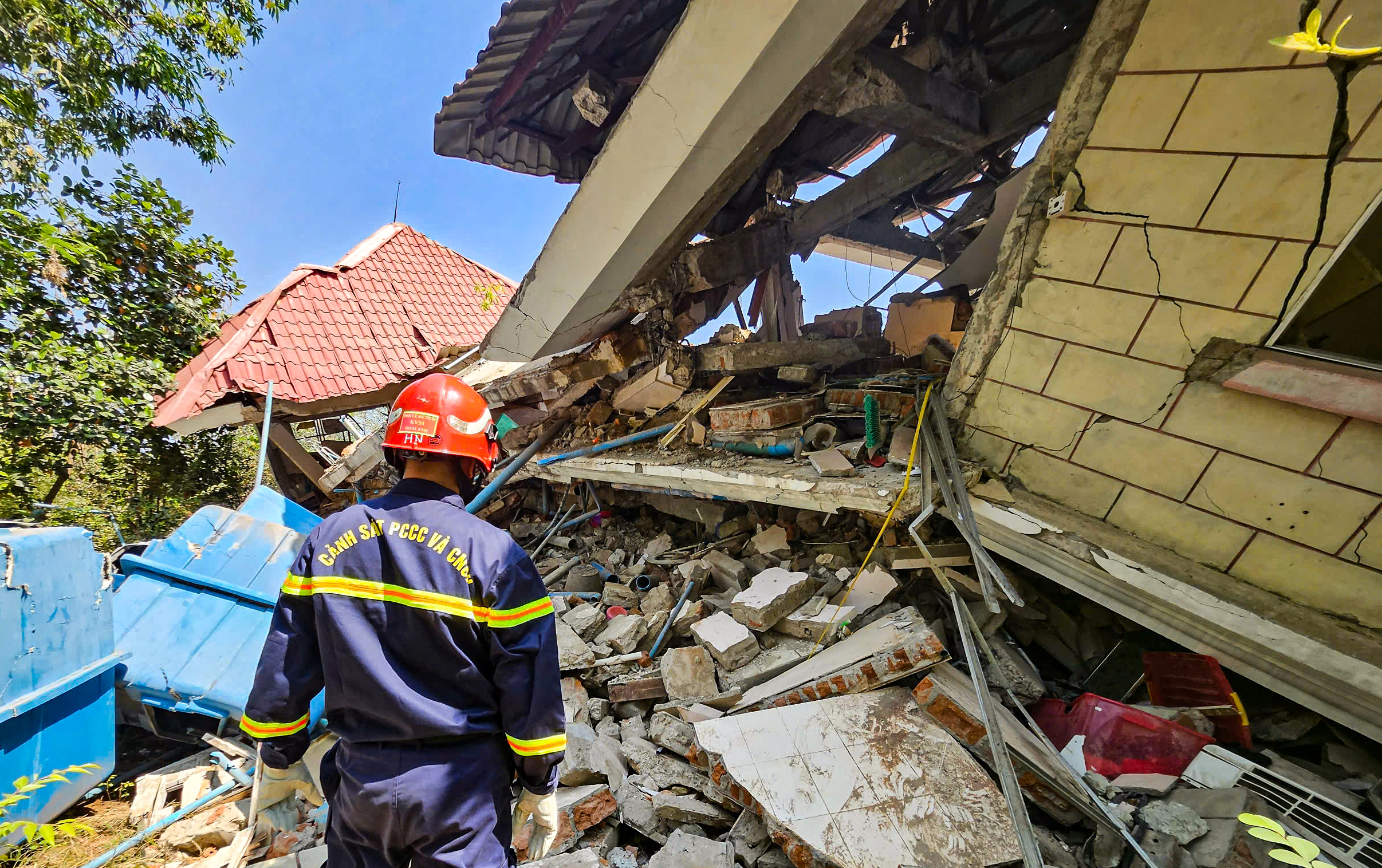
The scorching heat is posing a major challenge to rescue efforts. It also causes the bodies of victims to decompose more quickly, making identification difficult.
A powerful 7.7 magnitude earthquake struck in the early afternoon of March 28th in the northwestern area of Sagaing city, central Myanmar. Just minutes later, a strong aftershock measuring 6.7 magnitude shook the area.
The earthquake flattened houses, collapsed bridges, and cracked roads across Myanmar. Mandalay – the country's second-largest city with over 1.7 million inhabitants – was one of the hardest-hit.
Tuoitre.vn
Source: https://tuoitre.vn/luc-luong-viet-nam-dung-rada-xuyen-tuong-tim-nan-nhan-dong-dat-tai-myanmar-20250331120242304.htm#content-4


![[Photo] Prime Minister Pham Minh Chinh presides over a meeting on private sector economic development.](/_next/image?url=https%3A%2F%2Fvphoto.vietnam.vn%2Fthumb%2F1200x675%2Fvietnam%2Fresource%2FIMAGE%2F2025%2F12%2F20%2F1766237501876_thiet-ke-chua-co-ten-40-png.webp&w=3840&q=75)

















































































Comment (0)