

Google is planning to "use good mosquitoes to kill bad mosquitoes" in the US market. The tech giant has submitted a request to the US government to release up to 32 million sterile male mosquitoes in the states of California and Florida.
This is the next step in the "Debug" program, which aims to leverage technical capabilities to breed a sterile army of male mosquitoes, thereby reducing the number of these disease-carrying insects.
Mosquitoes are currently the world's most dangerous animals, claiming more human lives than any other creature each year through the transmission of diseases such as dengue fever, West Nile virus, Zika, chikungunya, and malaria.
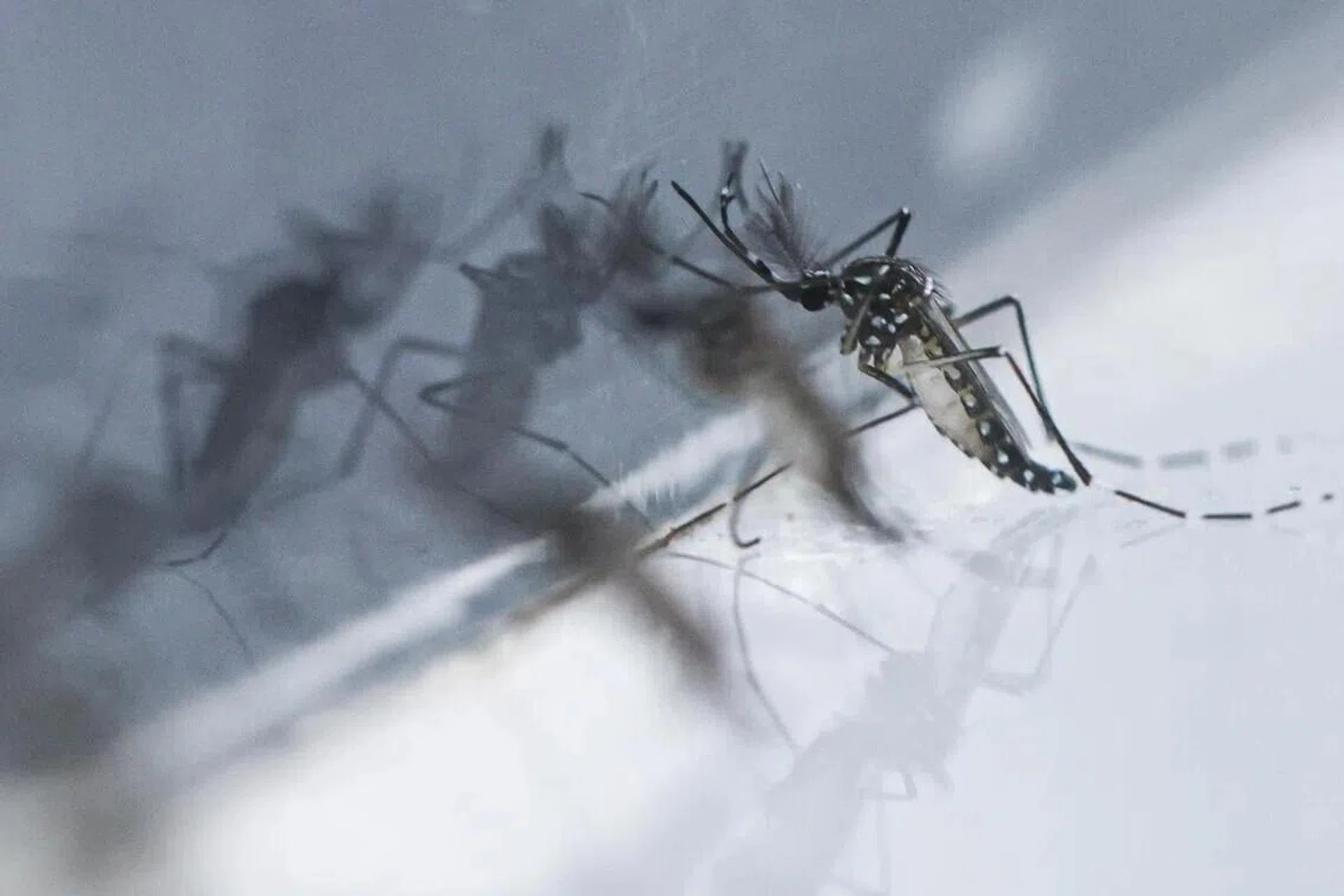
According to federal records, the U.S. Environmental Protection Agency (EPA) is reviewing Google's request to release up to 16 million mosquitoes annually in Florida and California for two years.
The EPA will decide whether to grant Google a trial license after the public comment period ends on June 5th.
Because male mosquitoes don't bite and don't transmit disease, Google's core method involves breeding male mosquitoes infected with a naturally occurring bacterium called wolbachia.
This type of bacteria prevents them from reproducing when they mate with female mosquitoes in the wild. When infected male mosquitoes mate with wild female mosquitoes, the female mosquitoes' eggs will not hatch, causing the mosquito population density to gradually decrease over generations.
While it might sound strange for a tech giant to participate in a laboratory to breed mosquitoes infected with bacteria, Alphabet—Google's parent company—has long been heavily invested in science .
Verily Health, a healthcare and AI company that originated from the moonshot project at Google X, was the core unit driving the Debug program for many years. As of December 2024, Google had fully acquired Debug and removed the project from Verily's portfolio.
Google says traditional intervention methods are no longer effective: spraying pesticides can be toxic and lose effectiveness over time due to mosquito resistance, while finding and clearing all stagnant water sources that serve as mosquito breeding grounds is extremely difficult.
Google's method is based on a scientific technique called insect sterility, which experts have been applying to many pest insect species for the past 15 years.
Currently, Google is focusing its resources on the Aedes aegypti mosquito, the vector for most cases of dengue fever, Zika, yellow fever, and chikungunya.
Google engineers and scientists are using data analysis and sensors to build automated nurturing systems.
The biggest challenge of the project is applying AI-based computer vision technology to accurately separate male and female mosquitoes, ensuring that male mosquitoes are released at the right time and in the required numbers.
The Debug project has made promising progress in Singapore, the program's first international research and development center.
According to data from Singapore's National Environment Agency, releasing millions of male Wolbachia-infected mosquitoes has helped the country eradicate 80-90% of the Aedes aegypti mosquito population and reduce dengue fever cases by more than 70% after 6 to 12 months of implementation.
This success provides a foundation for Google to further expand the project to other communities in Asia, which bear 70% of the global burden of dengue fever.
(According to The Guardian)

Source: https://vietnamnet.vn/ly-do-google-xin-tha-32-trieu-muoi-duc-vo-sinh-tai-my-2522323.html




![[Photo] General Secretary and President To Lam presides over a meeting with the Central Organizing Committee.](https://vphoto.vietnam.vn/thumb/1200x675/vietnam/resource/IMAGE/2026/06/03/1780482764658_a1-bnd-4741-3342-jpg.webp)
![[Photo] Secretary of the National Assembly Party Committee, Chairman of the National Assembly presides over the meeting of the Standing Committee and Executive Committee of the National Assembly Party Committee.](https://vphoto.vietnam.vn/thumb/1200x675/vietnam/resource/IMAGE/2026/06/03/1780480353201_ndo_br_bnd-2585-jpg.webp)

















































![[Video] Sunset at Lap An Lagoon – Where the sun sets over the fishing nets](https://vphoto.vietnam.vn/thumb/1200x675/vietnam/resource/IMAGE/2026/05/31/1780192137701_beach-landscape-sea-water-nature-grass-745871-pxhere-com.jpeg)








![[Photo] General Secretary and President To Lam attends the 14th Congress of the Vietnam Trade Union](https://vphoto.vietnam.vn/thumb/402x226/vietnam/resource/IMAGE/2026/06/04/1780543339765_anh-man-hinh-2026-06-04-luc-10-22-07.png)































Comment (0)