

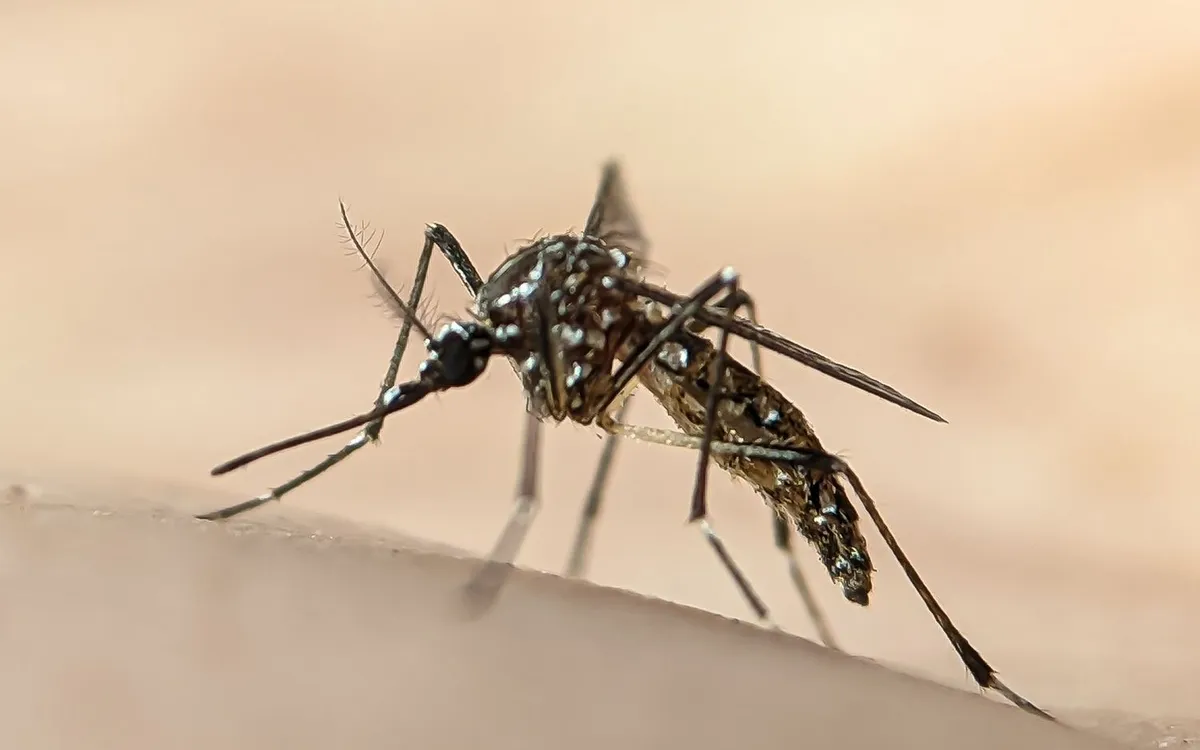
(Illustrative image: Getty)
The proposal to release up to 32 million mosquitoes in California and Florida to reduce the number of mosquito species that transmit dangerous diseases to humans is attracting public attention amid continued outbreaks of mosquito-borne diseases in many areas of the US, including West Nile virus, Dengue fever, Zika, and Chikungunya.
Under its plan, dubbed "Debug," Verily intends to release 16 million mosquitoes in Florida in the first year and another 16 million in California the following year if approved by the U.S. Environmental Protection Agency (EPA). The application for trial authorization is currently under review by the EPA in accordance with federal law on biological pesticides.
Contrary to initial concerns from some in the public, the mosquitoes released were not female mosquitoes that feed on human blood, but male mosquitoes incapable of biting. These mosquitoes carried Wolbachia bacteria – a naturally occurring bacterium found in more than half of the world's insect species.

Image of the Aedes albopictus mosquito - a type of mosquito capable of transmitting dengue fever, Zika virus, and chikungunya (Photo: CDC)
When mating with female Aedes aegypti mosquitoes (the mosquitoes that transmit yellow fever) in the wild, the eggs produced will not hatch into larvae. As a result, the mosquito population carrying the disease will gradually decrease over time without the need for large amounts of insecticides.
The Aedes aegypti species is one of the most dangerous disease vectors today. It is capable of spreading infectious diseases such as dengue fever, Zika, yellow fever, and chikungunya. According to health experts, hundreds of millions of cases of these diseases are recorded globally each year.
The U.S. Centers for Disease Control and Prevention (CDC) considers mosquitoes to be the world's deadliest animal due to their ability to transmit dangerous diseases. In the U.S. alone, the West Nile virus causes approximately 120 deaths each year.
Verily's proposal comes as California state health officials recently detected a mosquito sample positive for the West Nile virus in the North Shore area of Riverside County during routine surveillance. Although no human cases have been reported, authorities have increased monitoring and advised residents to take measures to prevent mosquito bites.
According to Verily, the method of using Wolbachia-carrying mosquitoes is not a new technology. In 2017, the company released approximately one million sterile mosquitoes in California and achieved positive results. Prior to that, many similar programs had been implemented in Australia, Singapore, and Brazil to control disease-carrying mosquito species.

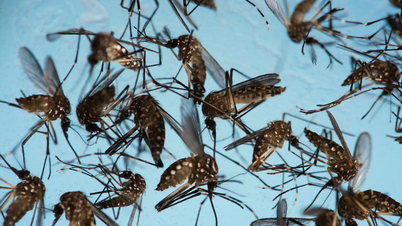
(Photo: Getty Images)
However, the project has sparked debate about its long-term environmental impact. Some opinions on social media have expressed concerns that deep intervention into the ecosystem could lead to unpredictable consequences.
Republican Congressman Tim Burchett of Tennessee questioned whether humans are repeating past mistakes in introducing invasive species into the wild, while warning against disrupting the balance of nature.
In response to these concerns, Verily stated that the majority of the scientific community believes that a significant reduction in the number of Aedes aegypti in urban environments will have a relatively small ecological impact. They are not a crucial food source for other animal species, and controlling them primarily helps restore the ecosystem to its pre-invasion state.
However, experts also note that this is not a permanent solution. According to the CDC, once the release of Wolbachia-carrying mosquitoes is stopped, the number of disease-transmitting mosquitoes may gradually return to its original levels. This means that control programs need to be maintained regularly and continuously.
In the context of climate change causing rising temperatures and humidity in many parts of the world, the distribution range of disease-carrying mosquito species is also expanding. Many recent studies show that these insects are able to adapt quickly to new environments, increasing the risk of future disease outbreaks.
Biological control technologies such as the Debug program are considered to have the potential to become important tools in supporting the prevention of mosquito-borne diseases. However, their long-term effectiveness and environmental impacts still need to be monitored and evaluated before large-scale implementation.
Source: https://vtv.vn/google-de-xuat-tha-32-trieu-con-muoi-tai-my-10026060215071651.htm
![[Photo] General Secretary and President To Lam presides over a meeting on preparations for the review of one year of operation of the three-tiered government system.](https://vphoto.vietnam.vn/thumb/1200x675/vietnam/resource/IMAGE/2026/06/02/1780391821195_a1-bnd-4595-9717-jpg.webp)































































































Comment (0)