

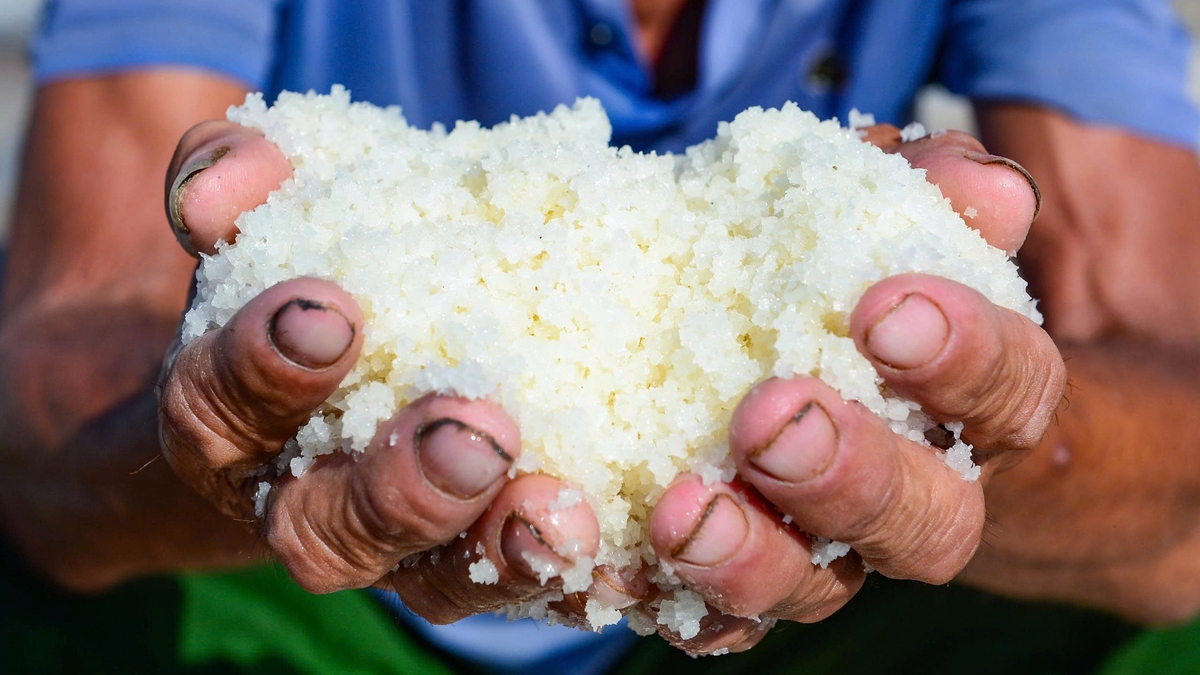
Under the Nguyen dynasty, salt became a tightly controlled state commodity, subject to taxation and stockpiled, reflecting the economic policies and living conditions of the coastal inhabitants of Quang Nam province.
The salt permeates the earth.
Quang Nam province, with its "vast, tranquil sea in the east," boasts a long coastline stretching from the foot of Hai Van Pass to Dung Quat Bay. The salinity of the seawater here differs between the nearshore and offshore waters.
The surface water in the coastal areas has a lower salt concentration compared to offshore areas during the rainy season. Therefore, Quang Nam province is not as famous for salt production as neighboring Sa Huynh or Ca Na in the south of the ancient "Quang Nam region".
However, Quang land still retains many place names related to salt.
First, there is the group of place names containing the element "diem". The land register of Quang Nam during the Gia Long era (1812) recorded the names of the communes Diem Dien, Diem Pho, and Binh An Diem Truong. The place name Diem Dien is also mentioned in the work Quang Nam province's poem (19th century): "Ha Dong Tao, a Zen master, used fruit to cure diseases; Diem Dien Lanh, a Taoist, rode a dragon and flew high." The Taoist named Lanh in Diem Dien village had the skill of moving the village temple; later, Emperor Tu Duc summoned him to punish him, but he rode a dragon and flew away.
Place names containing the element "lỗ" include Lỗ Giản commune (now called Lỗ Giáng), Lỗ Hương Tây district, Lỗ Hương Thị district, and Lỗ Đông source. Place names containing the element "nại" include Nại Hiên, famous in the folk song "Nại Hiên is Nại Hiên ne/Taking water to make salt, taking bamboo to make pots" (variant: "Nại Hiên is the village í e"). The element "nại" is always evident in the folk song "The people of nại are as foolish as buffaloes/The sun is blazing, they stick their heads out to dry."
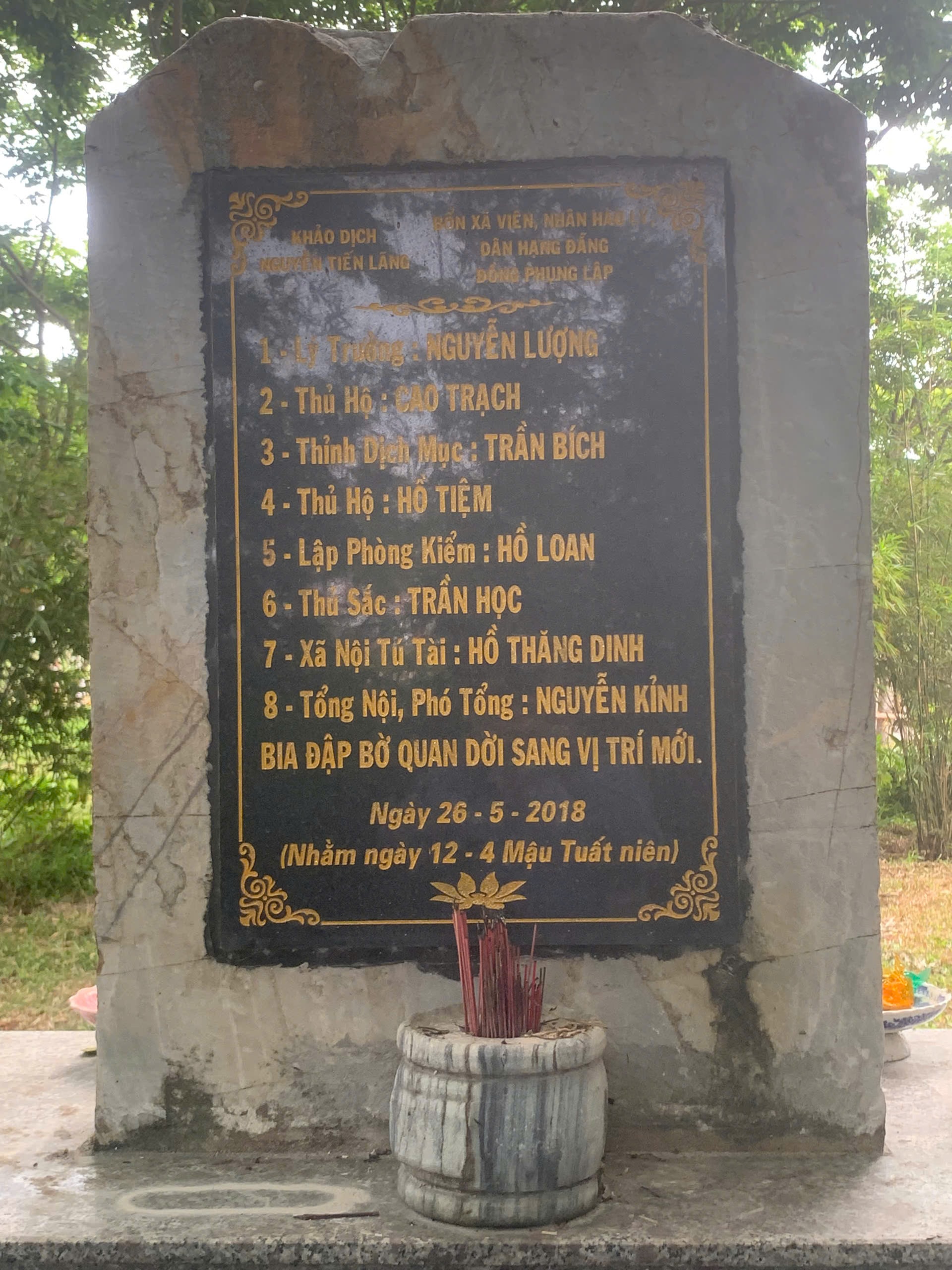
The salinity still permeates the land of Hoa Khue commune. The Hoa Khue Dong commune's commemorative stele, composed by scholar Ho Thang Doanh, records the construction of the salt-prevention dike, and includes the following passage:
“For the past thirty years, the sea has risen, causing saltwater intrusion, and the rice fields have become polluted. Half of the rice crops are planted, and only one-third are harvested. (…) The precious dike was built (…). Since then, farming has become more convenient, irrigation has developed further, and the rice is lush and green (…). Truly, this brings blessings for all the people of our community for generations to come.”
Etymologically, "nại" means salt field, which is also a unit of measurement. "Lỗ" refers to naturally occurring salt, rock salt. "Diêm" refers to salt produced by humans, hence the terms "diêm dân" (salt farmers) and "diêm hộ" (salt households). "Diêm" is salt, and it is a homonym for "Diêm" (in "Diêm Vương"), so the humorous expression "going to sell salt" means going to meet the King of Hell.
Local products
Salt was considered a local product of Quang Nam province during the time of the Nguyen lords and the Nguyen dynasty.
As early as the 18th century, Le Quy Don listed salt among the products produced in Quang Nam: “Thuan Hoa has little wealth, so it must all come from Quang Nam, because Quang Nam is the most fertile land in the world. The people of Thang Hoa and Dien Ban know how to weave cloth, silk, brocade, satin, and other fabrics skillfully and beautifully, no less than the goods from Guangdong. The fields are vast, the rice is of good quality, and agarwood, incense, rhinoceros horn, ivory, gold, silver, tortoiseshell, shells, cotton, wax, sugar, lacquer, betel nuts, pepper, fish, salt, and timber are all produced here.”
During the reign of Emperor Tự Đức, the book Đại Nam nhất thống chí included salt in the list of local products of Quảng Nam: "Salt produced in the two districts of Hòa Vang and Lễ Dương is subject to tax; each measure of salt is taxed in money at a rate of 3 tiền."
Later, the Đồng Khánh Geographical Gazetteer recorded even more details: "Coarse salt, fish sauce, laterite, and pineapple products in Hà Đông district" when referring to the products of Thăng Hoa prefecture, and "Coarse salt in the three communes of Diêm Phố, Bình An, Diêm Trường, and Phú Vinh, which have salt-making industries" when referring to the products of Hà Đông district. Phú Vinh commune in the Quảng Nam Land Register during the Gia Long era was recorded as Phú Vinh Thượng commune.
State administration
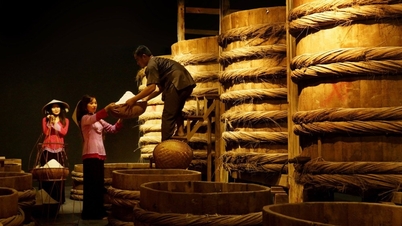
Salt is an essential commodity in life. Throughout history, the world has witnessed many wars related to salt. Salt was also considered a medium of exchange, used for trade, or for paying taxes and tribute. Therefore, the issue of salt has always been strictly controlled by the state.
The imperial court conducted an inventory of salt fields in the Quang Nam region. Accordingly, Diem Pho commune had 9 "nai" (salt fields), and Nai Hien Dong Tay commune had 65 "nai," as recorded in the Quang Nam land register during the Gia Long era.
According to Lê Quý Đôn's book Phủ biên tạp lục, the tax on salt-producing land in Đàng Trong was 221 quan, accounting for 0.27%, while the foreign trade tax was 3,200 quan, accounting for 3.91%.
According to the Đại Nam thực lục (Chronicles of Đại Nam), during the reign of Lord Nguyễn Phúc Khoát, a tax rate for salt was set for three years (in the first year, 1738, each person was charged 6 baskets of salt; in the second year, 4 baskets; and in the third year, 3 baskets) to test the people's ability to pay taxes. Only then was an annual tax rate established for salt producers.
In the 18th year of Minh Mệnh (1837), the Ministry of Finance reported: "The localities traditionally pay taxes in salt. However, until now, not much salt has been spent on consumption, and storing a lot of it inevitably leads to dampness over time. We think it is better to allow the people to pay in money instead." The King agreed and changed the custom of paying the salt tax to money.
However, the king still issued a decree that large provinces like Quang Nam and Nghe An should store 1,500 measures of salt annually, meaning Quang Nam had to deposit 1,500 measures of salt into the warehouse each year, with the remainder paid in cash. Thus, Quang Nam was listed as one of the provinces with large salt reserves, related to the state's salt policy for both the economy and military .
Source: https://baodanang.vn/man-moi-dat-quang-3335976.html
![[Photo] General Secretary and President To Lam presides over the meeting to approve the draft report on the results of the second inspection by the Politburo of the Standing Committee of the Hanoi City Party Committee.](https://vphoto.vietnam.vn/thumb/1200x675/vietnam/resource/IMAGE/2026/05/26/1779789811432_a2-bnd-4430-9620-jpg.webp)





































































































Comment (0)