

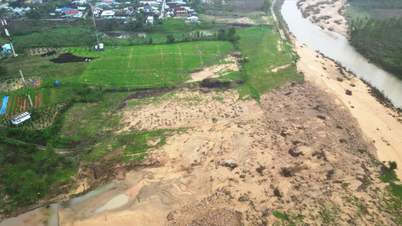
According to the Provincial Meteorological and Hydrological Station, water levels on the rivers are entering a new high tide period, combined with the strong return of the Northeast monsoon, so saltwater intrusion on the rivers tends to increase and penetrate deeper into the rivers with the daily high tide (salinity only increases with the high tide and then decreases again).
 |
| Local authorities need to monitor warning information to respond to saltwater intrusion in a timely manner. |
In areas within approximately 20km of the river mouth: salinity gradually increased until January 4th, remained relatively unchanged on January 5th, and gradually decreased from January 6th to 10th. In areas 21km or more from the river mouth: salinity increased on January 2nd, remained relatively unchanged on January 3rd, decreased slowly on January 4th and 5th, gradually decreased from January 6th to 9th, and slightly increased on January 10th.
Forecasts indicate that the 4‰ salinity boundary is likely to penetrate deepest: on the Cua Dai River, reaching Loc Thuan commune, approximately 22km from the river mouth; on the Ham Luong River, reaching Hung Nhượng and Dai Dien communes, approximately 26km from the river mouth; on the Co Chien River, reaching Quoi Dien, Hoa Minh, and Hung My communes, approximately 22km from the river mouth; and on the Hau River, reaching Luu Nghiep Anh commune, approximately 26km from the river mouth.
The 1‰ salinity boundary has the potential to penetrate the deepest: on the Cua Dai River, it will reach Loc Thuan commune, about 25km from the river mouth; on the Ham Luong River, it will reach Tan Hao and An Dinh communes, about 30km from the river mouth; on the Co Chien River, it will reach Cam Son commune and Long Duc ward, about 35km from the river mouth; on the Hau River, it will reach Tan Hoa commune, about 34km from the river mouth. The natural disaster risk level due to saline intrusion is at level 1.
The Provincial Meteorological and Hydrological Station warns: Saltwater intrusion can affect crops, livestock, and drinking water sources in areas where salinity levels of 0.5‰ or higher are reached. Depending on the adaptability of the crops and livestock, appropriate response plans should be developed. Localities located 25-35km or less from the river mouth should monitor and check salinity levels when operating sluice gates and using river water directly.
Text and photos: NGUYEN KHANG
Source: https://baovinhlong.com.vn/thoi-su/202601/man-xam-nhap-บน-cac-song-tu-ngay-2-101-91f3872/















































































Comment (0)