

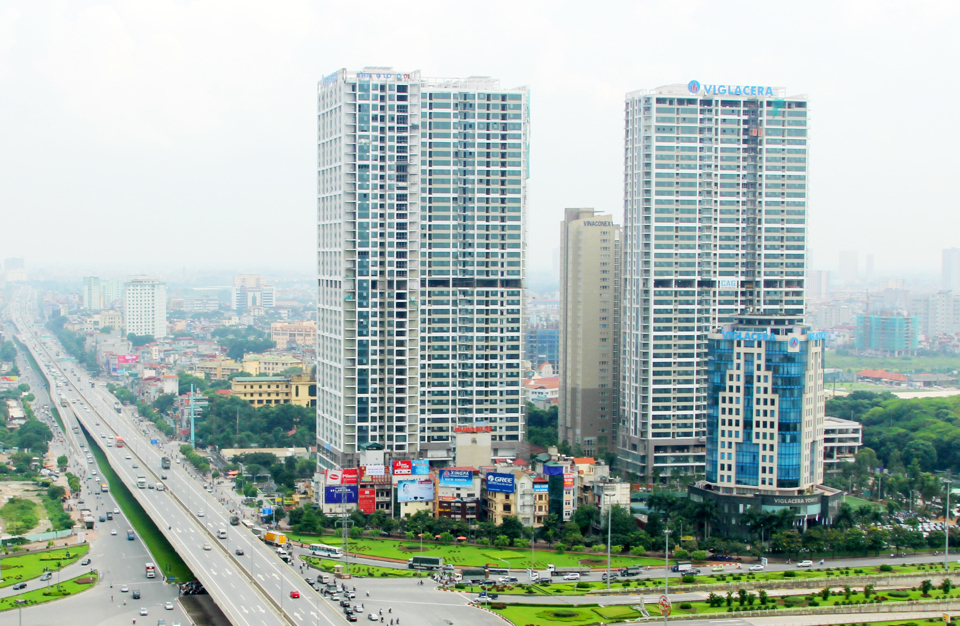
An indispensable element
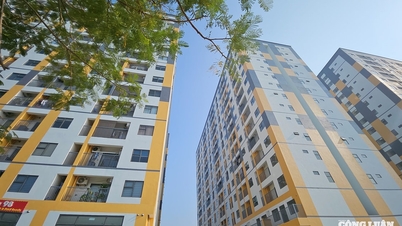
According to the Ministry of Construction, statistics show that there are currently over 400 green buildings nationwide with a total floor area of approximately 10 million square meters. The number of buildings certified as green buildings and using energy efficiently has already exceeded the target set in Decision No. 280/QD-TTg of the Prime Minister approving the National Program on Energy Saving and Efficiency for the period 2019-2030.
According to Decision 280, the target is to have 80 green buildings nationwide certified as energy-efficient by 2025, and 150 by 2030. Currently, the number of green buildings in Vietnam is at a relatively average level compared to other ASEAN countries.
Green building practices have been developing globally since the 1990s and have gradually become a movement and trend in the investment, construction, and operation management of buildings in over 100 countries and territories. In Vietnam, green buildings first appeared around 2005-2010. In 2023, Vietnam ranked 28th in the world in the number of green buildings assessed according to the LEED standard for green building assessment and certification by the U.S. Green Building Council.
Industry experts recognize that green technologies and materials play a crucial role in evaluating sustainable green building development. In particular, green facade design is a key factor that needs attention to minimize the impact of construction on the environment and human life.
Furthermore, the application of green technology to building facades not only relates to the aesthetic quality of the architecture but also promotes multifaceted energy savings. An optimized facade design will help save energy in the building's operation.
Multiple construction solutions
At the recent workshop "Sustainable Facade Solutions for Green Buildings," Tim Middleton, Director of Sustainable Environmental Design at Worklounge 03, presented two passive design solutions to reduce heat absorption: using reflective insulation panels in the roof, or creating green roofs and walls to reduce heat transfer efficiency through insulated chambers.
Specifically, the building's facade design is based on the principle of orienting the building north-south whenever possible, reducing the proportion of east-west windows, avoiding direct sunlight through skylights (using high-rise windows as a substitute), using high-reflectivity roofing, increasing roof insulation, shading and sun protection, and using Low-E/Solar Control or double-glazed glass.
This design can save 20% of the building's energy. Passive design before the conceptual stage will be more effective in construction and use, potentially reducing energy consumption in the building by up to 60%, resulting in lower investment costs and greater efficiency.
According to Amos Seah, Senior EDGE BOND Solutions Manager at Technoform Singapore, preliminary statistics in Vietnam show that glass accounts for up to 90% of commercial building systems, and this rate is 70% in residential buildings. Aluminum frames also absorb a significant amount of heat, but there are no specific regulations in place. Many countries, such as Singapore, have strict regulations regarding double-glazed windows, with heat absorption levels of only around 2-3%.
According to Mr. Seah, the solution to optimizing the building's energy efficiency involves applying a high-performance facade system with heat conduction through opaque walls, heat conduction through glass windows, reduced solar radiation through glass windows, and reduced heat at the glass frames and edges. The materials used are multi-layered DGU coated glass with Low-E coating and IGU spacers, which have improved heat absorption efficiency at the glass surface as well as the window frames.
Source: https://kinhtedothi.vn/mat-dung-ben-vung-cho-cong-trinh-xanh.html

![[Photo] Prime Minister Pham Minh Chinh attends the Conference on the Implementation of Tasks for 2026 of the Industry and Trade Sector](/_next/image?url=https%3A%2F%2Fvphoto.vietnam.vn%2Fthumb%2F1200x675%2Fvietnam%2Fresource%2FIMAGE%2F2025%2F12%2F19%2F1766159500458_ndo_br_shared31-jpg.webp&w=3840&q=75)



















































































Comment (0)