

The most notable feature of VASA-1 is its ability to allow users to animate any image. They can take a picture of a person and make that person move expressively, talk, and sing. What's interesting about this AI solution is the high level of realism it delivers.
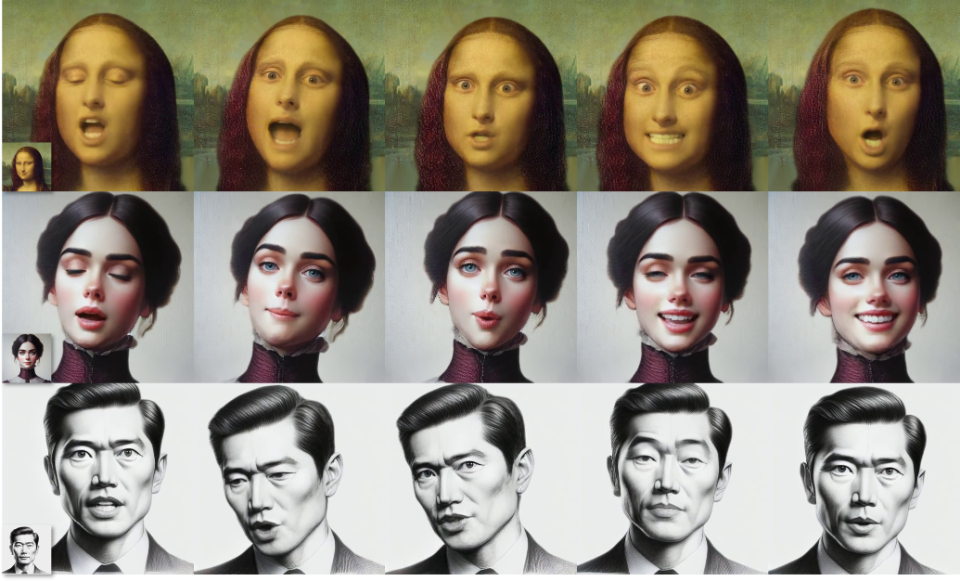
VASA-1 can make photos more vibrant.
The VASA-1 solution focuses on improving accessibility for people with communication difficulties. It seeks to provide companionship or therapeutic support to those who need it, enabling the creation of realistic talking faces in real time. VASA-1 only requires an image of the face of the person they want to add a voice to. Additionally, it allows users to add other elements to make things more realistic. Users can also edit the position of the eyes or the movement of the mouth, making the face smile or shout.
Microsoft emphasizes the realism and lifelike quality of these videos created from a person's photo, but it's not just about the ability to easily and realistically add voice and movement to drawings or artwork; VASA-1 has the capability to add emotion, facial expressions, and even head movement.

VASA-1 will not be released to the public.
However, similar to OpenAI's Sora, Microsoft warns that VASA-1 will not be accessible because they will not publish any demos, APIs, products, or services related to VASA-1. It's possible this is just the first version of this new technology and is still under development, and Microsoft is concerned about the risk of deepfakes being used for malicious purposes. Therefore, it seems likely to be used only in agreements with specialized centers working with individuals who have various communication difficulties.
Perhaps VASA-1 will be deployed in the future, but in a controlled manner to avoid problems. The foundations that VASA-A is aimed at are public organizations that can create more user-friendly virtual assistants, and it could also be an addition to Copilot, creating a more approachable virtual assistant right within Windows.
However, even if that happens, Microsoft is very concerned about security to avoid being exploited for fraudulent platforms or encouraging investment in fraudulent activities.
Source link
![[Photo] Prime Minister Pham Minh Chinh presides over a meeting on private sector economic development.](/_next/image?url=https%3A%2F%2Fvphoto.vietnam.vn%2Fthumb%2F1200x675%2Fvietnam%2Fresource%2FIMAGE%2F2025%2F12%2F20%2F1766237501876_thiet-ke-chua-co-ten-40-png.webp&w=3840&q=75)






































































Comment (0)