

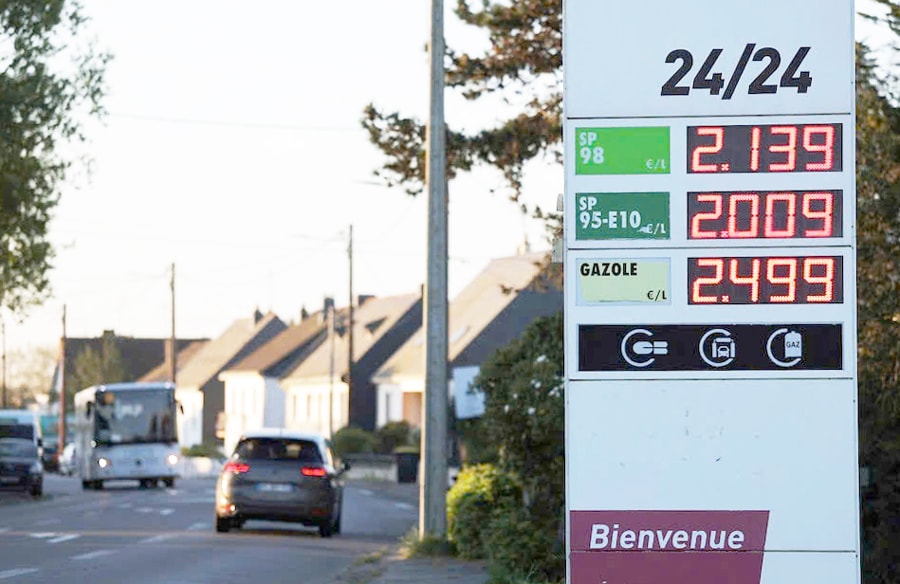
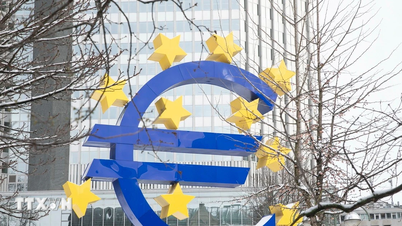
On May 21, the European Commission (EC) simultaneously lowered its economic growth forecasts for the EU and the Eurozone, while raising its inflation forecast for 2026-2027. According to the EC's Spring Economic Report, the EU economy is expected to grow by only 1.1% in 2026. For the Eurozone, the outlook is even bleaker, with growth projected at 0.9%, down from the previously forecast 1.2%.
At the same time, the EC raised its inflation forecast for the Eurozone to 3% in 2026, significantly higher than the previous 1.9% and well above the European Central Bank's (ECB) 2% target. Inflation across the entire EU is projected to reach 3.1%, primarily driven by soaring energy costs due to supply disruptions in the Middle East.
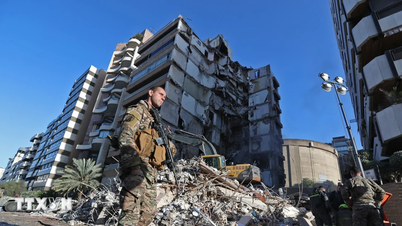
European Economic Commissioner Valdis Dombrovskis noted that the current conflict in the Middle East has slowed EU economic growth, while inflation remains high. At the heart of the current crisis is the escalating conflict between the US, Israel, and Iran, which has severely disrupted energy shipments through the region, pushing Brent crude oil prices above $100 per barrel for several weeks.
As a net energy importer, the EU is particularly vulnerable to shocks in oil and gas prices. Rapidly rising energy prices immediately lead to escalating production, transport, and consumption costs across the economy. The EC warns that energy inflation in the EU could exceed 11% in the second quarter of 2026 and remain above 10% for much of the remainder of the year, before cooling down in 2027.
The current shock has also spread to the food, transportation, industrial manufacturing, and household consumption sectors. Soaring fuel prices have led to sharp increases in logistics and input costs, forcing many businesses to pass this burden on to consumers. As a result, market confidence and purchasing power continue to weaken.
Germany, Europe's largest economy and the Eurozone's manufacturing hub, is now projected to grow by only 0.5% in 2026, a sharp drop from the previous 1%. Meanwhile, France, the region's second-largest economy, is expected to see zero growth in the first quarter of 2026.
French media outlets have noted that the country's economy is clearly losing momentum and warn that if the energy shock persists, growth in the second and third quarters could fall into negative territory. Even the UK, despite no longer being a member of the EU, is experiencing similar impacts...
What worries policymakers most is the risk of Europe entering a “new normal,” with prolonged low growth accompanied by persistently high inflation. Following the Covid-19 pandemic and the 2022 energy crisis caused by the Russia-Ukraine conflict, Europe had hoped for a more stable recovery thanks to cooling inflation and a surge in technology investment. However, tensions in the Middle East have overturned that outlook. Unlike the 2022 crisis, which was primarily related to gas supplies from Russia, the current shock directly impacts the global oil and liquefied natural gas (LNG) markets, making the impact broader and more difficult to control.
Financial markets are also beginning to react strongly to the risk of prolonged inflation. Government bond yields in many European countries have risen sharply, while the market now anticipates that the ECB may continue to raise interest rates instead of easing as expected earlier in the year. The ECB is expected to raise interest rates at its next meeting in June to control inflation. However, this move also risks further weakening economic growth as borrowing costs continue to rise.
Many European countries have had to implement emergency support measures such as fuel tax reductions, electricity subsidies, and direct support for households. Italy recently called on the EC to loosen fiscal regulations to allow countries to increase spending to respond to the energy crisis, similar to how the EU did with defense spending after the conflict in Ukraine.
According to analysts, the biggest problem today is not just the oil price shock, but also the widespread decline in economic confidence. The EC believes the greatest risk now lies in the possibility of prolonged conflict and continued disruptions to shipping through the Strait of Hormuz.
Less than five years after the energy shock from the Russia-Ukraine conflict, Europe faces a new test of its economic resilience. But this time, policy space is more limited, public debt is higher, and market confidence is far more fragile.
Source: https://hanoimoi.vn/mong-manh-da-phuc-hoi-cua-chau-au-815968.html






























































































Comment (0)