

From legends of mythical horses to bountiful harvests.
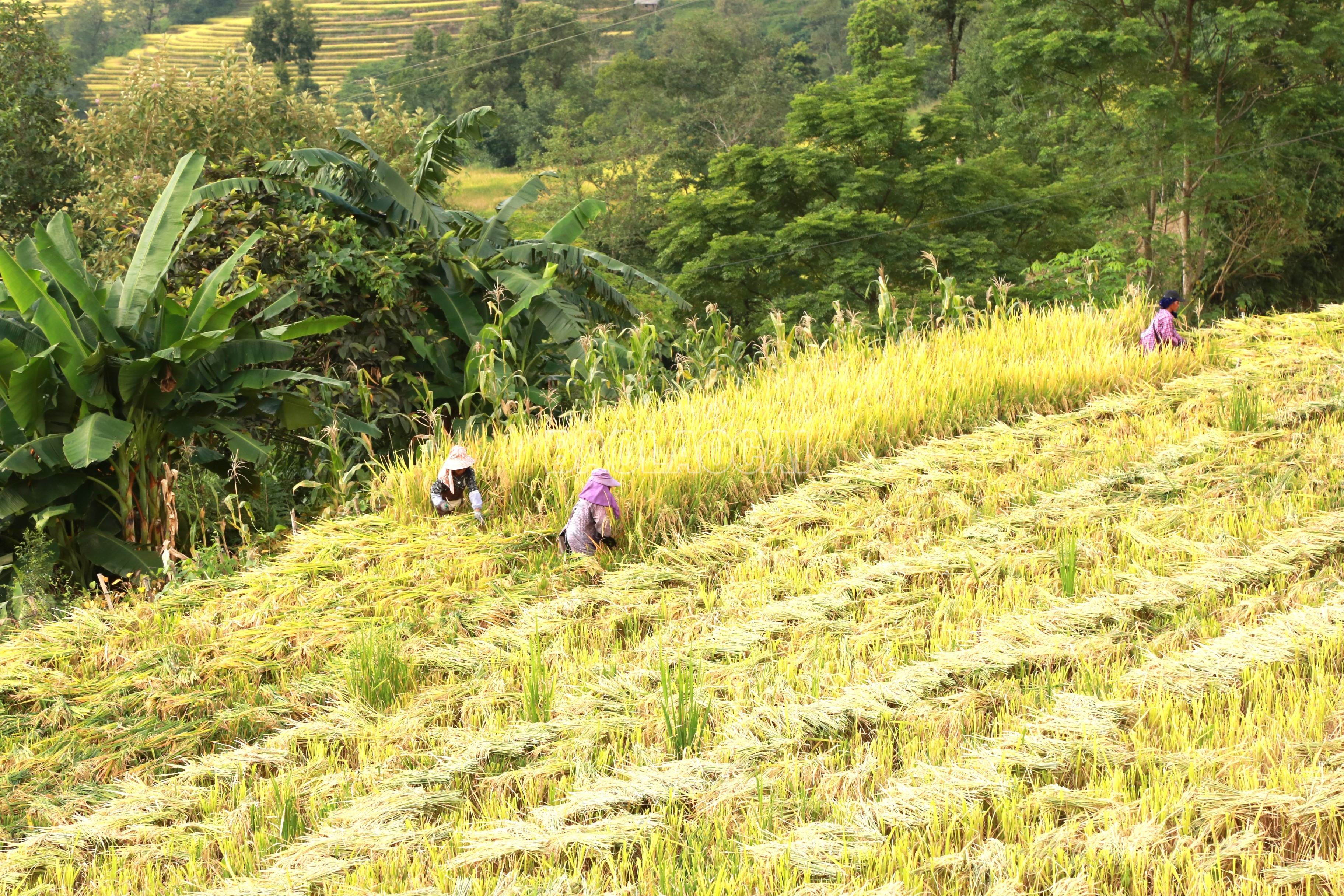
In autumn, the entire Northwest highlands are bathed in a vibrant golden hue of ripening rice. On the terraced rice paddies, ethnic minority communities are bustling with activity as they harvest their rice. For the Ha Nhi people in some communes of Y Ty, Muong Hum, and Trinh Tuong, autumn is also the most anticipated season of the year because they get to go to the fields to harvest rice and carry sacks full of grain home with joy.
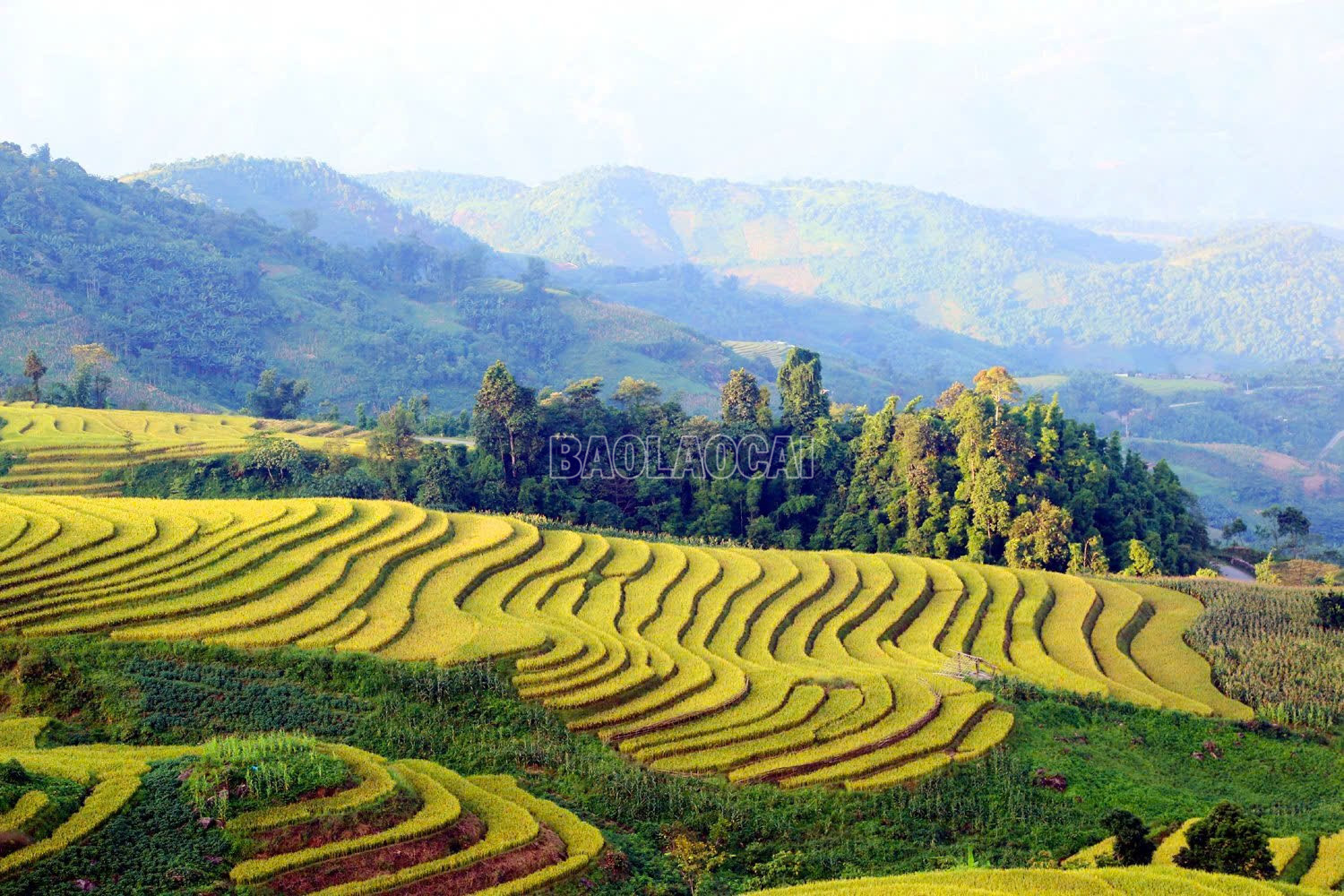
According to the beliefs of the Ha Nhi people, a bountiful harvest depends not only on the sweat and hard work of each person in the fields but also on the blessings of deities and ancestors. In the spiritual beliefs of the Ha Nhi people, there are gods of the earth, water, fire, and forest that always protect the lives of the village. In the high-altitude communes of Bat Xat district, the Ha Nhi people also worship the horse god, hoping that the deity will bless their crops with good harvests and a prosperous life.
Distinguished artisan Ly Seo Cho (Lao Chai village, Y Ty commune) is 80 years old this year, his hair and beard are as white as snow. Despite his advanced age, Mr. Cho remains sharp-minded and often tells his grandchildren folk tales and legends, especially the legend of the Sacred Horse Mountain. The story goes that, since ancient times, the Ha Nhi people carved through the mountains, channeled water, and created terraced rice fields in the The Pa valley at the foot of a towering rocky mountain. On the mountaintop lived a white horse that would often fly down to the fields to graze. To prevent the sacred horse from destroying the crops, the elders performed a ritual offering to the sacred horse, and since then, the harvests have always been bountiful.
However, after several years, the villagers forgot to perform the ritual offering to the white horse, so the horse came down and destroyed the rice crops, causing the rice to fail to bear grain, the corn to not grow ears, and famine to spread everywhere. At this time, the elders in the village showed the villagers how to make stone tigers (Ha Gu) and place them facing the mountaintop, and perform rituals to prevent the sacred horse from destroying the crops. During the Kho Gia Gia Festival, the villagers also did not forget to offer a bushel of rice and a handful of grass to the sacred horse. As a result, the crops flourished again, and the Ha Nhi village once again enjoyed a prosperous life.
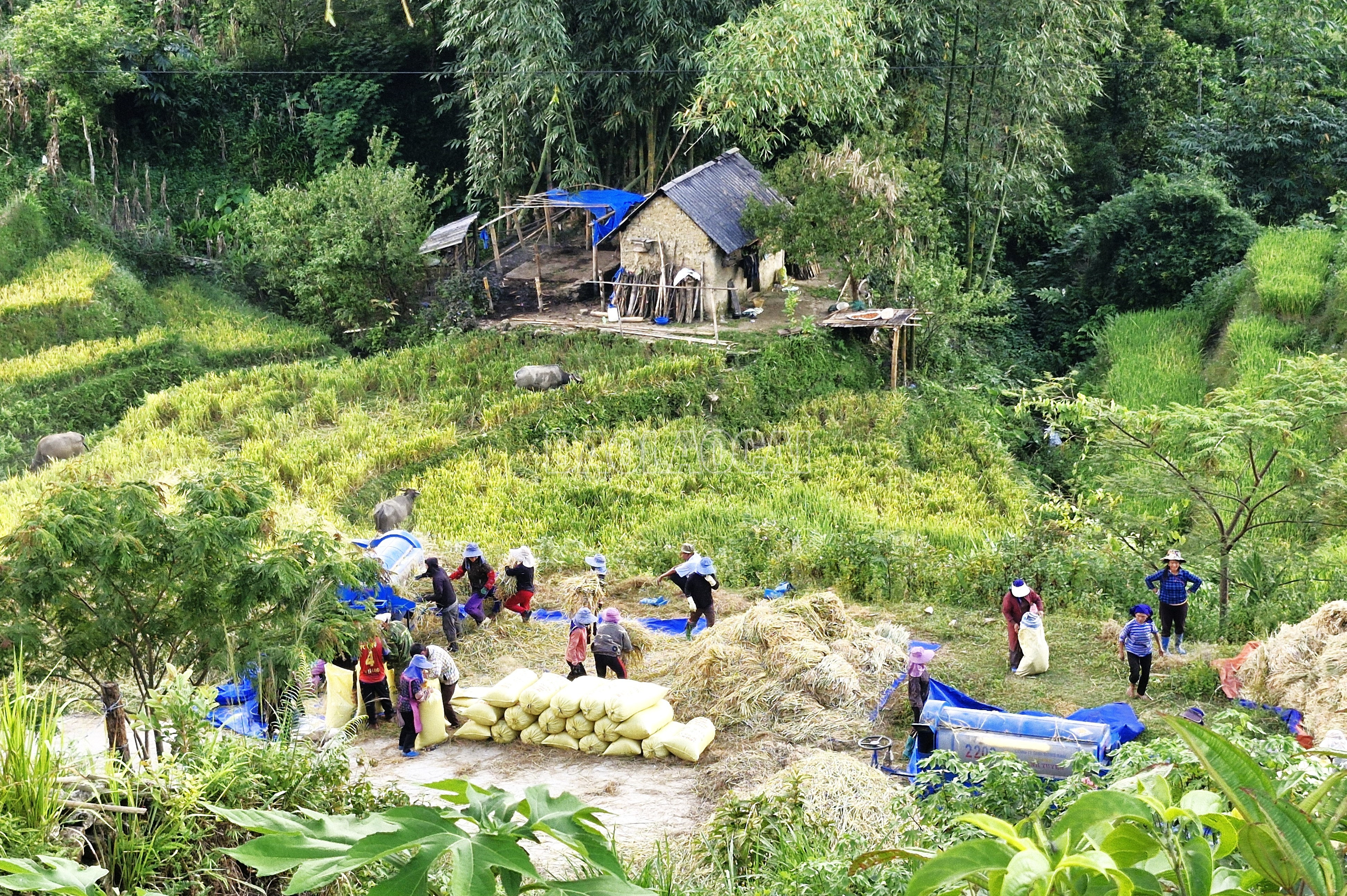
Even today, the Ha Nhi people in the villages and hamlets still remember to worship the sacred horse, praying for favorable weather, gentle winds, and a bountiful harvest. At the foot of the Sacred Horse Mountain, terraced rice fields stretch endlessly in golden hues. The The Pa Valley is the largest rice granary in the region, sustaining the Ha Nhi, Mong, and Dao people of the former Y Ty, Ngai Thau, and A Lu communes (now Y Ty commune) for many years.
The joy of the new rice harvest season
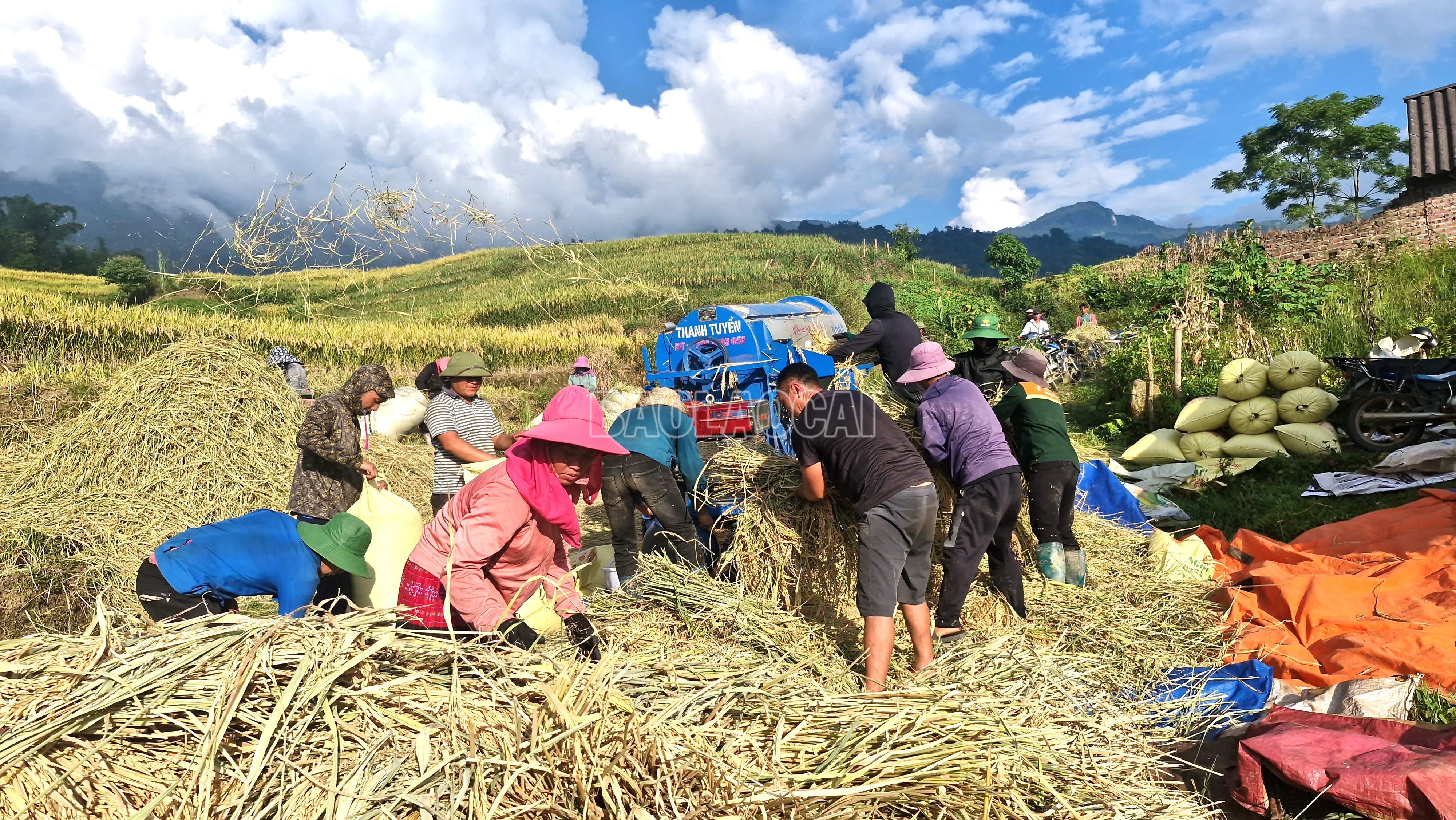
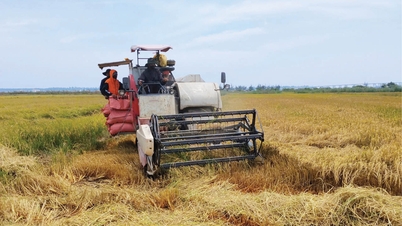
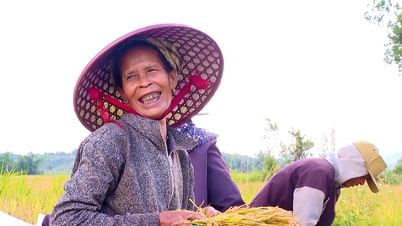
Amidst the golden, honey-like sunshine of a September autumn day, we descended into the The Pa valley to admire the golden rice paddies and white clouds. These days, the ethnic minority people are busily harvesting rice on the terraced fields. On the terraces, young men and women of the Ha Nhi, Mong, and Dao ethnic groups are bustling with activity, their sickles cutting the rice, their laughter echoing everywhere. Ha Nhi women carry heavy loads of rice on their backs, using ropes slung across their foreheads, transporting the harvest down the concrete road. From early morning to late evening, the sound of threshing machines rumbles along the The Pa valley. On their sweat-drenched faces are the smiles of farmers reaping the fruits of their labor.
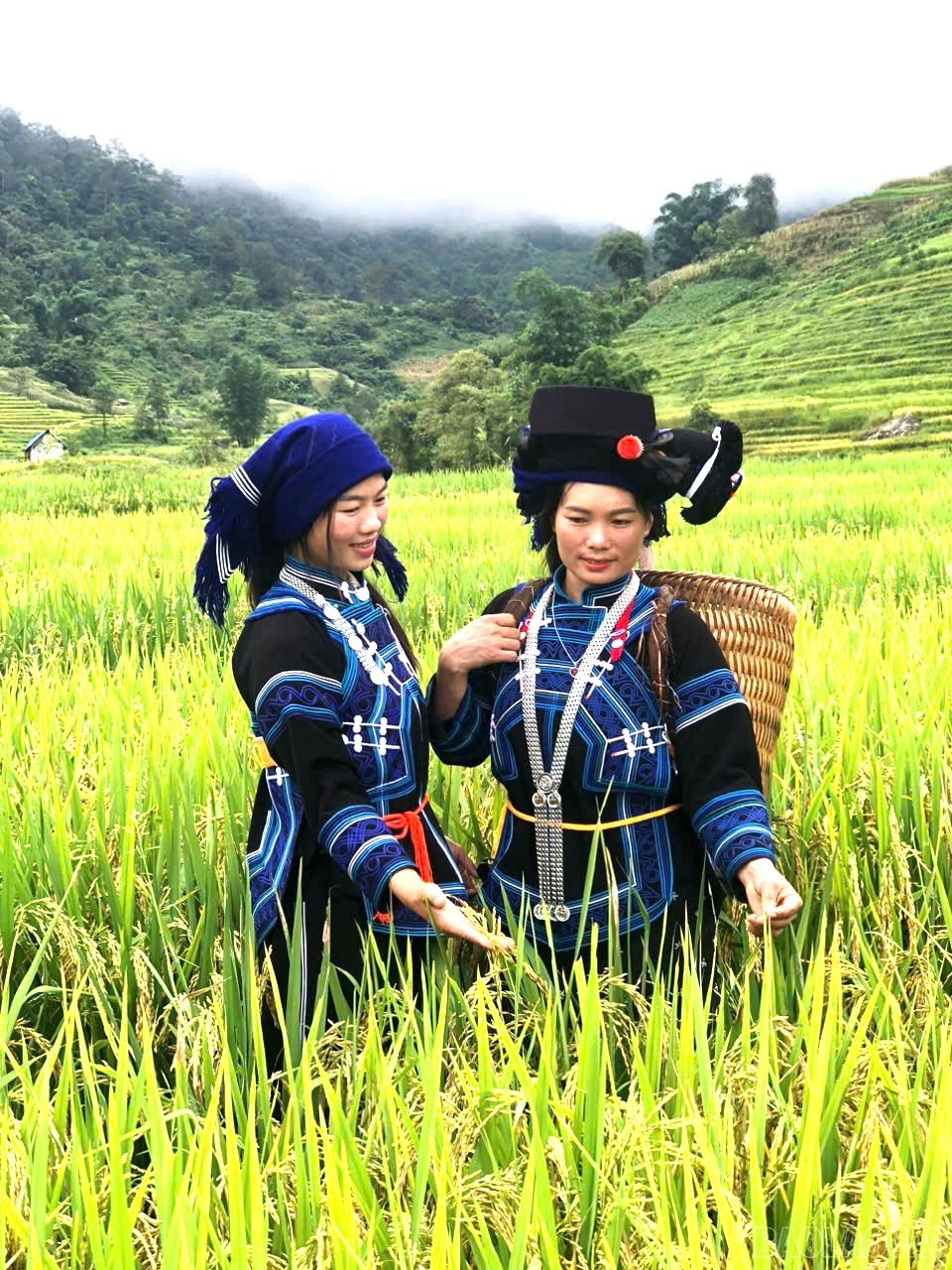
Holding a bundle of rice stalks heavy with grain in his hands, Mr. Sờ Có Suy, from Choản Thèn village, Y Tý commune, excitedly shared: "This year, the weather has been favorable, and the rice in the Thề Pả valley has yielded a bountiful harvest. My family harvested 60 sacks of rice (about 3.5 tons). For highland farmers, having a house full of rice means a year of joy and peace of mind. The people of Y Tý now not only have enough rice to eat all year round, but also have rice to sell to support their lives. This year, the corn and rice crops are abundant, the harvest is plentiful, and everyone is having a big feast."
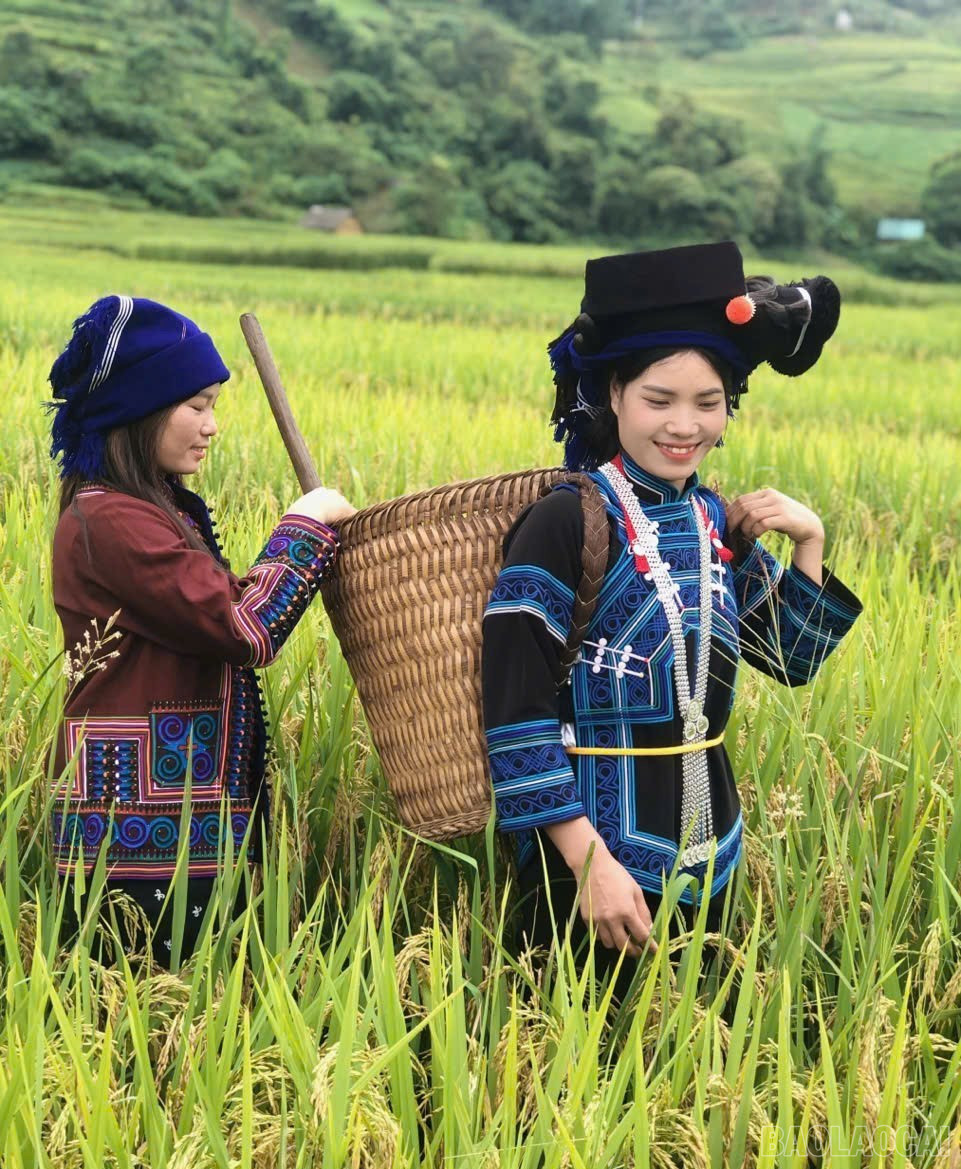
Sharing in the joy of a bountiful harvest, Mr. Phu Suy Tho from Mo Phu Chai village said: According to the traditional customs of the Ha Nhi people, on the first Dragon day of the eighth lunar month, Ha Nhi families will prepare new rice to offer thanks to heaven, earth, and ancestors for granting them a bountiful harvest. Before that, choosing an auspicious day, the Ha Nhi people go to their family's rice fields and cut 3 or 9 bundles of rice, each bundle containing 3 or 9 ears of rice, to prepare the offering. If, on the day of the new rice offering, the rice is still green and not enough to cook, they mix a little new rice and old rice together for the offering. In addition, they also offer chicken, pork, wine, and various vegetables and fruits grown by the family to the altar to thank the gods and ancestors.
A unique custom of the Ha Nhi people is that when they eat new rice, families always feed the dog first. Legend says that in ancient times, the dog lived in heaven and used to sleep in the granary. When the dog came down to the Ha Nhi village, it brought down grains of rice clinging to its fur. Thanks to this, the Ha Nhi people have rice seeds to plant.
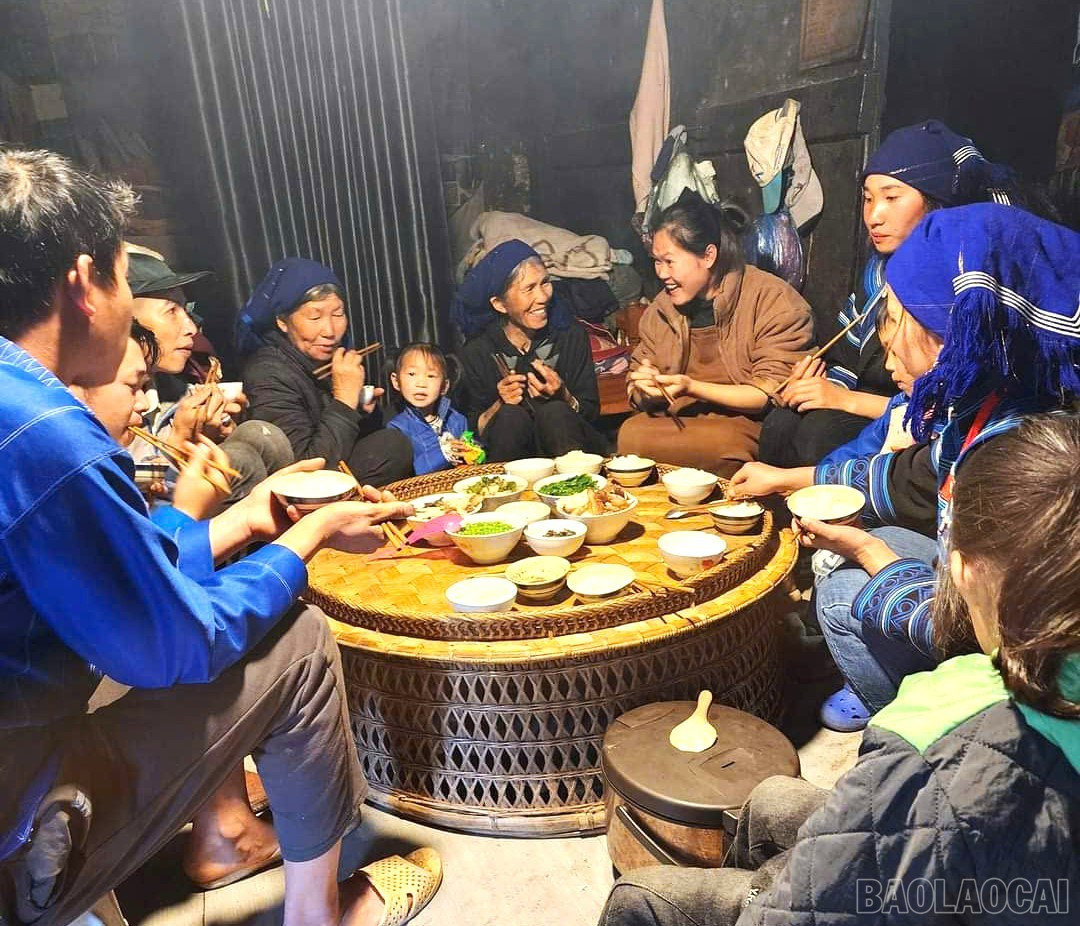
Legend also tells that, in the old days, when the Ha Nhi people faced a famine and had nothing to eat, a dog brought rice seeds for them to use as planting material. Since then, the people have been able to cultivate rice, have plenty of rice to eat, and their lives have gradually become more prosperous. To show gratitude to the dog that brought the rice seeds to the villagers, the Ha Nhi people often feed the dog first during the New Rice Festival. On the New Rice Festival day, family members and villagers gather together, exchanging good wishes.
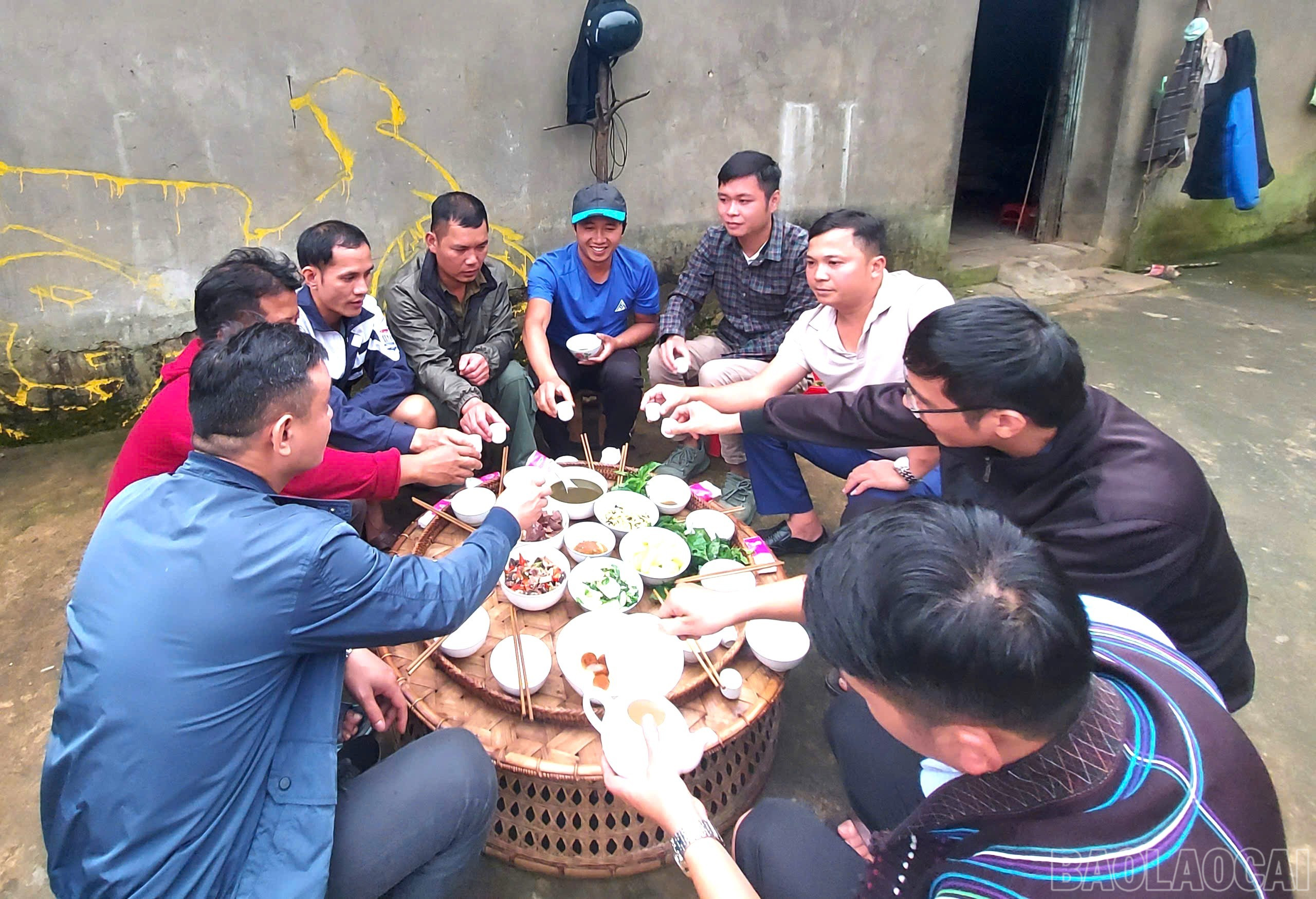
Visiting the villages of the Ha Nhi people during the rice harvest season, we felt the bustling atmosphere and the joy of abundance. Bowls of freshly cooked, fragrant rice, soaked with the sweat and hard work of the farmers and the rain and sunshine of the land, are offerings the people present to thank the gods, the heavens, and their ancestors, with prayers for a life of warmth, peace, and prosperity.
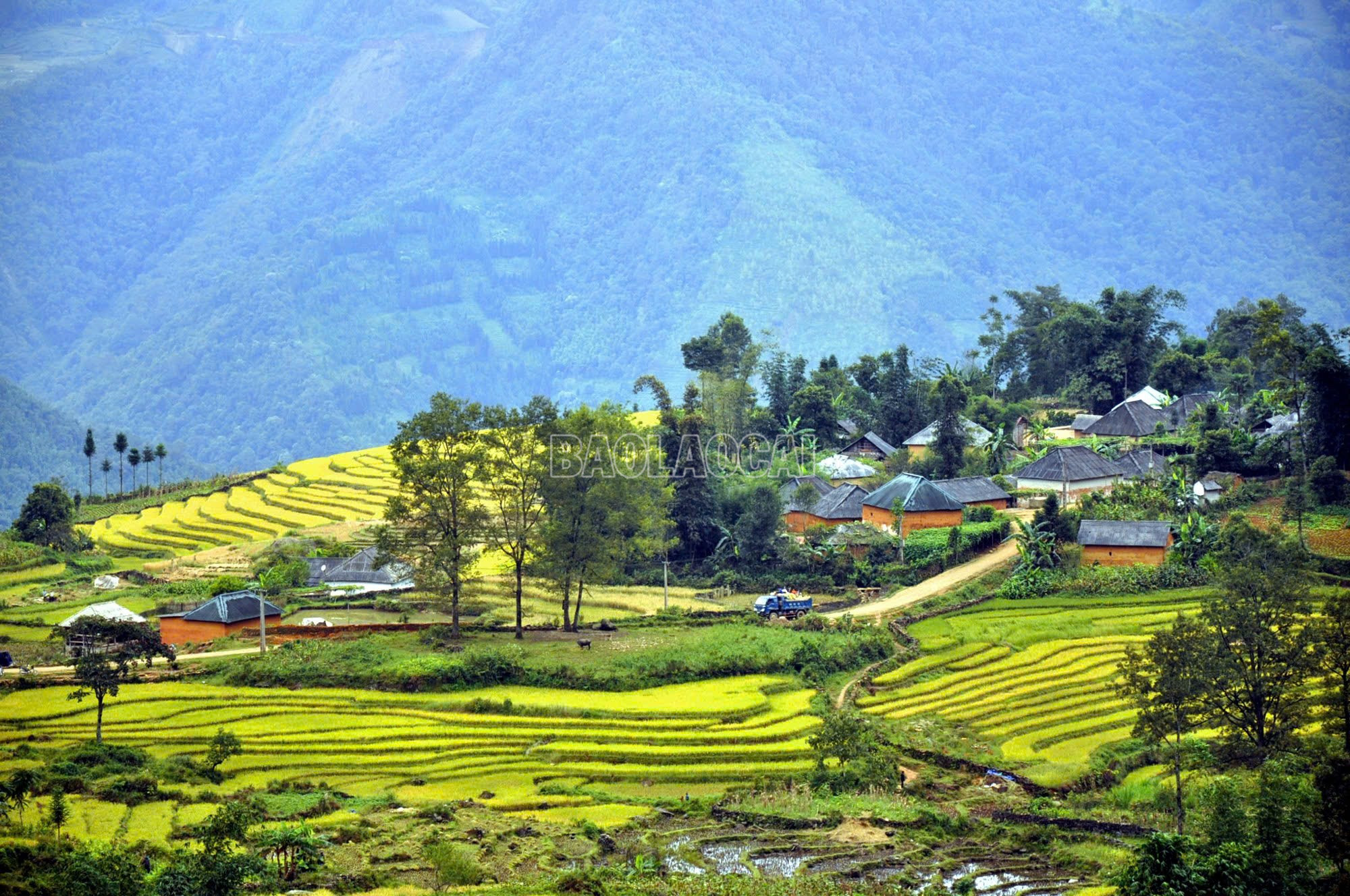
Later, no matter where they go or where they return to, when the new rice season arrives, every Ha Nhi person remembers the warm memories with their family, remembering the bowl of fragrant, sticky new rice by the glowing fire, a symbol of deep affection. For hundreds of years, the new rice season in the Ha Nhi village has remained like a joyful melody amidst the golden hues of the terraced rice fields and the green of the majestic mountains.
Source: https://baolaocai.vn/mua-com-moi-o-ban-ha-nhi-post881750.html

![[Photo] The heat at the fireworks display site on the opening night of the Da Nang International Fireworks Festival 2026](https://vphoto.vietnam.vn/thumb/1200x675/vietnam/resource/IMAGE/2026/05/27/1779889741485_ndo_br_z7872039145157-fecaba5112f39e8352544099d7ef4738-5140-jpg.webp)
![[Photo] The courage of new recruits of Brigade 144 on the training ground.](https://vphoto.vietnam.vn/thumb/1200x675/vietnam/resource/IMAGE/2026/05/27/1779881651341_anh-man-hinh-2026-05-27-luc-18-32-52.png)





































![[Photo] The courage of new recruits of Brigade 144 on the training ground.](https://vphoto.vietnam.vn/thumb/402x226/vietnam/resource/IMAGE/2026/05/27/1779881651341_anh-man-hinh-2026-05-27-luc-18-32-52.png)


















Comment (0)