

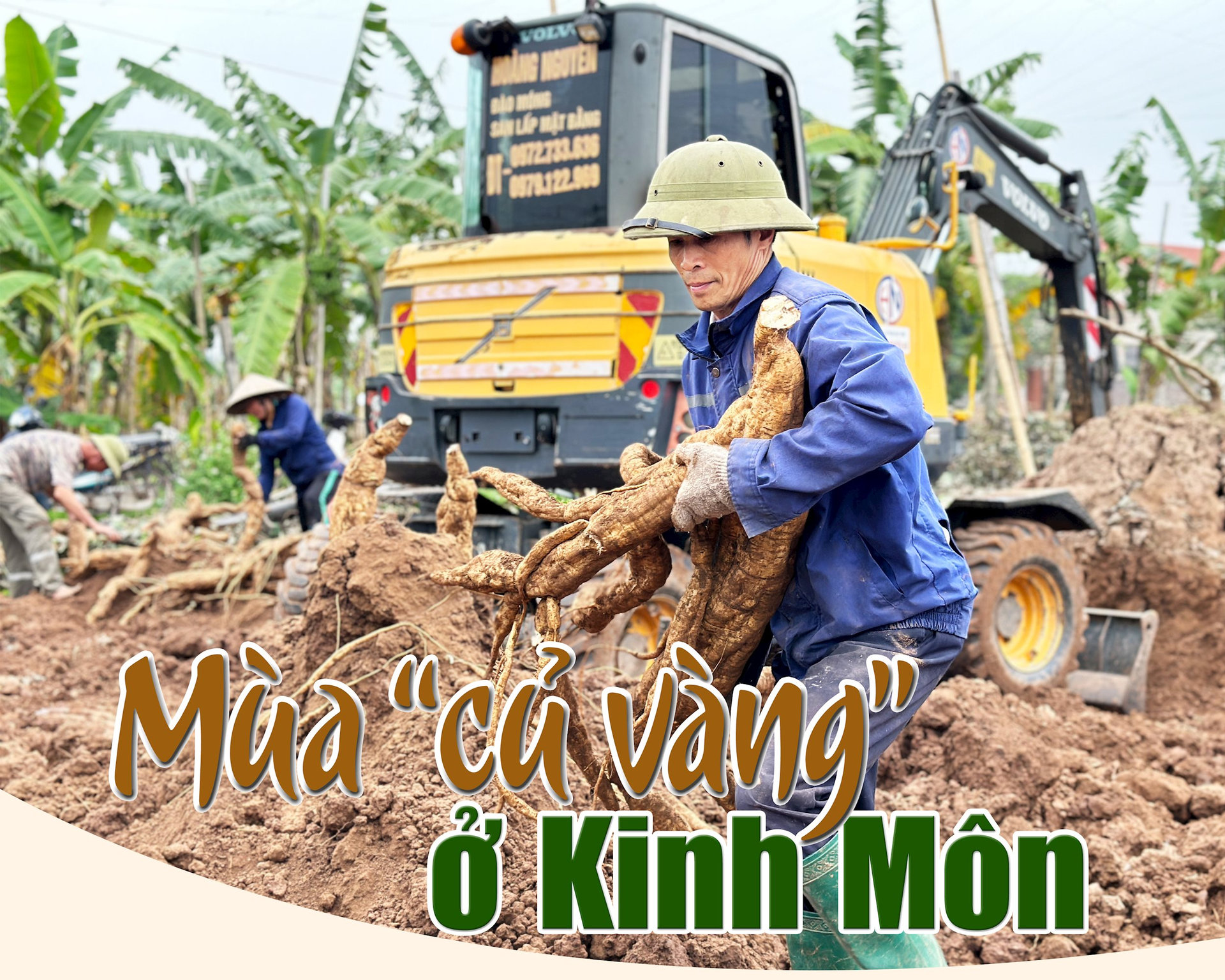
These days, the people of Kinh Mon are in the midst of harvesting cassava. Often referred to as "golden root" because, along with other specialty crops like glutinous rice, bananas, onions, and garlic, cassava is contributing significantly to the economic value of the local people.

Taking us across the vast cassava fields where the vines had been neatly cut, Mr. Nguyen Duc Minh, Chairman of the Farmers' Association of Thuong Quan commune, explained that the vines were cut to make it easier for farmers to harvest the tubers.
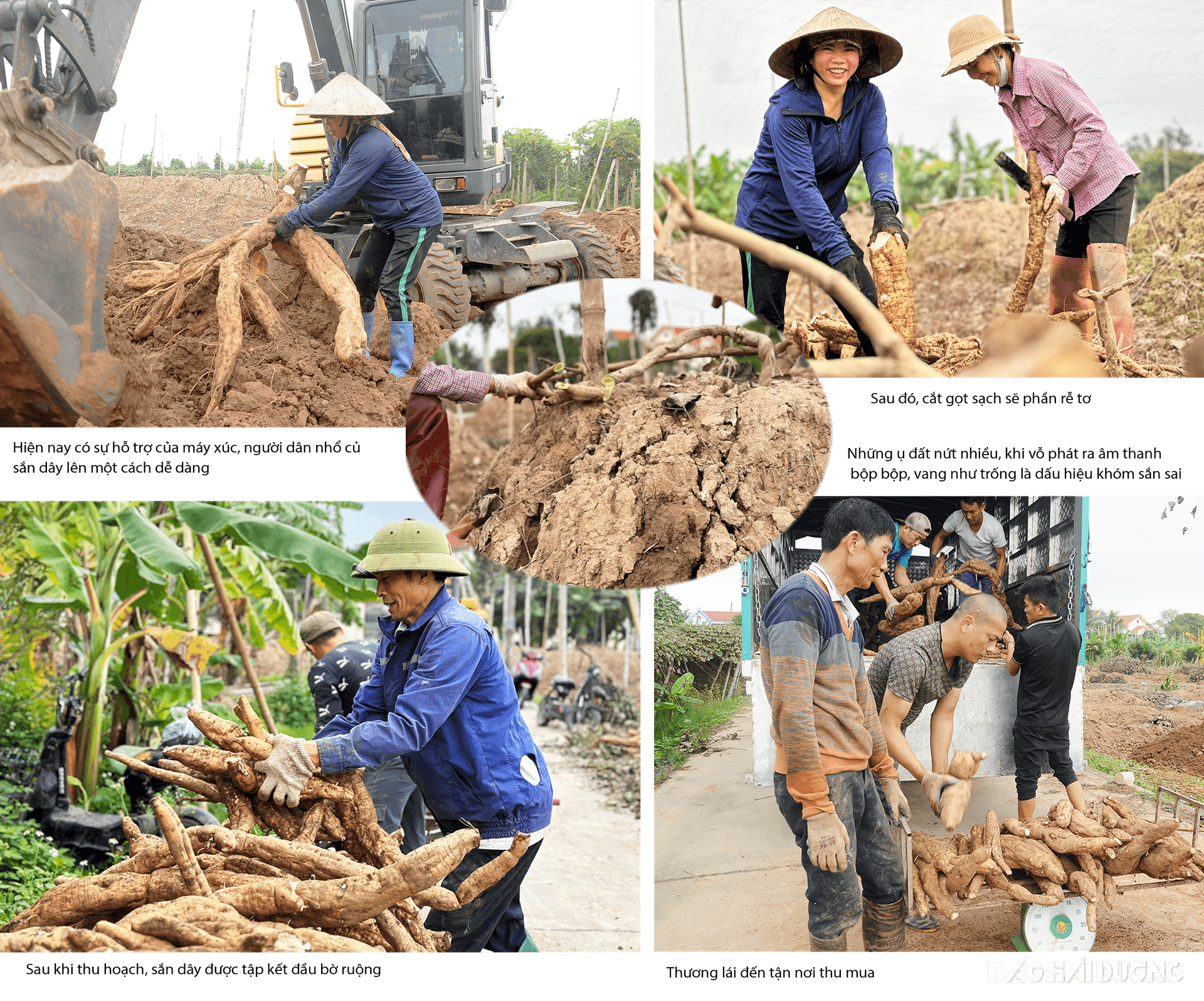
According to Mr. Minh, in the past, people had to use hoes and shovels to dig up the tubers manually, which was both laborious and inefficient. "Now, machines have replaced human labor; with just an excavator, they can harvest dozens of tons of tubers in a day," Mr. Minh said.
Clapping his hands on the cracked mound of earth covering the cassava roots, he "revealed" to us how to identify cassava plants with many tubers: "The mounds of earth that make a 'thump, thump' sound, a regular, resonant sound like a drum, with this kind of vibration, indicate a very high yield of tubers."
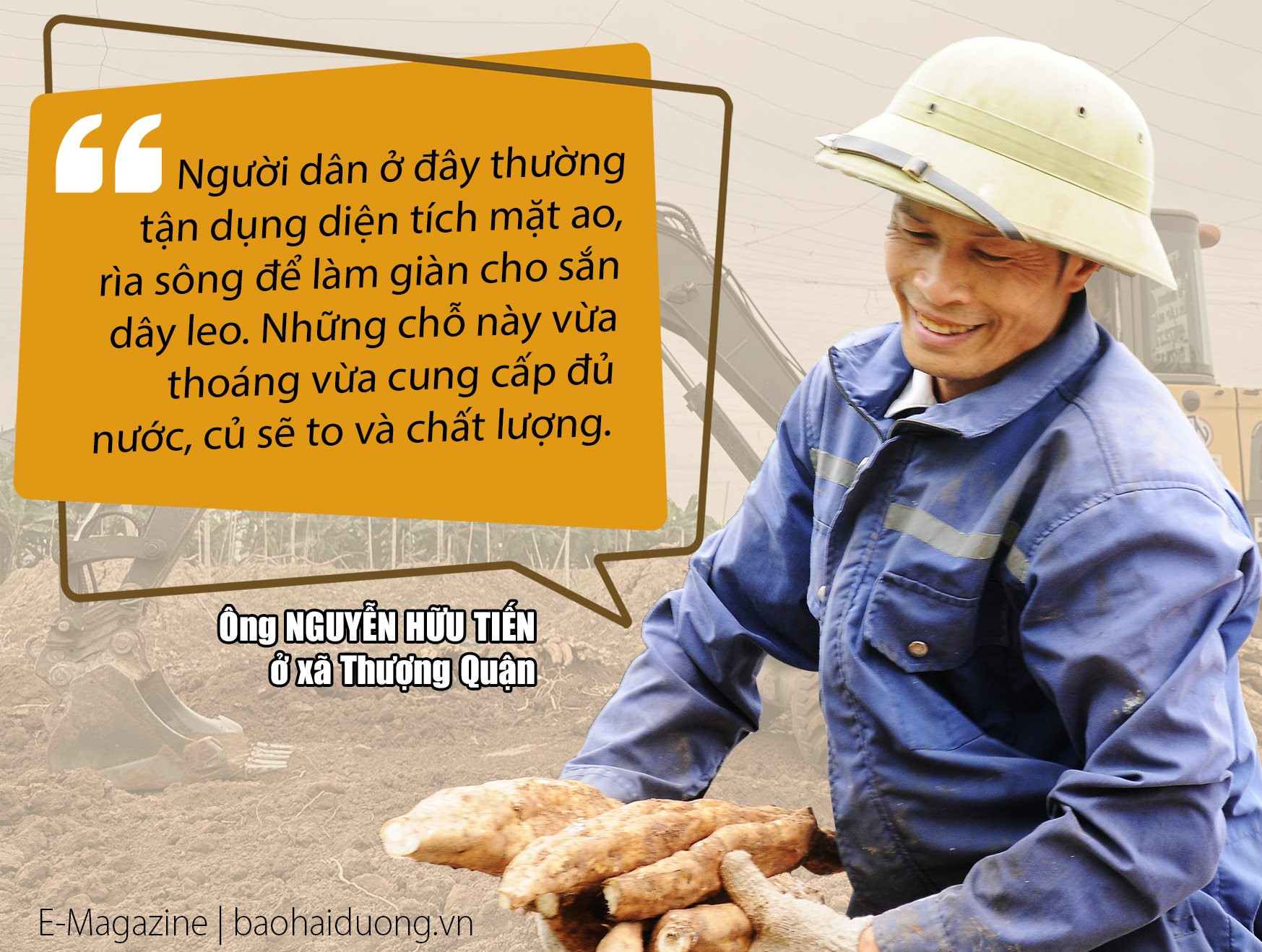
As Mr. Minh predicted, after the strong, decisive movements of the excavator's bucket, layers of plump cassava tubers were revealed, creating a sense of excitement for the harvesters. Some tubers were as big as an adult's calf, long, and weighed over 20 kg. After harvesting, the cassava tubers were gathered at the edge of the field. Traders from many places flocked to buy them. Mr. Nguyen Huu Tien, from Bai Mac village, Thuong Quan commune, is the owner of a field currently being harvested. His family has 5 sao (approximately 0.5 hectares) with 60 cassava plants. He said that this year's cassava tubers are large, beautiful in appearance, have smooth skin, little fiber, and a high starch content. "Every cluster in my family's field yields over 100 kg of tubers," Mr. Tien said.
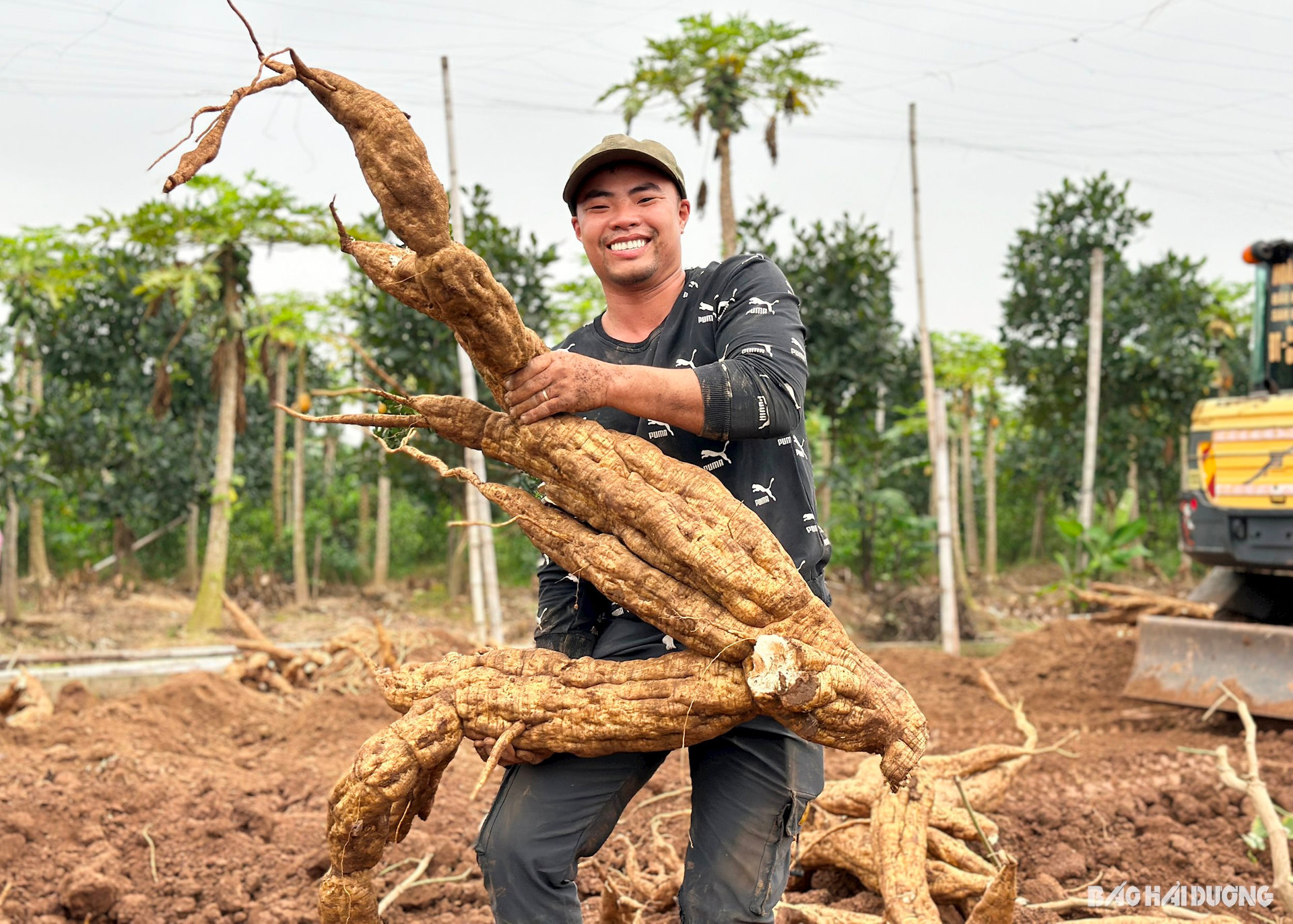
However, these are not the largest cassava clumps ever harvested. At the 2024 Onion and Garlic Harvest Festival organized by Kinh Mon town last January, Mr. Hoang Van Son from Dich Son village, Hiep Hoa commune, displayed his family's cassava clump weighing 275 kg for the public and tourists to admire. Most recently, during the harvest, Mr. Nguyen Duc Tuyen's family in Hue Tri 1 residential area, An Phu ward, unearthed a cassava clump weighing 360 kg. According to some locals, in Le Ninh commune, a household also harvested cassava clumps weighing 360 kg. This is a record for the heaviest cassava clump in Kinh Mon.

Thuong Quan is considered the largest cassava growing area in Kinh Mon town, with an area of over 80 hectares and a production of 2,240 tons per year.
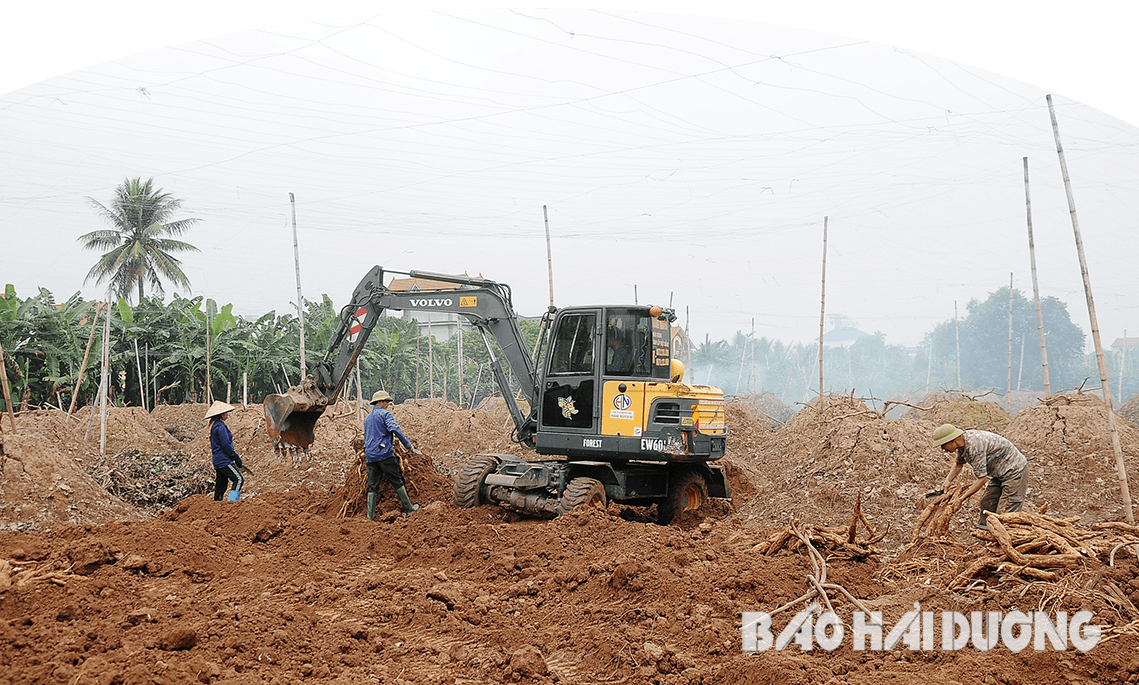
Thuong Quan commune has favorable natural conditions, especially the fertile alluvial plains formed by the Kinh Mon River, suitable for growing kudzu. The people of Thuong Quan commune have a long tradition and advanced techniques in kudzu cultivation. Mr. Nguyen Ba Lua from Thuong Quan commune said: “No one remembers exactly when kudzu first appeared here. In our ancestors' time, this plant was grown naturally along fences, its vines climbing up bamboo bushes or mahogany trees. The tubers were very small and few back then.” For the past 30-40 years, the people of Thuong Quan have continuously improved their kudzu cultivation techniques, resulting in increasingly higher yields.
Cassava plants, sown from May of the previous year to February of the following year, are ready for harvest. According to Mr. Lua and many residents of Thuong Quan commune, for cassava to produce large, numerous, and high-quality tubers, three factors must be met: fertile, loose, and well-draining soil; a wide and airy trellis area; and sufficient water supply. Therefore, people often replace the soil or intercrop cassava with other plants to improve the soil, regularly supplementing it with cow, chicken, and pig manure; and humus to maintain soil moisture. "We often utilize the surface area of ponds and riverbanks to make trellises for cassava to climb. These places are both airy and provide enough water, resulting in large and high-quality tubers," said Mr. Nguyen Huu Tien from Thuong Quan commune.
In terms of planting techniques, people also have many methods. "Initially, the vine is coiled into a circle like a pot holder. Then we plant a three-pronged branch and then use the grafting technique. The grafting method currently yields good results, with many branches and healthy plants," Mr. Lua said.
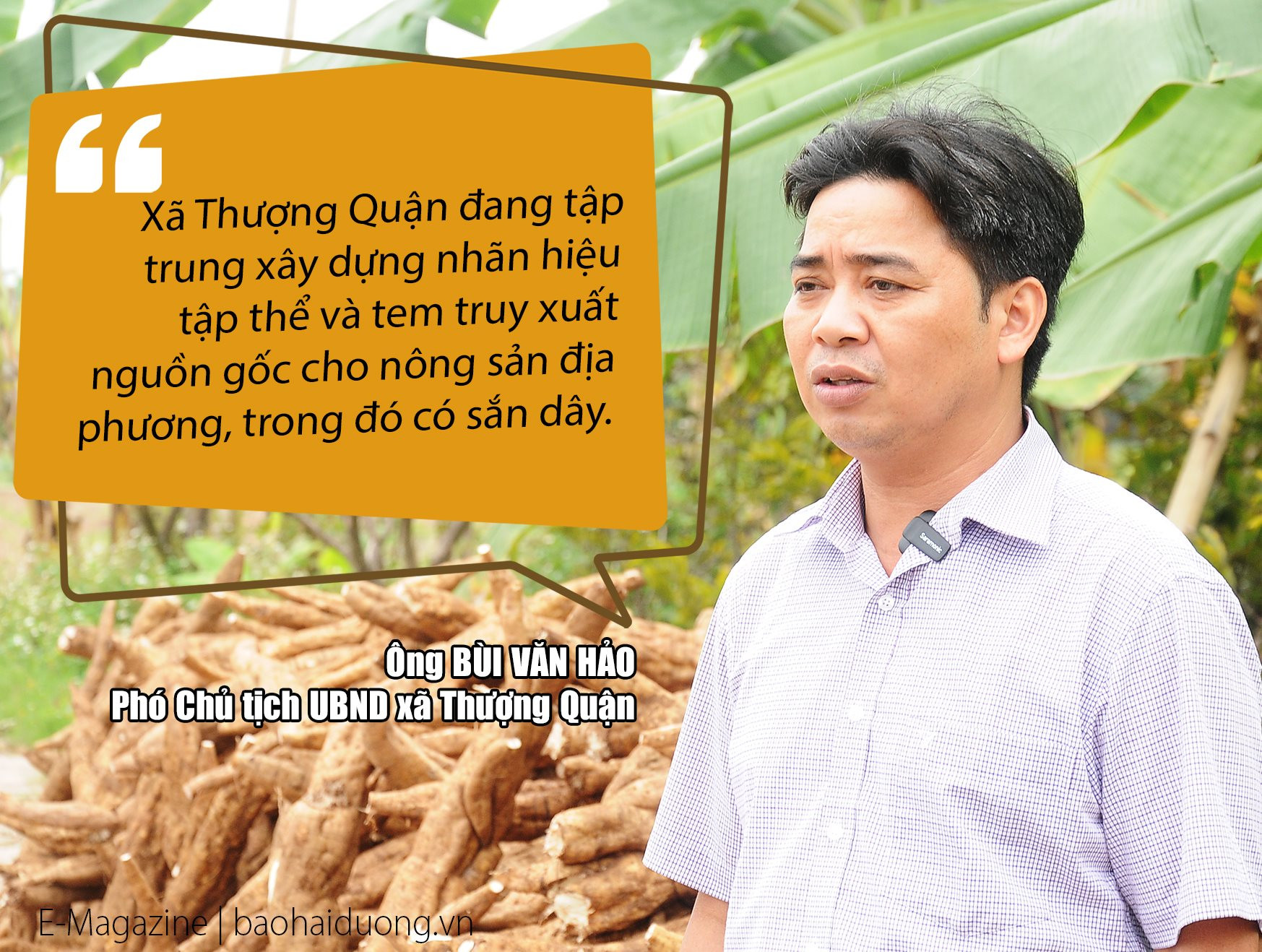
“At one point, selling one cassava plant was enough to buy one tael of gold. My parents once sold three cassava plants and used the extra money to buy a calf,” Mr. Lua said. Cassava cultivation has contributed significantly to the economic value and improved the lives of the local people. In 2023, the value from cassava cultivation in Thuong Quan commune reached over 32 billion VND, accounting for 11.27% of the commune's total agricultural revenue. Currently, Thuong Quan has about 500 households growing cassava, concentrated in Bai Mac and Que Linh villages. With fresh tubers selling for 14,000-15,000 VND/kg right in the field, many families earn more than 1 billion VND per crop. To support cassava cultivation, the Thuong Quan Commune Farmers' Association has recently organized training courses on cassava planting and care techniques, and provided fertilizers and pesticides to the people. "Thuong Quan commune is focusing on building collective trademarks and traceability labels for local agricultural products, including cassava," said Mr. Bui Van Hao, Vice Chairman of the People's Committee of Thuong Quan commune.

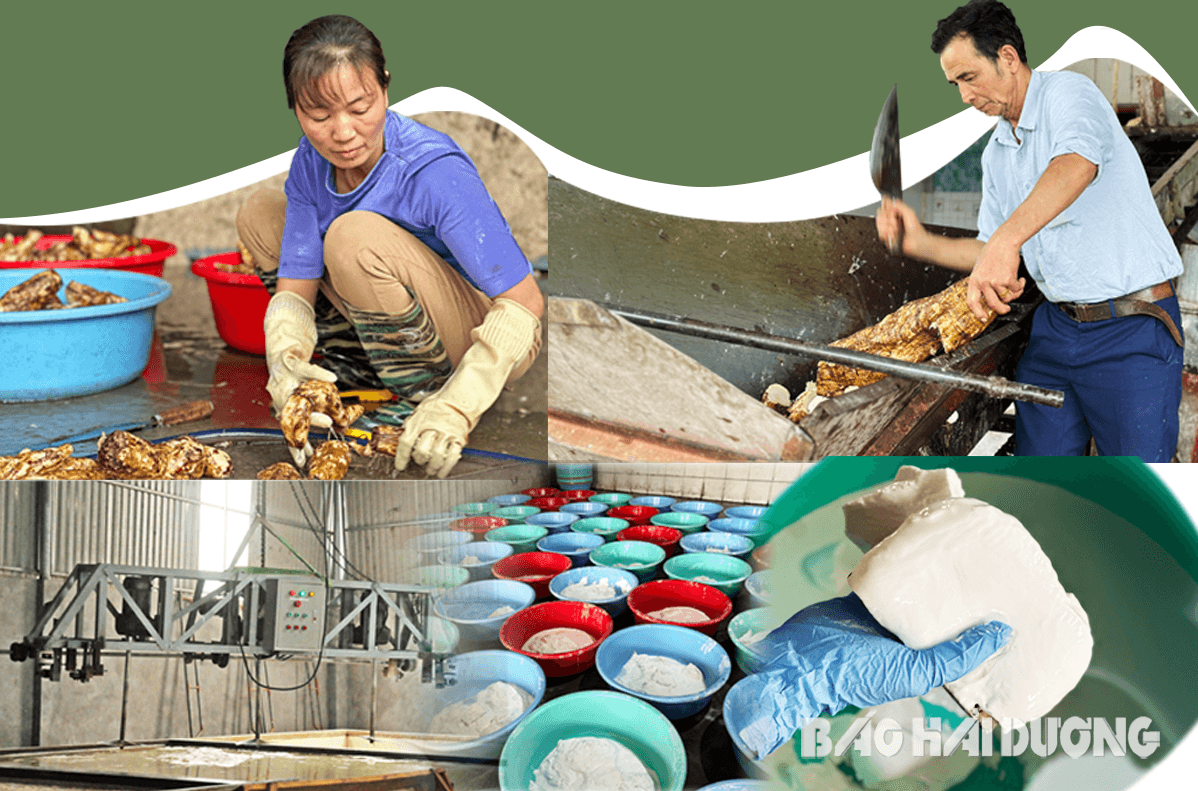
Previously, Kinh Mon kudzu root was mainly sold as fresh tubers, with low economic value. Nowadays, kudzu root is processed into starch using advanced technology, bringing significant economic value.
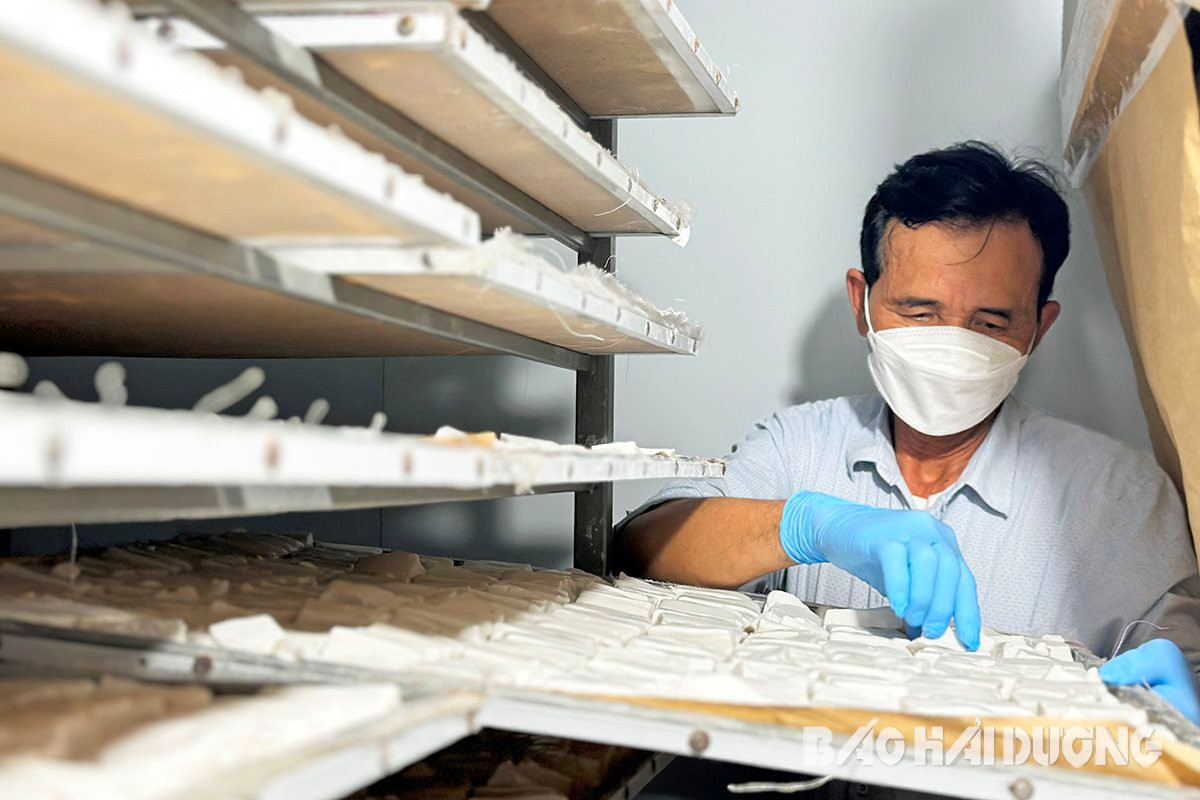
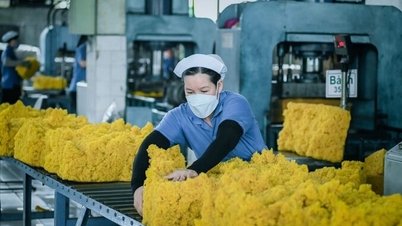
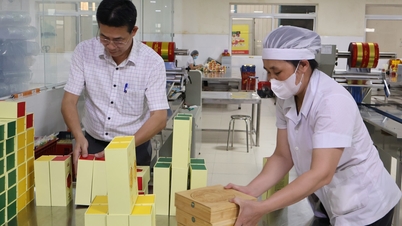
Ms. Nguyen Thi Nhan, Deputy Director of Thanh Nhan Clean Agricultural Products Cooperative, a reputable cassava starch production facility in Kinh Mon town, said that the cooperative recently invested nearly 1 billion VND in a Japanese-technology cold drying system. “To continuously improve our products, we must invest and constantly explore and innovate,” Ms. Nhan said. Despite having 15 years of experience in producing and processing cassava starch, Ms. Nhan has never stopped at the existing process.
In addition to investing in product quality, Ms. Nhan's family cooperative also focuses on improving labeling and packaging. The products have QR codes for consumers to trace their origin. To better access the market, Thanh Nhan cassava starch products have been available on e-commerce platforms such as Lazada and Shopee for many years.
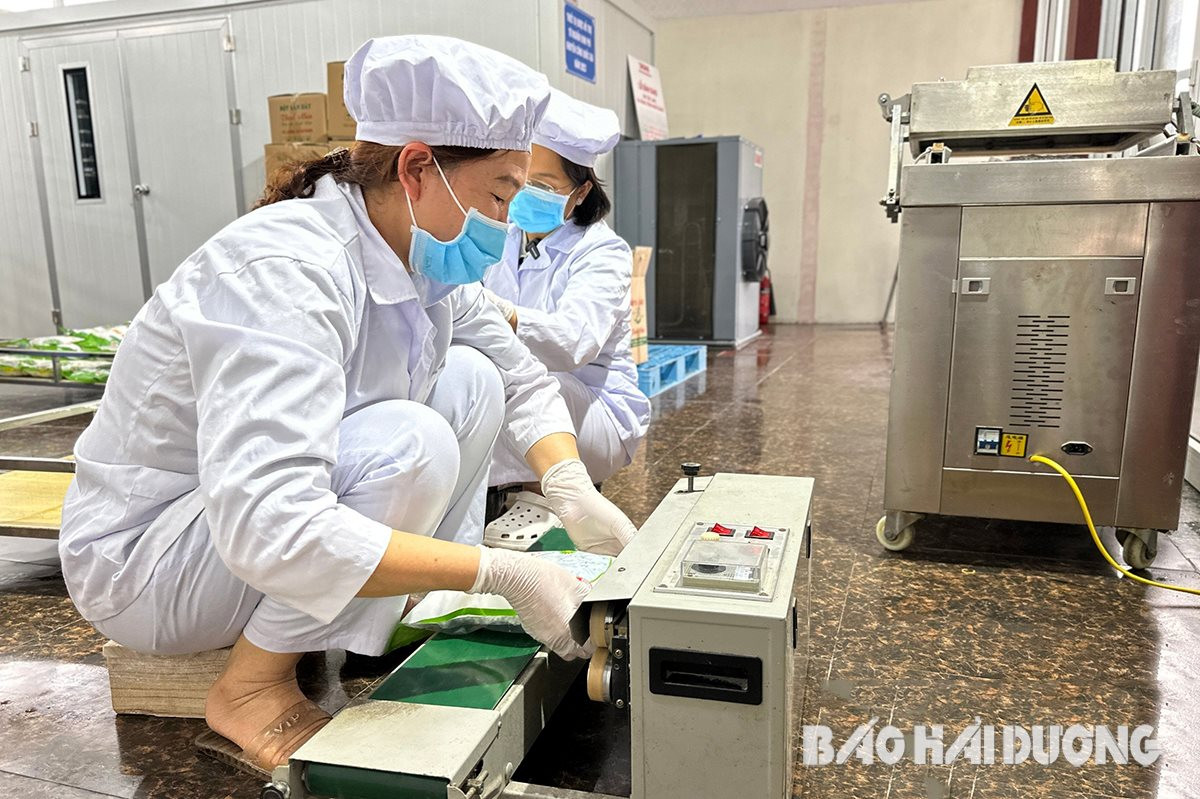
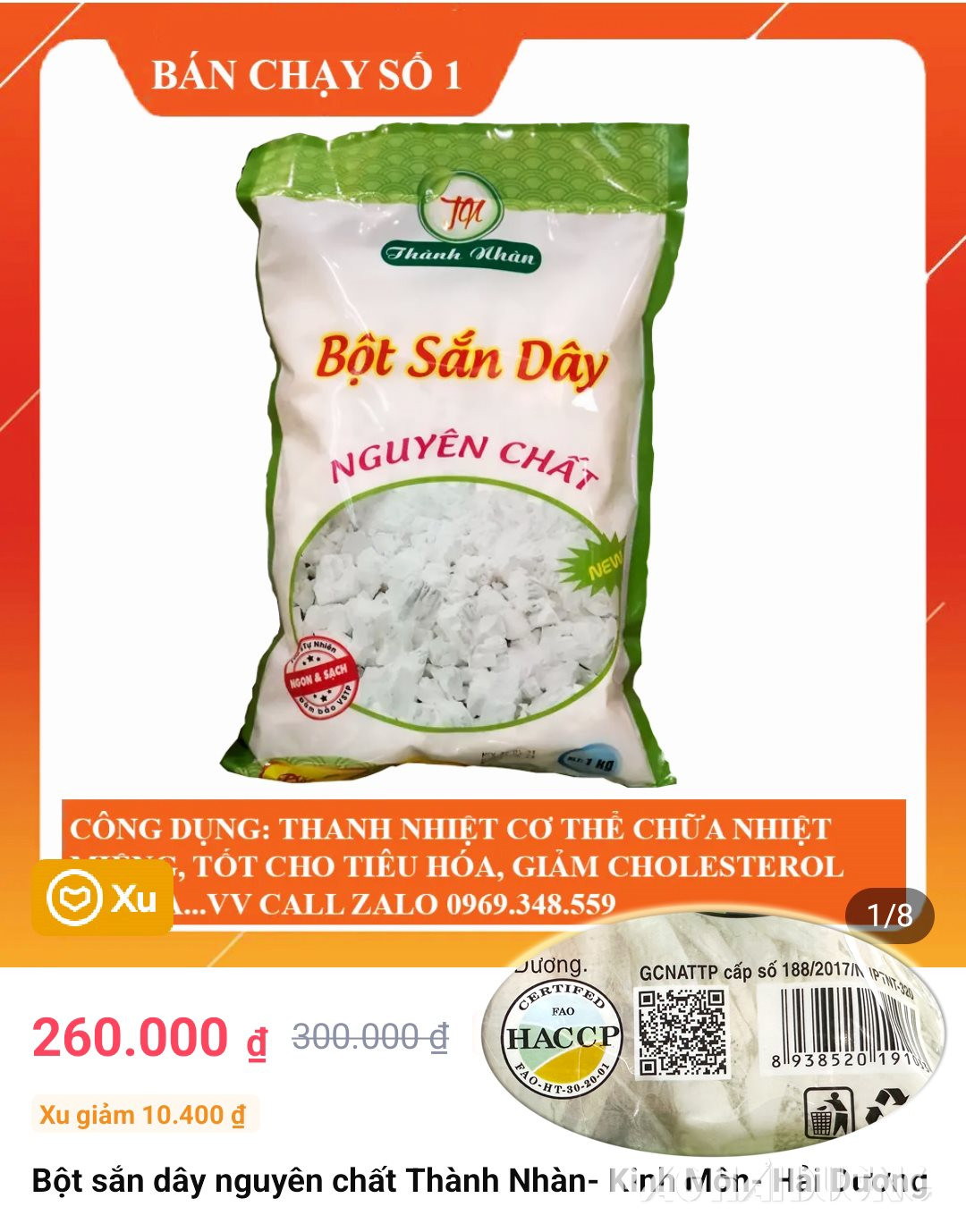
With an annual production of 50 tons of cassava starch, Thanh Nhan's cassava starch products are not only available in many provinces and cities nationwide but are also exported to India, South Korea, France, Japan, Taiwan (China), and other countries. According to Ms. Nhan, 5 kg of fresh cassava tubers yield 1 kg of dried cassava starch. With a factory selling price of 150,000-180,000 VND/kg, after deducting expenses, her family earns a profit of 500-600 million VND per cassava crop. The facility also provides employment for 15 workers with incomes ranging from 7-12 million VND per person per month.
Kinh Mon town has approximately 40 cassava starch processing facilities. Many of these facilities utilize modern technology and have established brands. Besides Thanh Nhan cassava starch, which achieved OCOP 4-star certification and was recognized as a typical national rural industrial product in 2023, Phuong Khiem cassava starch also achieved OCOP 3-star certification. In 2018, Kinh Mon cassava starch was honored with the Golden Agricultural Brand award in Vietnam.
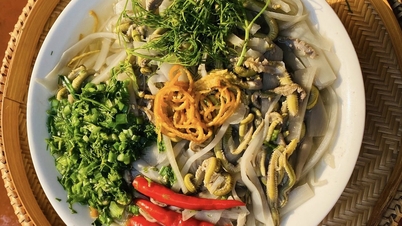
Cassava root is not only used as a traditional dish when boiled or sliced, but it is also processed into cassava flour. From cassava flour, it is further processed into refreshing drinks and many nutritious, cooling, and healthy dishes.
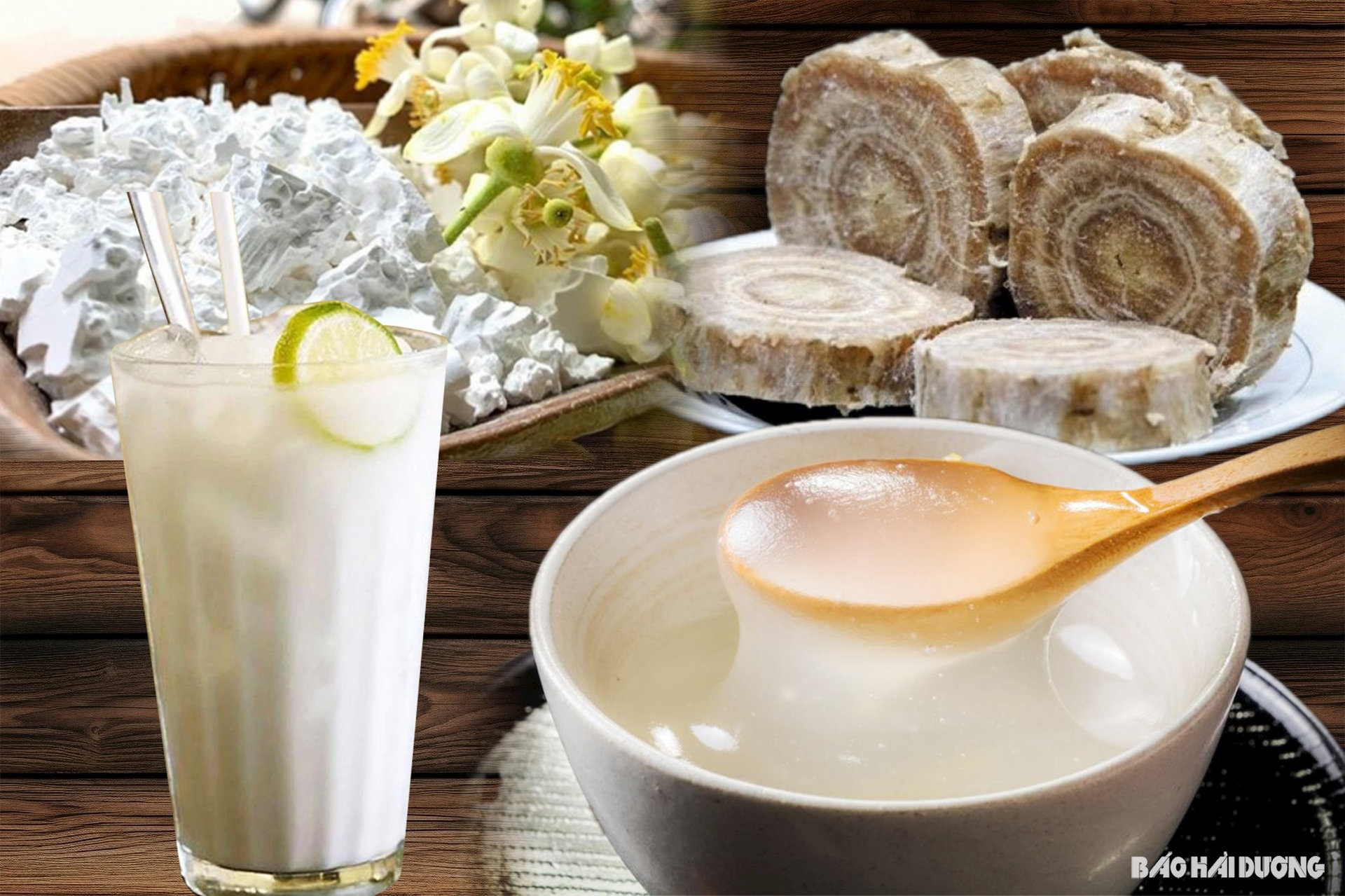
According to Mr. Nguyen Xuan Ha, Head of the Economic Department of Kinh Mon town, the town currently has 262 hectares of kudzu, mainly distributed in Thuong Quan, An Phu, Lac Long, Hiep Hoa... The fresh tuber yield is over 8,000 tons per year. Processing kudzu starch brings high economic efficiency, but currently only 1/10 of the fresh tuber yield is processed (producing about 160 tons of dry starch). The rest is exported to provinces and cities such as Thai Binh, Thai Nguyen, Nam Dinh, Hanoi ... Thus, the "potential" for kudzu starch production and processing in Kinh Mon is still very large.
Regarding this issue, Mr. Le Van Dien, Vice Chairman of the People's Committee of Kinh Mon town, said that the local Party committee and government always pay attention to and encourage localities with potential to maintain and develop the area of kudzu cultivation. "In the coming time, the town will continue to create conditions and call on businesses to invest in deep processing and value chain linkages to enhance the value of the product and sustainably develop kudzu in particular, and Kinh Mon's characteristic agricultural products in general," Mr. Dien affirmed.
Recently, a Japanese delegation collected samples of kudzu flowers from several locations in the town for research on making tea. If the samples meet the standards, this will be a favorable condition, opening up new opportunities for kudzu cultivation.
Content: LE HUONG
Presentation and photos: Tuan Anh
Source
![[Photo] Prime Minister Pham Minh Chinh receives the Ministers of Foreign Affairs, Defense, and Public Security of China.](https://vphoto.vietnam.vn/thumb/1200x675/vietnam/resource/IMAGE/2026/03/16/1773659638054_ndo_br_dsc-4386-6157-jpg.webp)


![[Photo] The General Secretary works with the Executive Committee of the Hai Phong City Party Committee.](https://vphoto.vietnam.vn/thumb/1200x675/vietnam/resource/IMAGE/2026/03/16/1773629925474_vna-potal-tong-bi-thu-lam-viec-voi-ban-chap-hanh-dang-bo-thanh-pho-hai-phong-8644445-332-jpg.webp)




















































Comment (0)