

Viral fever is a fever reaction in children when they are infected with a virus. Viral fever can be simple and resolve on its own, but it can also be accompanied by other symptoms, leading to a more serious condition depending on the type of virus and the child's constitution.
- Common symptoms of viral fever in children
- How long does it take for a child to recover from a viral fever?
- Dangerous complications when children have viral fever.
- When should a child with a viral fever be taken to the hospital?
- Preventing viral fever in children.
Common symptoms of viral fever in children
Common signs of viral infections in children include fever of varying degrees, which can be transient, mild, or in some cases, persistently high. Many viruses can cause very severe illnesses that threaten a child's life or leave serious sequelae, such as the Japanese encephalitis virus, the hand-foot-mouth disease virus, the dengue virus causing hemorrhagic fever, and the rotavirus causing dehydration and diarrhea.
When children have a viral fever, they usually exhibit the following symptoms:
- Children often experience high fevers ranging from 38 to 39 degrees Celsius, and in some cases, even as high as 40 to 41 degrees Celsius. While experiencing a high fever, children are usually tired and less responsive to common fever-reducing medications. Once the fever subsides, they become alert and playful as usual.
- Children may experience body aches; older children may complain of muscle pain or pain all over their body. Younger children, who cannot yet speak, may show signs of excessive crying and refusal to feed.
- Children may experience headaches, but some may still be alert and not agitated.
- In addition, children may experience symptoms such as coughing, sneezing, nasal congestion, runny nose, loss of appetite, etc.
Depending on the type of virus a child is infected with, there may be other characteristic symptoms such as:
- If the cause is a gastrointestinal virus, the child will have additional symptoms such as digestive disorders, diarrhea, loose stools, and no blood or mucus in the stool. These symptoms usually appear later, a few days after the fever.
- Children may exhibit symptoms such as watery eyes, red eyes, excessive discharge, and extreme sensitivity to light.
- If the cause is dengue fever virus, the child will exhibit symptoms such as bleeding gums, nosebleeds, or skin bleeding, etc.
- In some cases, children may develop a rash or blisters. The rash usually appears 2-3 days after the fever, when the fever symptoms have subsided.
How long does it take for a child to recover from a viral fever?
When children have a viral fever, the symptoms usually appear intensely within 3-5 days, then gradually subside, and will completely disappear after 7-10 days with proper treatment.
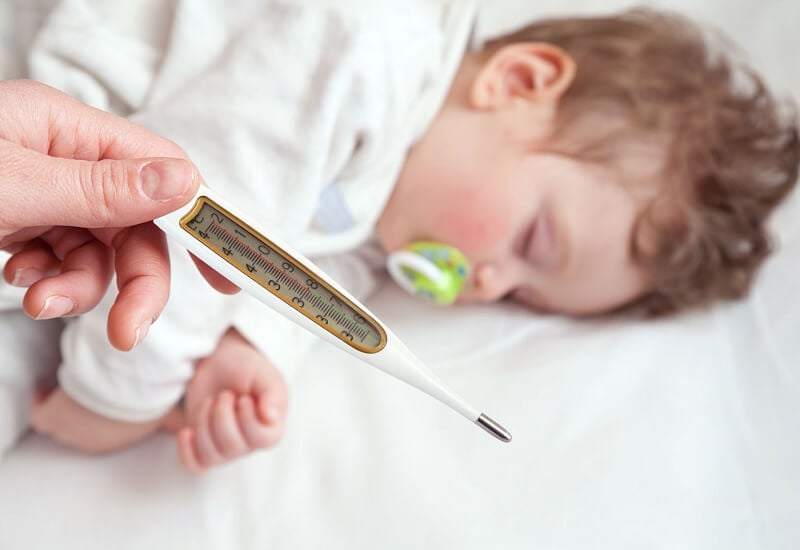
Viral fever is a fever response in children when they are infected with a virus.
Dangerous complications when children have viral fever.
The younger the child, the more susceptible they are to viral infections due to their weaker immune system. However, for some viruses, the child may contract the virus later because antibodies from the mother are passed through the placenta and breast milk. For example, with measles, if the mother has been vaccinated or has previously had measles and is breastfeeding, the child is less likely to contract measles before 6 months of age.
Viral infections in children can become dangerous if not detected and treated promptly, leading to complications affecting multiple organs of the body. These complications include severe pneumonia caused by RSV (respiratory syncytial virus), influenza, cerebral edema, myocarditis, pulmonary edema due to hand, foot and mouth disease; bleeding, and shock due to dengue fever.
When should a child with a viral fever be taken to the hospital?
Currently, there are no specific treatments for most viral illnesses; treatment is primarily symptomatic. If a child has a simple viral fever, they can be treated at home following a doctor's instructions: dress them in light, breathable clothing, encourage fluid intake, provide easily digestible, nutritious food, and include fruits and fruit juices. Parents should keep fever-reducing medication on hand for use when needed.
When a child's body temperature is above 38.5°C (measured externally on the skin, armpit, forehead, or ear), paracetamol can be used at a dose of 10-15mg/kg body weight every 6 hours to prevent excessively high fever that may cause adverse reactions such as seizures, dehydration, and extreme fatigue. If dengue fever has not been ruled out, medications containing ibuprofen should not be used as they may worsen bleeding.
Signs that indicate a child needs to be taken to the hospital:
- Children with high fever above 38.5 degrees Celsius, especially when the fever is above 39 degrees Celsius and does not respond to common fever-reducing medications.
- A simple fever that lasts for 2-3 days without subsiding.
- Fever accompanied by systemic or organ-specific symptoms such as extreme fatigue, lethargy, drowsiness, poor appetite, rash, blisters on the skin...
- The child exhibited symptoms of startling or convulsions.
- The child experienced persistent and progressively worsening headaches, nausea, and frequent dry vomiting.
Preventing viral fever in children.
To prevent viral infection, parents need to:
- Prevent children from coming into contact with sources of infection, such as: avoiding contact with people infected with the virus, avoiding crowded places, sleeping under mosquito nets, and spraying mosquito repellent...
- It is necessary to boost children's immunity: provide adequate nutrition (breastfeeding is encouraged in the first year of life), regularly encourage children to exercise to strengthen their physical fitness, and create a clean, happy, and healthy living environment.
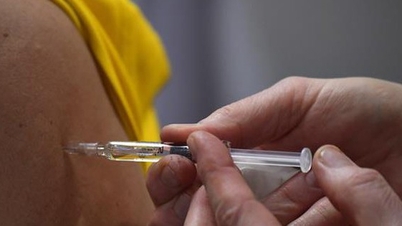
- Full vaccination creates active immunity in children against viruses (influenza, measles, mumps, Japanese encephalitis, polio, rotavirus, etc.).
Source: https://suckhoedoisong.vn/mua-he-canh-giac-voi-sot-virus-o-tre-em-169260530215937415.htm



![[Photo] The General Secretary, President and his wife lay flowers at the Ho Chi Minh Monument in Manila.](https://vphoto.vietnam.vn/thumb/1200x675/vietnam/resource/IMAGE/2026/05/31/1780219759477_anh-man-hinh-2026-05-31-luc-16-29-07.png)














![[Video] Sunset at Lap An Lagoon – Where the sun sets over the fishing nets](https://vphoto.vietnam.vn/thumb/340x192/vietnam/resource/IMAGE/2026/05/31/1780192137701_beach-landscape-sea-water-nature-grass-745871-pxhere-com.jpeg)



































































Comment (0)