

Every summer, the number of children hospitalized due to mosquito-borne infectious diseases increases sharply. Among them, Japanese encephalitis and dengue fever are two dangerous diseases that often break out from May to August.
- Why do diseases surge during the summer?
- Table differentiating between Japanese encephalitis and summer dengue fever.
- Warning signs of Japanese encephalitis are easily overlooked.
- Dengue fever is most dangerous when the fever begins to subside.
- Do not use fever-reducing medication incorrectly without consulting a doctor.
- Getting vaccinated against Japanese encephalitis on schedule is very important.
- Things to do to kill mosquitoes and mosquito larvae in your home.
- Don't underestimate summer fevers.
The worrying aspect is that in the early stages, both diseases present with high fever, making them easily mistaken for viral fever or common rashes. Many parents are complacent and self-treat at home, leading to delayed hospitalization and increasing the risk of neurological complications, shock, or multi-organ damage.
Early recognition of the characteristic signs of each disease is crucial for treatment.
Why do diseases surge during the summer?
The hot and humid season provides favorable conditions for mosquitoes to breed rapidly. This is also the period when children participate in many outdoor activities, travel , or play in areas with many stagnant ponds and puddles.
Japanese encephalitis is transmitted by mosquitoes carrying the virus from intermediate hosts such as pigs and birds. Meanwhile, dengue fever is transmitted by Aedes mosquitoes, which spread the Dengue virus from infected individuals to healthy ones.
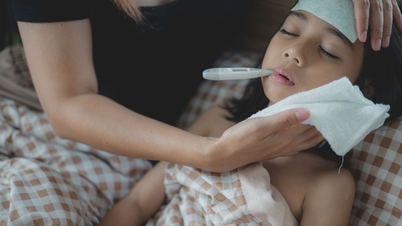
Experts say many parents still think their children only have a "common fever" and therefore delay taking them to the doctor. However, both Japanese encephalitis and dengue fever can progress to serious conditions in a short period of time.
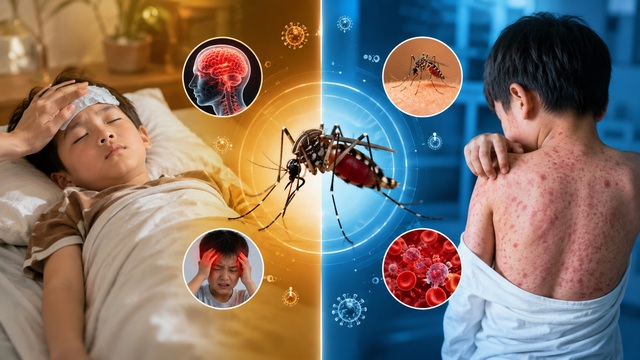
Japanese encephalitis and dengue fever both surge in the summer, but they have very different warning signs.
Table differentiating between Japanese encephalitis and summer dengue fever.
| Token | Japanese encephalitis | Dengue fever |
|---|---|---|
| Reason | Japanese encephalitis virus | Dengue virus |
| Route of transmission | Mosquitoes transmit viruses from animals to humans. | Mosquitoes transmit the virus from person to person. |
| Type of fever | Sudden, persistent high fever | Persistent high fever of 39–40 degrees Celsius |
| Prominent symptoms | Projectile vomiting, severe headache, stiff neck. | Body aches and pains, eye socket pain. |
| Severe warning signs | Convulsions, lethargy, altered consciousness | Petechiae, nosebleeds |
| Dangerous injury | Brain and central nervous system | Blood vessels, liver, risk of shock. |
| Those who are susceptible | Unvaccinated children | All ages |
| Dangerous time | After a few days of fever, neurological symptoms appeared. | Shock can easily occur during the fever reduction phase. |
| Complications | Neurological sequelae, coma | Severe bleeding, multiple organ failure |
Warning signs of Japanese encephalitis are easily overlooked.
According to pediatricians, Japanese encephalitis usually begins with a high fever similar to the flu or a viral fever. However, after 1–2 days, children may develop characteristic neurological signs.
Parents should pay special attention if their child:
- A persistently high fever that is difficult to bring down.
- Frequent projectile vomiting.
- Severe headache.
- Stiff neck, stiff nape.
- Convulsion.
- Drowsiness, lethargy, or unusual irritability.
- Tremors or muscle weakness in the hands and feet.
Doctors say that Japanese encephalitis can leave long-term neurological sequelae such as developmental delay, paralysis, or motor disorders if treatment is delayed.
Dengue fever is most dangerous when the fever begins to subside.
Unlike many common fevers, dengue fever is usually dangerous during the 3rd–5th day, when the child's fever begins to subside.
Many parents think their child's fever has subsided and that the illness is getting better, but in reality, this is the time when plasma leakage and shock are most likely to occur.
Warning signs include:
- Red spots appear under the skin.
- Nosebleeds or bleeding gums
- Severe abdominal pain
- Cold hands and feet
- Exhausted, lethargic.
- Frequent vomiting
- Small amount of urine
If these symptoms appear, the child should be taken to the hospital immediately for monitoring.

Eliminating mosquitoes, removing mosquito larvae, and ensuring children receive vaccinations on schedule are crucial measures to protect them from disease.
Do not use fever-reducing medication incorrectly without consulting a doctor.
Doctors advise parents not to give aspirin or ibuprofen to children suspected of having dengue fever without consulting a doctor, as this can increase the risk of bleeding.
When a child has a fever, only use fever-reducing medication as directed for their age and closely monitor for any unusual signs.
Furthermore, intravenous fluids should not be administered at home without professional medical guidance, as this may worsen the patient's condition.
Getting vaccinated against Japanese encephalitis on schedule is very important.
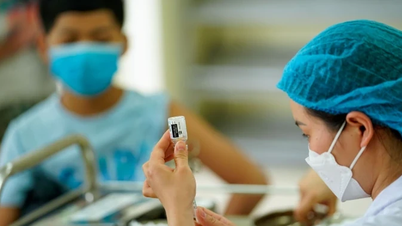
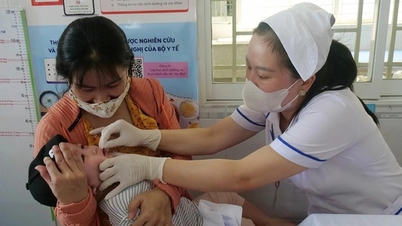
Currently, there is an effective vaccine to prevent Japanese encephalitis, but many children have not yet been fully vaccinated.
According to health authorities, children need to receive all the necessary vaccinations according to the schedule to develop protective immunity.
Parents should check their children's vaccination records before summer, especially for young children living in areas with many mosquitoes or near livestock farms.
Meanwhile, dengue fever cannot yet be completely prevented by mass vaccination, so mosquito control remains the most important measure.
Things to do to kill mosquitoes and mosquito larvae in your home.
Health experts say that many mosquito breeding grounds are located in everyday household items.
To reduce the risk of summer illnesses, families should:
- Keep the water container tightly sealed.
- Change the water in the vase regularly.
- Turn over any unused bottles, jars, and buckets.
- Release fish into the water tank to eat the mosquito larvae.
- Sleep under a mosquito net, even during the day.
- Dress young children in long-sleeved clothing.
- Use mosquito repellent when necessary.
- Clean dark, damp areas around the house.
In particular, mosquitoes that transmit dengue fever are most active during the day, so many people are complacent and do not take adequate precautions.
Don't underestimate summer fevers.
The most dangerous aspect of Japanese encephalitis and dengue fever is that they are easily mistaken for common fever in the early stages.
If a child has a prolonged high fever, neurological symptoms, petechiae (small red spots), or abnormalities in consciousness, parents should take them to the doctor as soon as possible instead of self-treating at home.
Accurate diagnosis and timely treatment not only help reduce complications but can also save lives during the most critical periods of the summer epidemic season.
Source: https://suckhoedoisong.vn/dung-xem-nhe-nhung-con-sot-mua-he-169260522120512759.htm


![[Photo] Standing Committee member of the Party Central Committee Tran Cam Tu working with the Central Inspection Committee](https://vphoto.vietnam.vn/thumb/1200x675/vietnam/resource/IMAGE/2026/05/28/1779969579668_ndo_br_bnd-2495-jpg.webp)














































































Comment (0)