

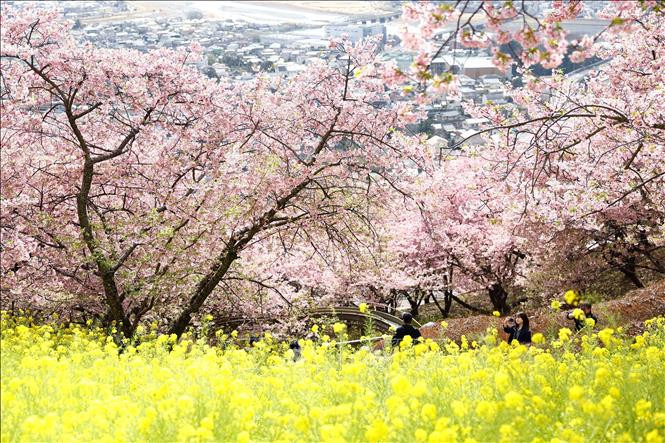
According to Professor Emeritus Katsuhiro Miyamoto of Kansai University in Osaka, this year the economic impact of hanami is estimated at around 1.14 trillion yen (US$7.7 billion), nearly double last year's 616 billion yen. Miyamoto commented, "Hanami, the tradition of cherry blossom viewing, has long been a national event in Japan, and the beautiful cherry blossoms have now become a tourism asset, attracting foreign visitors."
The increased economic impact is partly due to the lifting of restrictions such as bans on gatherings and parties since the government lowered the transmissibility level of COVID-19 to that of seasonal influenza in May 2023. In a report published last week, Professor Miyamoto projected a 32% increase in the number of foreign tourists visiting Japan this year compared to last year. Professor Miyamoto also pointed to other factors contributing to the economic benefits of hanami, including the rising prices of products, including souvenirs, while the yen depreciated.
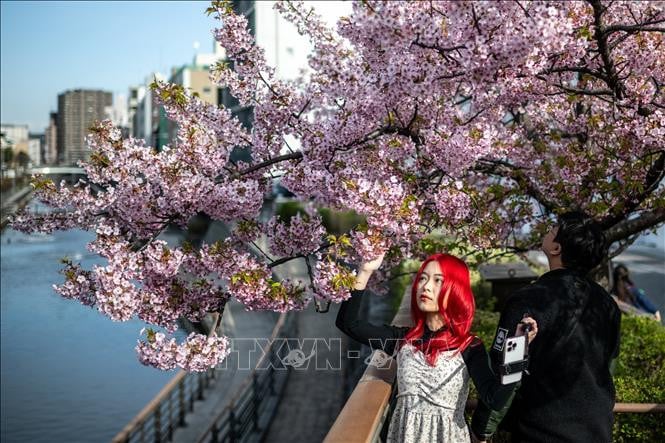
The average daily spending per person for foreign tourists is estimated at 30,286 yen, up from 28,580 yen last year, due to the weaker Japanese currency. Based on estimates from travel company JTB for 2024, approximately 3.73 million foreign tourists are expected to visit Japan during the hanami season – from late March in southern Kyushu to early May in Hokkaido.
As the hanami season approaches, travel companies have been receiving a surge in bookings from tourists eager to visit Japan. All Japan Tours, a California-based company primarily serving clients from Europe and the U.S., reported a 300% increase in profits compared to pre-pandemic levels. “With the Japanese government completely lifting travel restrictions, our booking process has streamlined considerably. As a result, our group tours are in greater demand, while private tours are fully booked,” said Kiyoshi Katsume, a representative of All Japan Tours.

However, not all travel companies are doing well. Hankyu Travel, a provider of tours for domestic tourists, reported a 70% drop in customers compared to last year. This is due to tourists choosing to travel abroad in the post-pandemic period.
In recent years, some travelers have opted to book guided tours on platforms like Airbnb and Klook instead of through travel companies because of the more options and lower prices.
Source


































































































Comment (0)