

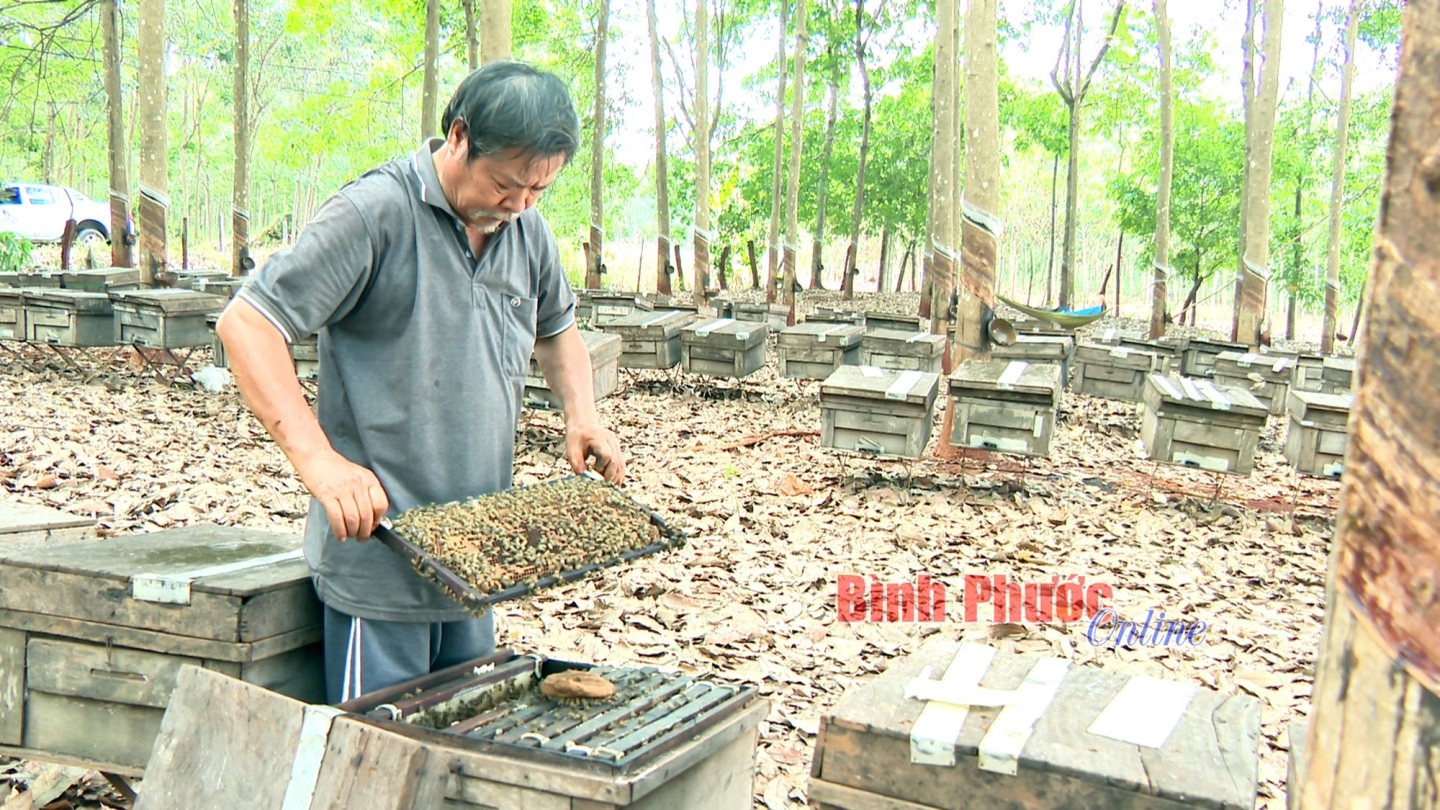
Mr. An Van Huu (born in 1956) has been beekeeping for 45 years. His home is in Dong Nai province, but he often travels with his bee colonies from one province to another. This is the honey harvesting season, so he is temporarily staying in a rubber plantation in Loc Thuan commune, Loc Ninh district.
With 300 beehives, he harvests over 30 tons of honey annually. The wholesale price to companies is currently around 25-28 million VND per ton, while the retail price on the market is 80,000 VND per liter. In addition to honey, he also collects bee pollen, royal jelly, and beeswax... After deducting expenses, he earns over 500 million VND in profit each year.
Mr. Huu said that beekeeping doesn't require as much effort as other professions; you just need to master the techniques, be diligent, and persistent. However, the difficulty lies in finding natural food sources for the bees. Therefore, during the season, if you want the bees to produce a lot of honey, you have to move the bee colonies to areas where industrial crops like rubber, coffee, and acacia are grown… “Beekeeping isn't difficult, and the economic efficiency is quite good. This year, the price of honey has increased by more than 10,000 VND/kg compared to last year, and supply can't meet demand, so beekeepers are very happy,” Mr. Huu said.
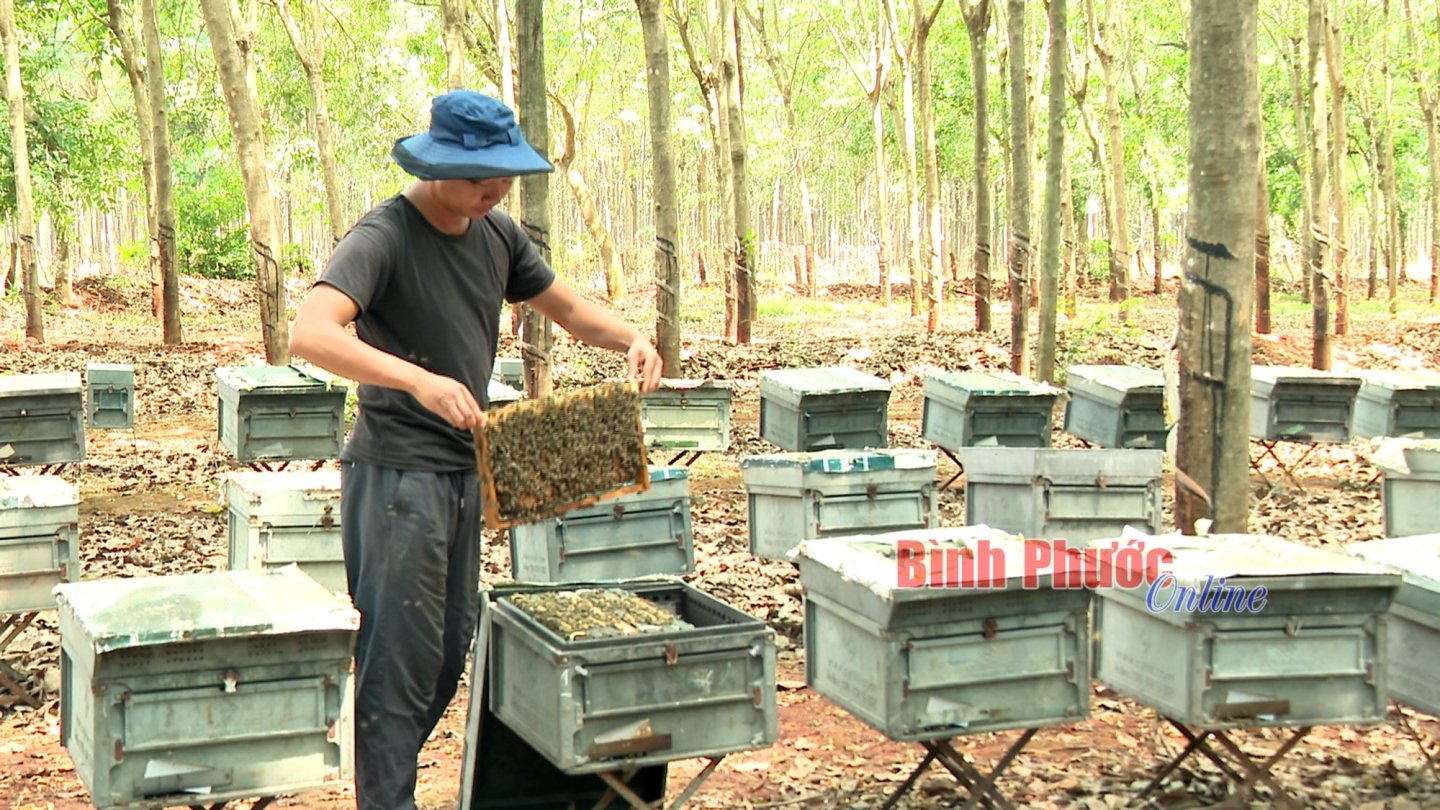
From Da Lat city, Lam Dong province, Mr. Bui Quoc Hung also brought his bee colonies to raise in a rubber plantation in Loc Thuan commune. Mr. Hung said that his family currently has 300 beehives producing honey. Every 10 days, he and his workers harvest honey once, each time harvesting several tons. The harvesting period lasts from November of the previous lunar year to May of the following lunar year. After the harvest season, he divides the bee colonies into smaller groups and transports them to provinces with abundant crops to "replenish" the bees. Therefore, beekeeping often requires wandering from place to place. Wherever there is plenty of food for bees, there you will find beekeepers.
In Binh Phuoc, when rubber trees shed their leaves, they produce a lot of nectar, making it very favorable for beekeeping. Each cluster of rubber tree leaves secretes nectar right at the base, and this secretion occurs almost daily. Rubber tree honey has a very unique flavor and is a valuable medicinal product. Therefore, all the rubber tree honey produced is consumed immediately. Mr. Bui Quoc Hung, Da Lat City, Lam Dong Province |
Speaking about beekeeping techniques, Mr. Huu said that in order for bees to produce a lot of honey safely, beekeepers need to choose a location for the beehives that is well-ventilated, quiet, not near roads, sugar factories, chemical factories, fruit processing factories, and not surrounded by large lakes... The hives should be placed near sources of nectar and pollen, in areas where no chemicals are sprayed, there are no diseases, and there are few or no wild bees, birds, or animals.
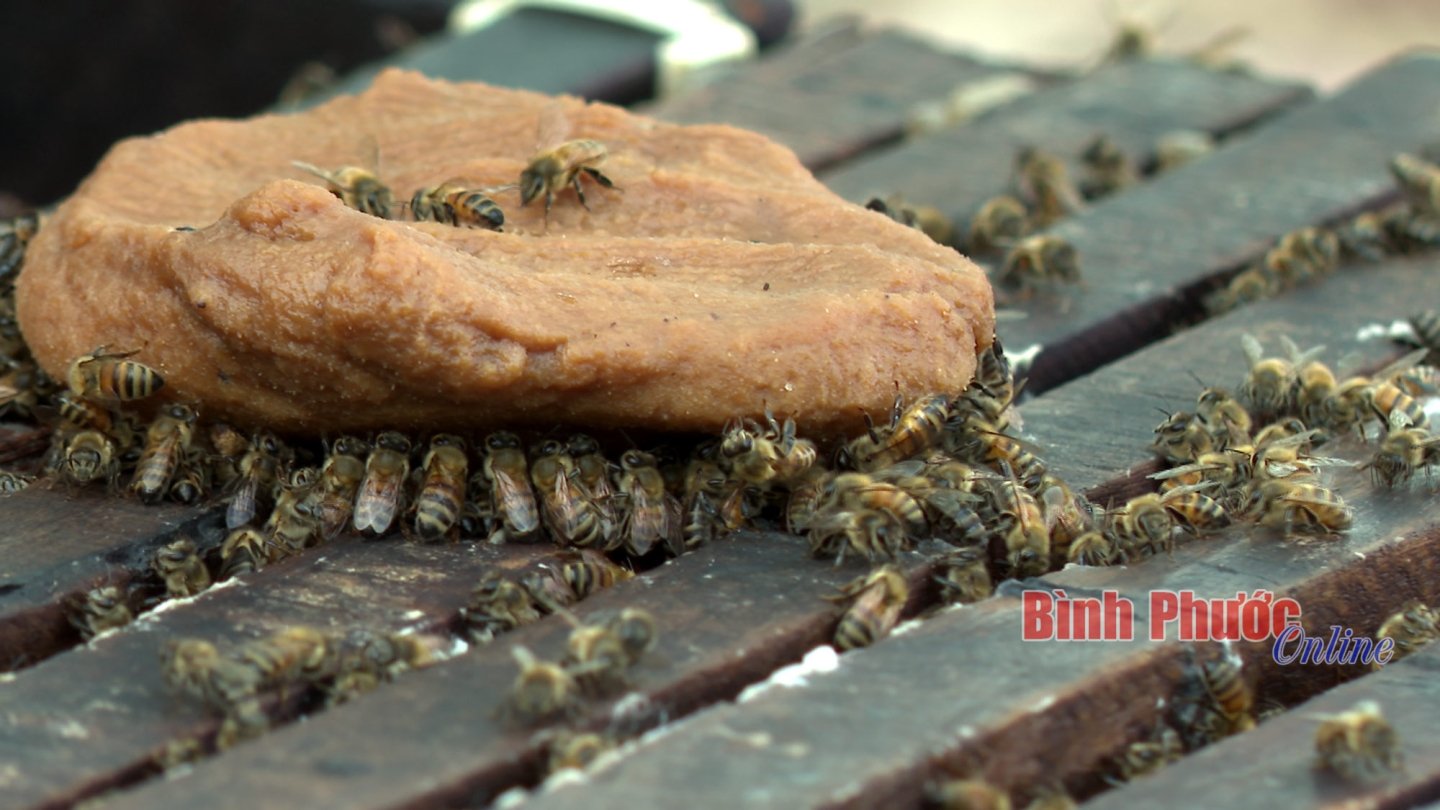
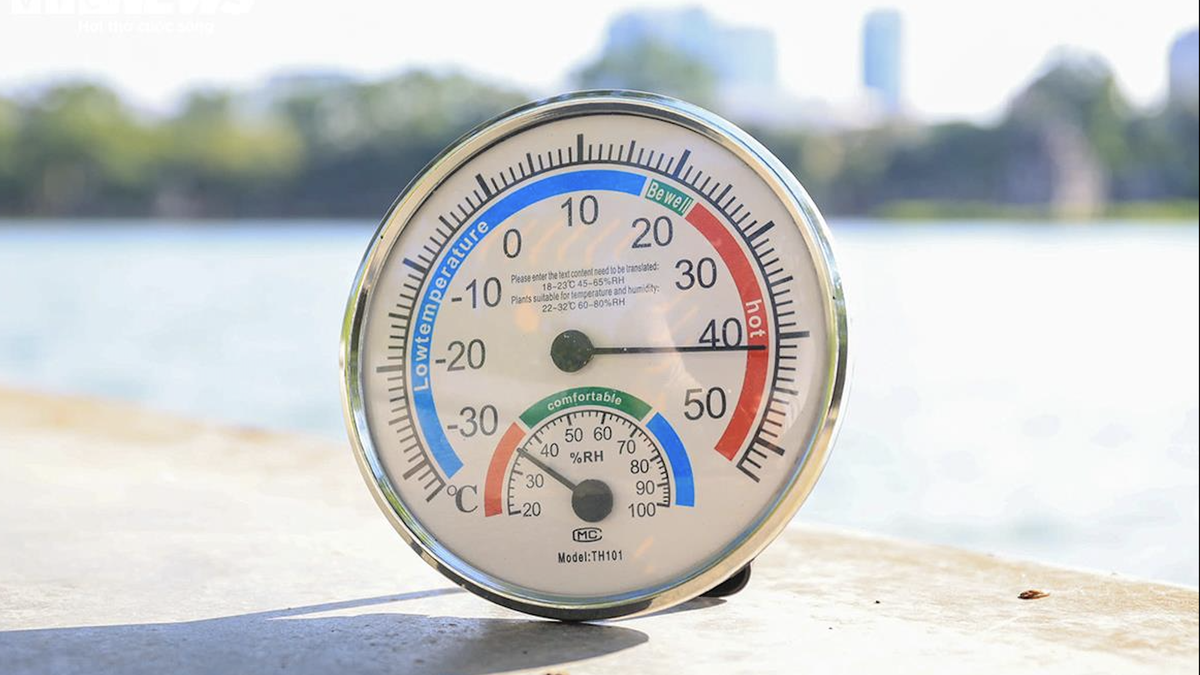
According to Mr. Huu, it is necessary to ensure the temperature in the bee colony is between 33-35°C, humidity is 60-80%, and the colony is not overcrowded. Water troughs should be placed in the hive on hot days. Feed the bees adequately until honey is produced, then seal the hive. If pollen shortages persist, supplemental feeding is necessary. During the rearing process, regularly check and maintain good queen bees for the colony. Replace the queen bee every 6-9 months. Queen bee breeding should be done during periods of abundant natural nectar and pollen.
This year, during the cashew and rubber tree flowering season, Binh Phuoc province has hundreds of bee farms from other provinces converging, while the number of local beekeepers is currently very small. This represents a huge waste and a missed opportunity for economic development for the province's farmers. According to beekeepers, Binh Phuoc is a "honey hub," not only leading in rubber plantation area but also in cashew plantation area nationwide, along with many fruit orchards and natural forests... creating very favorable conditions for developing and expanding beekeeping.
Source: https://baobinhphuoc.com.vn/news/9/171064/mua-ong-lay-mat
















































































Comment (0)