

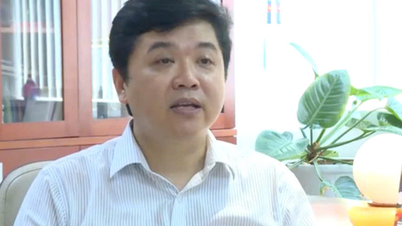
Major General, Associate Professor, Doctor Nguyen Tung Hung, Deputy Commander of the 86th Command:
Promoting synchronized, widespread, and effective digital transformation throughout the entire military.
With the function of advising the Central Military Commission (CMC) and the Ministry of National Defence on managing and protecting national sovereignty in cyberspace and information technology, the 86th Command has advised the CMC and the Ministry of National Defence to promptly and effectively implement tasks according to Resolution No. 57-NQ/TW of the Politburo, Resolution No. 71/NQ-CP of the Government, and Resolution No. 3488-NQ/QUTW of the CMC; proposed to the Minister of National Defence to issue a directive on strengthening the development and management of ministerial-level databases and specialized databases within the Ministry of National Defence; and implemented tasks in the Ministry of National Defence's "Digital Literacy Movement".
 |
| The Minister of National Defence visits a model of a weapons and ammunition depot applying new technology at Depot KV1, Department of Military Equipment, General Department of Logistics and Technical Services. Photo: LA DUY |
Simultaneously, the 86th Command issued 3 regulations, 3 rules, 3 guidelines, and a document announcing the list of software and applications used in the Ministry of National Defense for agencies and units throughout the army; deployed 4 common software applications, including the QiMe multimedia messaging application (with over 140,000 accounts); advised on the development and implementation of the "Ministry of National Defense Digital Education Platform" on both the internet and the military computer network, attracting over 30 million visits; and completed the construction and commissioning of the Northern Ministry of National Defense Data Center, meeting advanced technology requirements and standards according to national standards...
 |
| Major General, Associate Professor, Doctor Nguyen Tung Hung, Deputy Commander of the 86th Command. Photo: LE MANH |
In the coming period, the 86th Command will continue to effectively fulfill its role as the Standing Agency of the Ministry of National Defense's Steering Committee on breakthroughs in science and technology development, innovation, digital transformation, implementation of Project 06, and administrative reform; advising the Minister of National Defense on the effective implementation of the Digital Transformation Project within the Ministry of National Defense for the period 2026-2030 after adjustments. It will promote the construction, updating, and commissioning of ministerial-level databases and specialized databases according to the approved list; and implement the Plan for the Development and Application of Digital Data in the Ministry of National Defense until 2030.
To further promote digital transformation throughout the entire army, the 86th Command has identified three key areas of focus: researching the complete mobility of command and control operations; mastering cloud computing technology and developing a specific roadmap for migrating all systems serving digital transformation to cloud computing platforms; and researching and developing products that utilize artificial intelligence (AI) technology, intelligentizing existing applications and platforms.
------------------------------------------------
Rear Admiral, Associate Professor, Doctor Ngo Thanh Cong, Director of the Naval Academy:
A breakthrough in building "smart schools"
Recognizing that implementing digital transformation in the fundamental and comprehensive reform of education , training, and scientific research is an inevitable trend and an urgent requirement, the Naval Academy has leveraged its internal resources and mobilized various sources to invest in the synchronous modernization of its technological infrastructure, ensuring effective support for teaching, research, and management. To date, the entire Academy has completed the construction of a high-speed local area network (LAN), connecting all departments, faculties, and units. The data server system is secured with multiple layers of protection; many smart classrooms and simulation rooms for practical training have been put into operation and are being used effectively.
 |
| Rear Admiral, Associate Professor, Doctor Ngo Thanh Cong, Director of the Naval Academy. Photo: Tu Son |
At the Combat Simulation Training Center, trainees can control model warships and coordinate combat operations in a near-realistic virtual environment, complete with elements such as waves, wind, radar, sonar, and radio communication. In addition, the Naval Academy has digitized all curricula and documents for internal circulation (except for classified documents); over 2,700 digitized documents are integrated into specialized management software. Simultaneously, the Academy is gradually building a digital data and academic center, a smart training control room, and a virtual reality simulation center to serve the training of surface ships and submarines.
Furthermore, recognizing that people are the central focus and subjects of digital transformation, the Academy has adopted specific resolutions and action plans to build a faculty team that is sufficient in quantity, strong in quality, and capable of quickly adapting to the digital environment. Regular training courses on digital skills, electronic lecture design skills, and training on the use of simulation software and learning management systems are organized for faculty members; young faculty members are encouraged to participate in research groups, innovation clubs, and digital transformation groups at the Academy level. In particular, incorporating the "digital competence of faculty members" into the criteria for evaluating performance, awarding titles, and granting professional and technical positions to staff and faculty has created a strong impetus to promote the learning and research movement.
The achievements in faculty development and infrastructure investment are creating a solid foundation for the Naval Academy to gradually build a "smart school" model, a "digital Naval Academy," effectively serving the goal of building a modern Navy.
------------------------------------------------
Colonel, Dr. TRAN NGOC HA, Director of the Air Defense-Air Force Engineering Institute:
Focus on researching and developing advanced products.
As the leading research center of the Air Defense-Air Force Command, the Air Defense-Air Force Engineering Institute applies mechanisms and policies to attract high-quality human resources; boldly appoints capable young officers to key positions, and builds a friendly working environment with many opportunities for development to retain high-quality personnel. Currently, 95% of the Institute's research staff have a master's degree or higher, with nearly 20% holding doctoral degrees.
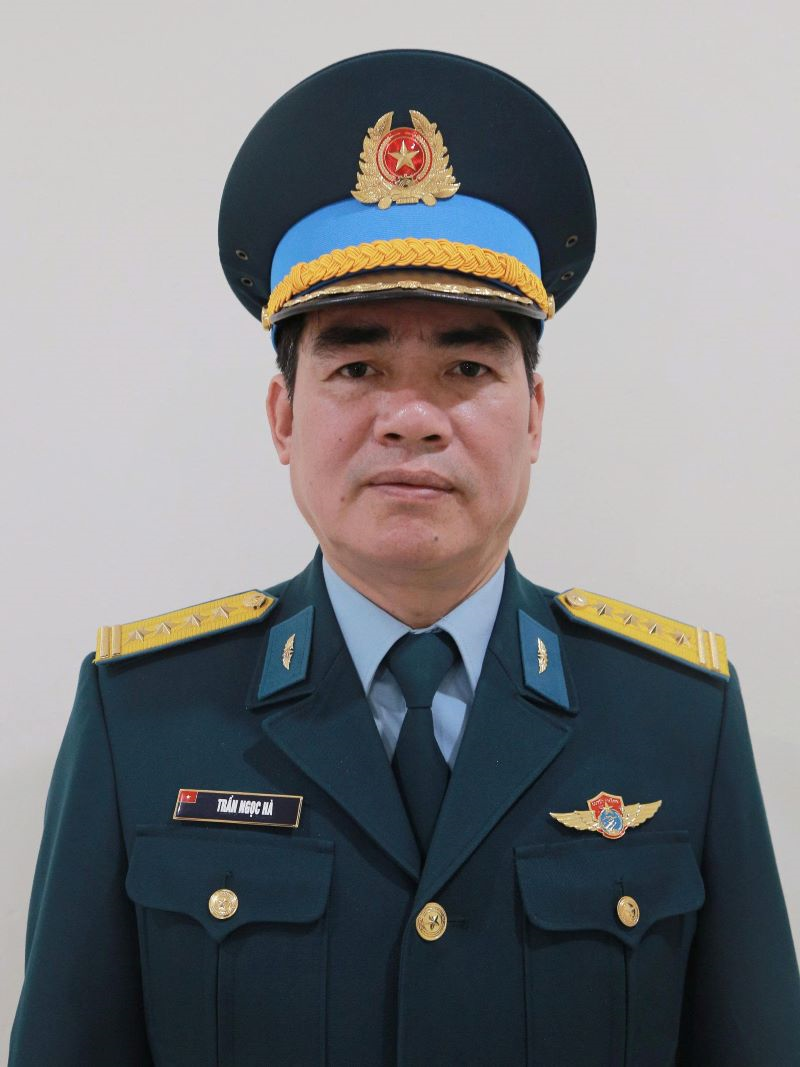 |
| Colonel, Dr. Tran Ngoc Ha, Director of the Air Defense-Air Force Engineering Institute. Photo: CONG NGU |
Alongside human resource development, the Air Defense and Air Force Engineering Institute proactively proposes increased investment in upgrading infrastructure and measurement and testing equipment towards modernization and synchronization, creating a technical foundation to improve the quality of research, innovation, design, and testing of weapons and technical equipment. At the same time, to keep pace with the development of military science and technology and to implement the "self-reliance and modernization" orientation in scientific research, the Institute promotes cooperation in scientific research and technology transfer, leveraging the strengths in infrastructure and scientific and technological expertise of its partners.
On the other hand, the Institute focuses on developing a research orientation, considering this a top priority solution and a foundation for the proper and effective development of research. With over 30 years of experience in research on unmanned aerial vehicles (UAVs), the Institute has mastered the technology and manufactured products with suitable design configurations and high reliability. Typical examples include UAVs compatible with the targeting and fire control systems of the Su-30MK2 aircraft, and the FPV UAV series applying AI and edge processing technology (Edge AI).
 |
| Testing equipment for programmable modules of the C125-2TM anti-aircraft missile, researched, designed, and manufactured by the Air Defense-Air Force Engineering Institute. Photo: CONG NGU |
During the period 2020-2025, the Air Defense and Air Force Engineering Institute implemented 12 projects, 82 research topics, and 8 science and technology tasks at various levels, with over 400 technical tasks put into use, contributing to improving the quality of training, combat readiness, and airspace management in the new situation. The Institute has finalized its science and technology development plan until 2030 and beyond, focusing on researching the technical, tactical, and air attack capabilities of various types of UAVs to design and manufacture equivalent dummy targets for training and exercises; researching and mastering the technology for manufacturing various types of modules, single units, and important systems to ensure self-sufficiency in materials, moving towards self-reliance in technical support, and reducing dependence on imports...
Source: https://www.qdnd.vn/quoc-phong-an-ninh/xay-dung-quan-doi/mui-nhon-dot-pha-xay-dung-quan-doi-hien-dai-1022882































































































Comment (0)