During the resistance against the French, Mr. Hieu's village was situated in a buffer zone between our forces and the enemy. During the day, the puppet regime temporarily controlled the area. At night, Viet Minh organizations openly held meetings, and guerrillas secretly planted mines right at the foot of the puppet army's outposts.
Back then, Mr. Hieu was just a little boy. Later, his grandmother told him the story: "Your father was a village school teacher at the time. It was during a chaotic period, one Sunday morning, your father recklessly went to the city to attend his teacher's funeral. He somehow got caught in a raid and was captured by the enemy and taken to a military camp."
So, by some strange twist of fate, they forced your father to wear a gaudy, horse-dung-colored military uniform. It was like a joke. We were convinced that if the headmaster personally intervened, he would be sent back to teaching. But instead, he was rounded up and taken aboard a warship, straight to Southern Vietnam, and we haven't heard from him since.

From then on, Hieu's father's life was anchored in a shabby, chaotic alley in the glamorous city of Saigon. Enduring a life of exile for decades, he only had the chance to visit his ancestral homeland once in his old age. He never fulfilled his final wish to return to his homeland, to live a few more years, and finally rest peacefully in his motherland at fifty. Tragically, he passed away after a stroke. Hieu temporarily placed his father's ashes in a temple on the outskirts of the city. The temple was small, but the stupa housing the ashes was a towering nine stories high. A single urn, no bigger than two hands, required a considerable sum of money. In matters of filial piety, no one ever haggles over the cost. He thought it was just a temporary arrangement. Little did he know his father's spirit would be crammed into that space for over a decade.
Due to official duties, after the country's reunification, Mr. Hieu was transferred to work in the South. From then on, his entire family settled in the same ward as his elderly father, their houses only a few streets apart. When he left, Mr. Hieu had to reluctantly sell his old house and the plot of land, owned by his family for dozens of generations. At that time, his two daughters hadn't even finished primary school. Now they have their own children. He and his wife have also been retired for over a decade. This year, a few days before his father's death anniversary, Mr. Hieu leisurely walked to the temple. That morning, the temple was busy with a memorial service for someone, the young monks bustling about in the main hall. The nine-story pagoda was deserted. Mr. Hieu slowly climbed to the top floor, gasping for breath like a fish out of water, his eyes blurry, his heart pounding. Trembling, he pushed open the door of the prayer room, and a blast of cold air, like thick mist, rushed out, chilling his face. After resting for a while, waiting for the exhaustion to subside, his shirt soaked with sweat, his whole body trembling as if he had a cold, Mr. Hieu involuntarily shivered, sensing many pale, listless eyes of the dead staring at the back of his neck. He reassured himself, "I'm nearing the end of my life, I'm about to become a ghost, what's there to fear?" He placed a burning incense stick in the communal incense burner, then turned to his father's altar and respectfully offered incense before the porcelain portrait of his father.
After the first bow, he looked up and was startled. His father's face seemed to be moving, his eyes glistening with tears, his lips contorted as if about to cry. Before he could recover from his shock, Mr. Hieu heard his father's hoarse voice: "This place is guarded by demons, my son. I'm so scared. Please get me out of here as soon as possible. It's best to go back to our village and be with our ancestors…" Suddenly, silence fell. The murmuring sounds like a disturbed beehive also ceased. Outside, the sound of footsteps could be heard. Mr. Hieu looked out and saw a young novice monk, his back hunched, sweeping back and forth across the doorway. He appeared seemingly out of nowhere, seemingly on guard duty at the door, not intentionally sweeping. And then, something strange happened: from either side of the monk's head, two slimy, blood-stained horns slowly emerged, wriggling and twitching. If he hadn't heard the chant "Amitabha Buddha" as a greeting, he would have surely died of a heart attack. Coming to his senses, he saw before him the young monk in his loose robes, his head shaved, his movements calm and friendly, a half-smile of compassion on his lips. Sweating profusely from panic, Mr. Hieu stumbled, clasped his hands in return, and hurried downstairs.
From that day on, Mr. Hieu couldn't eat or sleep peacefully. Could his erratic blood pressure be causing hallucinations? He had never believed in demons, gods, hell, or the murky underworld. But the bright eyes of his father, truly brimming with tears, and the trembling lips pleading in pain, constantly haunted his mind every minute, every hour. Could that place be the lair of evil spirits disguised as Buddhists, committing wicked deeds? After much deliberation, he finally told his siblings and children everything. Each of them responded with a mix of sympathy and mockery: "You're senile, old man. You're delusional." Not knowing who to confide in, Mr. Hieu secretly prepared for a clandestine trip back to his hometown for Tet (Lunar New Year). If there was still enough land at his ancestors' graves, he would respectfully ask his ancestors for permission to bring his father's ashes back home for a reunion. He knew that if he revealed it, they would try to stop him. The refrain will be: "Oh my God, I'll be eighty in just a few days, my hands and feet are trembling, if I forget to take my medicine I'll have such high blood pressure that I'll feel dizzy, going to the North alone... I'll go completely insane, Dad!" Or: "Brother!"
Three o'clock in the afternoon on the twenty-eighth day of the Lunar New Year. The Reunification Express train, running from North to South, dropped off passengers at the station. From here to his village was only about three kilometers. Mr. Hieu cautiously slung a bag containing a few sets of warm clothes and some packets of medicine to prevent cardiovascular disease over his shoulder. He leisurely disembarked the train. He leisurely walked out of the station. He felt perfectly fine, his heart beating gently. Perhaps the cool breeze, along with the scent and colors of the traditional Tet holiday in his hometown, had invigorated him. Without rushing, he pulled up the collar of his woolen sweater, ignoring the many enticing offers of the glib motorbike taxi drivers, and confidently walked. The scene outside the station was different on the eve of Tet; the streets were vibrant with color, and vehicles whizzed by at a dizzying speed. Mr. Hieu congratulated himself on his wisdom: Sitting behind those motorbike drivers, whizzing through that chaotic crowd, this old body of his wasn't ready to die yet.
Upon reaching the edge of the village, Mr. Hieu paused beside a gnarled, centuries-old muỗm tree, silently gazing at its canopy bathed in the soft golden afternoon sunlight. He knew that in this cold winter month, with the sun still shining so brightly, it would be a long time before nightfall. During his last visit to his hometown, he had heard the murmurs of the villagers about the village head and his wife wanting to cut down this tree to build a community center, and his heart had been filled with apprehension. He thought that a tall, shady tree was the very essence, the lifeblood, of each hamlet, each village, even each person's life. He wanted to dissuade them, but suddenly remembering his exile, he remained silent, tightly grasping the hands of his friends and relatives who had bid him farewell. Then he bowed his head and walked away. Today, being able to lean against the sturdy trunk of the ancient tree, its branches rustling happily in the wind, made him feel as happy as if he had met an old friend. He had been away from home for decades; surely not many of his relatives, neighbors, or people of his age were left. Suddenly, he felt a pang of sadness and wanted to cry.
Stopping before the withered bamboo grove along the roadside, the golden bamboo stalks rustled, dropping their last withered leaves onto the stagnant pond teeming with water hyacinths. Mr. Hieu recognized the alleyway leading to the house of his friend, with whom he had fought alongside nearly a decade against the Americans. During the war, his friend had a chest full of medals and decorations. In peacetime, he had shouldered the responsibility of fighting tirelessly, determined to revitalize a village struggling in countless ways. Yet now, he sat here, lifeless in his wheelchair, before a large basket overflowing with pork. One person busily butchered the meat around the basket, while another carefully tossed each blood-stained piece into the four corners. His tall nephew, with one hand in his jeans pocket and the other holding an iPhone, stood behind the wheelchair, seemingly a student on holiday. Hearing his father's command, "Watch the firewood and the boiling pot for me," he retorted, "Dad, and you too, what era are we living in that we're still wasting time on trivial matters? Pork is readily available at the market; you can buy any piece you want." During Tet, with pale, tired legs and arms, they haphazardly divide up those mushy, watery lumps of food. It spoiled the appetite. His father brandished a greasy knife, looked up, and scolded: "Damn you! The egg is smarter than the duck. For a whole year, we contributed feed, labor, endured the cold and harsh weather, wading through ponds to fatten up this piglet, which is over sixty acres in size. Raised on animal feed, it grew to over a hundred kilograms in three months. Do you think your father is stupid? For three days during Tet, stuffing your belly with dirty, chemically contaminated food from the market will kill you quickly."
Witnessing the simple, rustic exchange, I was about to open the gate and join in the conversation, perhaps to pay my respects to my old friend, when the boy lifted the lid of the pot. A cloud of steam rose, carrying the distinctive aroma of perfectly cooked pig's intestines in the simmering broth. I can't remember how many times little Hieu had carried a basket on his head, following his grandfather to receive his share of the New Year's meat. Back then, under the roof of the ancient house, where four generations lived together, the atmosphere in Mr. Hieu's family on the eve of Tet was so joyful and warm. His great-grandfather, with his glasses perched low on his nose, meticulously trimmed narcissus bulbs. His grandfather busied himself with red couplets. For his grandfather, on the thirtieth day of the lunar year, sitting leisurely sipping chrysanthemum wine, picking up pieces of fragrant pig's intestines with basil, until he was slightly tipsy, then standing up, rubbing his hands, and muttering: "My Tet is over now. What more could I ask for? I'm going to bed to sleep." Regardless of the king's land, regardless of the Buddha's temple, regardless of your contempt, grenades exploded and clashed. The following Tet, the war spread near the village, leaving only a few elderly people clinging to the land. The children and grandchildren scattered in all directions, leaving Grandpa alone, struggling to carry a basket of meat back home. He sliced the offal himself, sat alone, and savored it, complaining of the bitter taste in his mouth, then cursed: "Damn those French bastards for ruining the whole village's Tet!" Then, silently, he went to bed, stretched out his arms and legs, silently returned the teachings of the sages, silently returned the temple to the Buddha. That night, Grandpa ascended to heaven, peacefully as if falling into a long sleep. That Tet, the village's communal temple, dedicated to the Saints, was without Grandpa, missing a melodious voice to lead the ceremony. The officials were bewildered, mourning the loss of a talented man born in an untimely era.
Lost in a stream of melancholic memories, Mr. Hieu changed his mind, sighing, deciding to postpone his visit until later. Then, he leisurely walked step by step along the village road. He remembered every blade of grass on this road, decades ago, even with his eyes closed. Now it was dry, hard concrete. Rarely did he encounter a bamboo gate, a clump of old bamboo rustling and trembling in the biting autumn wind. A few gleaming cars passed him. They must be expensive; his village was truly wealthy now, he thought. More numerous were the motorbikes carrying entire families, chattering excitedly as they returned home for Tet (Lunar New Year). One after another, they honked their horns close behind him. No one showed any sign of recognizing the lonely old man cautiously walking amidst the bustling scene of people and Tet decorations. He didn't recognize whose children they were either. His heart was heavy with sadness, yet strangely, his steps were light. It was as if the road was covered in a hazy mist. He sighed, thinking, "It's not dark yet, I still have my health, I should go visit the graves of my ancestors first."
His village had a plot of land, about fifteen hectares in size. He didn't know what kind of soil it was; not even grass could grow there. Since ancient times, the village had reserved it for the deceased to gather and settle permanently. It was still designated as a cemetery. On his last visit, he had been surprised to see this village of the dead sprouting up a jumble of tombs, varying in height, size, and style. This time, before him, that chaotic scene unfolded in all its forms, a blatant display of wealth and ostentation showing no sign of stopping. Right before his feet, a newly dug tomb of some unknown person sat perched atop a miniature pavilion, eight roofs covered with glazed tiles, eight corners adorned with eight dragons with curved tails, their heads proudly raised towards the roof. Curious, Mr. Hieu slipped through the slightly ajar door.
In his view, a large stone tablet, the size of a mat, was inscribed with the words "Nguyen NC…" along with his full academic titles and degrees. A portrait of the owner covered almost the entire surface of the tablet. His face was arrogant and self-satisfied, just like when he was still in office. "Oh, so it's him…" Mr. Hieu knew him all too well. Focusing on his thick eyebrows and his bulging, greedy eyes, Mr. Hieu whispered, "Do you recognize your old friend, Ly Quy? Don't put on airs like you did when you were sitting at the top. Still holding a grudge against us for giving you that nickname, Ly Quy? 'First the devil, second the ghost, third the student,' it was just mischief. Let's be friendly with each other like we used to. Back then, we joked a little too much, making you blush in front of the girls. Sorry." With that excessively wide, gaping mouth, lips as thick as two pieces of lean meat, and round, bulging eyes that reveal a gluttonous and unruly appetite, only the derogatory nickname Li Kui would suit you.
Sharing the same plight of poor students boarding together, a plate of fried shrimp for ten people, you'd devour it in three bites—that's how greedy you were, so later, when you had the chance, you'd gobble it all up. Like when you went to Province A to investigate the land reclamation project by migrants. Based on a decision to reclaim the land and hand it over to a state-owned farm, I don't know what kind of magic was at play, but many plots of land outside the approved map were transformed into hundreds of acres of rubber plantations owned by big shots. My colleagues and I from seven major newspapers secretly investigated that case, meeting with many victims of land seizure, gathering detailed information down to the smallest detail to publish many honest, humane reports, steeped in the sweat and tears of ordinary people. Knowing you were investigating that case, I met with you, as a friend, and told you everything. You put your arm around my shoulder, intimately: "Don't worry, the truth will come out eventually, just trust me." So many complaints poured in for your inspection team, filled with trust and hope. Yet, in the end, the rubber plantation remained the same, owned by the same person as before. The only difference was that the land title initially stated "right to use," but later changed to a 50-year lease. In essence, it was no different. People suspected you pocketed a fortune. They suspected it, but they let it go, because land laws weren't fully developed back then. But I knew for sure their suspicions weren't wrong. Because I knew you, Ly Quy, too well. You'd pull off even more outrageous scams later. Everyone thought you were about to fall from grace, but you were incredibly lucky. Your protection was strong. Neither sun nor rain touched you.
After a moment of silence, Mr. Hieu lit an incense stick, his hand trembling as he placed it in the incense bowl, muttering: "Now you've cleverly come here to lie here before me. Remember back then you cursed us: 'You're nowhere near as noble and outspoken as I am. A man of high rank! You're the kind with mouths so small you can't fit an apple in them, you'll only ever be servants carrying palanquins for the rest of your lives.' Back then, we laughed in your face. But now, having learned my lesson, I have to admit, you were so shrewd even before you were old enough. While we were all facing life and death situations, you comfortably went abroad to study, returning to the country with a comfortable position. And you weren't even that talented. In short, you were more cunning than others. While still a second-year student, you were already calculating how to get a wife, not very pretty, but the beloved daughter of some department head in the organization department." Back then, almost the entire class of third-year students went to the front lines, except for you and a few others who didn't lose a single hair on our legs. After peace was restored, we struggled to make a living, no matter how hard we tried, we couldn't escape the fate of being lowly clerks. But you rose rapidly through the ranks. Anyway, well, you're dead now, so consider your sins forgiven. Goodbye, I have my own business.
Intentionally heading straight to the ancestral tomb, he didn't know what kind of magical force was guiding him, but his feet led him to a Thai-style villa, even more magnificent than Ly Quy's tomb. Curious, he approached a solid block of granite, on which sat a gleaming golden bronze bust. It looked familiar. After slapping his forehead three times, Mr. Hieu recognized his childhood friend, nicknamed "Big Brother David." His parents were both former Catholics who had fallen in love and fled the church. Afraid to return to their parish, they hid and built a home in this village, giving birth to him. His mother, said to be of mixed Western descent, had pale skin, platinum blonde hair, and was a head taller than her husband. She was skilled at sewing, constantly clacking away at her sewing machine. His father was short and stocky, with a short, bald head, round like a coconut shell. Every day, he diligently carried his long, bulky fishing rod, wading across the fields, a small basket of live frogs as bait slung over one hip, and a large, lacquered basket slung over the other, gurgling with water. Each day, the short man would catch at least a few snakehead fish. He'd proudly show them off to everyone he met: "I'm going to feed that little rascal. Poor thing, he's so sickly and weak." That boy he called sickly, at twelve years old, already looked like a French soldier, with an unparalleled ferocity. Anyone unlucky enough to get punched by him would have a pale face months later. That's why he earned the nickname "Big Boss David." Even I, a few years older than him, didn't dare challenge his fist. Sitting in class, like a big fighting rooster among a group of timid chicks, he felt inferior and dropped out of school halfway through, volunteering to fight the Americans. Once, I happened to run into him on a march. He was slung over his shoulder a jingling load of pots and pans. I taunted him, "You're so big, haven't you been shot by those big-nosed guys yet?" He pursed his lips and raised his fist, the size of a grapefruit, and I quickly slipped away. In 1979, when his unit was transferred to the front lines to fight China, he quietly slipped away. After his demobilization notice arrived in his hometown, he disappeared without a trace.
Thirty years later, Big Boss David suddenly returned to the village in a luxurious car worth several billion dong. His wife, stunningly beautiful, opened the tinted window, and the intoxicating scent of perfume overwhelmed everyone from the old to the children. At that time, he built his parents a small house, slightly larger than the village committee headquarters. He also sponsored a maternity ward for the village, fully equipped with modern medical equipment. He even spent money to restore the village temple, half of its tiled roof having collapsed due to American bombs. No one mentioned his desertion anymore. Nor did anyone question where all that money came from. At his father's funeral, the whole village followed the coffin. Each person received an envelope containing a brand-new, crisp green banknote. Those who were absent regretted it deeply. And yet, now Big Boss David rests peacefully in this miniature Thai-style villa.
Leaving the extremely wealthy and ostentatious neighborhood, Mr. Hieu realized it was already getting dark. There wasn't a single breeze, yet the cold was biting from his feet to the top of his head. He quickly pulled his coat shut and hurried forward. This time, his feet led him to the gate of his old house. He stood before two heavy, solid wooden gates. One gate still bore a deep, jagged hole, its splinters almost touching his face. It was the mark left by the Frenchman in the red hat who had missed his chicken and angrily pulled the trigger. Eager like a child, Mr. Hieu pushed the gates open, the splinters piercing his ring finger. Suddenly, he heard a voice call out: "My great-grandson, why don't you come in and visit your grandfather?" Oh no, the old man had summoned him, and if he didn't show up in time, he'd surely get a beating. Just as he thought this, Mr. Hieu found himself standing with his arms crossed before the old man. The old man was sitting on a polished black mahogany bench, still wearing his faded, grayish silk robe. The old man's hands, with their unusually long fingers, were tightly gripping a steaming cup of tea; he must be feeling cold.
After the usual respectful bow, Mr. Hieu boldly began: "Grandpa! The Lunar New Year is almost here, why is your house so deserted?" "Oh, oh… Your grandfather is busy writing couplets at the village temple. As for what you wanted to say, I know, I know. Bring your father back to this house to liven things up." Then the old man turned and called: "Where's Uncle Oi? Get the pen and ink so I can give my great-grandson a New Year's gift, and then take him home before he gets cold." Mr. Hieu was bewildered, thinking to himself: "Uncle Oi died a long time ago. In the old days, he used to take me to school every day. On days with festivals, he would carry the trays for the old man. So Uncle Oi must be dead." Holding the New Year's gift in his hand, Mr. Hieu tiptoed after Uncle Oi. His footsteps were light as he weaved through the tiny houses dimly lit by oil lamps. Through the window of a small house on the street corner, shrouded in shadows, Mr. Hieu caught a glimpse of his elementary school teacher engrossed in a thick book. The friend in the wheelchair he intended to visit upon arriving at the edge of the village was the teacher's son. Wanting to greet the teacher, Uncle Oi cautioned: "No, young man. The negative energy here is too strong; you won't be able to handle it." Later, he saw an old man hobbling along with a long fishing rod. Mr. Hieu recognized him as the father of Big Boss David, with two baskets swaying back and forth on either side of his hips. Passing through the gate of the Thai-style house, before he could even ask, "Why is it so dark and cold?", Uncle Oi whispered: "That's Big Boss David's villa. The Judge sent demons to drag him away the moment he arrived here, before he could even step through the gate." Passing by the octagonal house with its glazed tile roof, its doors tightly shut, Uncle Oi quickly announced: "Just like that man, the demons seized him the moment he poked his head through the door. I heard he was a high-ranking official." Before Mr. Hieu could ask another question, Uncle Oi gently nudged him from behind: "The negative energy is heavy here; you should go home safely."
It seemed as though Mr. Hieu had just fallen to the ground with a thud, yet he didn't seem to feel any pain. He quickly sat up, only to be blinded by several flashlight beams shining directly on his face. Many voices were murmuring. "He's awake now, don't call an ambulance." Looking closely, Mr. Hieu recognized his nephews. One was hunched over supporting his back, another chattered excitedly: "Since this morning, the ladies there have been calling constantly. We've split up to search everywhere but couldn't find you. Who would have thought you'd be sleeping soundly beside the ancestor's grave like this?"
Night had long since fallen. A biting north wind blew, but not as chilling as the cold he had just experienced. The uncle and nephews cautiously made their way through the crevices of the graves. Passing the tomb of Big Boss David, Mr. Hieu asked: "How long ago did he die?" The quick-witted nephew quickly replied: "Several years, Uncle. He was killed by gangsters. When his body was brought back to the village, it was revealed that he had been the big boss of illegal coal mining. He also controlled a clandestine coal export network to China. If he wasn't eliminated by them, he would have been caught by the law for the crime of collapsing a mine, burying over a dozen people at once, and their bodies couldn't be recovered." Hearing this, Mr. Hieu muttered: "Escaped punishment in this world, but not in the next. Truly terrifying. Truly terrifying." One of the nephews asked: "What are you saying, Uncle?" After a while, Mr. Hieu mumbled again: "Truly terrifying." Opening his hand and finding it empty, he panicked: "Come back so I can find the pen that Grandpa Do gave me as a New Year's gift." The nephews gaped in astonishment, not understanding what was happening. The splinter in his fingertip still throbbed. Looking at it in the flashlight beam, Mr. Hieu muttered, "Luckily, it didn't bleed." Suddenly realizing that telling them what had just happened would only invite ridicule, Mr. Hieu fell silent and continued walking dejectedly.
That very night, the mischievous boy called the children: "Sisters, come back to the village immediately! Uncle is seriously ill."
VTK
Source: https://baotayninh.vn/muon-neo-coi-ve-a186135.html


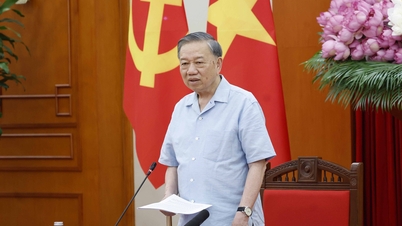
![[Photo] General Secretary and President To Lam presides over a meeting on preparations for the review of one year of operation of the three-tiered government system.](https://vphoto.vietnam.vn/thumb/1200x675/vietnam/resource/IMAGE/2026/06/02/1780391821195_a1-bnd-4595-9717-jpg.webp)























































Comment (0)