

 |
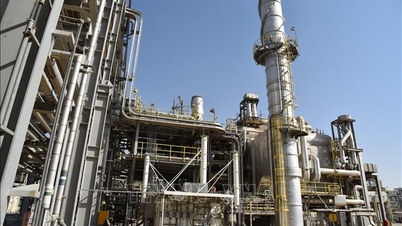
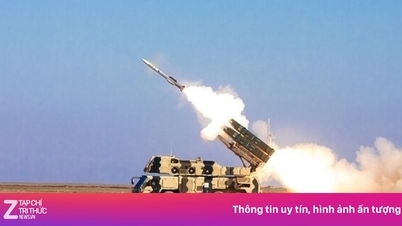
| The US attacked Iranian missile facilities on May 25. (Source: INA) |
For the first time since the ceasefire took effect on April 8, the US military attacked Iranian missile launch sites and ships in the Strait of Hormuz.
Even though Washington claimed it was an act of self-defense, the surprise US airstrike on Iran while delegations from both countries were negotiating an agreement to maintain a ceasefire and pave the way for broader talks exposed the extreme fragility of diplomatic efforts.
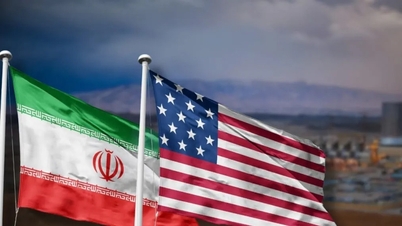
For a long time, trust has been the biggest shortcoming in US-Iran relations. Nearly half a century of tense confrontation, especially surrounding Iran's nuclear program, along with a series of failed negotiations in the past, has allowed suspicion to gradually build between the two sides.
The suspicion deepened when the US and Israel unexpectedly launched airstrikes that killed Supreme Leader Ayatollah Ali Khamenei and several high-ranking Iranian officials in Tehran, just as negotiations between the two sides had concluded in Geneva, Switzerland.
It took great difficulty for the international community, with the active efforts of mediating countries such as Pakistan, Qatar, and Oman, to bring Washington and Tehran back to the negotiating table. However, the US airstrike has shaken the nascent seeds of trust that had just begun to grow.
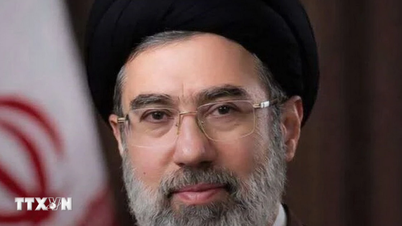
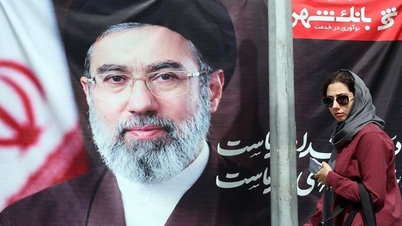
While Iran's Islamic Revolutionary Guard Corps (IRGC) has stated it reserves the right to retaliate against US airstrikes, Iran's Supreme Leader Mojtaba Khamenei declared: "The wheels of history cannot be reversed" and that countries in the region will no longer be a "shield" protecting US military bases.
Harsh rhetoric targeting the US and Israel has begun to reappear. The prospect of extending the ceasefire for another 60 days to reach a final agreement between the US and Iran has become even more uncertain, not to mention more thorny issues such as handling enriched uranium, the extent of sanctions relief, demands for war reparations, or restrictions on Iran's missile program.
It is noteworthy that the channels of negotiation are not entirely closed. Tehran remains open to dialogue, while Washington has also signaled that an agreement is still possible if core security conditions are guaranteed. But this only highlights the paradox of the US-Iran situation: diplomacy still has a door open, yet each military action narrows that door further.
When trust is absent, deadlock is inevitable!
Source: https://baoquocte.vn/my-iran-khi-niem-tin-thieu-vang-398465.html
![[Photo] Standing Committee member of the Party Central Committee Tran Cam Tu working with the Central Inspection Committee](https://vphoto.vietnam.vn/thumb/1200x675/vietnam/resource/IMAGE/2026/05/28/1779969579668_ndo_br_bnd-2495-jpg.webp)




































































Comment (0)