

SGGP
At a time when the U.S. military's strategic resources were under heavy strain due to the war in Ukraine, the conflict with Israel and the Hamas armed forces erupted. Alongside the U.S. military's commitment to the Asia-Pacific region, there was growing concern that the U.S. might be experiencing "strategic overload."
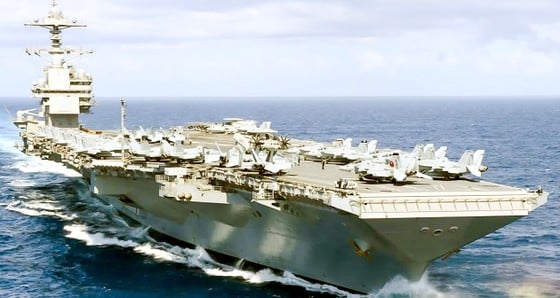 |
| The aircraft carrier USS Gerald R. Ford |
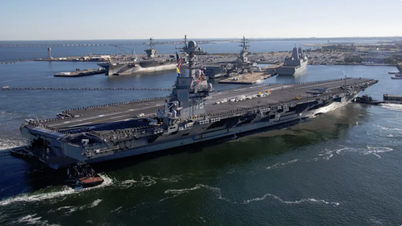
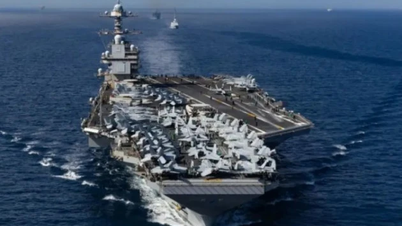
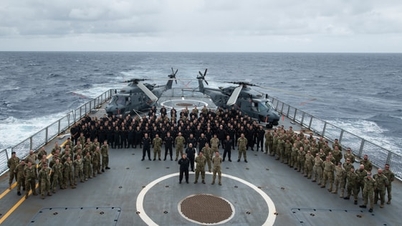
The US Navy's newest aircraft carrier, the USS Gerald R. Ford, has arrived in the Eastern Mediterranean, bolstering the delivery of equipment and ammunition to Israel. US President Joe Biden has also pledged further military aid to Israel. However, analysts believe the likelihood of direct US military action is very low.
Professor Douglas Streusand of the U.S. Marine Corps Command and Staff College believes that, despite Hamas's large rocket reserves, Israel is still capable of dealing with Hamas, making it highly unlikely that the U.S. will take military action there.
Professor Aaron Danis of the Institute for World Political Studies in the US also believes that the current situation does not require the US military to confront Hamas in the Gaza Strip. While the US military possesses offensive forces and deployment capabilities unmatched by any other nation, Washington's strategic objectives are scattered across the globe. After the Cold War, the US military strived to maintain the ability to win unexpected situations in key regions. But over time, this standard has been and continues to be questioned.
The Heritage Foundation, a Washington-based think tank, released a report stating that the 2023 U.S. military power index indicates that the U.S. is unable to undertake more missions and lacks the capacity to handle conflict simultaneously in two critical regions.
Professor Brands, of the Johns Hopkins University School of Advanced International Studies (USA), predicted in 2022 that the US would not only face ongoing tensions in the Pacific but also a serious security crisis in the Middle East. These developments may allude to a deeper problem that has been accumulating for years: strategic overload.
However, some analysts argue that the U.S. military still has considerable experience in handling practical problems.
According to expert Dennis Snower of the Kiel Institute for World Economy in Germany, the deployment of the USS Gerald R. Ford carrier strike group to the Mediterranean is leveraging existing resources already deployed in the Mediterranean and will not reduce capabilities elsewhere.
US Director of National Intelligence Dennis Blair is confident that even if additional troops are needed in the Gulf region, the US can secure them in the short term. Some strategic adjustments by the US to the Indo-Pacific region will not affect its ability to deploy military forces in the Middle East.
Source

































































































Comment (0)