

 |
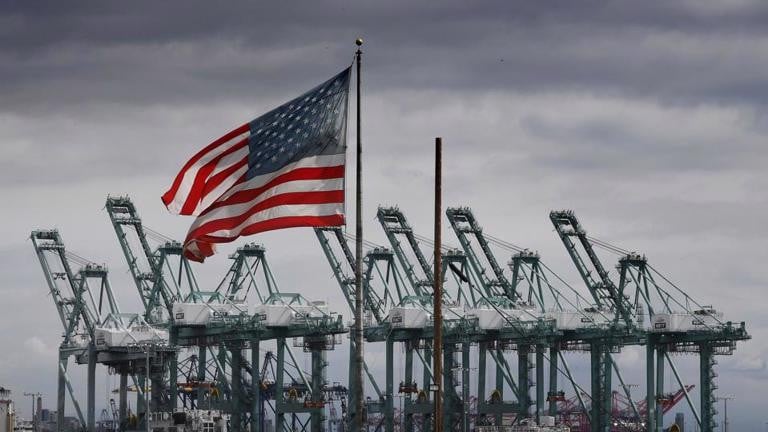
| The US economy could grow at its fastest pace in nearly two years. (Source: Getty Images) |
The aforementioned growth rate shows that the US remains the global economic powerhouse, while the European economy is stagnating and Asia is facing a slow recovery from the Chinese economy.
Personal consumption—a key driver of the U.S. economy—is projected to grow by 4%. Strong demand is challenging Federal Reserve officials after nearly two years of interest rate hikes. While inflation has fallen sharply from its peak, consumer price pressures remain nearly double the 2% target.
The Gross Domestic Product (GDP) figures released on October 26th will not be enough to prompt the Fed to raise interest rates in November, but sustained spending momentum in the fourth quarter of 2023 could increase the likelihood of policy tightening later in the year.
In a statement last week, Fed Chairman Jerome Powell suggested that continued overshooting economic growth or a tightening labor market could hinder progress on inflation and force the Fed to continue raising interest rates.
Income and spending data for September 2023 will be released on October 27th. The core personal consumption expenditures price index, excluding the volatile energy and food prices that the Fed prioritizes monitoring, is projected to rise by 3.7%.
This is the lowest increase since May 2021 and indicates moderate price pressure.
Source

![[Video] Sunset at Lap An Lagoon – Where the sun sets over the fishing nets](https://vphoto.vietnam.vn/thumb/1200x675/vietnam/resource/IMAGE/2026/05/31/1780187239592_2222.jpeg)





























![[Image] Nearly 125,000 Hanoi students completed the Literature exam for the 10th grade entrance exam.](https://vphoto.vietnam.vn/thumb/1200x675/vietnam/resource/IMAGE/2026/05/30/1780117233041_ndo_br_thiet-ke-chua-co-ten-2-png.webp)












































































Comment (0)