

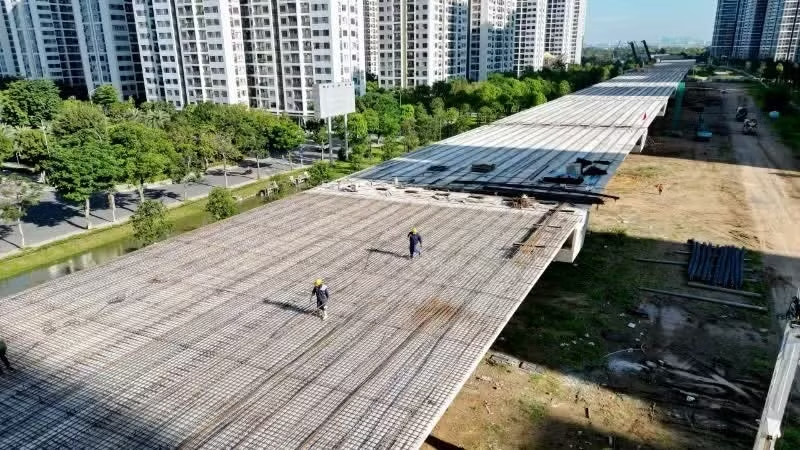
To comprehensively develop the socio-economic aspects of the Mekong Delta region, on April 2, 2022, the Politburo issued Resolution No. 13-NQ/TW on socio-economic development and ensuring national defense and security in the Mekong Delta region until 2030, with a vision to 2045. In implementing the resolution, provincial and city Party committees in the region have developed action programs and plans with specific tasks and solutions.
After more than three years of implementing the resolution, the Mekong Delta region has seen positive changes. Notably, strategic transportation infrastructure has made breakthroughs, connecting the region internally and with Ho Chi Minh City. Many renewable energy projects have come into operation; agriculture continues to affirm its role as a pillar, a key food production area, ensuring national food security; culture and society have progressed, people's lives have improved, national defense and security have been maintained, the merger of provinces and cities in the region has been completed, and the two-tiered local government model is operating smoothly, initially demonstrating the effectiveness of streamlining the administrative apparatus in localities.
To comprehensively develop the socio-economic conditions of the Mekong Delta region, on April 2, 2022, the Politburo issued Resolution No. 13-NQ/TW on socio-economic development and ensuring national defense and security in the Mekong Delta region until 2030, with a vision to 2045.
However, despite the achievements, the implementation of the resolution in some organizations, units, and localities has lacked proactiveness and enthusiasm. The quality and effectiveness of coordination between central ministries and agencies and localities have sometimes been inadequate. Specifically, there is a lack of sufficiently strong regional linkage mechanisms. Specific mechanisms and policies for regional linkages have been slow to be issued; linkages in planning implementation, investment and development, training and employment, and the construction of regional and inter-regional information system databases have been slow to be implemented. There is a lack of shared inter-regional databases; and a lack of shared digital platforms to serve regional governance. The capacity for innovation, scientific research, and technology transfer remains limited…
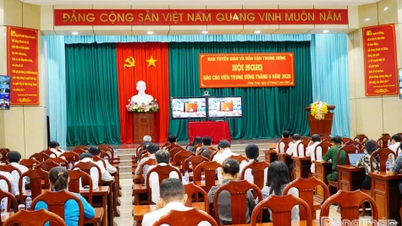
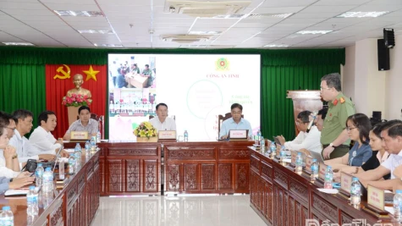
The main reason is the lack of uniformity in understanding the role, position, and importance of the region across various levels and sectors, leading to a slow pace of innovation in regional development and linkage thinking. According to many officials, Party members, and people in the Mekong Delta region, for the Politburo's Resolution No. 13-NQ/TW to continue to be effective, Party committees and authorities at all levels need to further strengthen propaganda within the political system and among all segments of the population, raising awareness about regional economic development and creating momentum for innovation and development that is appropriate to the new administrative boundaries and the two-tiered local government model.
Party committees and organizations at all levels must innovate their leadership thinking towards a deep understanding, correct implementation, and thorough execution; concretizing resolutions through action programs, plans, projects, and achieving measurable results.
Secretary of the An Giang Provincial Party Committee Nguyen Tien Hai
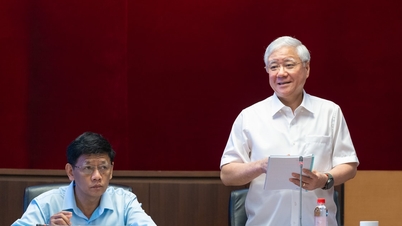
According to Nguyen Tien Hai, Secretary of the An Giang Provincial Party Committee, Party committees and organizations at all levels must innovate their leadership thinking towards a deeper understanding, correct implementation, and thorough execution; concretizing resolutions through action programs, plans, projects, and measurable results. In An Giang, in order to connect transportation infrastructure with socio-economic infrastructure, the Provincial Party Committee directed the acceleration of a strategy using public investment as "seed capital" to attract private investment, focusing resources on projects with high spillover effects.
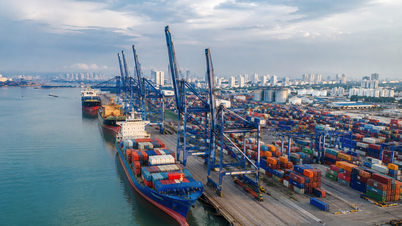
The focus is on the Chau Doc-Can Tho-Soc Trang expressway; the economic development infrastructure for border gates linked to logistics; sustainable agricultural infrastructure adapted to climate change; and regional transportation routes. The simultaneous implementation of these projects has removed transportation bottlenecks, opened up great prospects for inter-regional connectivity, shortened travel time to seaports, and enhanced the competitiveness and attractiveness of An Giang in the Mekong Delta regional development chain.
According to Comrade Nguyen Tuan Anh, Deputy Secretary of the Can Tho City Party Committee, the Central Government needs to strengthen decentralization and delegation of authority, coupled with local responsibilities, in investment management, planning, and land use; and to promptly finalize the legal framework for implementing breakthrough models such as free trade zones and regional centers for production, processing, and consumption of agricultural products.
Regarding infrastructure, the study prioritizes resource allocation to complete regional expressways; and prepares the conditions for the early commencement of the Ho Chi Minh City-Can Tho-Ca Mau high-speed railway line. This is a strategic boost to remove barriers related to transportation costs and expand the economic space for the entire region.
Regarding the reform of regional coordination mechanisms, it is necessary to clearly define the authority of the coordinating agency in deciding on inter-regional projects and to build a unified regional data system on a digital platform for common use by all localities…
Source: https://nhandan.vn/nang-cao-nhan-thuc-doi-moi-tu-duy-phat-trien-kinh-te-vung-post964677.html

![[Image] Hanoi's urban life under the challenge of a "scorching hot" environment](https://vphoto.vietnam.vn/thumb/1200x675/vietnam/resource/IMAGE/2026/05/25/1779706979265_nang-nong-t5-2026-minh-duy-7-4636-jpg.webp)













































































Comment (0)