

In administrative offices, military and police barracks, schools, hospitals, businesses, temples, and shrines throughout Ho Chi Minh City, it's easy to find the Ho Chi Minh Cultural Space – a place that stores and displays numerous artifacts, images, documents, and books about the life and career of the beloved Father of the Nation. This space has become a learning center and a venue for many solemn and intimate events, closely connected to the daily lives of each agency, unit, and locality. After more than five years of implementation, the Ho Chi Minh Cultural Space has expanded and developed in scale, quality, and the spread of Ho Chi Minh's thought, ethics, and style among the entire population, creating a civilized, modern, and compassionate living environment.
Major General Nguyen Thanh Trung, Political Commissar of the Ho Chi Minh City Command, shared: “In addition to building the Ho Chi Minh Cultural Space with diverse images, documents, and artifacts, the city's armed forces are gradually building on the internet, using electronic libraries, electronic yearbooks, and software applications that provide voice-overs in all three regions of Vietnam. They regularly update and supplement images and documents, creating diversity, richness, and practicality to enhance the effectiveness of propaganda and education for officers and soldiers.”
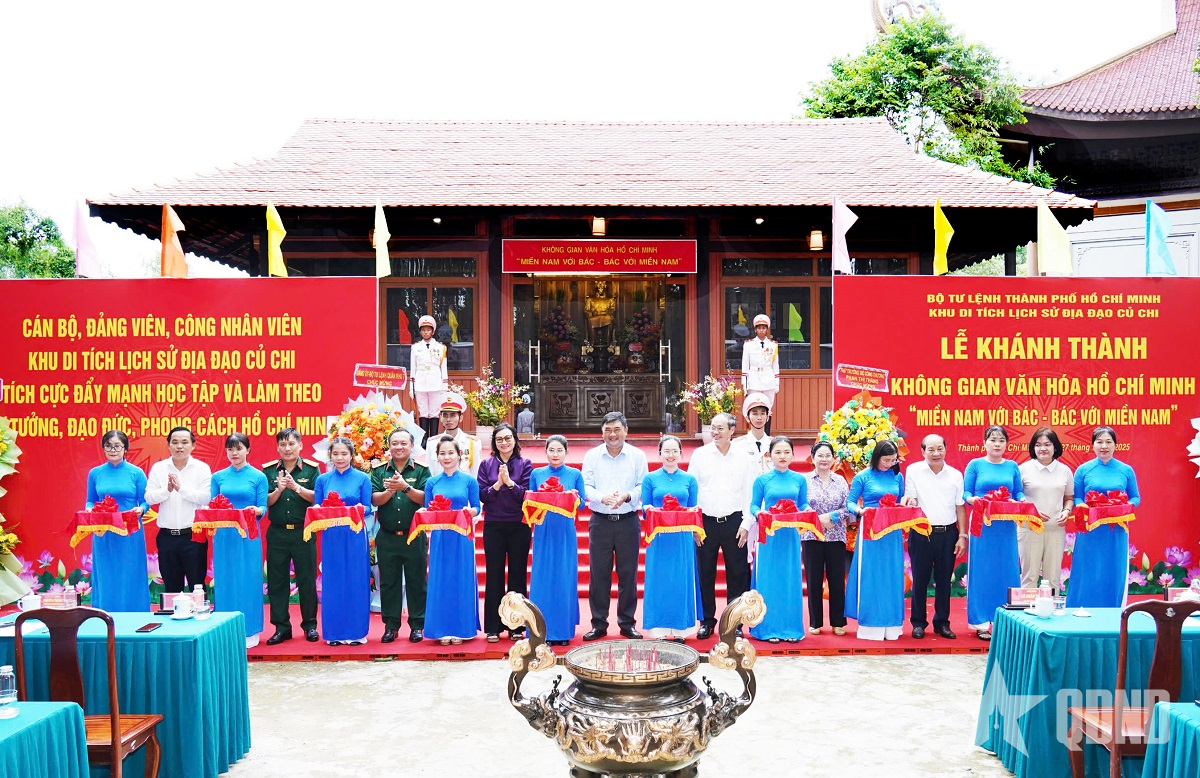 |
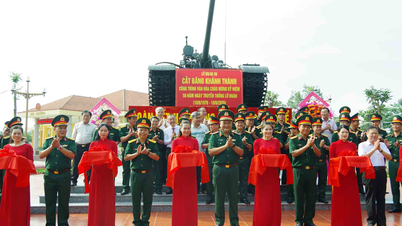
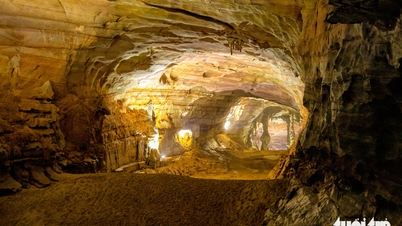
The Cu Chi Tunnels historical site (Ho Chi Minh City) has launched the Ho Chi Minh Cultural Space. |
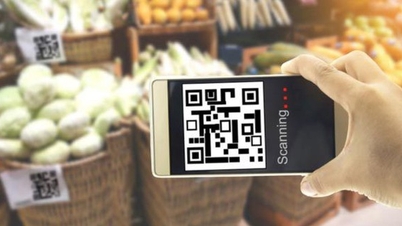
A highlight is that the Ho Chi Minh Cultural Space is located in prominent and convenient places for learning and research. The design and display of images, artifacts, and documents are quite rich and diverse, utilizing information technology for integration and storage. In addition to commonly seen documents, there are also models of: Nha Rong Wharf, Pac Bo Cave, Na Nua Hut, President Ho Chi Minh's stilt house, and the Ho Chi Minh Mausoleum... Documents are equipped with QR codes to help officials, Party members, citizens, and students easily access information and proactively utilize the materials. According to Comrade Nguyen Ngoc Vu, Secretary of the Party Committee and Chairman of the People's Council of Can Gio Commune: Placing the Ho Chi Minh Cultural Space right in the workplace facilitates the learning and emulation of President Ho Chi Minh's teachings on a regular basis. Each official, Party member, civil servant, and employee can self-reflect, self-correct, and self-improve in their work and daily life. From then on, everyone deeply understood that learning from Uncle Ho began with concrete actions: dedication, commitment, completing tasks rather than simply working until the end of the workday; fulfilling responsibilities, adhering to deadlines and procedures, ensuring quality, and behaving in a civilized manner.
Ho Chi Minh City currently has over 5,700 models of Ho Chi Minh Cultural Spaces; including hundreds of new models established in various units and localities after mergers. The city has implemented a comprehensive digitization of documents and artifacts through 3D and virtual reality. Social media platforms are also used to disseminate images, documents, and literary and artistic works about President Ho Chi Minh to a wide audience. Mr. Tran Quy Son, 65 years old, residing in Phu My 4 neighborhood, Binh Duong ward, Ho Chi Minh City, shared: “My neighborhood has launched the Ho Chi Minh Cultural Space. Everyone is excited and proud. This place has become a regular political activity center, a ‘red address’ for educating about revolutionary traditions and reverence for President Ho Chi Minh, contributing to fostering political acumen and a sense of responsibility among young people and residents of the neighborhood. This location also serves as a meeting place and community center for the neighborhood, so the value of learning from and following Uncle Ho has a strong ripple effect in the community.”
However, to further expand, develop, and spread the ideological, ethical, and stylistic values of Ho Chi Minh, it is necessary to innovate, closely adhere to reality, and meet the demands stemming from the conscious needs of all strata of the people. This shows that the Ho Chi Minh Cultural Space should not only focus on implementing and building models of physical cultural spaces, but also diversify its forms, regularly update and supplement materials, and strongly promote the value of the cultural space. Along with that, building the Ho Chi Minh Cultural Space must be linked to the task of protecting the Party's ideological foundation, combating erroneous and hostile viewpoints; and establishing codes of conduct on social media for cadres, Party members, civil servants, and armed forces personnel, aiming for clearer ideology and ethics, and improved work quality and efficiency.
According to Comrade Pham Phuong Thao, former Deputy Secretary of the City Party Committee and former Chairwoman of the Ho Chi Minh City People's Council: The Ho Chi Minh cultural space needs to develop in depth, avoiding formalism; attention should be paid to propaganda work in multiple languages to spread to international friends. Agencies, units, localities, schools, etc., need to actively apply science and technology to facilitate access to information for cadres, Party members, civil servants, teachers, students, and the people, enabling them to comprehensively, voluntarily, and consciously absorb the values of learning and following the thoughts, ethics, and style of President Ho Chi Minh, contributing to building an increasingly better city.
Source: https://www.qdnd.vn/van-hoa/doi-song/nang-tam-khong-gian-van-hoa-ho-chi-minh-1039915


![[Image] Close-up view of the interchange connecting the two expressways and Long Thanh Airport.](https://vphoto.vietnam.vn/thumb/1200x675/vietnam/resource/IMAGE/2026/05/25/1779703378210_ndo_br_z7863716673926-224453a31600126cce10622af6290afd-4549-jpg.webp)






















































Comment (0)