

Born and raised in a farming family, Nguyen Hai Diep has always been concerned about how to develop the economy in his hometown. Before 2016, his family mainly raised pigs. However, the volatile market and frequent disease outbreaks made economic returns unstable. After researching and visiting various livestock farming models inside and outside the province, he realized that the demand for chicken eggs was growing, while this was an essential product with stable consumption and less fluctuation compared to other livestock.
In 2016, Mr. Diep decided to completely switch his farming model from pig farming to egg-laying chicken farming. Initially, this decision worried his relatives because of the large investment required, while he had almost no experience in industrial chicken farming. But with a daring and proactive spirit, he boldly borrowed capital and invested in building a well-structured chicken coop on nearly 3 hectares of his family's land.
The early days of starting the business were not easy. From selecting the breed, building a closed coop system, installing cooling equipment and automatic feeders, to learning the procedures for caring for and preventing diseases in the flock of chickens, everything presented new challenges. Diep spent a lot of time attending technical training courses, learning animal husbandry at Phu Tho College of Mechanical Engineering and Agriculture and Forestry, researching through books, newspapers, the internet, and directly visiting large farms to learn from their experience.
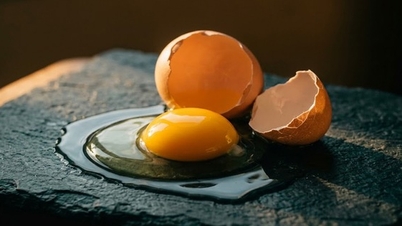
Thanks to perseverance, the model gradually stabilized. Currently, his family's farm maintains a scale of approximately 20,000 Egyptian laying hens. This breed of chicken adapts well to local climate conditions, has high resistance to disease, and produces superior egg yields. On average, the flock produces about 17,000 eggs per day, providing a steady supply to the market.

The large-scale egg-laying chicken farming model of Mr. Nguyen Hai Diep, in Zone 22, Van Xuan Commune, has yielded high economic efficiency.
A highlight of Mr. Nguyen Hai Diep's model is its focus on safe and modern livestock farming. The entire farm is designed as a closed system, ensuring ventilation in the summer and warmth in the winter. The feeding and watering systems are automated, saving labor and minimizing the risk of disease outbreaks.
In particular, he pays close attention to environmental sanitation. Livestock waste is processed according to strict procedures, ensuring hygiene while minimizing the impact on surrounding residential areas. This is also a factor that has helped the model develop sustainably over the years.
Not content with simply producing regular commercial eggs, Mr. Diep realized that to establish himself in the market, he needed to build his own brand. Therefore, he invested in sorting, packaging, affixing traceability labels, and registering the brand "Ninh Diep Chicken Eggs".
Brand building has helped the product gain consumer trust. The eggs are carefully selected, ensuring consistent quality, cleanliness, and safety before reaching customers. As a result, the product is increasingly well-received in the market.
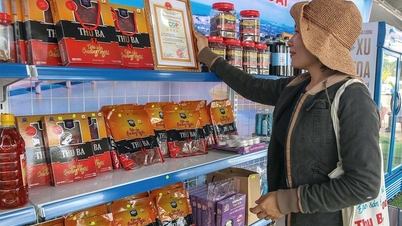
A significant milestone was reached in 2024 when the "Ninh Diep Chicken Eggs" product was recognized as achieving OCOP 3-star standard. This is not only a source of pride for his family but also a recognition of years of effort in building a systematic production model focused on quality. The OCOP title has given a boost to expanding the market. While previously the eggs were mainly consumed locally, they are now available in many organic food stores in Hanoi and some neighboring provinces. Every day, tens of thousands of eggs are transported to distributors, small supermarkets, collective kitchens, and individual customers.
According to Mr. Diep, to retain customers in an increasingly competitive environment, the most important factor remains product quality. Therefore, everything from chicken feed to egg harvesting processes is strictly controlled. The feed is selected from reputable suppliers, ensuring nutrition, avoiding banned substances, and minimizing antibiotic residue.
Besides providing a stable income for the family, the farm also creates regular jobs for 3 local workers with a salary of approximately 8 million VND per month. This is a significant source of income for rural workers, contributing to improving the lives of many families. Those working at the farm receive systematic training in techniques ranging from caring for the flock and collecting eggs to cleaning the coops. As a result, the work is carried out professionally, minimizing risks and increasing production efficiency.
After deducting all investment costs for feed, breeding stock, labor, electricity, water, and other incidental expenses, the model yields a profit of nearly 1 billion VND per year. This is a dream figure for many farmers in the midland region, demonstrating the correct direction taken by this young farmer.
But for Mr. Nguyen Hai Diep, his current success is just the beginning. He is planning to expand his operation by raising an additional 30,000 laying hens to meet the growing market demand. Simultaneously, he plans to invest in more modern farm facilities and apply digital technology to manage his flock to improve productivity.
Not content with just producing eggs, he also plans to develop processed products such as salt-cured chicken – a popular item in the market. Diversifying products will help him better utilize the value chain from livestock farming, while reducing risks when the market fluctuates.
Mr. Nguyen Hai Diep's model is becoming a destination for many young farmers in Van Xuan commune to visit and learn from. Local authorities consider it a typical model in developing agricultural economy towards commodity production, contributing to promoting the advanced new rural development program.
Hoang Huong
Source: https://baophutho.vn/nang-tam-thuong-hieu-trung-ga-ocop-ninh-diep-253824.htm


![[Image] Hanoi's urban life under the challenge of a "scorching hot" environment](https://vphoto.vietnam.vn/thumb/1200x675/vietnam/resource/IMAGE/2026/05/25/1779706979265_nang-nong-t5-2026-minh-duy-7-4636-jpg.webp)
![[Image] Close-up view of the interchange connecting the two expressways and Long Thanh Airport.](https://vphoto.vietnam.vn/thumb/1200x675/vietnam/resource/IMAGE/2026/05/25/1779703378210_ndo_br_z7863716673926-224453a31600126cce10622af6290afd-4549-jpg.webp)










































































Comment (0)