Ten banks have increased deposit interest rates in the past two months, with increases ranging from 0.1% to 0.7% depending on the term and the bank. For a 12-month term, deposit interest rates range from 4.6% to 5.95% per year.
Over the past two months, deposit interest rates Interest rates at commercial banks have started to rise again, which is creating significant pressure on... Lending interest rates. Especially in the context where banks have to keep lending interest rates low to support customers. Economic growth, as directed by the Government and the Prime Minister.
Over 10 banks have increased deposit interest rates in the past two months, resulting in a clear differentiation in interest rates among banks. Increases range from 0.1% to 0.7% depending on the term and the bank. For 12-month terms, interest rates range from 4.6% to 5.95% per year. There is a significant disparity between smaller joint-stock banks and larger banks. For terms of 13 months or more, some banks have pushed interest rates above 6% per year, reaching up to 6.5% per year for long-term deposits of 24 or 36 months.
Some banks offer rates as high as 9.5% per year, but they have their own criteria, such as only accepting large deposits, over 2 trillion VND, usually for economic organizations. The market... deposit interest rates The increase was explained by many banks as a need to raise capital to meet the rising demand for loans at the end of the year.
The bank's deposit interest rates have been adjusted upwards twice. To attract depositors, they also add extra interest when people deposit money. deposit savings online on digital banking.
"We have a program offering an additional 0.6% for new customers making their first transaction with the bank. The general interest rates across all banks are increasing, and to serve the overall needs, the capital demands of the entire system and industry must also increase," shared Mr. Dang Quang Anh, Director of BVBank's Hanoi branch.
More innovatively, many banks have introduced automatic interest-bearing programs for idle funds held in users' checking accounts. For example, MSB Bank accepts interest payments even for very short terms, as short as 3 days.
Ms. Nguyen Thi My Hanh, Deputy General Director of MSB, said: "When the account balance reaches a certain level, it will immediately help customers generate profit in their account, and this profit can be generated for a term of 1 week, 2 weeks, or monthly, depending on the customer's cash flow. This helps optimize the amount of money customers keep in the bank for."
According to statistics from the State Bank of Vietnam, approximately 14 million billion VND in deposits from individuals and economic organizations were held in the banking system as of the end of September.


The bank is striving to keep lending interest rates low.

With the increasing trend of cashless payments, demand deposits (or CASA) are considered a huge resource if banks know how to exploit them. Banks share that their goal is to pay interest on short-term deposits, both to maximize benefits for users and to attract more people to deposit their money there.
Interest rates on demand deposits are only about 0.1%-0.5% per year, which is very low compared to time deposits. Therefore, the more CASA (Current Account Savings Account) a bank attracts, the more it can reduce its cost of funding.
Looking at the Q3 business results, the CASA ratio at many banks is quite high, reaching nearly 37%. If banks can mobilize more low-cost capital, this is also how they can find a solution to the problem of how to keep lending interest rates low without increasing them in line with deposit interest rates.
Mr. Tran Van Luan, Deputy General Director of PGBank, stated: "High demand deposits help reduce funding costs, thereby lowering interest expenses for customers and increasing the bank's competitiveness. This is also a goal we are aiming for in the future, so that we can provide better products and services, especially in terms of pricing policies, to our customers."
Seeking to reduce input costs and cut operating expenses, banks have introduced various preferential loan packages to meet year-end capital needs.
Ms. Nguyen Anh Van, Deputy General Director of LPBank, said: "We have a short-term preferential loan package worth 3,000 billion VND, with a minimum interest rate of 6% or higher, and we have increased the limit of this preferential package to 6,000 billion VND. For individual customers, we provide loans for consumer purposes and loans for business recovery with interest rates starting from only 6.5%."
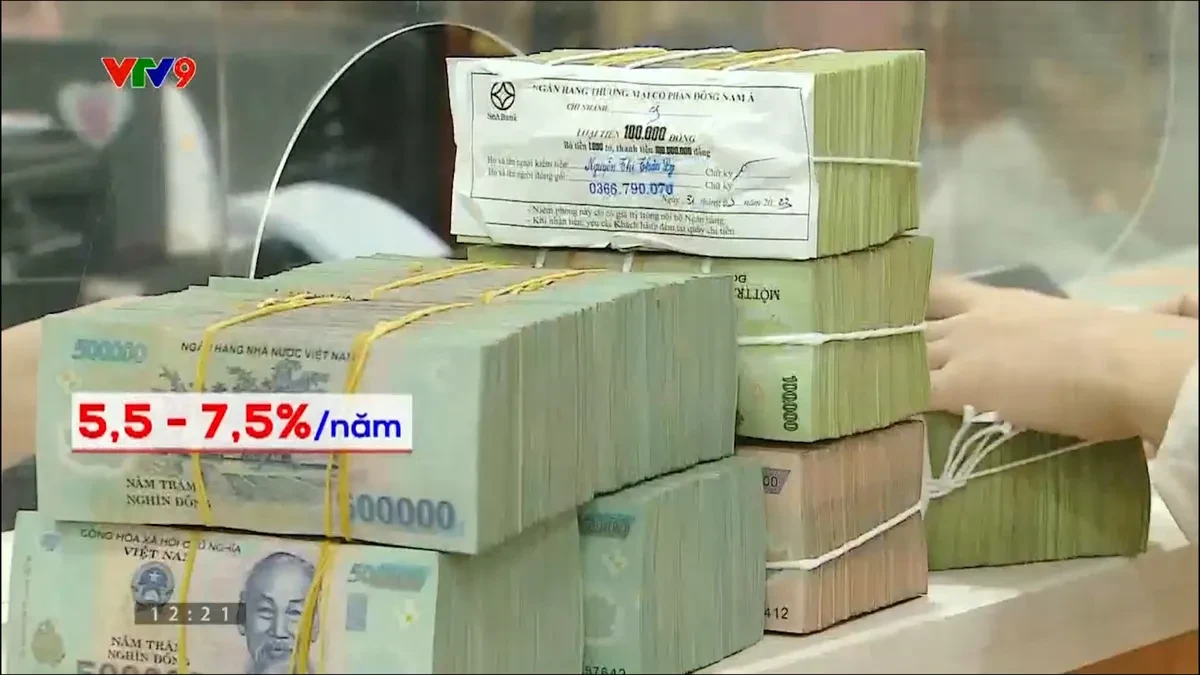


According to analysts, under the pressure of rising deposit and interbank interest rates, lending interest rates are unlikely to fall further, but at least they will not increase. This is because banks will have to offer competitive lending rates to retain good borrowers.
"If we look at the developments in deposit interest rates, they have started to inch up again by about 59 points compared to April, so there isn't much room for further reduction. However, with the pressure to boost economic growth, we assess that lending interest rates will still remain at a low level," shared Ms. Hoang Thi Minh Huyen - Senior Macroeconomics Specialist, Bao Viet Securities Joint Stock Company.
According to a report by the State Bank of Vietnam, the average lending interest rate of domestic commercial banks for new and existing loans with outstanding balances is fluctuating between 6.7-9.1% per year, a decrease of about 1% compared to the beginning of the year.
With the government 's directive to provide capital to support economic growth, banks must maintain lending interest rates at appropriate levels, balancing input costs with the resilience of businesses. Only when businesses are strong enough to recover will they have the capital to pay interest on bank loans. At the end of November, the State Bank of Vietnam also issued a document requiring commercial banks to maintain stable and reasonable deposit interest rates, consistent with their capital balance, ability to expand credit healthily, and risk management capabilities, contributing to the stability of the monetary market and interest rate levels.
Source
![[Photo] Prime Minister Le Minh Hung presides over the thematic session on promoting science and technology development and innovation.](https://vphoto.vietnam.vn/thumb/1200x675/vietnam/resource/IMAGE/2026/06/23/1782207872934_ndo_br_dsc-1724-jpg.webp)