

Today is the 29th day of the 12th lunar month, considered the 30th day of the Lunar New Year (Year of the Snake). In many families in Ho Chi Minh City and the southern provinces, bitter melon soup is an indispensable part of the New Year's Eve dinner. Besides the meaning of "the passing of suffering," does it have any other significance?
One day at the end of the year, we had the opportunity to interview the main lecturer, Ms. Bui Thi Minh Thuy, a member of the Center for Research, Preservation and Development of Culinary Arts in Ho Chi Minh City, about Tet dishes, especially the New Year's Eve dinner on the 30th day of the lunar year.
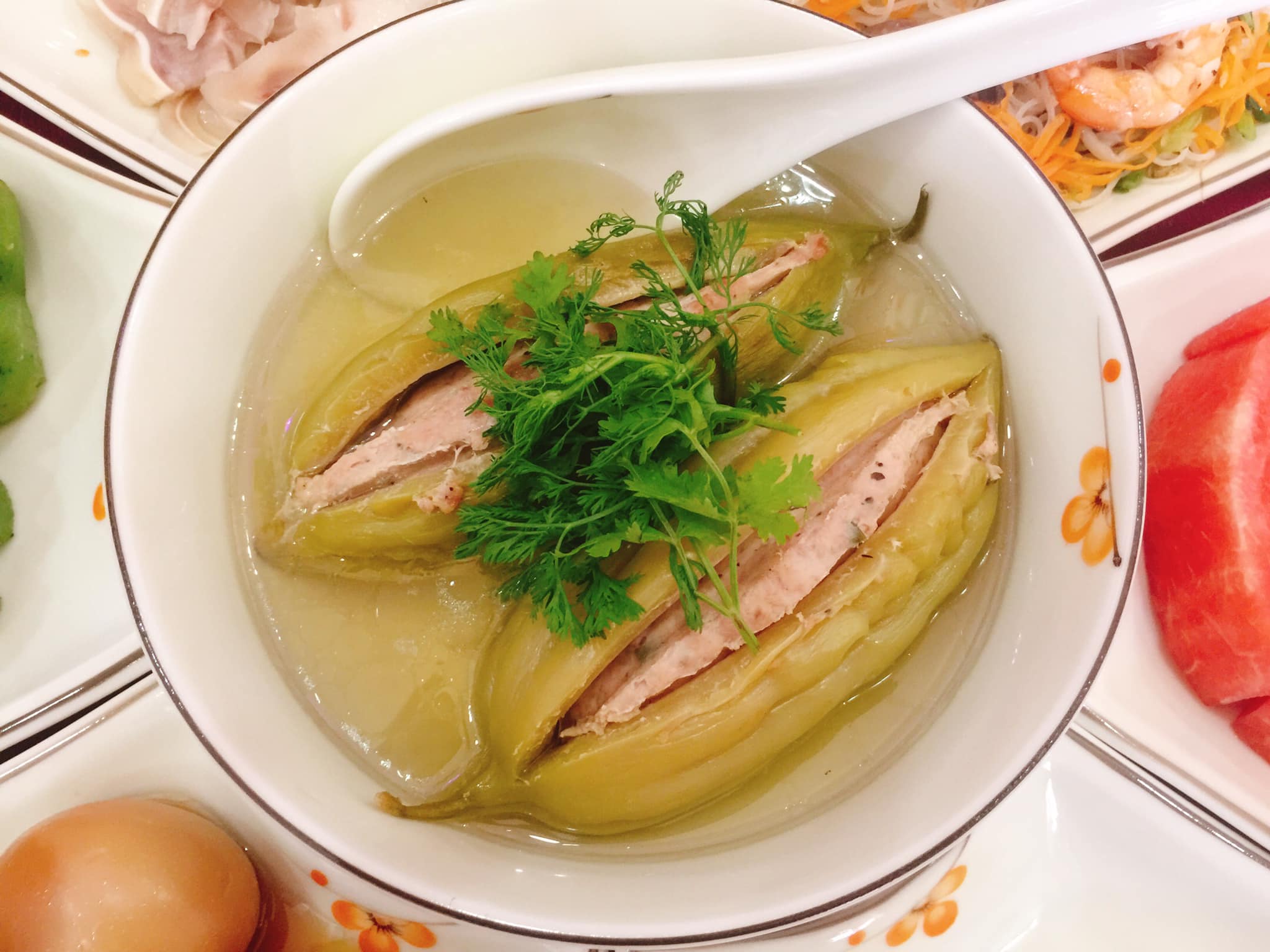
Bitter melon soup, an indispensable dish on the New Year's Eve dinner table on the 30th day of the lunar year.
Ms. Bui Thi Minh Thuy stated that, in terms of ingredients, bitter melon is easy to find, with many varieties available; it's an easy plant to grow and care for. Pork is also a familiar food. The method for preparing bitter melon soup is simple, quick, and not complicated, yet it's a nutritious dish. This soup provides protein and fat from the pork, as well as vitamins, fiber, minerals, and water from the bitter melon.
The weather during the Lunar New Year in Ho Chi Minh City and Southern Vietnam is usually hot and sunny. Therefore, the soup in the menu helps replenish the sweat lost due to the hot weather. This New Year's dish also balances yin and yang, hot and cold.
"Especially in the Vietnamese New Year's Eve dinner on the 30th day of the lunar year, the life-affirming meaning of the dishes is very important. Traditionally, we've known that bitter melon soup symbolizes the hope for 'the passing of suffering' to welcome good fortune and blessings in the new year. But there's another meaning to bitter melon soup," said Bui Thi Minh Thuy, a lecturer and member of the Ho Chi Minh City Center for Research, Preservation, and Development of Cuisine.
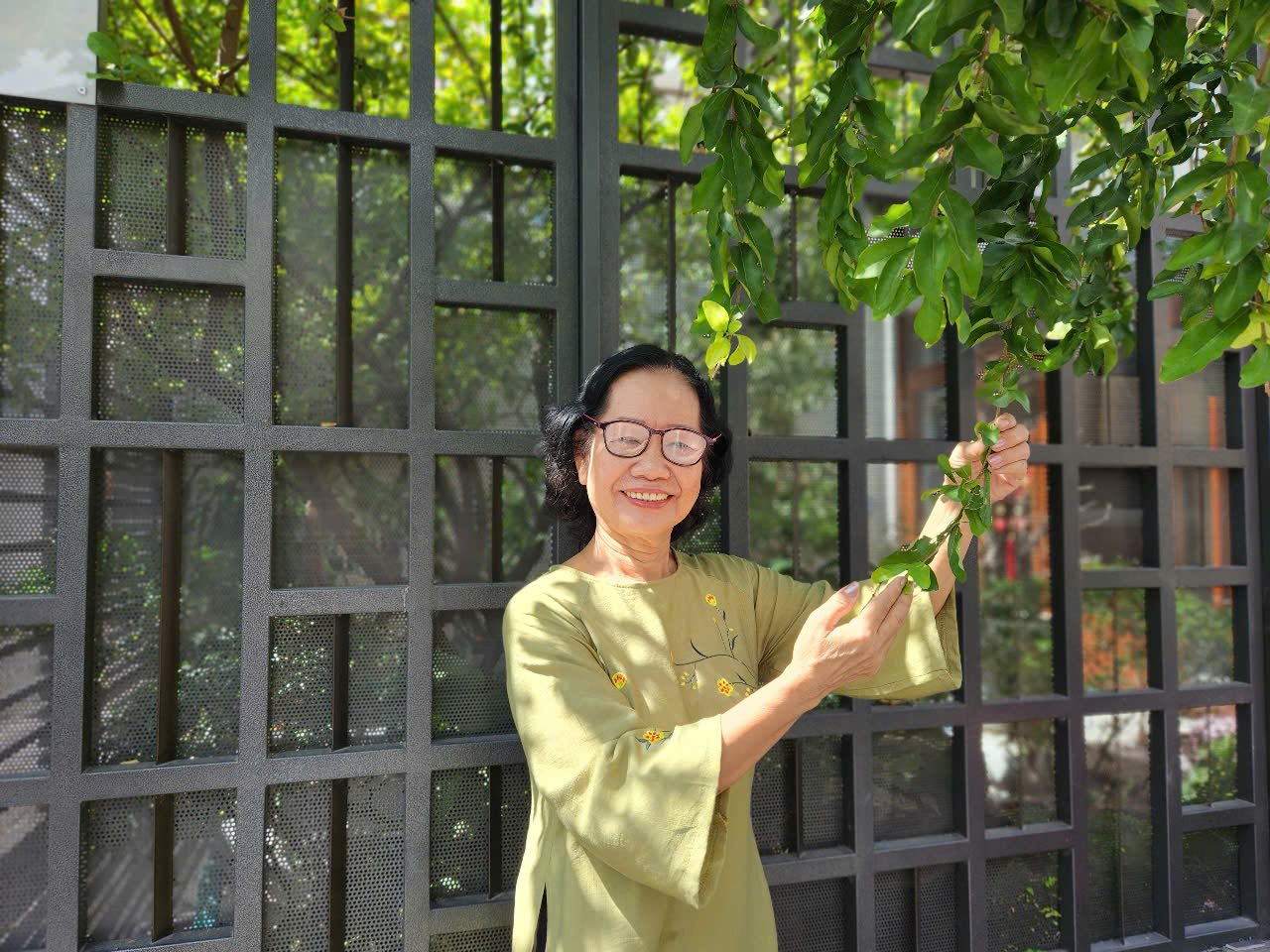
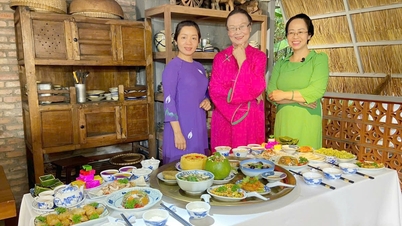
Ms. Bui Thi Minh Thuy
According to Ms. Minh Thuy, the outer skin of the bitter gourd is usually rough and spiky, reflecting the diversity of nature. From ancient times to the present, the bitter gourd's skin has acted as a protective shield for the seeds inside – protecting the future seedlings. When unripe, the bitter gourd tastes bitter, followed by a sweet aftertaste. When ripe, it also tastes sweet, and the ripe seeds turn red, symbolizing good fortune and the fruits of labor. The bitterness of the bitter gourd is also considered medicinal.
In the hot and sunny weather of Southern Vietnam, bitter melon soup is a remedy that helps balance and is good for human health. Thus, Ms. Minh Thuy believes that bitter melon soup also contains many life lessons. In life, everyone has difficult and challenging periods, but if one perseveres and overcomes them, each person will reap sweet rewards.
The braised pork with eggs dish served on the 30th day of the Lunar New Year symbolizes the square and round shapes of heaven and earth.
Along with bitter melon soup, braised pork with duck eggs is also an indispensable dish on the New Year's Eve dinner table on the 30th day of the lunar year in Ho Chi Minh City and other southern provinces. Ms. Bui Thi Minh Thuy explained that besides its nutritional value and suitability for the southern climate (people can braise a large pot to eat throughout the Tet holiday, reheating as needed), the dish's appearance symbolizes the round sky (duck eggs) and the square earth (large, square pieces of pork), representing a wish for completeness and fulfillment in all things.
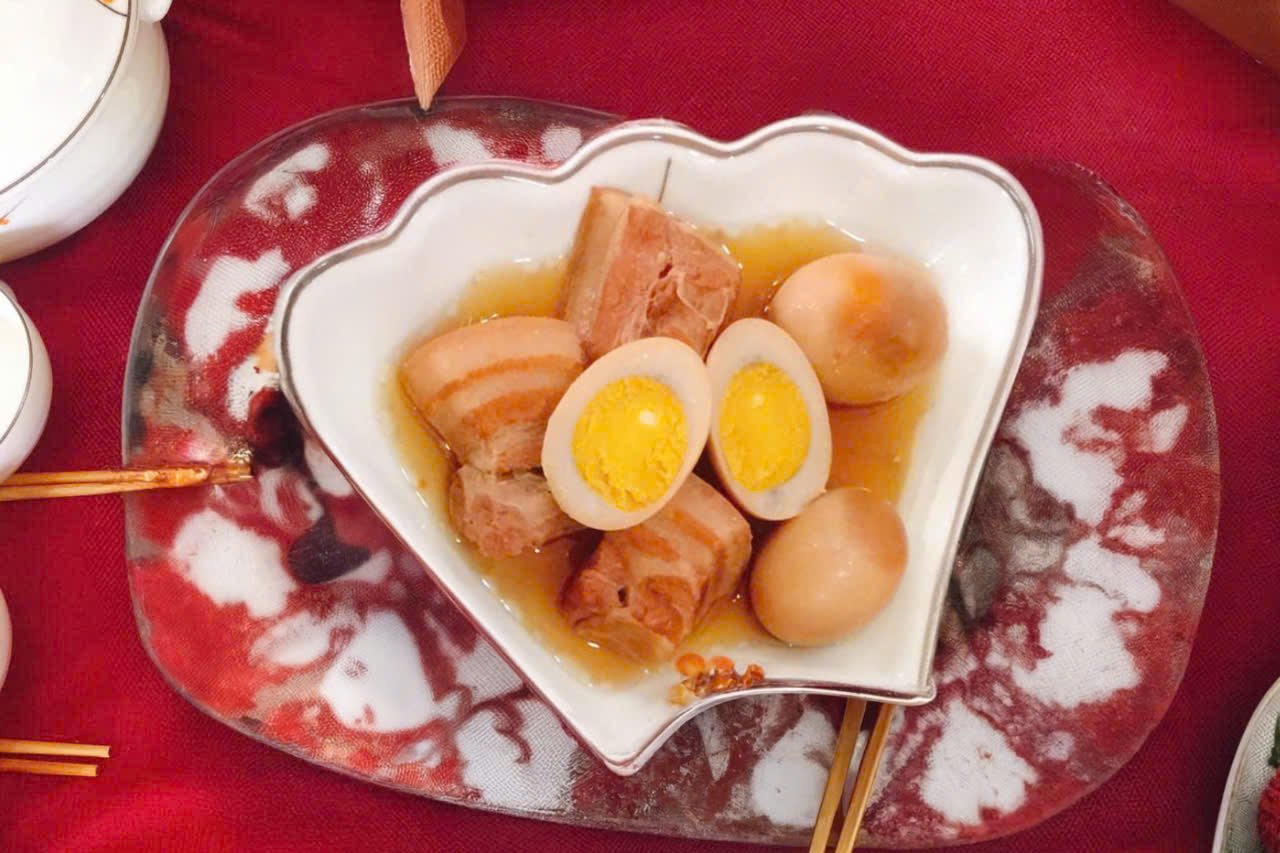
Braised pork with duck eggs, a familiar dish during Tet (Lunar New Year) in Southern Vietnam.
New Year's Eve dinner in Northern Vietnam
So what dishes are typically included in the New Year's Eve dinner on the 30th day of the lunar year in Northern Vietnam? Ms. Minh Thuy explains that although there are no specific rules about which dishes must be on the New Year's Eve dinner table, there are usually characteristic dishes. These include various types of cakes such as banh chung, banh day, banh gai, banh khao... Meat dishes such as gio lua, nem chua, thit dong, boiled chicken... Vegetable salads such as pickled onions, papaya salad, raw vegetables... Soups such as bamboo shoot soup, fish ball soup, and, of course, sticky rice dishes like gac fruit sticky rice, mung bean sticky rice, and steamed sticky rice...
"Sticky rice with gac fruit, spring rolls (fried spring rolls), and vermicelli soup (vermicelli soup) are popular and well-loved dishes, but they are not mandatory on the Tet holiday feast table. They can be replaced with other dishes depending on each family's preferences. The Tet holiday feast in Northern Vietnam is very rich and diverse, not limited by any particular dish," said Ms. Minh Thuy.
Keeping the kitchen warm and inviting is a way to preserve our national cultural identity.
According to Ms. Minh Thuy, the Tet feast is like a miniature painting of the culinary culture of each region. Each region has its own characteristic agricultural and aquatic products, and this is clearly reflected in the Tet dishes. For example, the North often uses winter vegetables such as Chinese cabbage, kohlrabi, and bamboo shoots, combined with pork and chicken. The Central region prioritizes fresh seafood such as shrimp, squid, and fish, along with characteristic herbs. Meanwhile, people in the South use many tropical fruits such as coconut, mango, and longan, and river aquatic products such as snakehead fish and catfish.
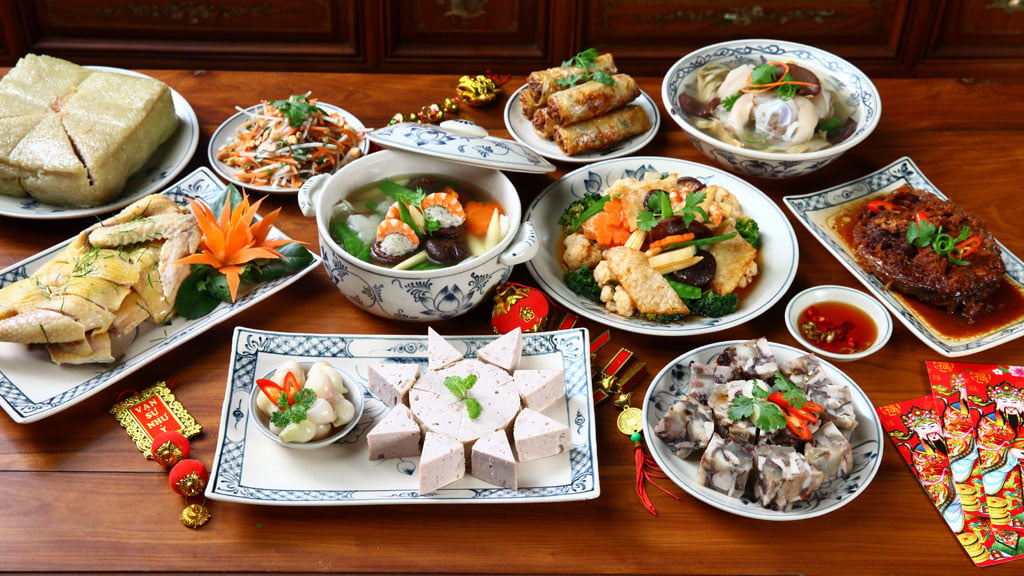
A traditional Northern Vietnamese New Year feast prepared by Chef Nguyen Dinh Tuyen.
PHOTO: YOUTH ONLINE
However, importantly, Ms. Minh Thuy wanted to emphasize that the Tet meal is not just a simple meal but also carries profound cultural significance. To have a Tet meal that is both delicious and healthy, we need to combine tradition and modernity, flavor and nutrition. "Most importantly, it's the warmth and affection of family gathering around the Tet meal that matters," she said.
Ms. Minh Thuy also observed that in modern life, some people may be indifferent to preparing traditional Tet dishes. Changes in consumer habits mean that some young people prioritize experiences and entertainment activities over cooking at home. Furthermore, many people lacked the opportunity to learn and practice cooking from a young age, leading to a lack of skills and interest in cooking, causing them to choose eating out rather than cooking at home.
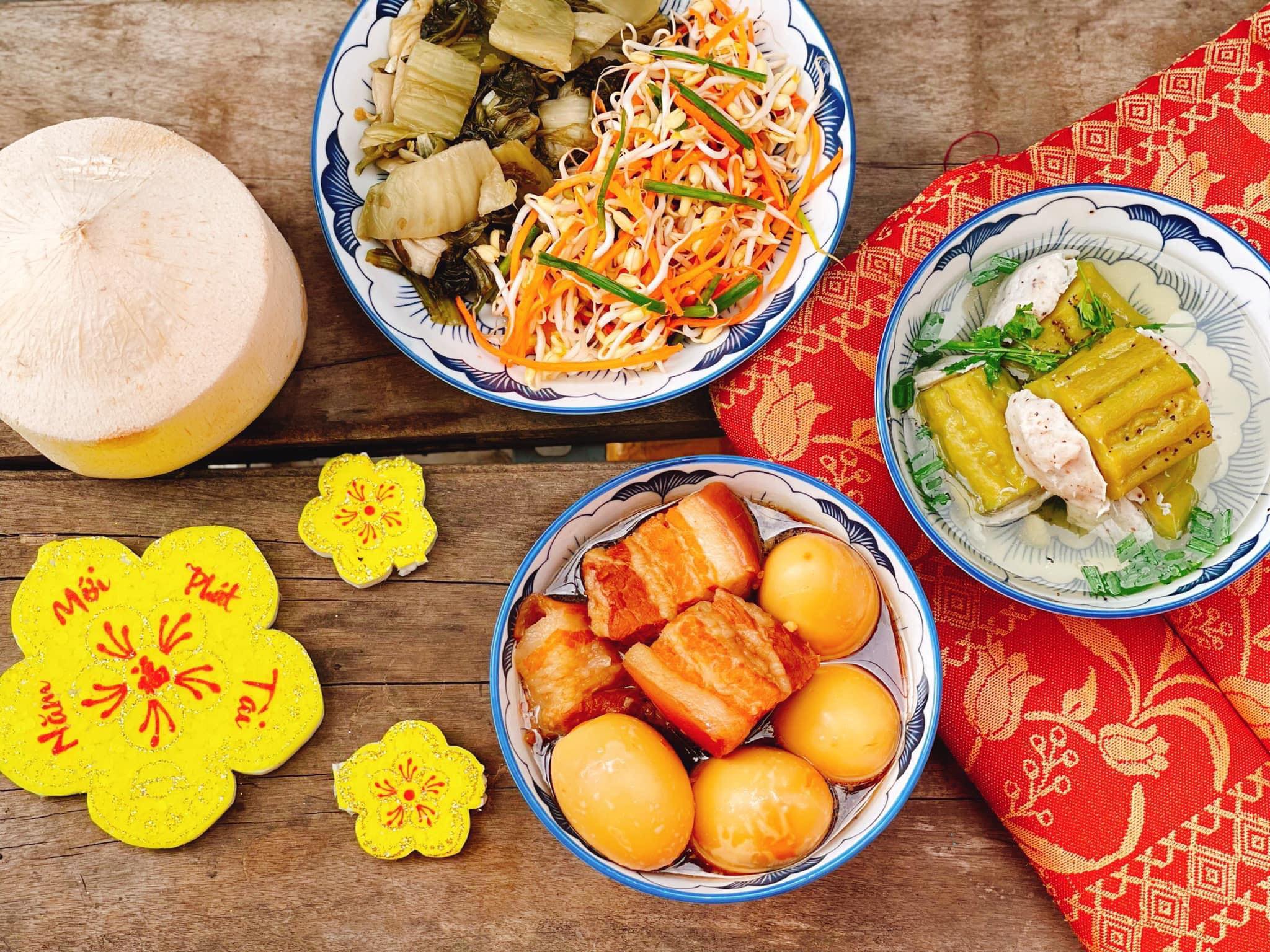
Familiar dishes in the Tet holiday meal in Southern Vietnam.
In the long run, this not only affects health (processed foods often contain many preservatives, fats, and sugars) but also significantly reduces family bonding. Preparing family meals together – the Tet holiday meal – is an opportunity for family members to connect, work together, share, and create beautiful memories. It also helps parents and grandparents pass on cultural and culinary values from one generation to the next. When this gradually disappears, we will lose a part of our national cultural identity.
"I want to offer advice to parents and young people, especially students. Parents who set a good example by cooking and enjoying the kitchen will inspire other family members to love cooking as well. Children should try starting with small things, like helping their mother with a few simple tasks in the kitchen, or learning and cooking a dish they love. Gradually, they will discover the joy and excitement in cooking, while also contributing to preserving the traditional values of the family," Ms. Bui Thi Minh Thuy expressed.
Source: https://thanhnien.vn/ngay-30-tet-bua-com-tat-nien-thom-mui-canh-kho-qua-vi-sao-185250127145403062.htm




















![[Photo] Prime Minister Pham Minh Chinh attends the Conference on the Implementation of Tasks for 2026 of the Industry and Trade Sector](/_next/image?url=https%3A%2F%2Fvphoto.vietnam.vn%2Fthumb%2F1200x675%2Fvietnam%2Fresource%2FIMAGE%2F2025%2F12%2F19%2F1766159500458_ndo_br_shared31-jpg.webp&w=3840&q=75)
















































Comment (0)