

| Imports in July maintained a slight increase; new-generation FTAs had a positive impact on exports and imports. |
Despite having over 3,200 km of coastline, Vietnam still spends billions of USD importing salt. This paradox stems primarily from the fact that domestic salt processing technology cannot meet the needs of local producers.
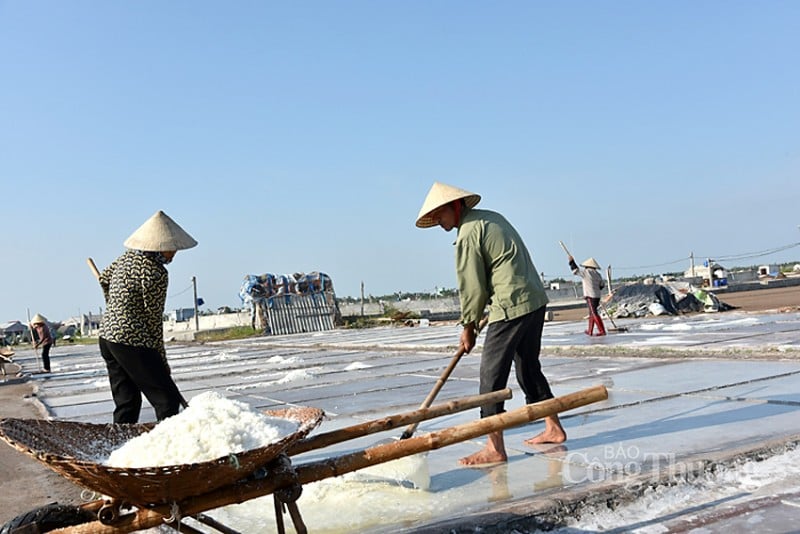 |
| Salt farmers in the salt fields of Bach Long commune (Giao Thuy district, Nam Dinh province ) - Photo: Pham Tiep |
Why do we still need to import salt?
In 2022, the Ministry of Industry and Trade announced an import tariff quota of 80,000 tons for salt; in 2023, it was 84,000 tons.
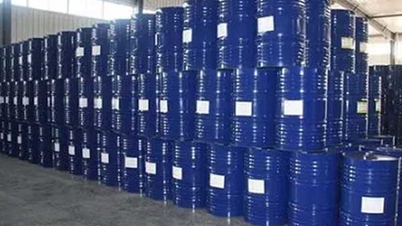
Regarding actual demand, Vietnam currently imports approximately 400,000-600,000 tons of high-purity white salt annually to serve various industries, mostly the chemical industry, especially for the production of sodium hydroxide and chlorine. In addition, tens of thousands of tons of exceptionally clean salt are imported for the medical sector. Mr. Van Dinh Hoan, General Director of Viet Tri Chemical Joint Stock Company, stated that the company needs about 80,000-100,000 tons of high-quality industrial salt annually for chemical production. All of this salt must be imported. Explaining the reasons, Mr. Hoan analyzed: Firstly, the quality of domestically produced salt does not meet the company's production needs due to many impurities. The need to process, remove, and filter these impurities in the salt results in a higher cost than imported salt. Not only is the quality a concern, but the current fragmented and manual nature of domestic salt production also fails to guarantee a stable and long-term supply of salt for chemical manufacturing companies.
Agreeing with Mr. Van Dinh Hoan, the representative of Southern Basic Chemicals Joint Stock Company also shared: Every year, the company imports a large amount of salt for the production of basic chemicals. The allocated salt quota is insufficient, so the units often have to import commercially.
The quality of salt in water must be improved.
Each year, domestic chemical and medical production units are allocated import quotas for industrial salt by the Ministry of Industry and Trade. However, the allocated quotas only meet a small fraction of the demand. For example, Viet Tri Chemical Joint Stock Company is allocated a quota of approximately 20,000 tons annually, but its actual needs are around 80,000-100,000 tons, only 20-25% of the total amount of salt the company uses for production. The remaining amount must be imported outside the tariff quota. Meanwhile, the import tax rates for salt differ significantly. Industrial salt imported under the tariff quota is taxed at 15%; industrial salt imported outside the tariff quota is taxed at 50%.
On the other hand, the cost of industrial salt accounts for a large proportion of the company's product manufacturing costs. With the current quota allocation, the company's products cannot compete with similar products imported from China.
Secondly, regarding the timeframe for allocating industrial salt tariff quotas. Annual industrial salt tariff quotas are always allocated at the end of the year. With such a tight timeframe, it is very difficult for companies to import the entire quota within the year. For example, in 2015, tariff quota number 12570/BCT-XNK, issued on December 8, 2015 (quantity 10,000 tons), had to be abandoned because the company could not import it in time.
Annually, to ensure strict compliance with regulations on the proper use of imported salt, the Ministry of Industry and Trade and the Ministry of Agriculture and Rural Development organize inspection teams to assess the situation of using imported industrial salt under tariff quotas at enterprises. In reality, domestically produced salt does not meet the quality and quantity requirements for use as a raw material by chemical manufacturing enterprises.
Based on this situation, Viet Tri Chemical Joint Stock Company proposes: Firstly, increasing the tariff quota for industrial salt according to usage needs so that domestic manufacturers can compete with similar products imported from China. Secondly, granting industrial salt tariff quotas to businesses earlier (before the fourth quarter of each year) so that domestic units can proactively import raw materials to meet production requirements.
In the long term, businesses hope that the salt industry will improve its technology and production scale to meet both the quality and quantity demands of domestic chemical production. Currently, the difference between salt imports within and outside the tariff quota has driven up the cost of chemical production for businesses, making it difficult to compete with similar products from foreign countries.
Therefore, if the domestic salt production problem can be solved to meet the needs of domestic production, eliminating the need for imports, it will ensure benefits for both sides: salt farmers will have increased income, the value of domestic salt will rise, and businesses will reduce production costs and become more competitive with foreign products. However, to meet this demand, the domestic salt industry needs systematic investment in technology, machinery, and human resources. This requires the joint efforts and involvement of various ministries and agencies.
Source link

![[Photo] General Secretary and President To Lam meets with National Assembly delegates from ethnic minorities.](https://vphoto.vietnam.vn/thumb/1200x675/vietnam/resource/IMAGE/2026/04/20/1776696701056_a1-bnd-8331-3342-jpg.webp)

![[Image] National Assembly discusses the implementation of the socio-economic development plan.](https://vphoto.vietnam.vn/thumb/1200x675/vietnam/resource/IMAGE/2026/04/20/1776696707422_ndo_br_img-20260420-185419-jpg.webp)

























































































Comment (0)