

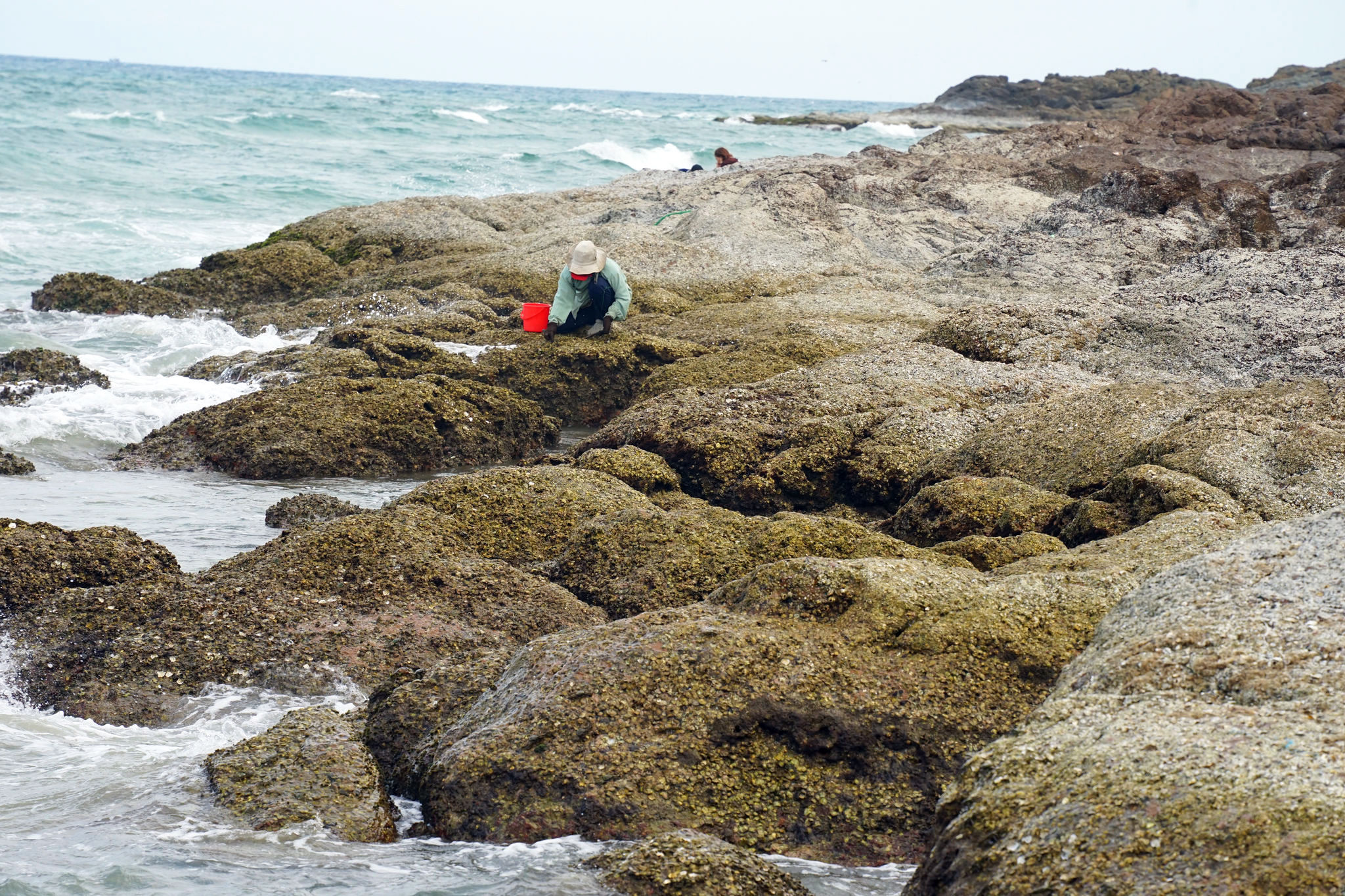
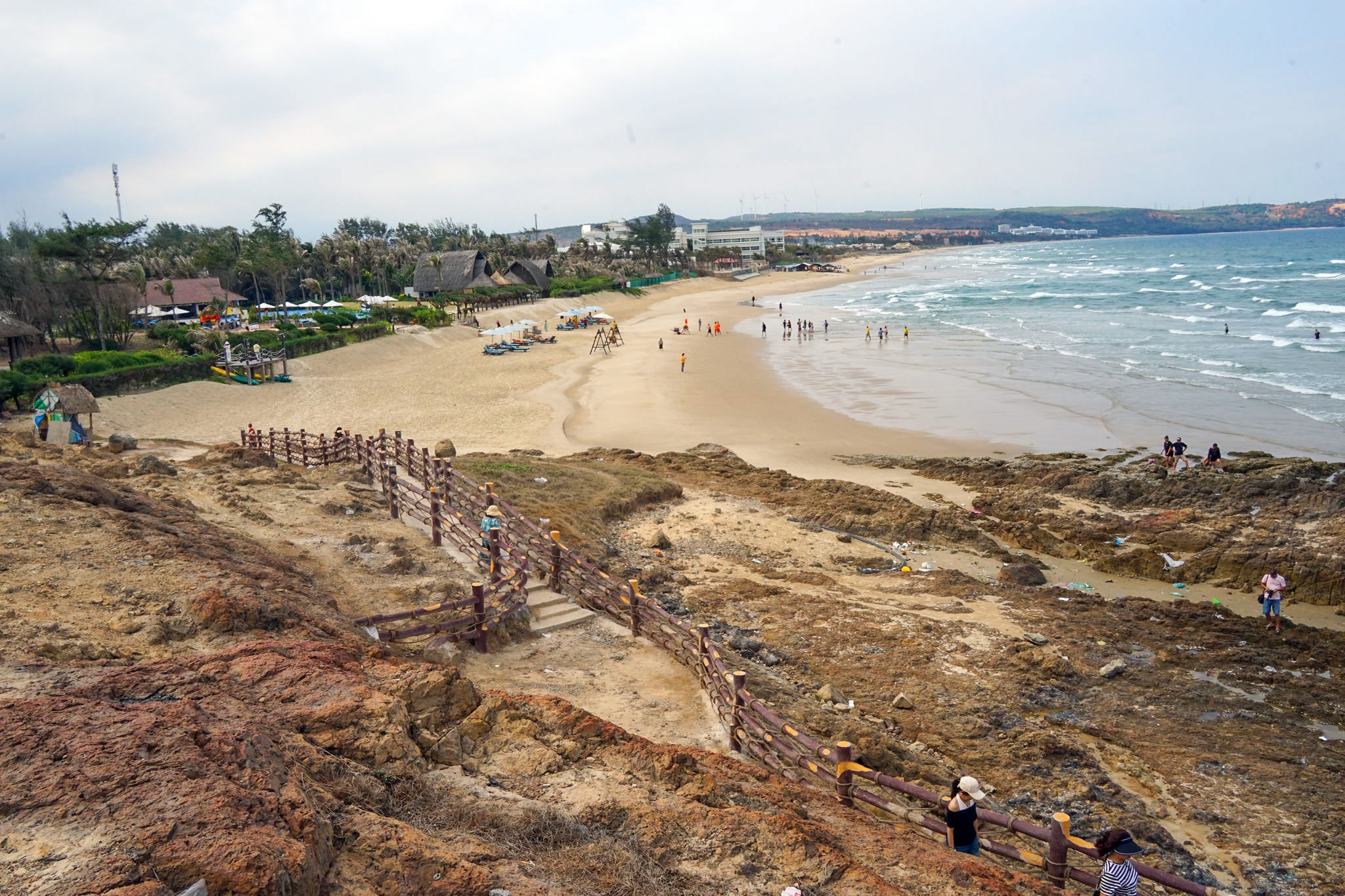
Besides offering beautiful scenery to admire, the area around Eo Gió Bridge and the rocky cliffs surrounding Miễu Ba Vàng (Mũi Né ward) is also a source of livelihood for many fishermen.
In the afternoons, when the tide recedes, dozens of people diligently pry open oysters along the rocky outcrops as the rocks gradually become exposed by the water. Each kilogram of oysters harvested is then sold to restaurants and eateries at tourist destinations.
The tools used to open oysters are small iron awls or chisels. People use iron awls or hammers to break the hard shells that cling tightly to the rocks to get the oyster meat inside, then put it in a small bucket of seawater to keep it fresh.
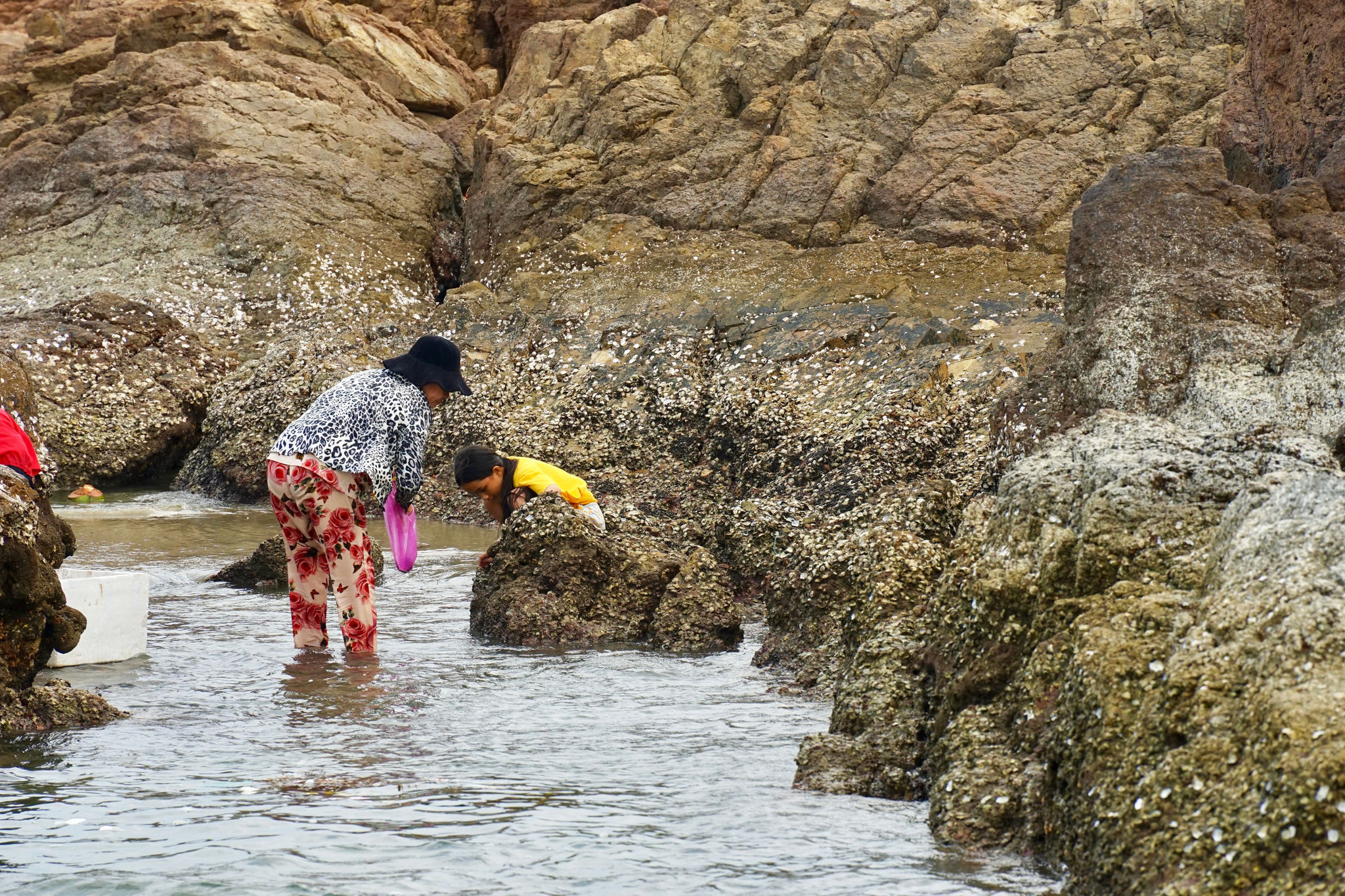
The job of prying open milk oysters is usually reserved for people living in coastal areas, requiring considerable experience to select live oysters with tightly closed shells. Gently prying open the top shell reveals the milky white oyster meat.
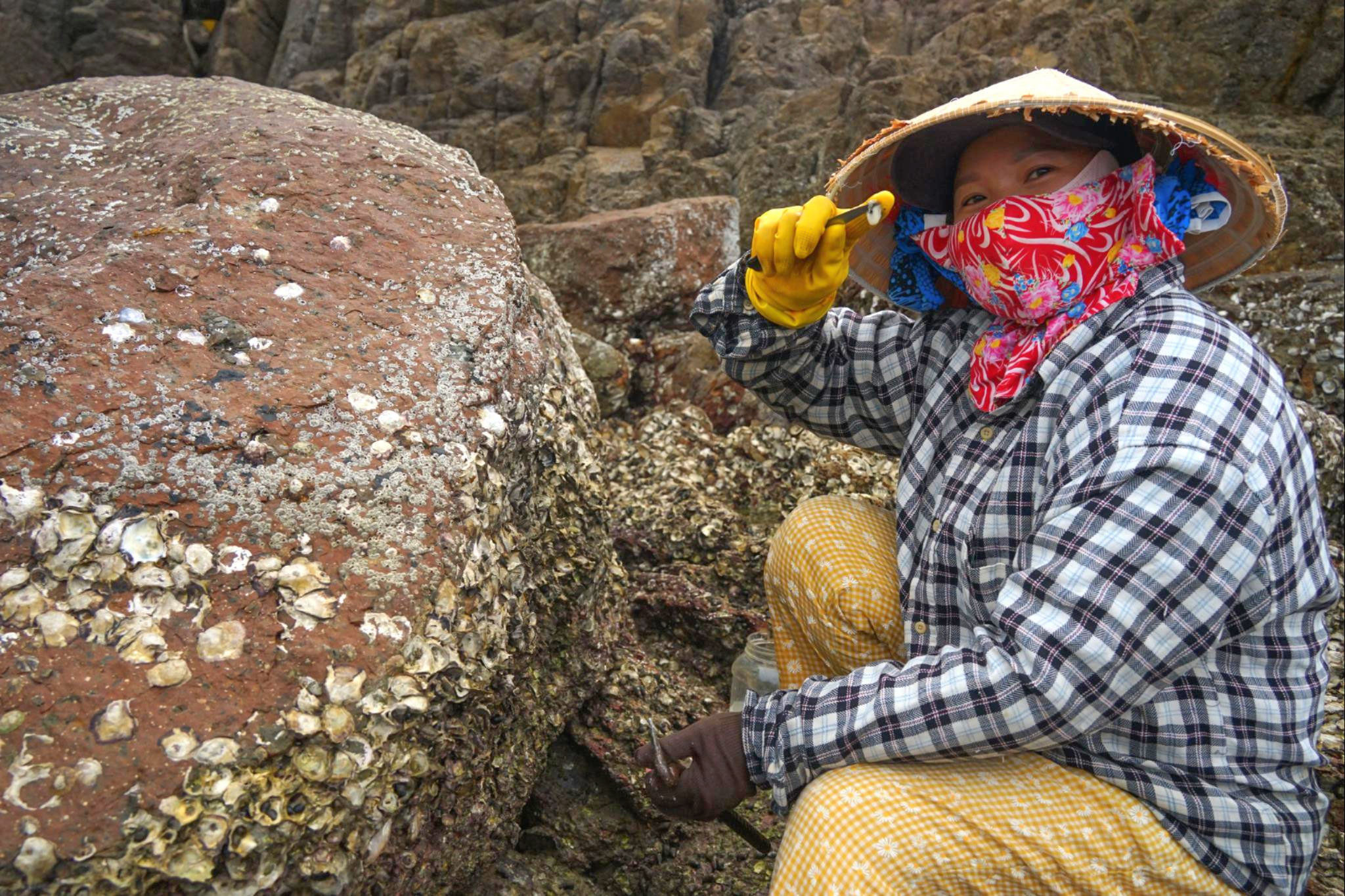
Ms. Bui Thi Be Hao from Ward 15, Mui Ne commune, said: "This job is generally based on experience. You have to know how to gently but firmly crack the shells to separate the oysters from the rocks without breaking the meat. Good oysters will have opaque white meat that is very plump."
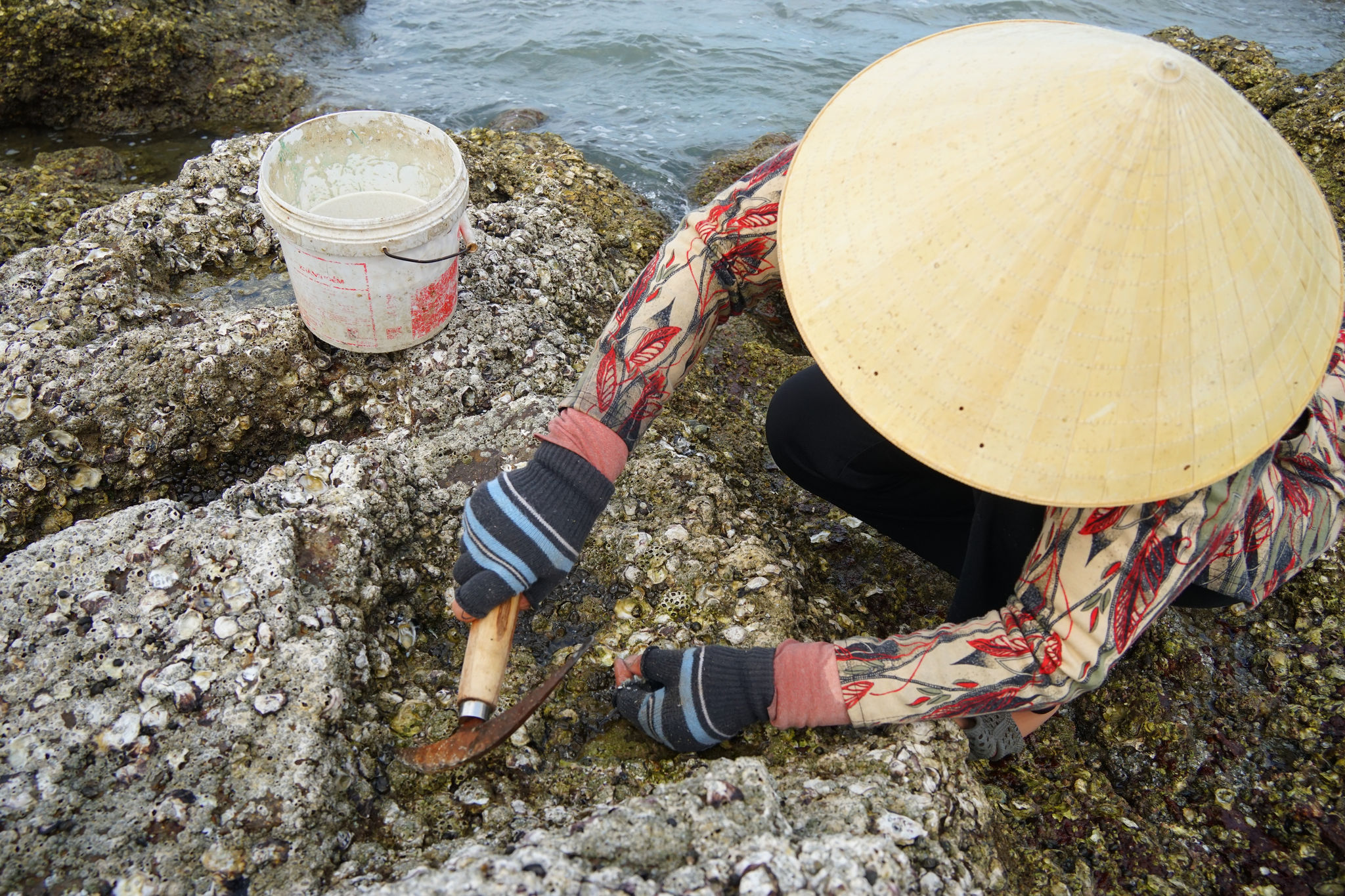
The price of oysters at this time is around 200,000 VND/kg. Natural oysters have high nutritional value and are often prepared into health-boosting dishes such as oyster porridge, oysters with egg sauce, etc., which are popular with diners.
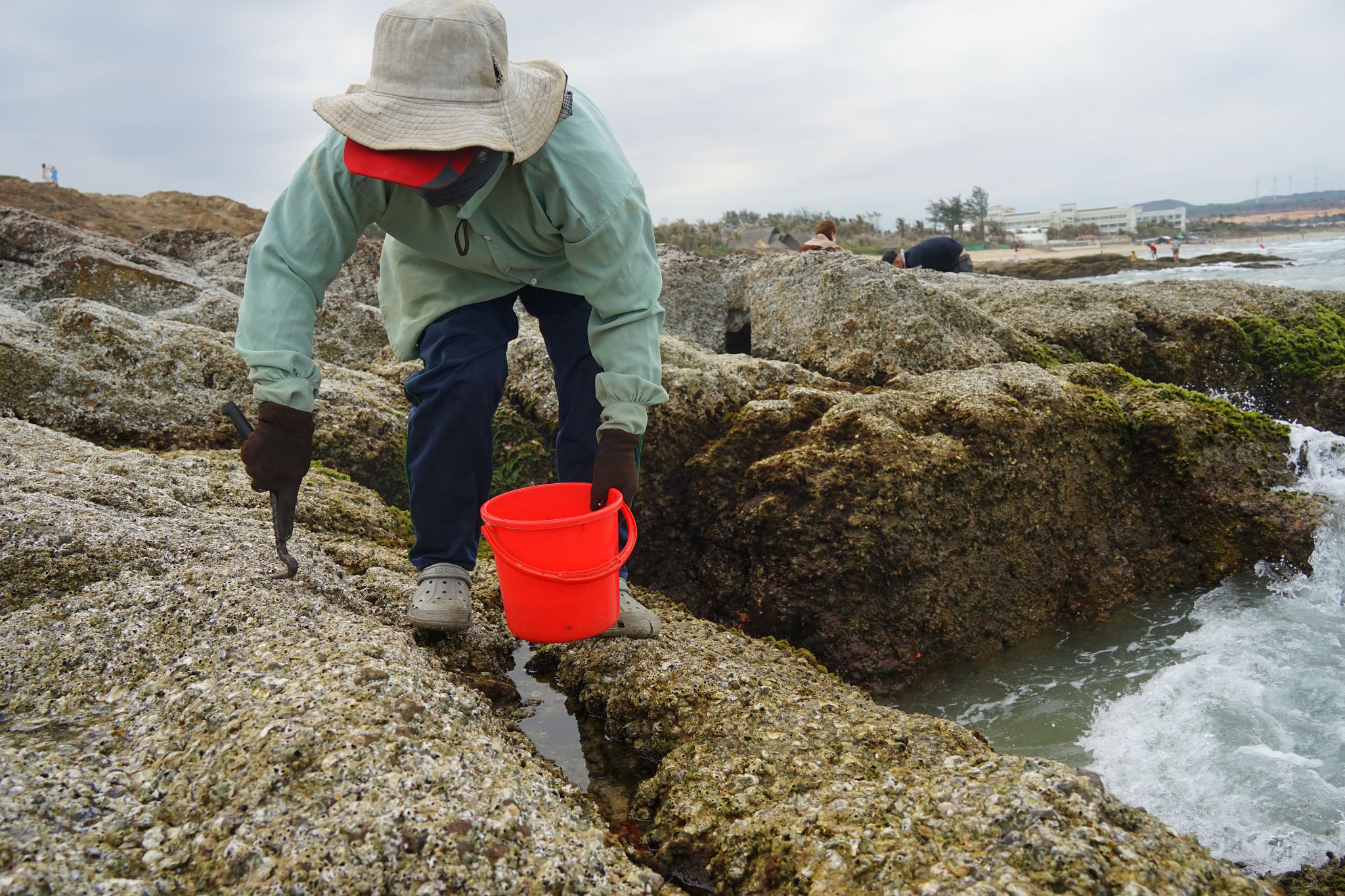
According to many locals, this profession is not heavily dependent on the weather; as long as the water recedes, they can work from early morning to late afternoon, or even at night.
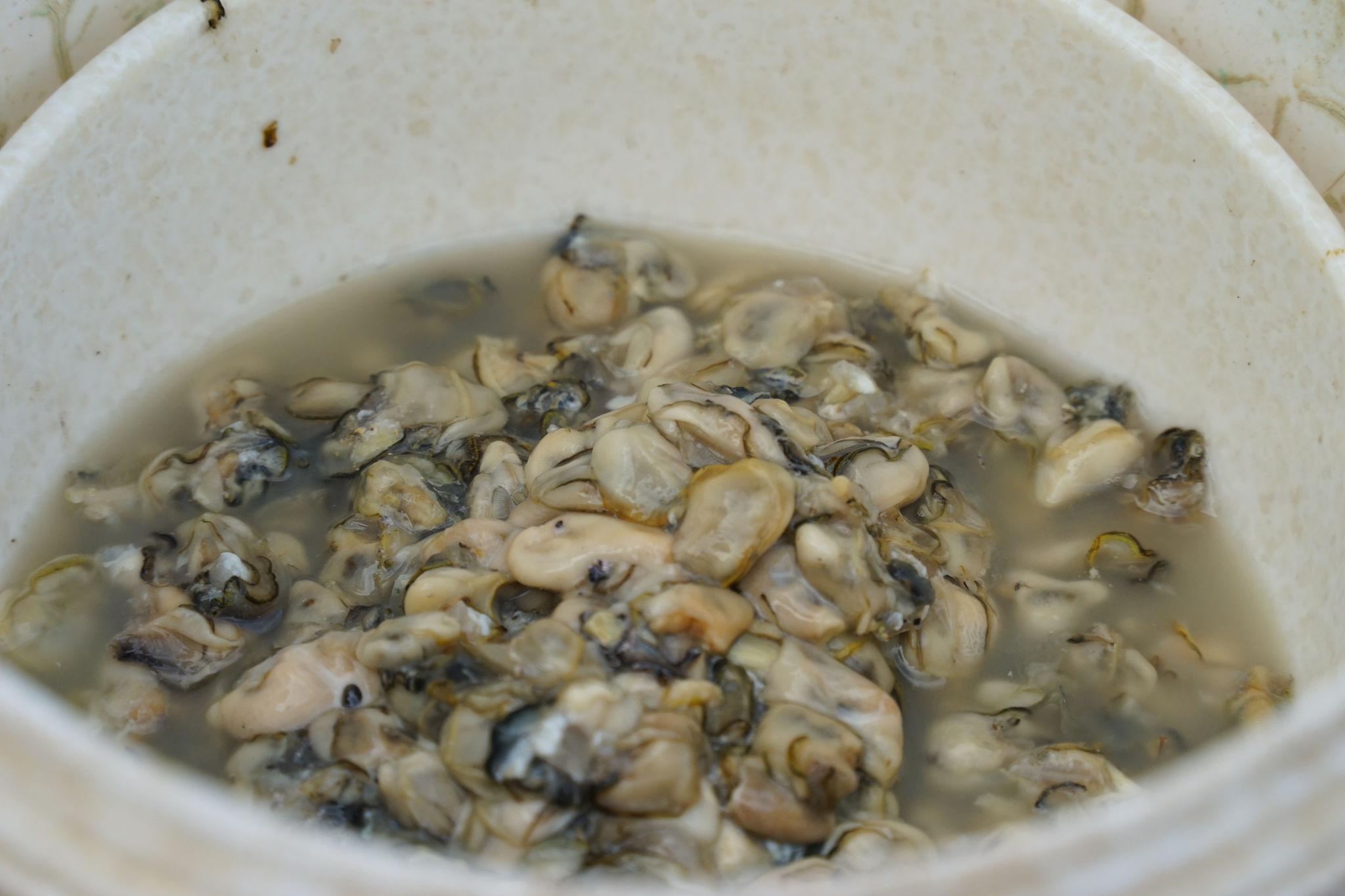
"Sometimes we have to wear headlamps when going out at night. On good days, we can get 2-3 kg," shared Ms. Nguyen Thi Hai, from Ward 12, Mui Ne neighborhood.
.jpeg)
Despite the arduous work of harvesting oysters, which involves climbing over rocky outcrops and crevices, this very daily routine becomes an attractive highlight for tourists. Many enjoy following the locals to learn how to pry oysters, chat with them, and gain a better understanding of life in this coastal region. "This is a beautiful beach, and we even got to see firsthand the local people working on the rocky outcrops doing their very interesting job. They are diligent and cheerful!" said Mr. Doan Ngoc Sang, a tourist from Ho Chi Minh City.
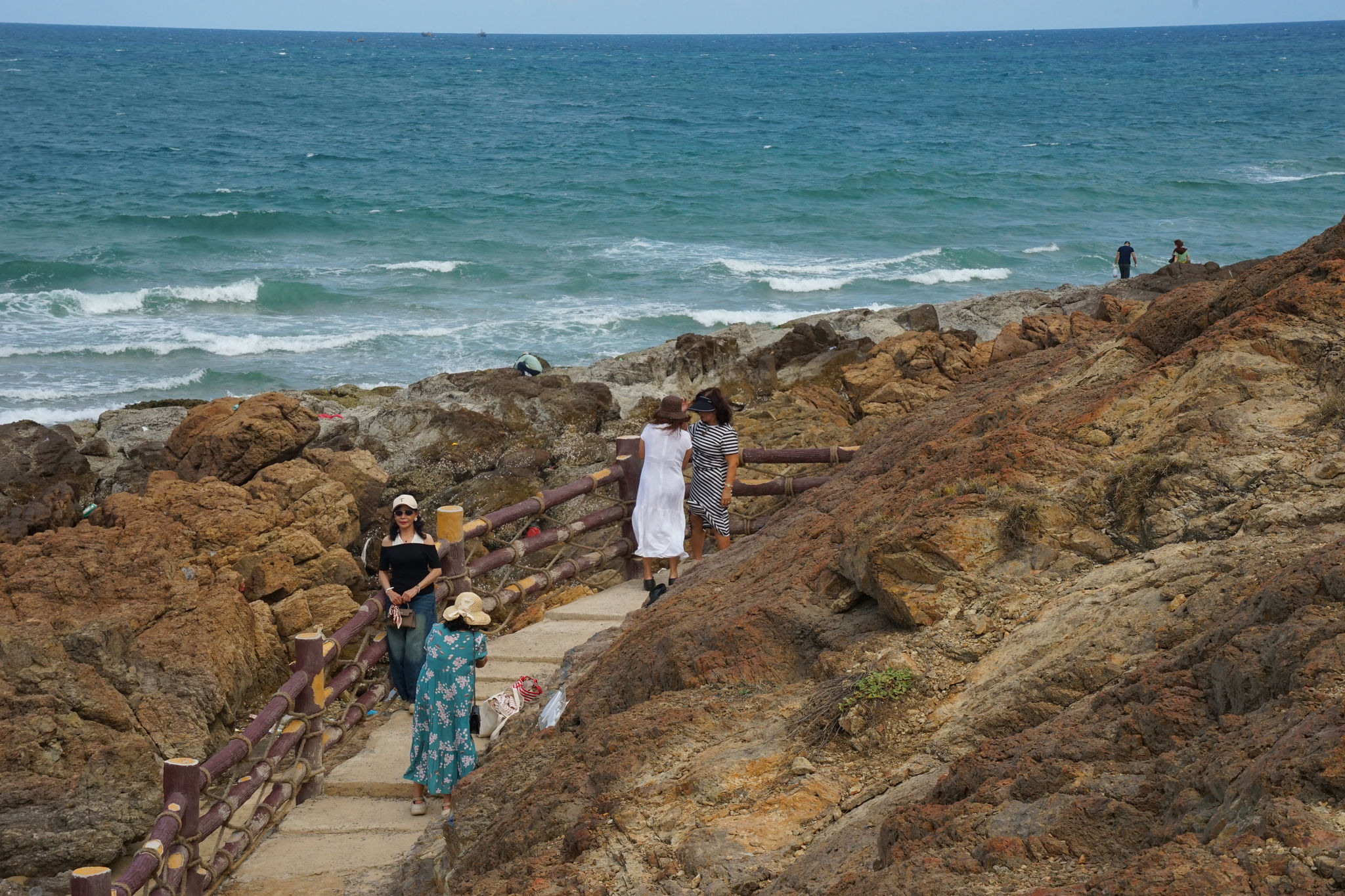
Amidst the ebb and flow of the tides, the profession of harvesting milk oysters quietly persists as a part of the livelihood of coastal residents, while also creating a unique experience for the Mui Ne coastal area.
Source: https://baolamdong.vn/ngu-dan-mui-ne-san-hau-sua-theo-con-nuoc-437610.html

![[Image] Close-up view of the interchange connecting the two expressways and Long Thanh Airport.](https://vphoto.vietnam.vn/thumb/1200x675/vietnam/resource/IMAGE/2026/05/25/1779703378210_ndo_br_z7863716673926-224453a31600126cce10622af6290afd-4549-jpg.webp)


![[Image] Hanoi's urban life under the challenge of a "scorching hot" environment](https://vphoto.vietnam.vn/thumb/1200x675/vietnam/resource/IMAGE/2026/05/25/1779706979265_nang-nong-t5-2026-minh-duy-7-4636-jpg.webp)




















































































Comment (0)