

Whenever I visit a new place, I usually choose temples or shrines as my first destination. This is because these historical sites are not simply ancient, solemn structures with cultural, religious, and spiritual value, but also closely linked to the history of our ancestors' pioneering efforts.
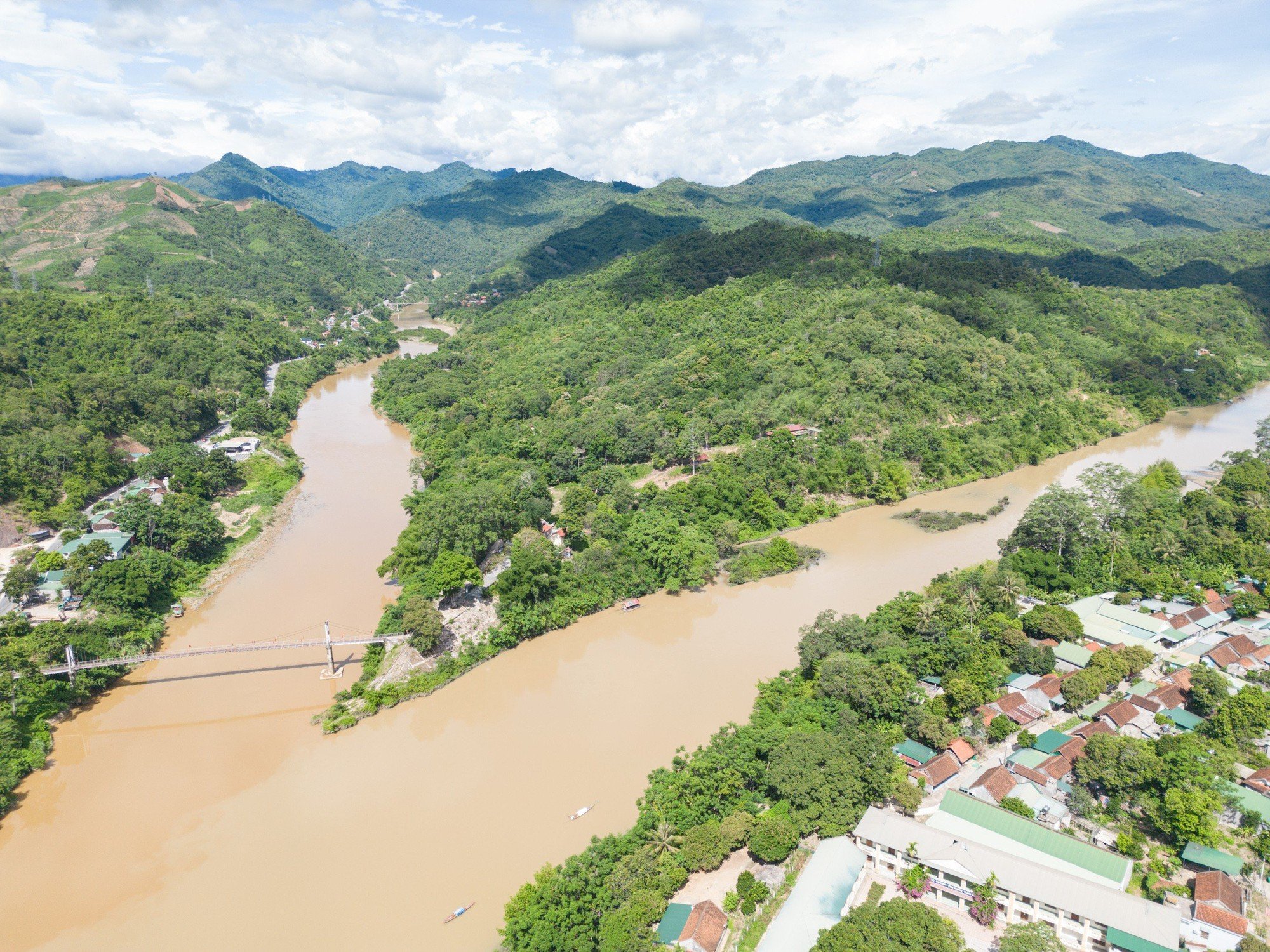
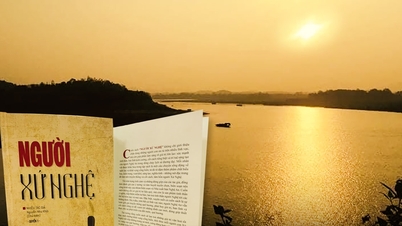
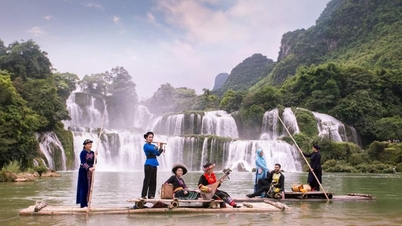
The Cửa Rào river junction – where the Nậm Nơn and Nậm Mộ rivers converge, is also the source of the Lam River.
Ancient temple by the legendary Lam River
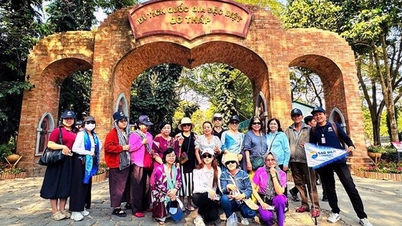
The Van Temple - Cua Rao, located on the outskirts of Thach Giam town, Tuong Duong district, bears the distinctive cultural identity of the ethnic groups in the highlands of Nghe An province. It has a vibrant and enduring history spanning 700 years and sits a boat-shaped islet at the confluence of three rivers: the Nam Non on the left and the Nam Mo on the right, both originating in Laos. After overcoming numerous treacherous rapids, they reach the area in front of the Van Temple – a place the locals have given a very impressive name: Cua Rao. From here, the two rivers merge to form the Lam River, also known as the Ca River (large river).
Here, the Lam River continues its journey downstream through Nghe An province for over 360 km, receiving water from the Hieu River (Que Phong district), the Giang River (Con Cuong district), and the La River (Duc Tho district - Ha Tinh province) before slowly and gently merging into the sea at Hoi estuary.
Along that same journey, for generations, the river has become a source of culture, sustaining countless generations of inhabitants: the O Du, Thai, Mong, and Kinh people. Together with the Hong Linh mountain range, the Lam River is a symbol of the ancient Hoan Chau region, which is now the two provinces of Nghe An and Ha Tinh.
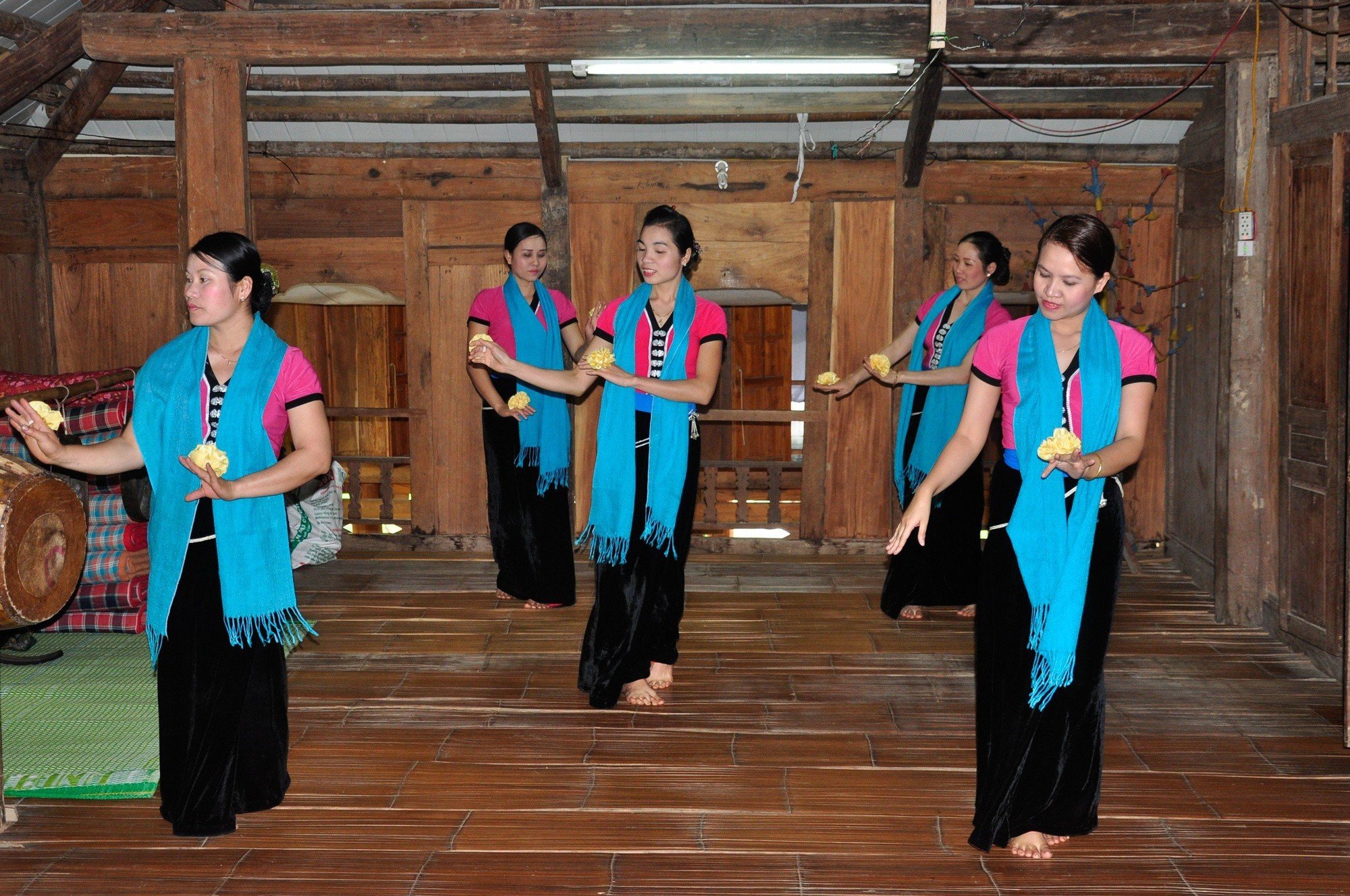
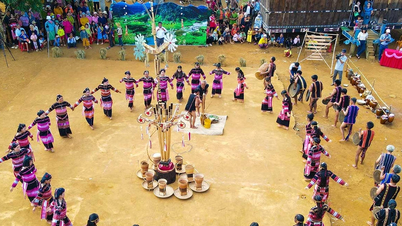
Cultural exchange of Thai Xoe dance in the highlands of Nghe An province.
Leaving Highway 7A, I stepped onto the suspension bridge spanning the Nam Mo River, leading to the complex of temples and shrines, facing the Lam River to the east.
The cool breeze from the river blew over them. It was truly refreshing, dispelling the fatigue after the endless mountain passes and slopes leading up to this wonder of nature. According to Mr. Nguyen Trong Thang, the caretaker of Van Temple - Cua Rao: The predecessor of Van Temple was a small shrine built in 1335 by the fishermen at the headwaters of the Lam River to commemorate General Doan Nhu Hai - a renowned official who served under three Tran dynasty kings. He, along with his loyal generals and soldiers, obeyed the orders of Emperor Tran Minh Tong to suppress the Ai Lao rebels harassing the southwestern border region, but was unfortunately ambushed and killed in the Cua Rao area that same year.
Later, the temple was expanded and gradually built into a magnificent and beautiful structure, nestled among ancient trees thousands of years old. It was named Van Temple because it was located at the confluence of three rivers, and also because it was established by people living on the waterways.
Tuong Duong district is home to six ethnic groups: Thai, Kinh, Kho Mu, Mong, O Du, and Tay Poong, with a total population of 75,993 people. Of these, the Thai people make up the majority with 54,815, followed by the Mong with 3,083, the Kho Mu with 8,979, and the Kinh people, accounting for approximately 10%, placing them in the "ethnic minority" group.
Despite the transformation of traditional cultural values brought about by social development, the Thai people in Tuong Duong still preserve their cultural identity in terms of customs, cuisine , and clothing. Every day, the rhythmic clicking sound of the looms on the stilt houses still resonates.
From agricultural tools to tourism products.
Even more impressive is that along the inter-communal road from Cua Rao intersection, over Ban Ve slope, through Yen Hoa commune, visitors can easily spot waterwheels, also known as water wheels or water wheels, along the streams, rivers, or lush green fields – a tool in agricultural production in the mountainous region, assembled entirely by hand by the locals using readily available bamboo, rattan, and other materials.
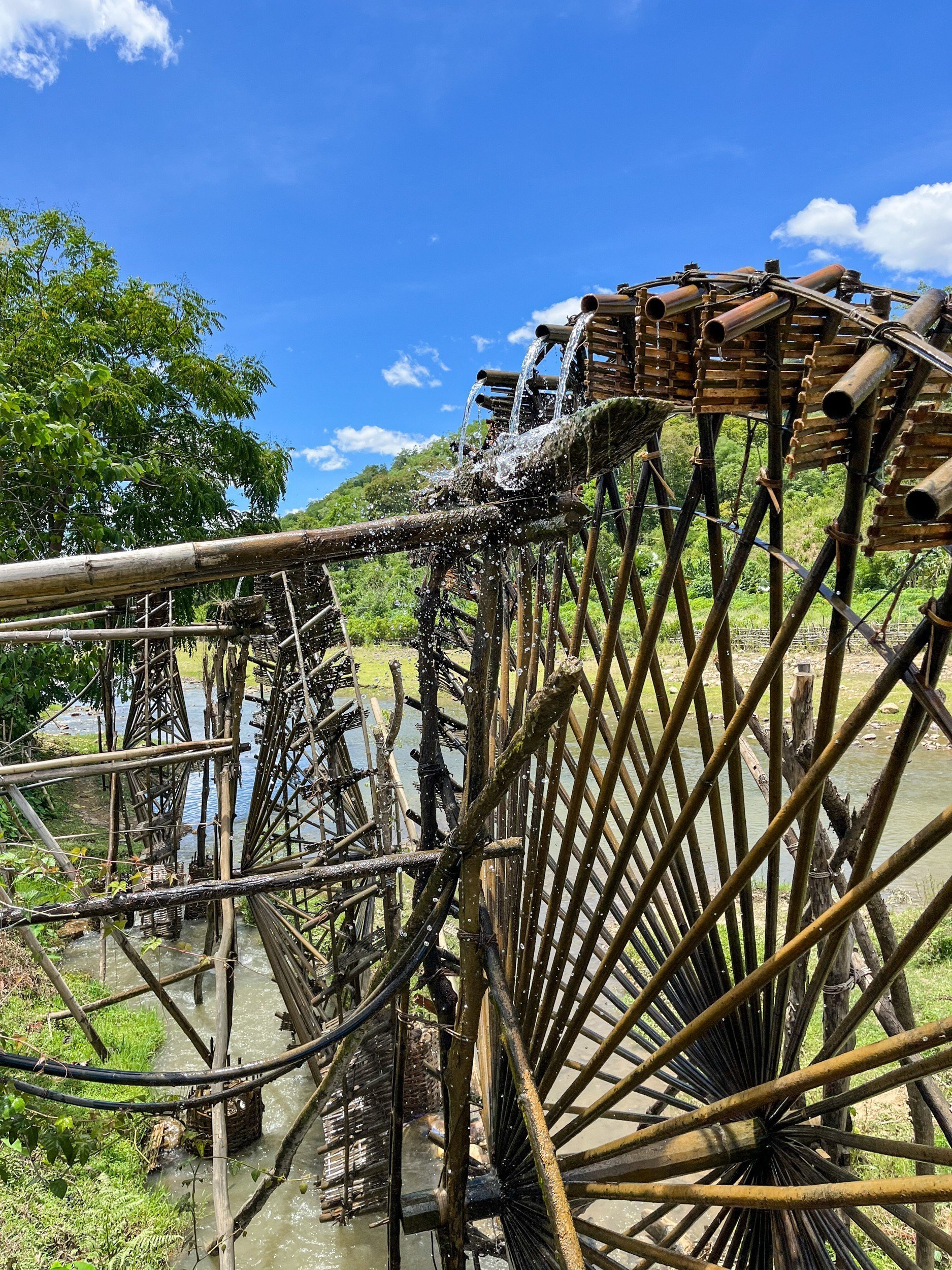
Waterwheels have become a popular check-in spot for tourists from far away.
The waterwheel operates using the flow of the Chà Hạ stream, creating a thrust that causes the wheels to slowly and steadily rotate, lifting water pipes made from bamboo stalks to a certain height. From there, the bamboo pipes tilt down into bamboo troughs leading to terraced fields or irrigating crops.
Living in the highlands with their rugged terrain, constructing irrigation canals to provide water for cultivation, as is the case in the lowlands, is impossible. Furthermore, the villagers are poor, and owning water pumps to irrigate their fields is a luxury. It's better to return to the traditional waterwheels used by their ancestors, which are low-cost, highly effective, and well-suited to the hilly landscape.
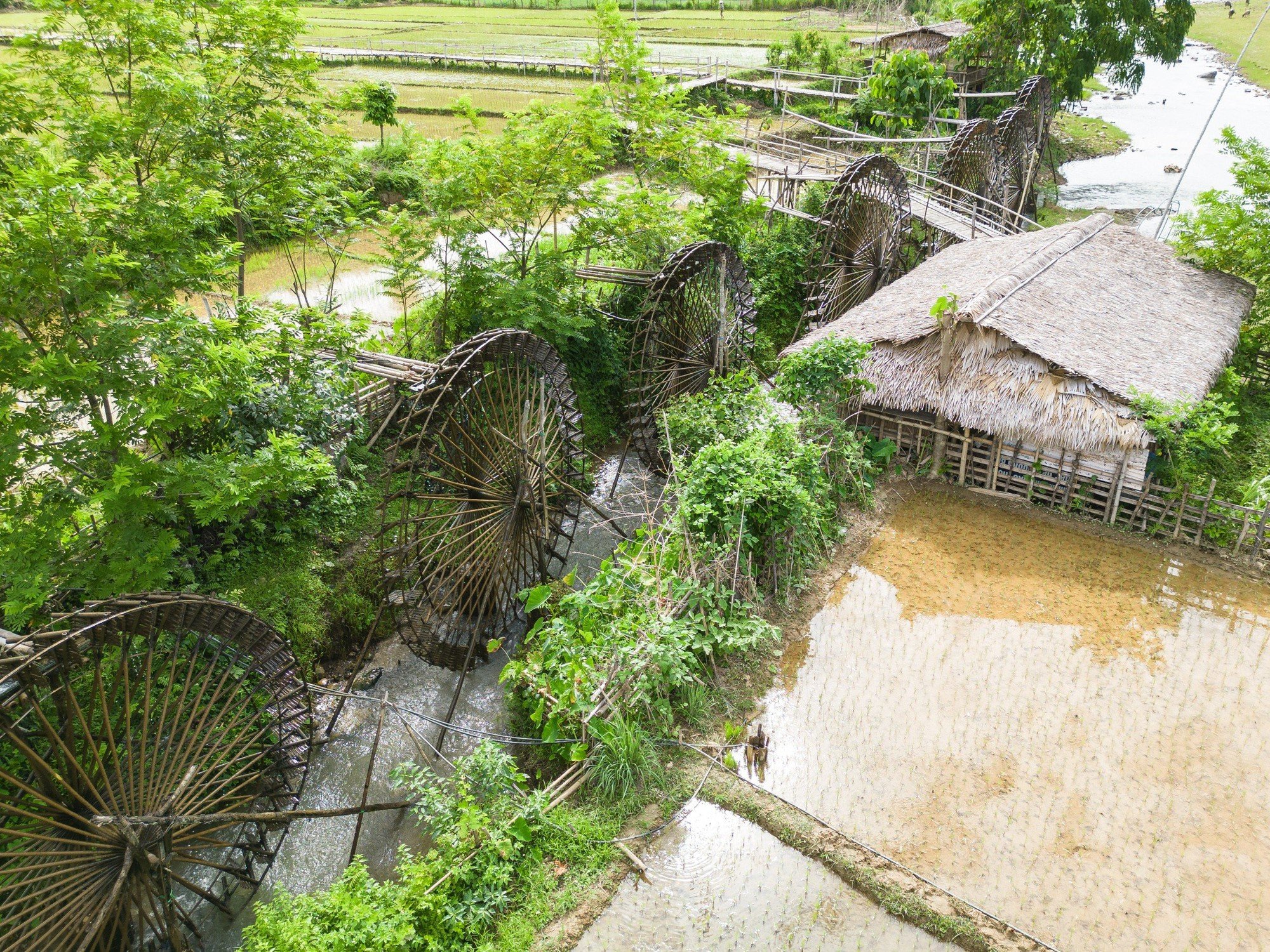
The waterwheels by the Chà Hạ stream turn tirelessly day and night.
Since the waterwheels began turning tirelessly day and night, along with the image of locals casting nets to catch fish for a living along the river and streams, adding a touch of beauty to the landscape, the area has attracted an increasing number of tourists from near and far to visit and take photos. Therefore, the cultural department of Yen Hoa commune has mobilized the people to build water channels, install bamboo bridges and viewing platforms next to the rows of waterwheels operating on the clear stream... in order to develop community tourism for the locality.
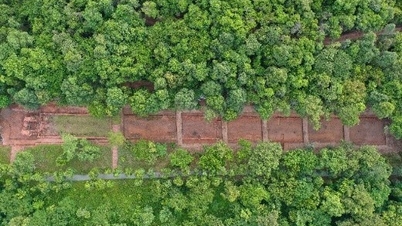
Furthermore, to increase the appeal and retain visitors, the locals have opened an eco-tourism destination in the Săng Lẻ forest, with countless slender trees reaching tens of meters in height interspersed with ancient trees. This allows visitors to relax, enjoy traditional food, and experience the Thái dance. It's a win-win situation: preserving the cultural heritage of the Thái people living in this border region, developing tourism products linked to agriculture, and providing additional income for the local people.
Source link





























































Comment (0)