


"A Thousand Miles of Homeland" is a planned four-volume historical novel by author Nguyen The Ky, depicting the figures of Nguyen Sinh Cung - Nguyen Tat Thanh - Nguyen Ai Quoc - Ho Chi Minh, along with the heroic and tragic chapters of the nation's history from the late 19th century and the first half of the 20th century.
Volume 1, titled "Debt to the Nation," depicts Nguyen Sinh Cung, Nguyen Tat Thanh, and their loved ones as they journey from a humble thatched house in Nghe An province to the imperial capital of Hue , followed by Binh Dinh, Phan Thiet, and Saigon.
Volume 2, titled "Drifting Across the Four Seas," portrays the image of Nguyen Tat Thanh, under the new name Nguyen Van Ba, leaving the Saigon trading port on June 5, 1911, to cross the vast ocean in search of a way to save the country. He traveled for 30 years from East to West, across the four seas and five continents, before returning to his homeland on January 28, 1941.
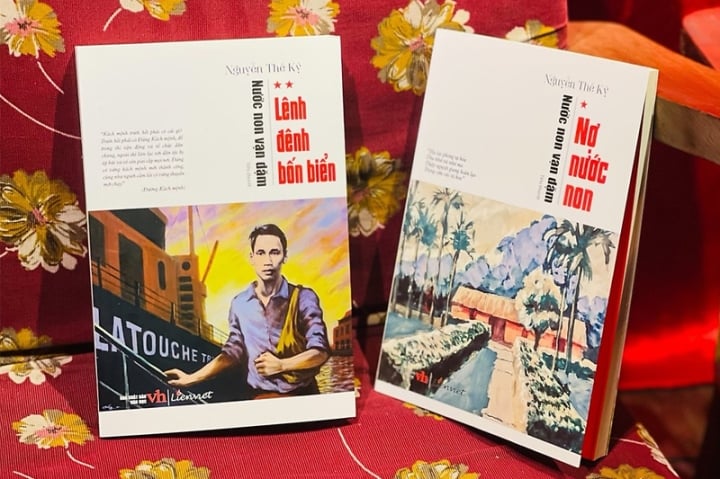
The two books "Debt to the Homeland" and "Drifting on the Four Seas" are part of the novel series "A Thousand Miles of Homeland".
Leaving home, "Drifting across the four seas"
" What can you do?"
I can do anything.
Thành replied confidently.
He seemed convinced, or perhaps there really was a need for an assistant on the ship, so he agreed immediately.
...
"Hey young man, I didn't think he'd agree to hire you right away. Maybe it's because you speak French. Many Vietnamese people learn French, but nobody who speaks French applies for a kitchen assistant job. So, Tat Thanh officially became a kitchen assistant on the Amiral Latouche Tréville, heading out to sea, his destination being France, cutting through the waves. His new name was Nguyen Van Ba ."
Volume 2 began like that. The entire volume consists of engaging dialogues that allow the reader to better understand the great qualities of Nguyen Tat Thanh – Nguyen Van Ba – Nguyen Ai Quoc, hidden within the ordinary and endearing aspects of his life. He deliberately sought out the homeland of the invaders and enslavers of his country to better understand the nation's enemies and to find a path to save the country and its people.
"Drifting Across the Four Seas" - Volume 2 is divided into relatively short chapters, each associated with a few places and some figures that Ho Chi Minh visited, met, lived with, and worked with (in France, England, the Soviet Union, China, Thailand, returning to Cao Bang, etc.) or each chapter is linked to a pivotal political event in Ho Chi Minh's life (the Versailles Conference in June 1919, reading Lenin's theses in July 1920, attending the Tours Congress in December 1920...). By creating the atmosphere of historical events and social life in the places where he lived and worked, the author transforms dry historical information into vivid stories connected to the life of a man who, even during his lifetime, became a legend - Ho Chi Minh.
The life of a person, with its simple, arduous activities that anyone must do to survive, a person with social interactions, activities, relationships, and work to make a living, and deeply embedded within it is an aspiration, a will, and a determination to find a way out for the nation, to achieve independence and freedom, is depicted in the most vivid way possible through "Drifting the Four Seas".
Drawing on his rich experiences and knowledge of the natural landscapes, geography, history, culture, customs, lifestyles, and ways of thinking of the people in the countries and geographical regions where Van Ba - Nguyen Ai Quoc visited, lived, and worked, along with his profound understanding of important political and cultural events associated with his life, the author transformed historical events and stories into vivid, captivating, literaryly brilliant, and humanistic images and characters that deeply moved the hearts of countless readers.
Nguyen Ai Quoc is portrayed as a flesh-and-blood human being with romantic feelings, very human and simple emotions about the aspirations of youth. But then, the young man Van Ba - Nguyen Ai Quoc - suppressed all those aspirations, prioritizing above all else the search for a path to save the country and its people.
“ Annette is a wonderful girl, perhaps even special. I sense that. But, forgive me, Phillipe and my loved ones. I… I… can only see Annette as a dear younger sister, like blood… But, Phillipe, it seems my life no longer belongs to me… I have decided to dedicate my entire life, my very being, to my beloved and suffering country. Do you understand? Does Annette understand and forgive me? ”
During those first few months of his seemingly aimless journey, unsure of his destination or where he would end up, the young man already saw a place he had to return to: " I may not stay here long, I may go somewhere else soon. I don't know. The East is the place to return to ."
Meetings and conversations with senior figures like Phan Chu Trinh, Phan Van Truong, and progressive French friends, members of the French Socialist Party and the French Communist Party, gradually helped Nguyen Tat Thanh see more clearly what he needed to do: “ Therefore, Thanh, our first task is to protect the rights of the Annamese people right here in France, and in some way, gradually regain self-determination for our country and our people .”
With exceptional creativity, the second volume of the novel provides readers with a vivid, detailed, engaging, and authentic portrayal of Ho Chi Minh's 30-year journey through numerous countries, his experiences, his encounters with countless people, from the ordinary to the great, his vibrant political activities, and the influence and impact of Nguyen Ai Quoc's activities within the Vietnamese community in France as well as the local community. Major turning points in his understanding stemmed from significant milestones linked to major events in world history.
Volume 2 chronicles the journey of Ho Chi Minh from his departure from Vietnam to France, his travels around Africa and the Americas, and his return to France with intense political activities. He submitted a petition to the Versailles Conference, read Lenin's Draft Theses on the National and Colonial Questions; attended the Tours Congress; went to the Soviet Union for important political activities; returned to Guangzhou, China; traveled to Thailand; was arrested in Hong Kong; went to Shanghai; returned to the Soviet Union; and in the spring of 1941, he returned to his homeland, Vietnam. Through literary creation, the author closely follows the original historical events at each step of his journey, creating a literary masterpiece that complements them.
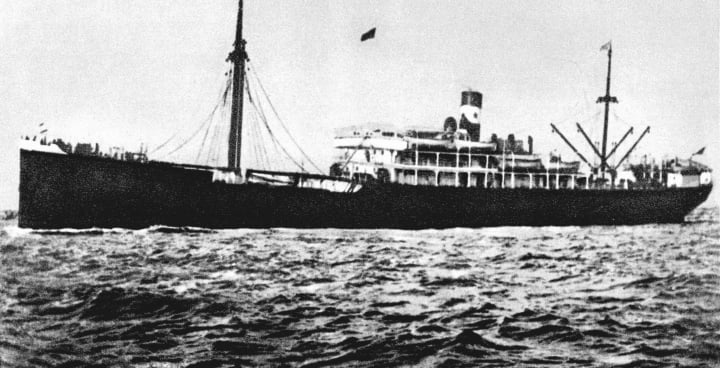
The patriotic young man Nguyen Tat Thanh set out on the ship Latouche Treville to find a way to save his country.
The author helps readers visualize a series of stories about the life of Nguyen Ai Quoc, which is both simple and humble, yet great and noble. Through literary creations, Nguyen Ai Quoc naturally and movingly enters the hearts of Vietnamese people and friends around the world because, before being a great man, he was a simple, humble person like millions of other ordinary Vietnamese people.
Interesting literary creations soften the dryness of historical events, making history come alive, yet without losing the authenticity of the key historical figures and events. Here is a passage describing the event of Nguyen Ai Quoc reading Lenin's theses and finding the path to national salvation:
“ My suffering and oppressed compatriots! This is what we need, this is the path to our liberation.” He spoke tremblingly to himself in his small, cramped room filled with books. Outside the small window, the canopy of trees shimmered in the afternoon sun. A French summer had never been so beautiful and lovely .
All the essential elements of the subjective factors that shaped Ho Chi Minh's later thought will be received by readers in a poetic and captivating way in Volume 2 of the novel. The ideals, great ambitions, willpower, determination, self-learning ability, and self-reliance of Van Ba, Nguyen Ai Quoc; his independent, self-reliant, creative, critical, innovative, and revolutionary thinking; his strategic vision… All these personal qualities of the man are vividly portrayed in Volume 2 of the novel.
Furthermore, Nguyen Ai Quoc's rich life experiences and profound understanding of imperialism, colonialism, and colonial regimes—not only theoretically but also through practical activities in imperialist countries; his insight into national liberation movements across many continents… All of this knowledge and experience is skillfully portrayed by author Nguyen The Ky through his writings to create the literary image of Van Ba - Nguyen Ai Quoc - Ho Chi Minh, which is very authentic, vivid, and captivating.
Reading volume 2 of the novel reveals the arduous and challenging journey, filled with hardships but also imbued with joy, happiness, and the sweet flavors of human relationships and life experiences during Nguyen Ai Quoc's 30 years of "wandering the four seas." From this, we appreciate even more the contributions of Nguyen Ai Quoc - Ho Chi Minh to the country and the Vietnamese people, understanding that Ho Chi Minh's ideology, which began to take shape there, was the product of sweat, tears, and imprisonment; it is the product of his keen intellect, distilled through self-learning, self-awareness, revolutionary self-movement, and relentless efforts to overcome adversity.
From a very early age, he associated with progressive and compassionate French friends, relying on their help to resist French colonial aggression in his own country and in many others. The characters of Philippe and Annette are a truly unique literary creation in this book.
The author portrays a French soldier, serving in Indochina, who, upon completing his term, returns home on the same Admiral's ship as Van Ba - Nguyen Ai Quoc. As a soldier of the mother country in Annam, Philippe understood imperialism and the colonial regime better than anyone else. From this understanding, Philippe became a friend of Van Ba - Nguyen Ai Quoc, sharing and assisting him during his time living and working in France.
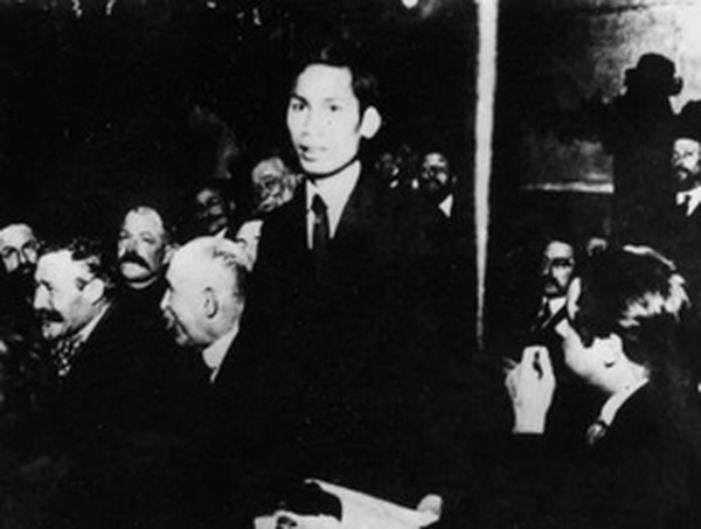
Nguyen Ai Quoc at the 18th Congress of the French Socialist Party in Tours, December 1920.
The image of Phillipe is subtly present in many chapters of the book. Phillipe is not only present during Nguyen Ai Quoc's time in France but also in many places along his journey. Not only Phillipe, but also his wife, his sister Annette, and other loved ones became pillars of support in many ways, enabling Nguyen Ai Quoc to remain steadfast on his journey to find a path to save the people and the nation.
The author's literary creativity in having Nguyen Ai Quoc wear a Philippine wedding suit to the Tours Congress is truly fascinating. This creative element adds meaning and appeal to the stories described. It was this wonderful relationship between the people of the colonies and the people of the colonizing nations that contributed to the defeat of colonialism, bringing independence and freedom to the colonies.
French colonialism was the enemy of the Vietnamese people, but the French people were friends of the Vietnamese people. This new understanding of Nguyen Ai Quoc was vividly reinforced through his relationships with his French friends during his arduous 30-year journey. The touching story of Nguyen Ai Quoc's relationship with a police officer in Paris, who secretly informed Nguyen Ai Quoc that he was being followed by the police and helped ensure his safety, is one of many moving stories described in Volume 2 of the novel.
“ At noon on the second day of Tet in 1941, the entire group arrived at the border marker between Vietnam and China... The revolutionary path ahead was still very long and full of obstacles and rapids, but he was determined to reach the goal with his comrades and compatriots. Nguyen Ai Quoc told himself this as he placed his hand on the stone border marker on that cold spring day. The weather was cold, but in his heart, it was as if a fire had just been lit. ”
Let's try to explore a chapter from Volume 2 - Chapter 4.
Chapter 4, which deals with the Versailles Conference and the Annamite People's Petition, is a highlight of Volume 2. In the 29 pages of Chapter 4, Nguyen The Ky successfully recreates the atmosphere of the Versailles Conference and the immense influence of the Petition.
The historical content selected for inclusion in the novel helps readers understand the historical context and attitudes of the countries participating in the Versailles Conference; the Versailles Peace Treaty system; the content of the Petition signed by Nguyen Ai Quoc; the reasons why the Conference ignored this Petition; and the reasons why Nguyen Ai Quoc sent the Petition to the US President.
However, the advantage of literary form allows the author to create a vivid historical atmosphere, helping readers visualize the work and processes by which Nguyen Ai Quoc disseminated the petition within the Vietnamese community in France and further into the Indochina colony.
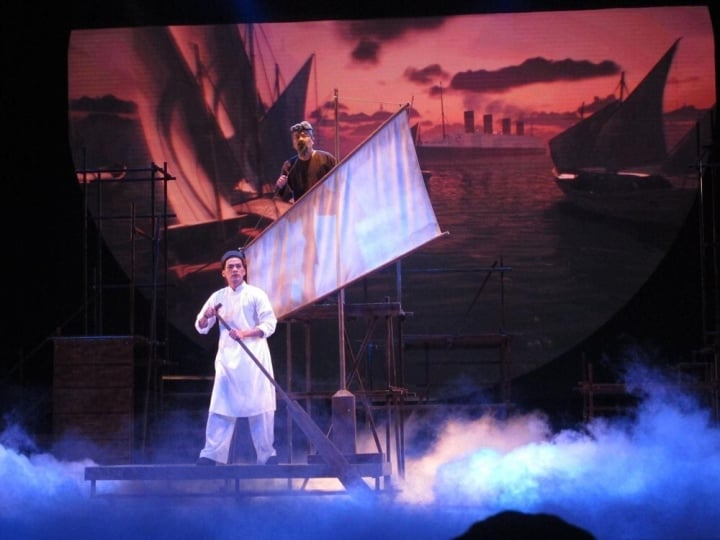
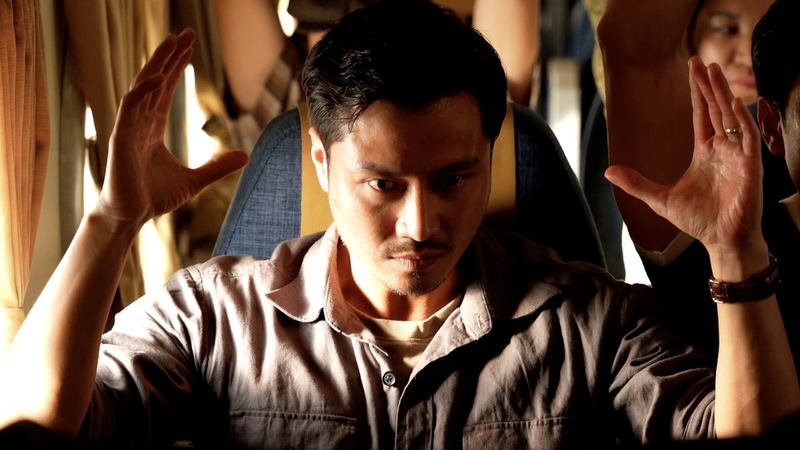
A scene from the stage play "Debt to the Nation".
The immense influence of the petition within the Vietnamese diaspora in France and on international public opinion was manifested in the form of interesting conversations or expressive and meaningful literary details. Philippe's sister, a close friend of Nguyen Tat Thanh, simply greeted him with, "Hello, Nguyen Ai Quoc," a name Nguyen Tat Thanh had chosen for himself, a name he was surprised to hear for the first time.
After the petition was published, the Vietnamese expatriates in his neighborhood greeted him with the new name Nguyen Ai Quoc and offered their support and assistance in any way necessary, simply because they too were patriots.
The meeting between Colonial Minister Albert Sarraut and Nguyen Ai Quoc after the petition caused a storm in French public opinion, the meeting with Paris secret police officers (who, surprisingly, turned out to be allies of Nguyen Ai Quoc), and the conversations are products of the author's imagination, based on historical sources and the author's personal experience, allowing the reader to immerse themselves in the atmosphere of Paris in the early 20th century.
The roles of Phan Chu Trinh, Phan Van Truong, and others, their influence on Nguyen Ai Quoc's political activities in France; the paths they chose; the path of the Russian October Revolution; and Nguyen Ai Quoc's still undefined path up to June 1919 are presented in a captivating, interesting, and memorable literary form through dialogues.
There are fascinating historical details that the author has subtly explored in Chapter 4 of Volume 2. Henri Barbusse's book, *Le feu* (The Fire and Smoke), which recounts World War I from his own experience as a combatant, was devoured by Nguyen Ai Quoc, causing him to lose track of time and place during a Parisian summer in 1919.
A book whose author, a citizen of a colonial country with countless colonies, wrote: " The future will be in the hands of the slaves ." This was the book that Nguyen Ai Quoc believed would become an important work in the history of French literature. Nguyen Ai Quoc could not have imagined that, late in the afternoon of the closing day of the Tours Congress, December 30, 1920, the author of "Smoke and Fire" would be standing at the door of the meeting room waiting to shake his hand and talk with him.
At that time, Henri was a journalist. The conversation revealed interesting similarities between the ideals of two men from two very different, even opposing, countries: one a mother country and the other a colony of that mother country.
In just 29 pages, chapter 4 provides readers with genuine knowledge and emotions about historical events that, if approached in the traditional way of listing events as we have always done in history, would remain merely history on paper, unlikely to penetrate the hearts and minds of students and readers.
In other chapters of Volume 2, readers will also experience a sense of surprise and delight as they encounter familiar historical information in a literary form; literary stories make historical events come alive and become captivating.
It can be said that, upon completion, this will be a monumental novel about the entire life and great revolutionary career of President Ho Chi Minh. The novel is not merely a literary work, but more than that, it is a historical novel of great value for understanding the life, career, and ideology of the beloved leader of generations of Vietnamese people – Uncle Ho.
Volume 2 of the novel series helps readers visualize clearly and in detail, without deviating from the official history of Nguyen Ai Quoc - Ho Chi Minh's 30 years of wandering abroad. Disparate historical events are linked together within a historical context, with a plot, characters, and dialogue creating a captivating, engaging, and logical historical narrative about Nguyen Ai Quoc - Ho Chi Minh on his long journey.
The way writer Nguyen The Ky has portrayed historical figures should be encouraged to help "our people know our history," to "understand the origins of our Vietnamese nation." Knowing this will help us appreciate, be proud of, and preserve the achievements our ancestors earned through blood, sweat, tears, and immeasurable sacrifices.
Assoc. Prof. Dr. Tran Thi Thu Hoai
Beneficial
Emotion
Creative
Unique
Source

![[Photo] Walking amidst the coffee blossoms in the Central Highlands](https://vphoto.vietnam.vn/thumb/1200x675/vietnam/resource/IMAGE/2026/02/22/1771736214034_ndo_bl_img-3460-8365-jpg.webp)



























































Comment (0)