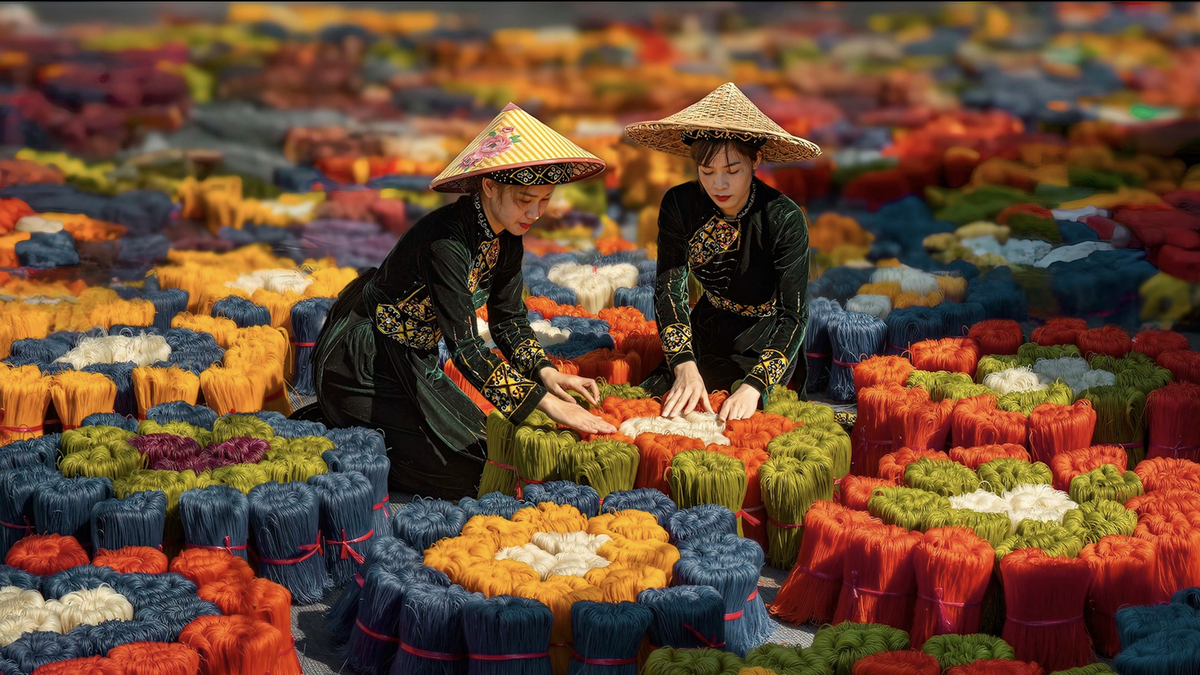
The Hoai Khao hamlet currently has 34 households, all of whom are from the Dao Tien ethnic group. Every year in the 7th lunar month, the Dao Tien people of Hoai Khao hamlet harvest bee colonies to melt them down into pure beeswax. The pure beeswax obtained after melting is used as the raw material for printing patterns on the traditional clothing of Dao Tien women.

Join Vietnam.vn in experiencing the beeswax-making process of the Dao Tien people through the photo series "The Dao Tien People and How to Process Wild Beeswax". To create the unique patterns on their traditional clothing, the Dao Tien people in Hoai Khao hamlet, Quang Thanh commune, Nguyen Binh district, Cao Bang province, have to go through many arduous steps: from going into the forest to harvest giant wild bee nests to processing the beeswax and printing the patterns onto the fabric... This photo series was submitted by the author to the "Happy Vietnam" photo and video contest, organized by the Ministry of Information and Communications .

The fresh climate and pristine forests of Hoai Khao provide ideal conditions for the giant honeybee to nest. The village has two nesting areas for giant honeybees: Chan Venh and Ta Lac, each with about 30 nests. The giant honeybees build their nests precariously on cliffs in the forest at a height of about 20m – 30m above the ground.

Every year, in the warm spring, the bees return to build their hives and make honey, and in the cool autumn, they fly away to find a warmer place to overwinter. While the bees are building their hives and making honey, the villagers always assign people to protect the bee colonies, ensuring no one harms them. When the honey runs out and the bees fly away, the village holds a meeting to choose a day and assign people to organize the harvesting of the beeswax.

At the right time, the Dao Tien ethnic minority women would gather together and go up the mountain to collect beeswax.

Sorting beeswax at the village cultural center.
The beehives are quite large, with diameters ranging from 1m to 1.5m. The beeswax is transported and collected at the village's community center. Here, the beeswax is sorted and sifted, separating the yellower wax from the darker wax. Before processing, the beeswax is sorted, removing any soil or leaves clinging to it. Yellow beeswax comes from hives that have recently flown away, resulting in better quality wax and a higher yield. Darker wax comes from hives that flew away earlier or were affected by rain, resulting in a lower yield.


After sorting, the beeswax is placed in a large pan to be melted. During the melting process, the women must stir continuously to prevent burning and to ensure the wax melts evenly. Once boiling, the wax is transferred to a pressing basket, allowing the beeswax essence and water to seep through.
The undissolved wax remaining in the basket is collected and taken to a separate place for further cooking. Yellow wax is usually boiled and filtered about three times to extract all its essence; black wax is boiled and filtered about twice to extract all its essence.
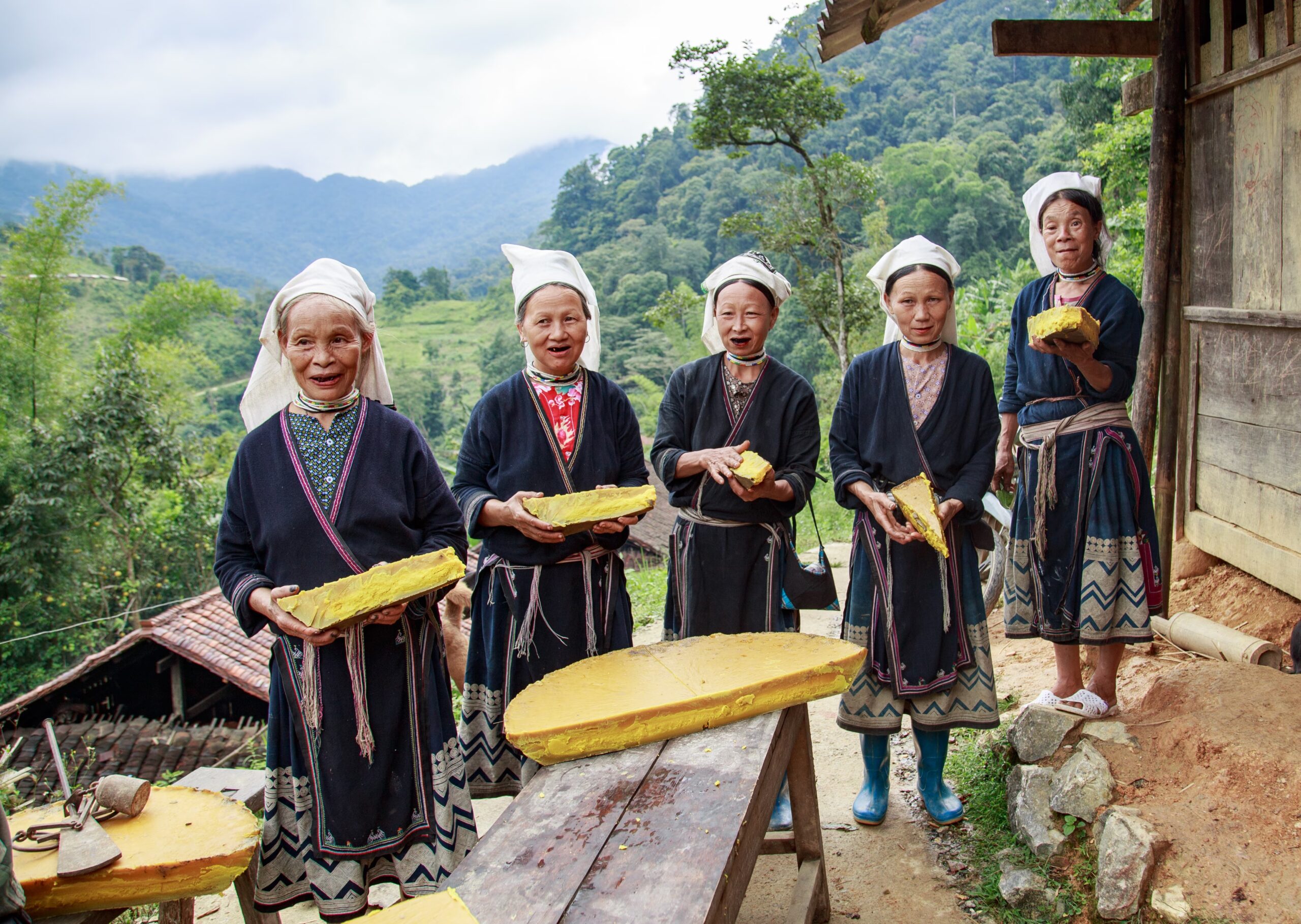
The villagers were happy with the pieces of beeswax in their hands.
After multiple pressing and filtering cycles, when all the wax essence is extracted, the beeswax shells and impurities are discarded. The beeswax essence obtained from these pressing and filtering cycles still contains quite a lot of impurities, so the wax is molded into fist-sized lumps. Next, this wax is poured into a pan and concentrated to produce pure yellow beeswax. The pure beeswax obtained is divided equally among all the households in the village, with each family receiving about 1.5 to 2 kg for decorative purposes and to use throughout the year.
The harvesting of wild beeswax takes place only once a year. The harvesting and processing of beeswax is carried out continuously day and night, taking about two days. For the people of Hoai Khao hamlet, the wild beeswax harvest is like a big festival. During the two days of harvesting, people contribute chickens, rice, and vegetables to cook meals together amidst the joyful laughter of locals and tourists. This is also an opportunity to strengthen the solidarity and cohesion of the Dao Tien community in Hoai Khao.

The strong, agile men, skilled at climbing, were tasked with going into the forest, climbing cliffs and tree branches to knock beehives down below. Meanwhile, the women below collected the honeycombs, tying them up neatly to carry back to the collection point in the village.


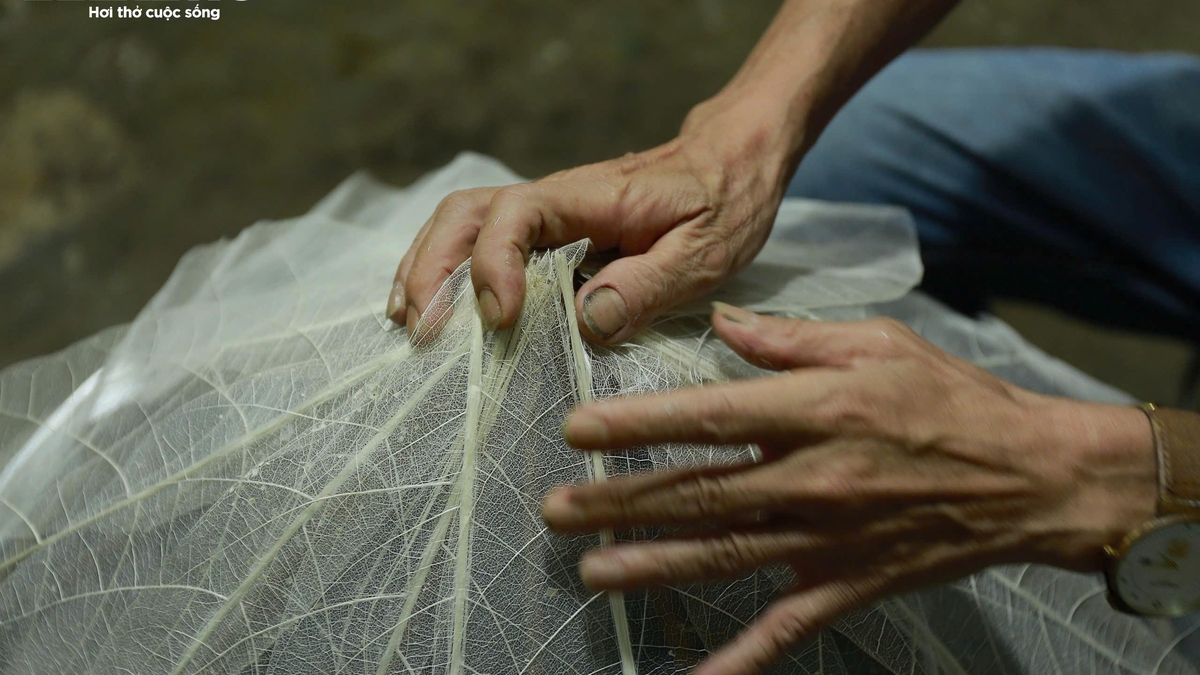
The beeswax extract is used by the Dao Tien people to print decorative patterns onto fabric.
To this day, Hoai Khao village still preserves many distinctive traditional cultural values of the Dao ethnic group. The village boasts a peaceful and picturesque natural landscape, ancient wooden houses with yin-yang tiled roofs, each family having a separate wooden granary from the main house, terraced rice fields in the valley, beeswax pattern printing, exquisite silver carving, and traditional medicine remedies beneficial to health… With its unique cultural values of the Dao Tien people in Hoai Khao, it is becoming one of the attractive destinations in the mountainous region of Cao Bang.
In 2024, the "Happy Vietnam" photo and video contest continued to be organized by the Ministry of Information and Communications in collaboration with the Vietnam Association of Photographic Artists on the website. https://happy.vietnam.vn is open to all Vietnamese citizens and foreigners aged 15 and above. The competition aims to honor individuals and groups with positive informational products that make practical contributions to promoting a beautiful image of Vietnam to the world. Through this, it helps people at home, overseas Vietnamese, and international friends access authentic images of Vietnam, its people, its achievements in ensuring human rights, and working towards a happy Vietnam.
Each competition category (photos and videos) has the following prizes and prize values:
– 1 Gold Medal: 70,000,000 VND
– 2 Silver Medals: 20,000,000 VND
– 3 Bronze Medals: 10,000,000 VND
– 10 Consolation Prizes: 5,000,000 VND
– The most voted entry: 5,000,000 VND
The winning authors will be invited by the Organizing Committee to attend the Award Ceremony and Certificate Presentation, which will be broadcast live on Vietnam Television.
Vietnam.vn
![[Photo] Prime Minister Le Minh Hung presides over the thematic session on promoting science and technology development and innovation.](https://vphoto.vietnam.vn/thumb/1200x675/vietnam/resource/IMAGE/2026/06/23/1782207872934_ndo_br_dsc-1724-jpg.webp)