Actually, it's just been a habit for many years. Because Mr. Mười lives alone. His relatives live far away in the lowlands; in the past, people used to visit occasionally, but then the visits became less frequent. For almost ten years now, no one has been seen coming or going.
The villagers say that in his youth, he was a resistance fighter, facing death several times. Once, when shot, he gritted his teeth and pulled the bullet out with the dagger he carried. In another battle, a comrade fell beside him while shielding him from bullets. He lay beside his friend, waiting for dawn before they could take him back to his unit for burial.
After his military service, he returned to live on the land his parents left him. He enjoyed a peaceful life in the countryside, raising livestock and cultivating crops on his small garden of a few hundred square meters. He never married, even though many village girls were smitten with him, drawn to his calm and hardworking nature.
When asked about it, he would just smile kindly and say, "I already have someone I love!"
Years passed, and people were startled to see Mr. Muoi's hair had turned white, his face deeply etched with wrinkles, yet his "loved one" was nowhere to be seen. Many rumors from the past remain unverified: "Mr. Muoi's beloved was a female guerrilla fighter who died in a battle; overwhelmed with grief and longing, he vowed to remain single for life"; others said, "Mr. Muoi was wounded near his private parts; he doesn't want any woman to suffer for him for the rest of her life..."
No matter what anyone said, he never explained himself, living a simple, unassuming life. The villagers never seemed to hear him complain, grumble, or get angry at anyone who judged or speculated about him. Moreover, whenever anyone in the neighborhood needed help, he was always enthusiastic and responsible, as if it were his own family matter. Those with malicious intent claimed he was "eccentric," mentally ill, or crazy. This shows that in life, no matter how kind and gentle one is, there will always be people who love and people who hate.
Never mind. He continued to live like a silent shadow amidst the ever-changing countryside. Occasionally, in his pensive gaze before sunset, one could catch a glimpse of a quiet, unspoken loneliness.
Times have changed; many people in the village have become wealthy, and multi-story houses are springing up everywhere. His old house, dilapidated and rickety with age, has been the subject of much support from various organizations, but he refused. He said: "I live alone, facing imminent death. This is fine as it is. There are many families who are worse off than me and need help. Let's help them!"
He lived off his small garden and his disability pension. Despite his poverty, almost every family in this small village had received a favor from him. When Mrs. Sau's kitchen collapsed, he pitched in to help repair it. When Mr. Tu's child had a fever in the middle of the night, he cycled to the health station to call a doctor. When floods came, he waded through the water to rescue two cows for Mr. Nam's family. Whenever he learned of someone in need, he readily gave them a dozen chicken eggs, some cassava, some sweet potatoes, or some vegetables he had picked from his garden.
He lived a secluded, lonely life in his small, simple house, seemingly just waiting for someone to need his help, whether it was a small or large task. Each time, he would appear unusually cheerful and energetic, as if he were a different person.
One day, he collapsed on the porch, his basket of eggs flying out into the yard and shattering. Luckily, Thao, his next-door neighbor, was picking vegetables for lunch. She heard a "thump," looked over, and saw Mr. Muoi's thin, veiny arm flail before falling limply to the ground. Thao quickly called her mother to take him to the hospital.
From that day on, Mr. Mười was bedridden. At first, a few people would stop by, inquiring about his well-being out of politeness. Some would bring a bowl of porridge, others would slip a packet of noodles or some rice into a corner of the house. But after only about five days, the number of visitors gradually decreased.
Some said, "Poor Mr. Mười, but we're not related, so we can only help him this much!" Others said, "Mr. Mười was a good man, but my family is small, and I work all day, so I don't have time to take care of him." A few remained silent, but their eyes spoke volumes: "He lived alone, and now he's lying there... what can we do?"
Only Thao regularly visited. She was only 15 years old, thin and dark-skinned from helping her mother with farm work since she was little. Thao's mother was a single mother, raising her children alone. Besides relying on a few acres of rice paddies, she had to collect scrap metal daily to earn extra income. But every day, Thao never forgot to run to Mr. Muoi's house. She would set up the stove to boil warm water to wash him and then cook porridge. She would sit beside the bed and feed him spoonfuls of porridge. He ate very slowly and with difficulty, sometimes even spilling it out and staining his freshly changed shirt. But Thao didn't show any impatience or anger towards him. She was patient, as if she were taking care of her own grandfather.
One time, Mrs. Sau from the neighboring village stopped by and, seeing this, asked half-jokingly, half-seriously, "Mr. Muoi isn't related to your family at all, is he?"
Thảo just smiled and said politely, "Grandpa often told me stories. Stories about the resistance war, about soldiers, about this village when it was poor. Thanks to him, I love my homeland and country even more, and I know how to help and love everyone. I love Grandpa like my own flesh and blood."
Mr. Mười lay inside the house, his eyes gazing out, following that small, devoted figure as if trying to salvage the last glimmer of light remaining in his life.
Every time Mr. Muoi coughed, Thao would quickly run in like a little squirrel and comfort him, "Don't worry, Grandpa. I'm here."
A month later, Mr. Mười passed away. The day he died was also the day the commune announced that a new inter-commune road project would pass right in front of his house. A lawyer appeared, bringing with him a notarized will. In it, Mr. Mười clearly stated: The entire plot of land, over 500 square meters, is left to his granddaughter, Nguyễn Thị Thảo, daughter of Mrs. Nguyễn Thị Miên…
Life is full of surprises. Sometimes, a small act done at the right time is what touches the deepest part of the heart.
Source: https://baothainguyen.vn/van-hoa/van-hoc-nghe-thuat/202506/nguoi-duoc-chon-37a124b/



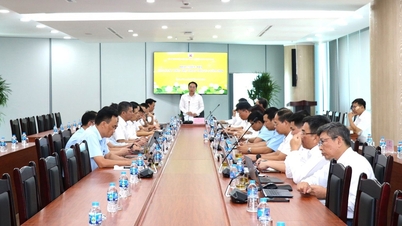
![[Photo] General Secretary and President To Lam presides over a meeting on preparations for the review of one year of operation of the three-tiered government system.](https://vphoto.vietnam.vn/thumb/1200x675/vietnam/resource/IMAGE/2026/06/02/1780391821195_a1-bnd-4595-9717-jpg.webp)










































































Comment (0)